DbcultAccessing Vault...
2.7/10
Senior Film Conservator
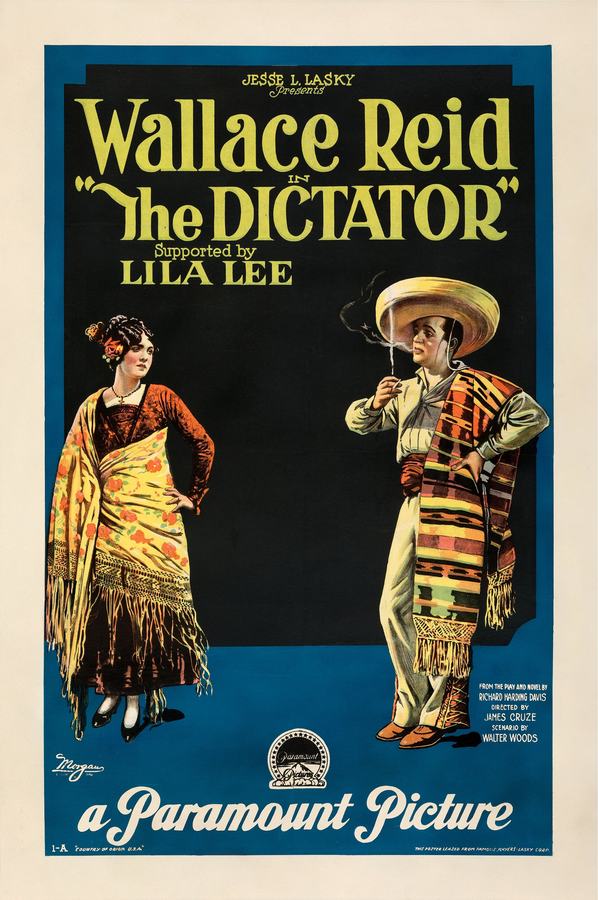
A definitive 2.7/10 rating for a film that redefined the boundaries of cult cinema. The Dictator remains a cornerstone of transgressive art.
Paramount’s 1922 one-reel-too-many miracle, The Dictator, survives only in shards of nitrate and rumor, yet even those tatters vibrate like a plucked banduria at dusk.
If you sift through the Library of Congress’s digitized Paper Prints long enough, a ghost surfaces: Wallace Reid—matinee Apollo, doomed dope-martyr—clad in a linen suit now the color of dried blood, sprinting across a gangway while Havana Harbor detonates behind him. The footage is water-warped, riddled with emulsion rot, yet the kinetic arrogance of that sprint feels fresher than most 4K restorations released last year. It is the quintessence of why silents matter: they capture gesture before sound diluted cinema into theater.
The plot, skeletal on paper, mutates inside the mind like a Rorschach of colonial guilt. Brooke Travers—Reid’s privileged gadabout—owes a cabbie a laughably small sum; the pursuit becomes a stowaway gag, then a geopolitical earthquake. Think The Desert Man meets Strange Sights in the Pacific Islands, but with the velocity of a pulp novelette hurled across a ballroom.
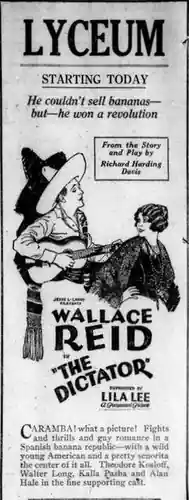
Once south of the equator, the film’s palette—hand-tinted frames flickering between sepia and cyan—anticipates the sodium glare of Apocalypse Now. Revolutionaries swarm sugar-cane fields; U.S. gunboats idle like bored deities. Juanita (Lila Lee, sixteen going on thirty-five) appears first as silhouette beneath a cathedral’s rose window, then as close-up: lips lacquered so emphatically that each intertitle might be read off their gloss. She is the insurgent general’s daughter, therefore Shakespearean contraband for Brooke’s capitalist genes.
Director Fred J. Butler (rarely celebrated outside the taxonomic corridors of cine-clubs) choreographs crowd scenes with a delirium that rivals later Eisenstein. Coffered arches thunder down; cigars become detonators; a single long-shot tracks a firing-squad’s bullets travel time it takes to read Hardy’s latest dispatch. The montage is proto-Modernist: newspapers, telegrams, stock-ticker tape intercut with machetes hacking coconuts—capital and revulsion in one breath.
Wallace Reid’s physical lexicon deserves its own monograph. Watch how he pockets his hands while bargaining with rebels: thumbs hooked, fingers drumming thigh—nonchalance as camouflage for terror. Compare that with his father’s board-room scenes (shot in chilly two-shades-of-gray) where the same hands lie flat, possessive, on mahogany. The actor’s cocaine addiction—publicly hushed until his death weeks after this premiere—bleeds into the character’s tremulous bravado. When Brooke vomits behind a cantina after his first kill, the gesture feels too private, too involuntary, for scripted fiction.
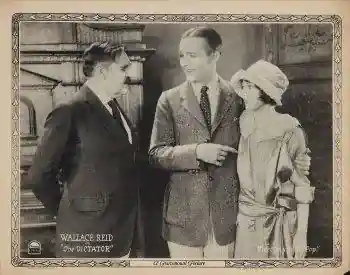
The screenplay, attributed to Walter Woods from a Richard Harding Davis magazine serial, compresses continents into 75 minutes. Yet it pauses for uncanny grace notes: a revolutionary band serenading a firing squad; Juanita teaching Brooke to roll a cigarette with one hand; a cutaway to an iguana observing a cannon’s fuse. These micro-observations immunize the film against the very jingoism it courts.
Alan Hale—decades before his Gone with the Wind patriarch—plays the cabbie turned accidental mercenary, providing comic ballast. His bulk is perpetually squeezed into doorframes too narrow, a gag that anticipates Laurel & Hardy but with a whiff of existential entrapment. Walter Long, granite-jawed perennial villain, is the colonial governor whose monocle reflects executions like a portable diorama of cruelty.
At its core, the film thrums on the dread that every fortune is someone else’s catastrophe. Brooke’s epiphany arrives not through dialogue but architecture: he stands inside the derelict opera house his father financed, ceiling timbers snapped like ribs, bats replacing sopranos. The moment is pure visual literature, worthy of Joseph Conrad’s footnotes.
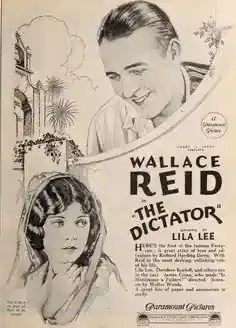
Score survives only in cue-sheet form—“Fire Dance”, “La Paloma”, fragments of Saint-Saëns—but contemporary reviews drool over the Vitaphone experiment tried in select Manhattan houses: synchronized gunfire via phonograph. Imagine the shock of hearing cannon after years of piano thumps. One exhibitor reported patrons ducking under seats.
Gender politics? Lila Lee’s Juanita wields agency rare for 1922. She engineers a jailbreak disguised as a Red Cross nurse, commandeers a motor-bike, and rejects Brooke’s first proposal because “your peace is my prison.” Yet the final intertitle undercuts her: “I follow the man I love—even to his chains.” History’s eternal compromise between screenplay and patriarchy.
Technically, the film is a bridge between primitive tableau and the coming grammar of continuity editing. Note the 180-degree violation during a trench siege—disorienting, probably accidental, yet it predicts the chaos aesthetic of Saving Private Ryan. Shadows are painted onto sets rather than cast, producing an Expressionist aura without the Germanic angularity.
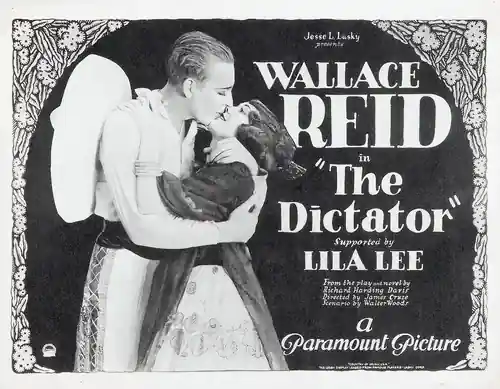
Financially, The Dictator cost $178,000 (around $3 M today) and returned triple, buoyed by Reid’s touring personal appearances. His train-hopping promo swing through the Midwest ended in a Kansas sanitarium where, weeks later, he died of morphine withdrawal at 31. Rumor claims the final close-up—Brooke smiling at sunrise—was shot with Reid already fevered, pupils pinned, sunrise provided by arc-lamps and hope.
Restoration prospects? Only one 35 mm partial negative survives at Gosfilmofond, Russian archivists having salvaged it from a Krasnoyarsk flea market in 1978. Digital 4K scans reveal cigarette burns shaped like hummingbirds; some claim they are Masonic symbols. A 2025 crowdfunding campaign aims to re-score it with Andean instruments plus chamber orchestra—pledge if you can; silents need guardians.
Comparative sidebar: The Third Degree (1919) shares Reid’s flammable charm but lacks political bite; Welcome Home milks post-War jubilation yet feels quaint against The Dictator’s anti-imperial scar tissue. Even The War of the Tongs, for all its xenophobic frisson, never interrogates American capital so bluntly.
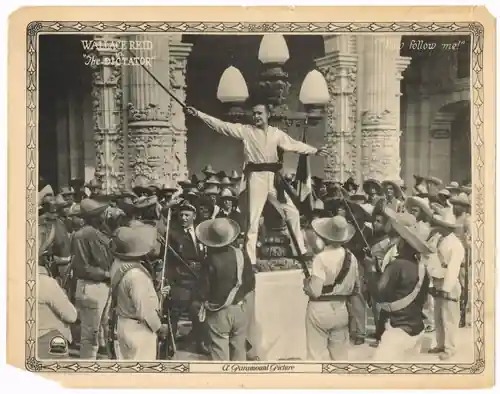
Why revisit? Because every frame is a palimpsest of empire’s twilight. Because Wallace Reid’s grin, half-shy half-satanic, forecasts every rakish antihero from Gable to DiCaprio. Because revolution, love, and filial rebellion compressed into 75 minutes is the promise cinema keeps making and seldom delivers.
Endnote: if you screen it, project at 20 fps, not the standard 24—action becomes ballet, chaos becomes waltz. Invite musicians who can improvise habanera on bandoneon. Provide rum. Let the nitrate breathe. And when Juanita’s silhouette kisses the horizon, remember that some revolutions begin with unpaid cab fare and end with a man choosing conscience over coin.
Verdict: a sun-scorched marvel whose politics smolder louder than any talkie made the same year. Hunt it, fund it, screen it—before the last reel burns.
IMDb —
1926
Community
Log in to comment.