DbcultAccessing Vault...
6.7/10
Senior Film Conservator
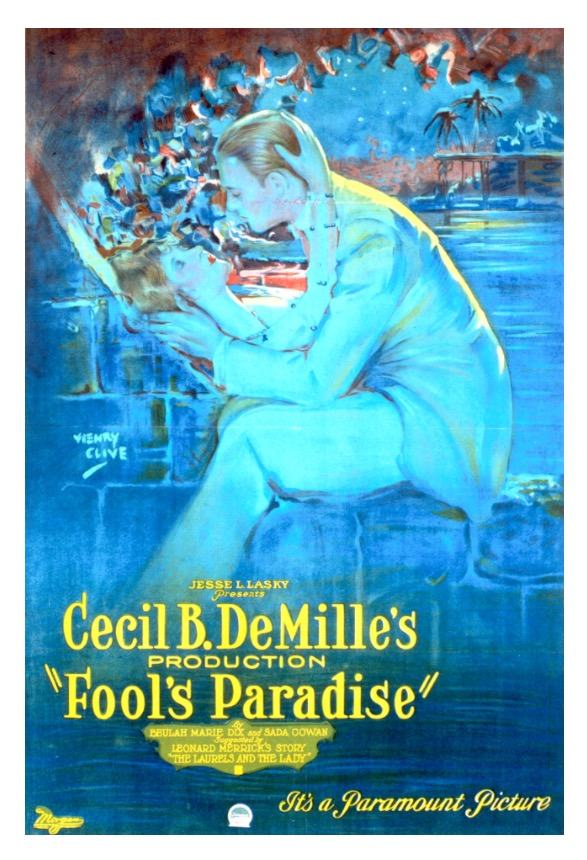
A definitive 6.7/10 rating for a film that redefined the boundaries of cult cinema. Fool's Paradise remains a cornerstone of transgressive art.
Picture a moonlit cantina where kerosene lamps flicker like gossip and tequila fumes braid with the accordion’s wheeze—this is the crucible in which Fool’s Paradise forges its cruel fairy tale. William Boyd’s Arthur arrives wearing the blank beatitude of a man who believes beauty owes him permanence; Jacqueline Logan’s Rosa twirls her skirts into liquid copper, every spin a promissory note on his desire; Gertrude Short’s Poll watches from the margins, eyes dilated with the cannibal hunger of the overlooked.
The cigar—fat, Havana-swaddled, wired with a practical-joke detonator—ought to be harmless. Instead it becomes the film’s atom bomb: a burst of phosphorus that confiscates Boyd’s baby-blues and leaves him groping through a cosmos of unrelenting ink. From here director William Beaudine stages one of the silent era’s most perverse courtships: a woman impersonating the beloved while the beloved is continents away, a marriage bed where identity is swapped like currency under cover of night.
Blindness, the film whispers, is not the absence of seeing but the tyranny of believing what you are told.
Cinematographer L. William O’Connell bathes the post-explosion sequences in bruised indigos and nicotine ambers; shadows pool so thickly they seem almost chewable. When Arthur traces Poll’s face with tremulous fingertips, the camera swaps to a tactile macro: beads of sweat become topographies, the lace of her collar a barbed frontier. The effect is discomfitingly intimate—viewers become complicit voyeurs of deception.
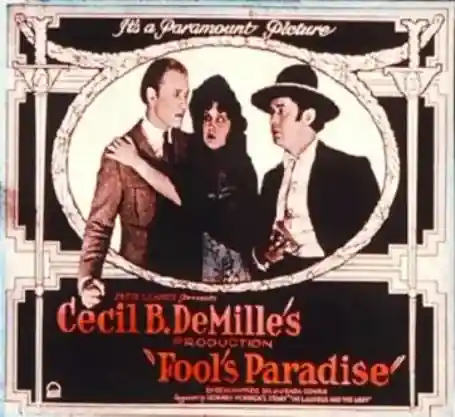
Intertitles—usually the blunt instruments of silent storytelling—here are haiku of cruelty. One card, framed by funeral-black matting, reads: "She spoke Rosa’s name until it wore her own skin." The sentence lingers, bruising.
The restoration-of-sight scene, shot through amber gel filters, is a masterstroke. Arthur’s pupils dilate; the hospital room smears into a Van Gogh vortex of chlorophyll greens and arterial reds. For a heartbeat the audience shares his chromatic vertigo, then the focus snaps, and clarity arrives like an assassin. Poll—now unmasked—stands in front of him, her lips parted in a rictus of dread. No dialogue needed: the dolly-in on Boyd’s trembling lower jaw says everything. He flees before the bandages finish unwrapping.
Siam, when we finally arrive, is less a geographical destination than a state of erotic amnesia. Temple spires pierce apricot skies; monks chant off-screen, their syllables echoing Arthur’s hollowed-out chest cavity. Rosa reappears as the kept ornament of a teak magnate, her choreography now a commodity. The reunion is staged in a moonlit courtyard where paper lanterns hover like jellyfish. Logan’s eyes hold zero recognition; Boyd’s face collapses into a silent howl. Love, once a cathedral, is revealed as a balsa façade—step through and you plummet.
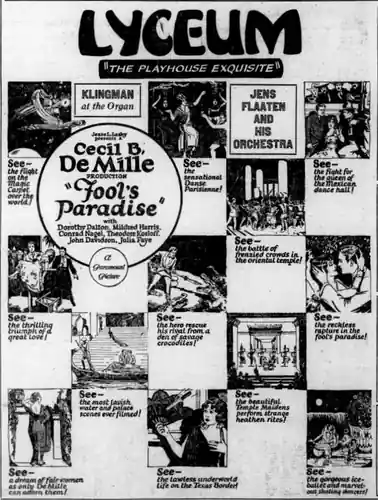
Critics of 1923 derided the film’s “Mexican poisoned-cigar hokum,” yet that misses the pulp poetry. Fool’s Paradise is less melodrama than a morality play about the dangers of aesthetic possession: Arthur covets Rosa the way a collector covets ivory carvings—lust disguised as reverence. Poll, meanwhile, weaponizes proximity, proving that devotion can corrode into colonization when unreciprocated. The cigar is merely the inciting MacGuffin; the real explosive is entitlement.
Performances oscillate between operatic and surgical. Short ripples with twitchy desperation—watch her knuckles whiten around the cigar box, the micro-expression of guilt flickering like a bad film splice. Boyd, usually the genial leading man, here accesses a darker register: his blindness feels feral, all teeth and flailing palms. Logan has the toughest assignment—she must embody an ideal so potent it justifies mutilation, yet remain vaporous enough to justify Arthur’s delusion. She achieves it by moving as though suspended in ether, every gesture half a second slower than reality.
The screenplay, adapted from Leonard Merrick’s 1904 novel The Worldlings, condenses three continents and a decade into seventy-three minutes, yet screenwriters Sada Cowan and Beulah Marie Dix retain the novel’s corrosive irony: every gift exacts a hemorrhage. Compare it to Tongues of Flame, another 1923 release where passion leaves physical scarring; there the fire is communal, here it is surgically precise.
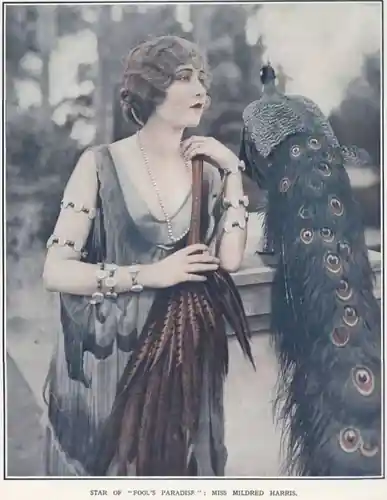
Musically, the surviving print carries a 2019 counter-melancholy score by Aleksandra Vrebalov. Solo violin threads through harmonium drones, evoking border-town dust; sudden taiko outbursts mark Arthur’s Siamese disillusion. The dissonance—European strings vs. Asian percussion—mirrors the colonial gaze the film critiques without endorsing.
Gender politics, viewed through a contemporary prism, are radioactive. Poll’s deception reads as predatory, yet the narrative refuses simple vilification. Her final close-up—left behind in a border hovel, clutching the wedding shawl like a corpse—grants her a sliver of tragic grandeur. The patriarchal machine that equates a woman’s worth with bridal capture has mauled both women; Arthur simply carries the privilege of passport and vision to walk away.
Visually, the film bookends with circular motifs: the cantina’s ceiling fan, the cigar’s ring, the Siamese moon. Circles imply return, but Arthur’s journey is a arrow—he escapes forward, never backward, leaving Poll to orbit the void he occupied. The final shot cranes up from Rosa’s indifferent silhouette to a night sky riddled with empty lanterns: desire released, unmoored, extinguished.
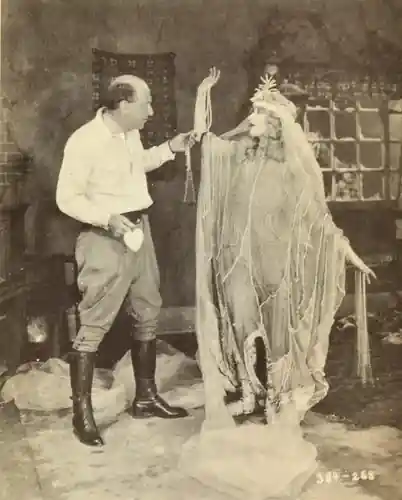
Restoration-wise, the 4K photochemical rescue by UCLA reveals textures previously smothered: the pockmarks on adobe walls, the glint of nitrate in Poll’s hairpins, the arterial pulse in Boyd’s neck when sight returns. Some deco-style intertitles, once lost, were reconstructed using period type slugs; the tinting follows 1920s Kodak specifications—amber for interiors, cyan for exteriors, rose for the Siamese fantasy—each hue a emotional cue.
Comparative context: fans of The Vanity Pool will recognize the trope of masquerade as seduction, though that film swims in art-deco opulence whereas Fool’s Paradise wallows in border-grime grit. Likewise, Her Bitter Cup shares the theme of bodily sacrifice for love, yet ends on quasi-redemptive grace; Beaudine offers no such sacrament—only the bitter dregs.
Box-office receipts were modest—Paramount logged $347,000 against a $232,000 negative cost—but the film haunted European censors; Sweden excised the blindness-curing surgery, deeming it “excruciating medical detail.” Today such squeamishness feels quaint, yet the edit inadvertently heightened the existential dread: Arthur’s sight returns off-screen, as though granted by a malicious deity rather than science.
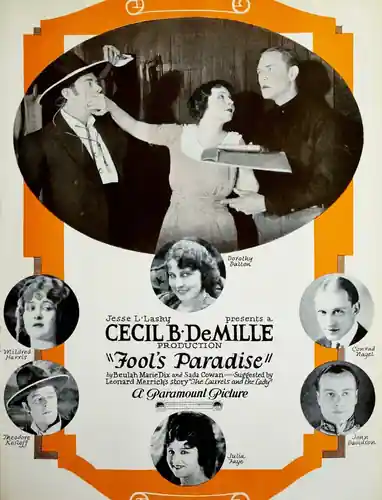
Academic footnote: the Siamese sequences were shot on Catalina Island amid imported banyan trees and rented elephants. Production diaries reveal Boyd developed a grapefruit-sized blister from riding bareback; Logan nearly drowned when her headdress snagged on kelp. These travails never reach the frame—the glamour of empire is, after all, built on concealed bruises.
For modern viewers, the film’s most unsettling echo lies in its treatment of disability: blindness as metaphor for moral myopia, restoration as trigger for abandonment. Advocacy groups have rightly critiqued this trope, yet within the narrative logic the impairment is less medical than karmic—Arthur’s refusal to see Poll clearly is punished by literal erasure of sight. When science reinstates his privilege, he reenacts the original sin, thereby confirming the cosmic joke.
So is Fool’s Paradise a masterpiece? Nominating it alongside The Bells or Hoodoo Ann would overstate—its pacing sags mid-voyage, and the Siamese caricatures verge on Orientalist ventriloquism. Yet as a artifact of erotic entropy, it mesmerizes. The image of Poll pressing the lethal cigar into Arthur’s palm, her thumbnail tracing the paper ring with almost maternal tenderness, sears itself into the retina like a phosphorous flare. You emerge blinking, uncertain whether you have watched a tragedy or confessed to one.
Stream it during a thunderstorm when the power flickers; let the celluloid scratches mingle with the rain’s rattle. Keep a glass of mezcal handy—smoke on the tongue, smoke in the eyes—and when the end card appears, resist the urge to search for stills of Rosa. Some flames are meant to keep you in darkness long after the lights come up.
IMDb —
1924
Community
Log in to comment.