DbcultAccessing Vault...
5.8/10
Senior Film Conservator
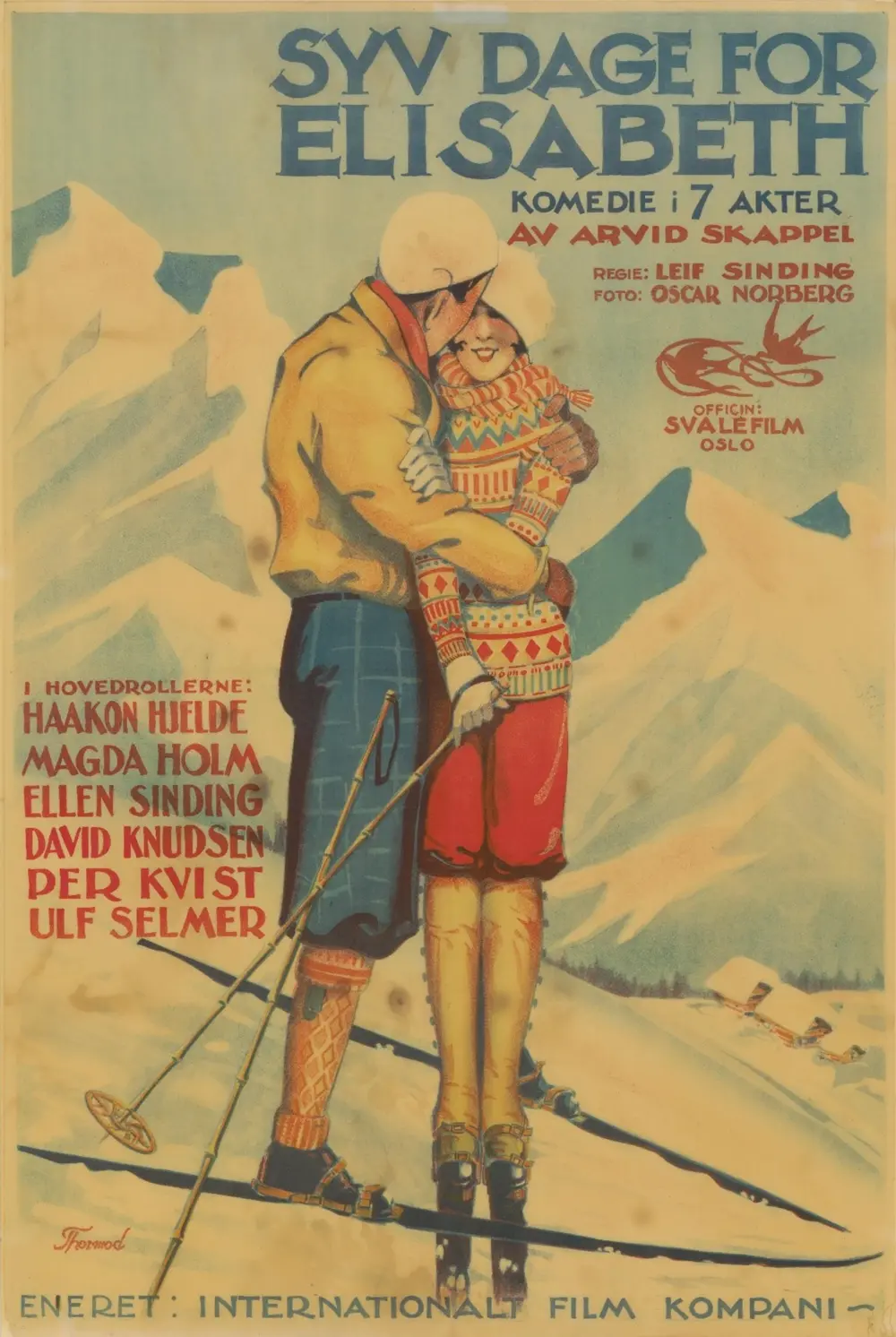
A definitive 5.8/10 rating for a film that redefined the boundaries of cult cinema. Syv dager for Elisabeth remains a cornerstone of transgressive art.
Is Syv dager for Elisabeth worth watching today? Short answer: yes, but with significant caveats. This 1927 Norwegian silent film is a fascinating, if sometimes ponderous, relic that offers a unique window into early Scandinavian cinema and the nascent star power of figures like Sonja Henie. It's a film primarily for film historians, silent film enthusiasts, and those with a deep curiosity for the cultural artifacts of the past, rather than casual viewers seeking modern entertainment.
It is not for audiences accustomed to rapid pacing, complex narratives, or contemporary cinematic language. If you struggle with the conventions of silent cinema, the deliberate speed, and the often broad acting styles, this will likely be a challenging viewing experience.
This film works because it is a charming, if simplistic, snapshot of its era, featuring an early glimpse of Sonja Henie's undeniable screen presence. Its historical value is immense, preserving a piece of Norwegian cultural heritage.
This film fails because its narrative is incredibly thin, the pacing can feel glacial by modern standards, and the villain's machinations are laughably transparent, undermining any genuine tension.
You should watch it if you are a cinephile keen on exploring the roots of European cinema, interested in the early career of Sonja Henie, or simply enjoy the unique aesthetic and storytelling of the silent film era.
"Syv dager for Elisabeth" (Seven Days for Elisabeth) arrives from an era when cinema was still finding its voice, a period of transition where storytelling conventions were less codified and the medium’s potential was still being explored. Directed by Leif Sinding, a prolific figure in early Norwegian film, it represents a specific moment in the nation's cinematic output, distinct from the more internationally recognized works emerging from Germany or Hollywood at the time.
The film functions as more than just a narrative; it’s a cultural artifact. It showcases the types of stories that resonated with audiences of the 1920s: simple morality tales, romantic comedy-dramas, and narratives centered around everyday people thrust into extraordinary circumstances. The lottery win premise, for instance, is timeless, but its execution here is distinctly of its period, reflecting a certain innocent optimism.
One might argue that the film’s primary strength lies not in its artistic grandeur but in its historical significance. It’s a testament to the perseverance of early filmmakers operating with limited resources, attempting to entertain and engage an audience hungry for moving pictures. The very act of watching it is an archaeological endeavor, peeling back layers of time to understand the foundations upon which modern cinema was built.
The plot of "Syv dager for Elisabeth" is remarkably straightforward, almost to a fault. Elisabeth, a hairdresser, wins the lottery, a dream scenario for anyone, then decides to spend her newfound wealth on an Easter holiday at a luxurious mountain resort with her friend Lucie. This premise, while compelling enough for a lighthearted romp, quickly introduces the antagonist, Franz Markel, a scoundrel whose intentions are telegraphed with such clarity that any suspense is immediately deflated.
Markel's attempts at "mischief" against Elisabeth are less cunning and more clumsily transparent. He is the archetypal silent film villain, all exaggerated gestures and thinly veiled avarice. His schemes feel less like genuine threats and more like plot devices designed to be easily overcome. For instance, his initial approach to Elisabeth, likely involving over-the-top flattery and feigned interest, is so blatant that it strains credulity, even within the context of silent film melodrama.
The narrative's resolution, with the millionaire's son effortlessly exposing Markel, further emphasizes the story’s lack of complexity. There’s no intricate web of deceit to unravel, no moral ambiguity to ponder. It’s a clear-cut case of good versus bad, where the good is pure and the bad is easily vanquished. This simplicity, while charming for its era, leaves modern viewers yearning for more depth, more character development, and perhaps a villain with a touch more nuance.
The film’s pacing also contributes to this sense of simplicity. Scenes unfold deliberately, allowing the audience ample time to absorb the visual information and the actors' expressions. While this can be a meditative experience for some, it can also feel protracted, particularly during sequences that lack significant dramatic tension. The seven days of Elisabeth’s holiday, though central to the title, often blur into a leisurely, almost uneventful, progression.
The cast of "Syv dager for Elisabeth" brings a range of silent film acting styles to the screen, some more effective than others. Per Kvist, as the villainous Franz Markel, embodies the exaggerated gestures common to the era. His performance is broad, ensuring that even without intertitles, the audience understands his nefarious intent. While effective for the period, it lacks the subtle menace that later cinematic villains would master. He is a caricature, undeniably, but a functional one for the story's purpose.
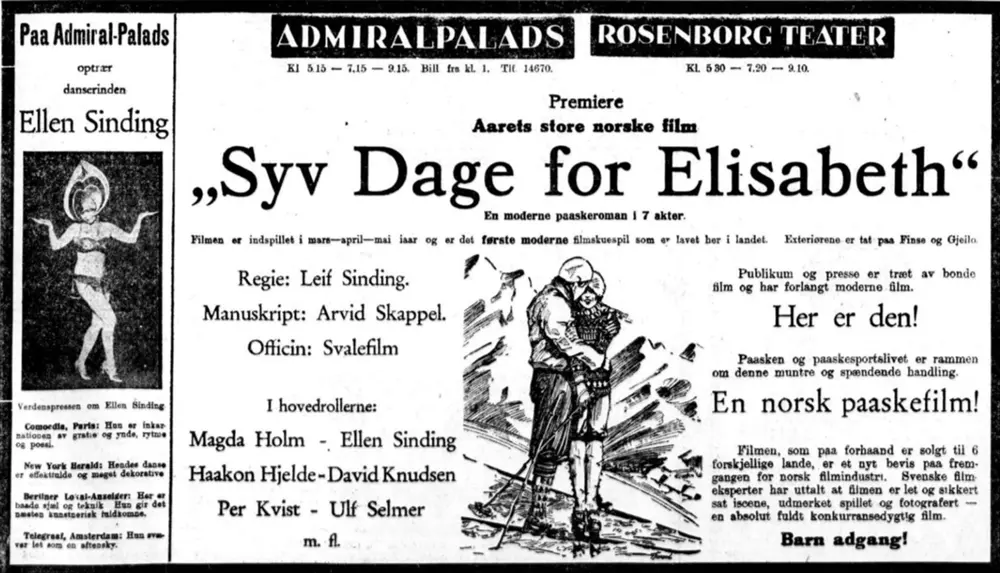
However, the most intriguing presence in the film is undoubtedly Sonja Henie. Even in this early role, before her Olympic fame and subsequent Hollywood career, her natural charm and athleticism are palpable. Her scenes, though not central to the main plot, offer a glimpse of the charisma that would later make her a global sensation. Her movements, whether on skates or simply interacting, possess a grace that stands out. One could argue her inclusion feels almost like an early marketing ploy, a chance to feature a burgeoning national talent, rather than a strictly integral part of the narrative fabric. Her screen time is limited, but her impact is disproportionately memorable.
The lead performance by Magda Holm as Elisabeth, while earnest, often falls into the trap of passive heroism. She is reactive rather than proactive, a common trait for female protagonists in many early films. Her innocence is portrayed convincingly, but one wishes for a touch more agency, especially given her sudden fortune. The supporting cast, including Kaare Knudsen as the millionaire's son, provides solid, if unremarkable, performances that serve the plot without truly elevating it. They are archetypes, fulfilling their designated roles in a simple morality play.
Leif Sinding's direction in "Syv dager for Elisabeth" is competent, adhering to the established conventions of silent filmmaking without pushing many boundaries. The camera work, while not groundbreaking, effectively captures the scenic beauty of the mountain resort, lending a sense of scale and aspiration to Elisabeth's holiday. The wide shots of the snowy landscapes and the grand interiors of the hotel serve to visually underscore the sudden shift in Elisabeth's circumstances.
One particular strength lies in the film's ability to establish atmosphere through its setting. The mountain resort feels genuinely luxurious and isolated, a perfect backdrop for both romantic encounters and villainous plotting. The use of natural light, where possible, adds a degree of authenticity to the outdoor scenes, a common yet effective technique in early cinema. There’s a scene early on, depicting Elisabeth and Lucie’s arrival, which uses a tracking shot (or a series of well-edited static shots) to convey the grandeur of their new surroundings, effectively communicating their awe and the audience’s appreciation for the setting.
However, the film's visual language is largely functional. There are few truly inventive or memorable shots that transcend mere exposition. The editing is straightforward, prioritizing clarity over stylistic flair. This isn't necessarily a flaw, especially for a film of this vintage, but it does mean that "Syv dager for Elisabeth" doesn't stand out as a visually innovative work when compared to its more experimental contemporaries from other nations, such as The Vortex or even some of the German Expressionist films of the period.
The tone is consistently light-hearted, even during moments of mild peril. Sinding clearly aimed for a charming, perhaps slightly comedic, melodrama, and in that regard, he largely succeeds. The film never delves into deep emotional complexity or dark themes, maintaining a pleasant, if somewhat superficial, demeanor throughout.
The pacing of "Syv dager for Elisabeth" is, to put it mildly, deliberate. This is a film that takes its time, allowing scenes to unfold at a leisurely rhythm characteristic of much silent cinema. For contemporary audiences, this can be a significant hurdle. The narrative progresses slowly, with long takes and extended sequences that might feel redundant to those accustomed to modern, fast-cut editing.
There's an almost documentary-like quality to some of the resort scenes, where the camera lingers on the activities of the guests, providing a snapshot of early 20th-century leisure. While this offers valuable cultural insight, it often comes at the expense of dramatic urgency. A specific example would be the extended sequences showing people ice skating or enjoying the mountain air; while picturesque, they don't always advance the central plot, making the film feel longer than its actual runtime.
The tone, however, is consistently charming and light. Even when Franz Markel is attempting his "mischief," the mood never truly darkens. It remains a gentle romantic comedy-drama, leaning heavily on the comedic aspects of the villain's ineptitude and the inherent sweetness of Elisabeth's character. This unwavering cheerfulness is both a strength and a weakness. It prevents the film from ever becoming truly engaging or suspenseful, but it also makes for an undeniably pleasant, if undemanding, viewing experience.
The film doesn't attempt to explore complex themes of class, wealth, or ambition with any real depth. Instead, it uses these elements as a simple backdrop for a straightforward tale of good fortune, attempted villainy, and eventual triumph. It works. But it’s flawed.
Yes, for a very specific audience. "Syv dager for Elisabeth" is a piece of cinematic history. It offers a rare look at Norwegian silent film. It features an early appearance by the legendary Sonja Henie. It’s a simple, charming story. It is slow by modern standards. The plot is predictable. The acting can be broad. If you appreciate silent film as an art form, it's worth your time. If you expect modern thrills, you will be disappointed.
"Syv dager for Elisabeth" is a film that earns its place in cinematic history more through its existence than its artistic brilliance. It’s a quaint, unassuming piece of Norwegian silent cinema that offers a valuable snapshot of its era and an early, albeit brief, glimpse of Sonja Henie's magnetic presence. While its narrative simplicity and languid pacing will undoubtedly test the patience of modern audiences, there’s an undeniable charm in its innocence and its straightforward portrayal of good triumphing over easily exposed evil. It’s not a film that will redefine your understanding of cinema, nor will it leave you on the edge of your seat.
Instead, it functions as a gentle, almost meditative, viewing experience for those willing to engage with the conventions of a bygone cinematic age. Consider it a historical curiosity, a pleasant diversion, and a testament to the foundational efforts of early filmmakers. If you approach it with the right expectations – that of an archaeological dig rather than a blockbuster – you might find a quiet enjoyment in Elisabeth's seven days of fortune and mild intrigue. It’s a film to be appreciated for what it represents, rather than for what it might have been.
IMDb 6.7
1932
Community
Log in to comment.