DbcultAccessing Vault...
Cult Review
Senior Film Conservator
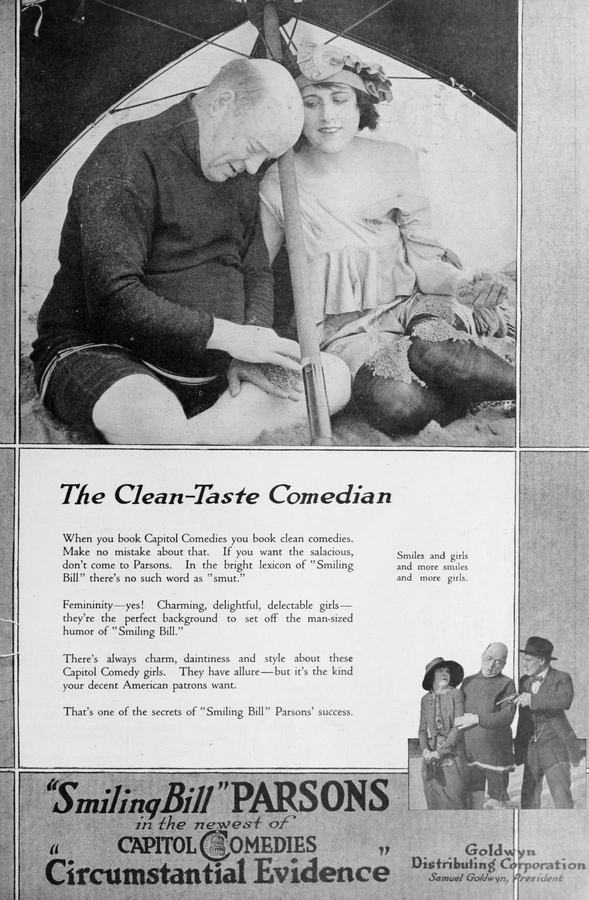
Stepping back into the nascent days of cinematic storytelling, one occasionally stumbles upon a gem whose thematic resonance feels as urgent today as it must have felt a century ago. Tom Bret's 'Circumstantial Evidence,' a compelling legal drama that predates many of the genre's more celebrated entries, offers precisely such an experience. It's a film that, despite the technological limitations of its era, manages to construct a narrative of profound psychological tension and moral ambiguity. This isn't just a historical curiosity; it's a testament to the enduring power of a well-crafted story and the indelible impact of a performance that transcends the silent screen's inherent challenges.
At its core, 'Circumstantial Evidence' is a meticulous dissection of a man's descent into a judicial nightmare, propelled by a series of events that, when viewed in isolation, appear damning. Our protagonist, Arthur Sterling, brought to life with a nuanced intensity by William Parsons, is a man of ambition, perhaps a touch too eager to climb the rungs of societal success. His world is turned upside down following the brutal murder of Mr. Alistair Finch, a titan of industry whose influence cast a long shadow over the burgeoning metropolis. Sterling, unfortunately, becomes the prime suspect, not through direct confession or eyewitness testimony, but through an insidious confluence of coincidences that weave a tapestry of guilt almost impossible to untangle.
The film's genius lies in its relentless accumulation of these 'facts.' We witness the discovery of Sterling's fingerprints on the very letter opener used as the murder weapon, an item he had innocently handled during a prior, heated business discussion with Finch. The disappearance of a substantial sum of money, precisely what Sterling needed to stave off financial ruin, from Finch's study further solidifies the prosecution's case. And, perhaps most damningly, a servant's recollection of a furious argument between Sterling and Finch just hours before the murder paints a vivid picture of motive and opportunity. Bret, as the writer, masterfully constructs this edifice of suspicion, demonstrating how easily truth can be distorted when viewed through the lens of prejudice and incomplete information. It's a narrative strategy that echoes the intricate plotting seen in later legal thrillers, proving that the foundations of such storytelling were laid remarkably early in cinema's history.
William Parsons' portrayal of Arthur Sterling is nothing short of captivating. In an era where histrionics often dominated silent film acting, Parsons delivers a performance imbued with a quiet desperation that feels remarkably modern. He doesn't merely act out the plot; he embodies the psychological torment of a man watching his life unravel, powerless against the tide of public opinion and legal machinery. His eyes, in particular, convey a depth of emotion – from initial disbelief to crushing despair, and finally, a flicker of defiant hope – that transcends the lack of spoken dialogue. This isn't the broad theatricality one might associate with some contemporaries; instead, Parsons opts for a more internalized suffering, allowing the audience to truly empathize with Sterling's plight.
One could draw parallels between Parsons' nuanced approach and the restrained intensity seen in films like The Cheat, where characters navigate moral quandaries with a similar internal struggle, even if the thematic context differs. Parsons brings a palpable vulnerability to Sterling, making his fight for vindication not just a legal battle but a deeply personal one. His performance anchors the film, providing the emotional core that prevents the intricate plot from becoming merely a series of events. It’s a testament to his skill that, even without a single spoken word, the audience feels the weight of every accusation, the sting of every doubt cast upon his character.
Tom Bret, as the architect of this intricate narrative, deserves significant commendation. His screenplay for 'Circumstantial Evidence' is a masterclass in suspenseful construction, demonstrating a keen understanding of how to build tension incrementally. Bret doesn't rely on cheap thrills; instead, he meticulously lays out the evidence, piece by damning piece, allowing the audience to experience the same sense of dread and inevitability that Sterling himself feels. The pacing is deliberate, allowing moments of quiet contemplation to punctuate the escalating drama, a technique that enhances the overall impact.
The characterizations, though perhaps less verbose than modern scripts, are remarkably effective. Sterling is not presented as a paragon of virtue, nor as an irredeemable villain. He is a flawed human being, making his predicament all the more relatable. The supporting characters, from the steadfast fiancée Eleanor Vance to the conniving business rival Reginald Thorne (the true puppet master behind Sterling's downfall), are sharply drawn, each serving a distinct purpose in advancing the complex plot. Bret's ability to weave these threads into a coherent, compelling tapestry speaks volumes about his storytelling prowess. His narrative precision, in some ways, anticipates the intricate legal machinations found in later films like Fate's Frame-Up, where the protagonist is similarly caught in a snare of manipulated reality.
Beyond the script and performances, the film's direction and cinematography play a crucial role in its effectiveness. The use of close-ups, particularly on Parsons' face during moments of intense emotion or during the trial, draws the audience directly into Sterling's psychological state. The framing of shots often emphasizes Sterling's isolation, his small figure dwarfed by imposing courtroom architecture or the vast, indifferent cityscapes, visually reinforcing his vulnerability against powerful forces. The editing, while perhaps not as rapid-fire as contemporary cinema, is judicious, building suspense through well-timed cuts and cross-cutting between different plot strands.
The film's visual style, while rooted in the aesthetic conventions of its time, showcases an early understanding of how to use the camera not just to record, but to interpret and evoke. The dimly lit interiors, the stark contrasts between light and shadow, all contribute to an atmosphere of foreboding and uncertainty. This visual language is particularly effective in the courtroom scenes, where the weight of the proceedings is conveyed through the solemn expressions of the jury, the stern demeanor of the judge, and Sterling’s increasingly desperate pleas. It’s a subtle yet powerful evocation of the legal drama, a genre that would continue to evolve but rarely lose sight of these fundamental visual principles. In this regard, it shares a certain dramatic gravitas with films like When Doctors Disagree, which also explored high-stakes conflicts through careful visual composition.
Beyond its thrilling plot, 'Circumstantial Evidence' serves as a fascinating social document, reflecting anxieties about justice, the power of the press, and the fragility of reputation in an increasingly complex society. The film implicitly critiques the legal system's reliance on 'facts' that can be easily manipulated or misinterpreted, highlighting the very human element of error and bias that can infect even the most rigorous proceedings. The ease with which Sterling is condemned by public opinion, fanned by sensationalized headlines (though not explicitly shown, it’s implied by the narrative's momentum), speaks to a timeless concern about trial by media.
This theme resonates deeply with other films of the era that explored societal injustices or the plight of individuals caught in larger systems. While not a direct comparison, one might consider the broader social commentary found in films such as The Yellow Menace, which, despite its problematic racial undertones, dealt with public fear and manipulation, or even His Picture in the Papers, which playfully satirized the obsession with public image. 'Circumstantial Evidence,' however, approaches these themes with a somber gravity, reminding us that the consequences of misjudgment can be devastating. It posits a world where truth is not always self-evident, and where the appearance of guilt can be just as destructive as guilt itself. The eventual vindication of Sterling, while providing narrative closure, doesn't entirely erase the chilling notion that countless others might not have been so fortunate.
'Circumstantial Evidence' stands as a powerful example of early cinema's capacity for sophisticated storytelling and profound thematic exploration. Tom Bret's taut script, coupled with William Parsons' compelling performance, creates a film that transcends its silent origins. It's a reminder that the fundamental elements of compelling drama – character, conflict, and consequence – are timeless. The film's examination of how easily a man's life can be shattered by a mosaic of misinterpretations remains chillingly relevant in an age saturated with information, where snap judgments and confirmation bias often dictate public discourse. It compels us to question what we perceive as 'truth' and to be wary of the seductive power of a seemingly coherent, yet ultimately false, narrative.
While it may not possess the sprawling epic scope of something like The Adventures of Buffalo Bill, or the dramatic intensity of a romance like Blazing Love, its focused intensity on the individual's battle against an unjust system gives it a unique and lasting power. It’s a film that demands close attention, rewarding viewers with a deeply satisfying, albeit unsettling, journey into the heart of human fallibility and the enduring quest for justice. For anyone interested in the evolution of legal dramas, the art of silent film acting, or simply a gripping story well told, 'Circumstantial Evidence' is an essential viewing experience that continues to resonate with undeniable force.
IMDb —
1933
Community
Log in to comment.