DbcultAccessing Vault...
Cult Review
Senior Film Conservator
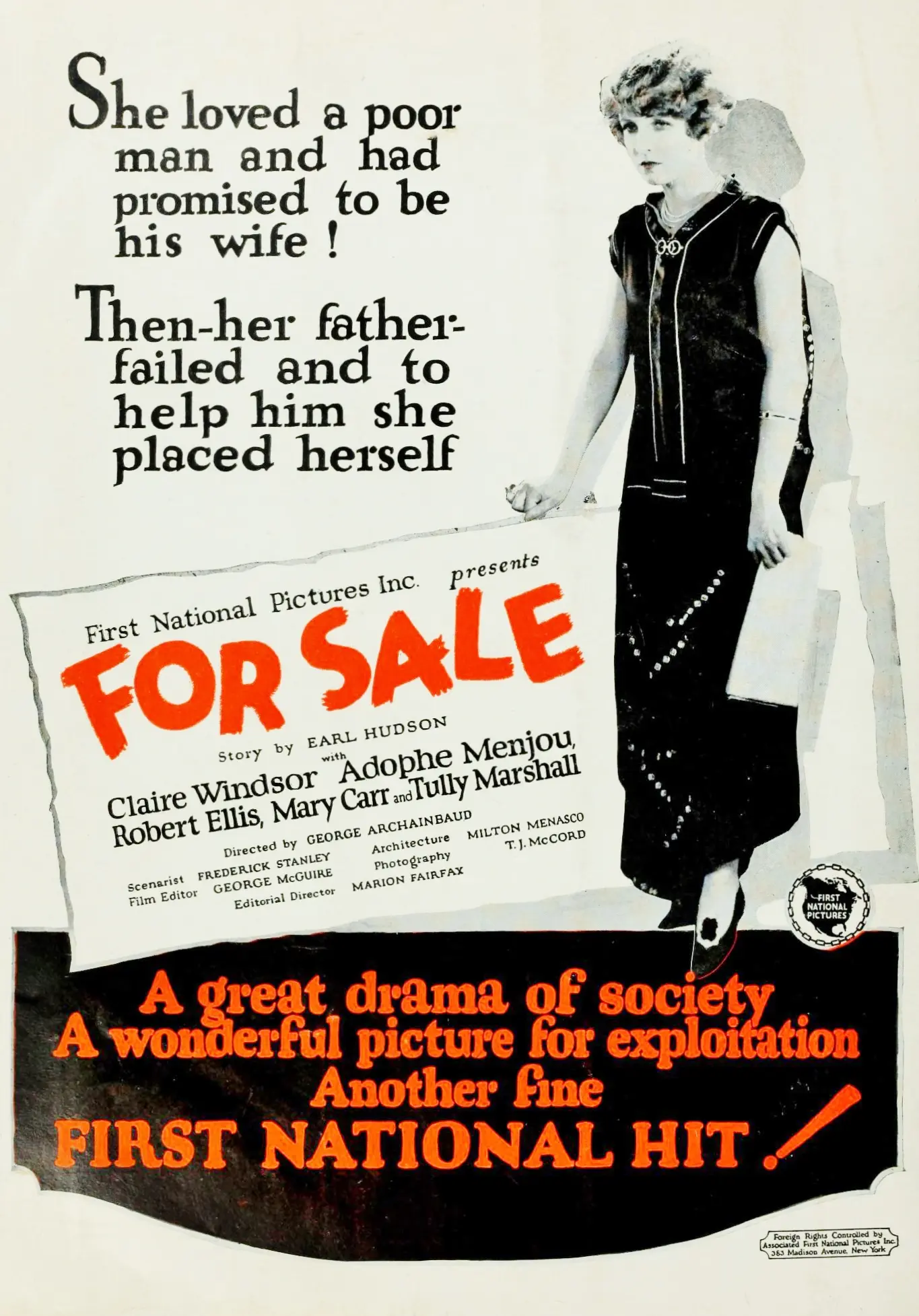
For Sale (1924) is a poignant and intricate exploration of the social and personal ramifications of financial ruin in the upper echelons of early 20th-century American society. The film, directed by Fred Stanley and Earl Hudson, centers on the Bates family, whose rigid adherence to societal norms and expectations is tested when their substantial wealth is suddenly depleted. This narrative not only captures the emotional turbulence within the family but also reflects the broader societal shifts of the time.
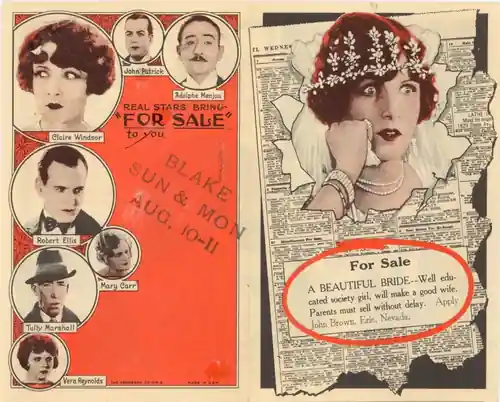
Central to the story is Harrison Bates, a man of considerable social standing and influence, alongside his wife, who together form a seemingly unassailable social and financial power couple. Their daughter, Eleanor, is introduced as an embodiment of the dutiful and well-reared daughter, agreeing to delay her marriage in the hope that her fiancé, Allan Penfield, will achieve a measure of success. The film’s narrative is meticulously constructed around the revelation of the Bates family’s financial collapse, a revelation that propels the plot forward and unravels the carefully maintained facade of their lives.

The cinematography, though perhaps basic by modern standards, effectively encapsulates the opulence and subsequent desolation of the Bates household. The visual storytelling is complemented by a cast of seasoned actors, including John Patrick as Harrison Bates, Frank Finch Smiles as the family’s butler, and Adolphe Menjou as a local businessman involved in the Bates’ financial downfall. Together, these performances bring layers of nuance to the characters, particularly in their reactions to the sudden change in their circumstances.
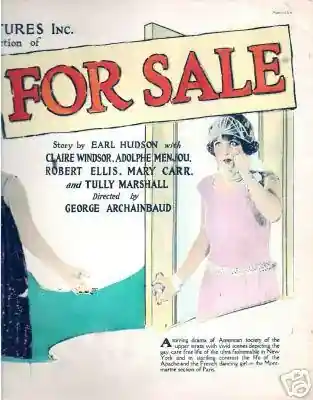
One of the film’s most compelling aspects is its exploration of the ethical dilemmas faced by the characters. With the family’s fortunes in shambles, Eleanor must reconsider her future, and Allan must confront the reality of their relationship without the financial security they once enjoyed. The narrative is further enriched by the introduction of supporting characters, such as Justine Valse and Marga Rubia Levy, who add depth to the social fabric of early 1920s America. Their interactions with the main characters provide a broader context for the film’s themes, including class, ambition, and the fragility of social status.
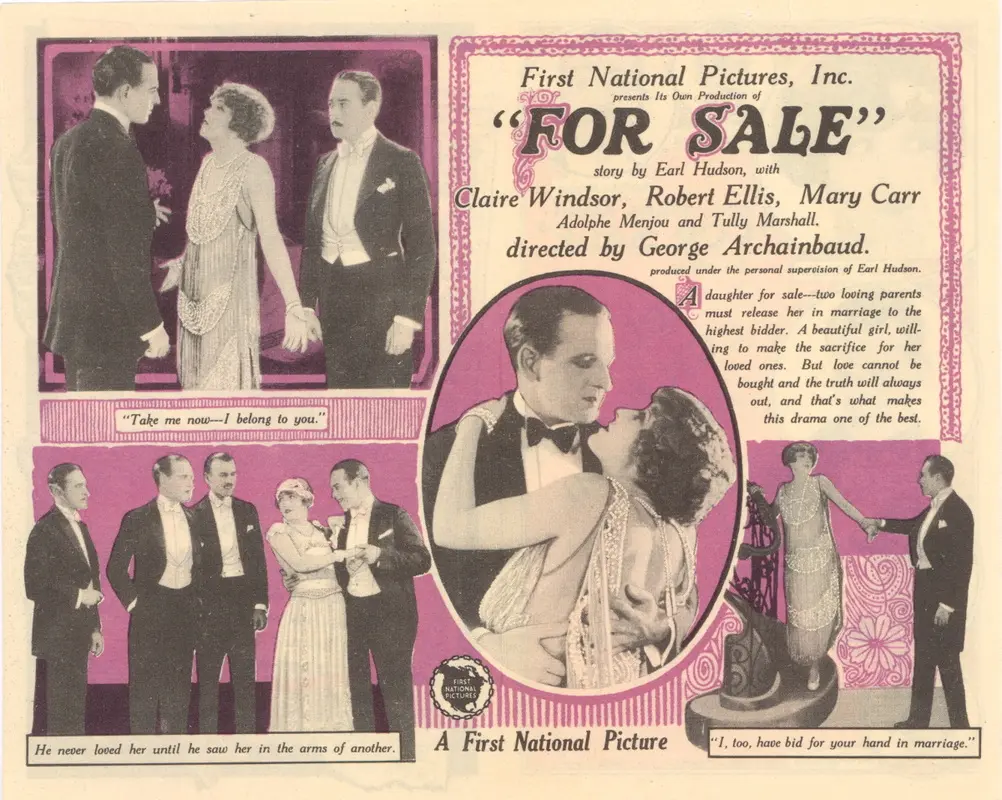
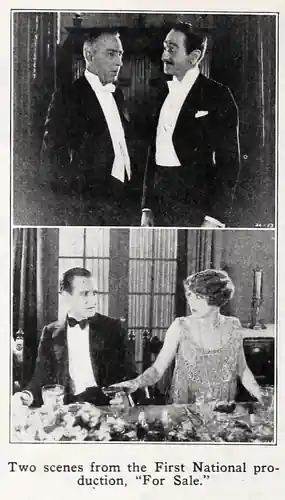
The film’s pacing is deliberate, allowing for a thorough examination of the characters’ inner worlds and the dynamics of their relationships. This approach is particularly effective in scenes that showcase the emotional turmoil within the Bates household, as well as the external pressures from creditors and social peers. The dialogue is rich in detail, reflecting the era’s formal and intricate social conventions, while still conveying the raw emotions of the characters.
Comparatively, Pace That Kills, another film from the same era, shares thematic similarities with For Sale in its exploration of financial ruin and its impact on family dynamics. However, For Sale delves deeper into the moral and ethical questions surrounding the loss of social standing, offering a more nuanced portrayal of the characters’ struggles. Similarly, Madame Du Barry and Pace That Kills provide contrasting yet complementary perspectives on the social and economic conditions of early 20th-century America.
Ultimately, For Sale is a remarkable piece of early silent film that remains relevant for its insightful portrayal of the complexities of family life and the societal expectations placed upon individuals. The film’s ability to balance historical context with relatable human emotions makes it a must-see for film enthusiasts and students of history alike. As audiences, we are invited to reflect on the enduring themes of ambition, morality, and the human capacity to endure change, all within the framework of a beautifully crafted narrative that transcends the limitations of its time.

IMDb 6.7
1936
Community
Log in to comment.