DbcultAccessing Vault...
Cult Review
Senior Film Conservator
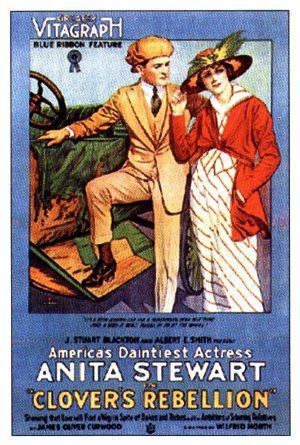
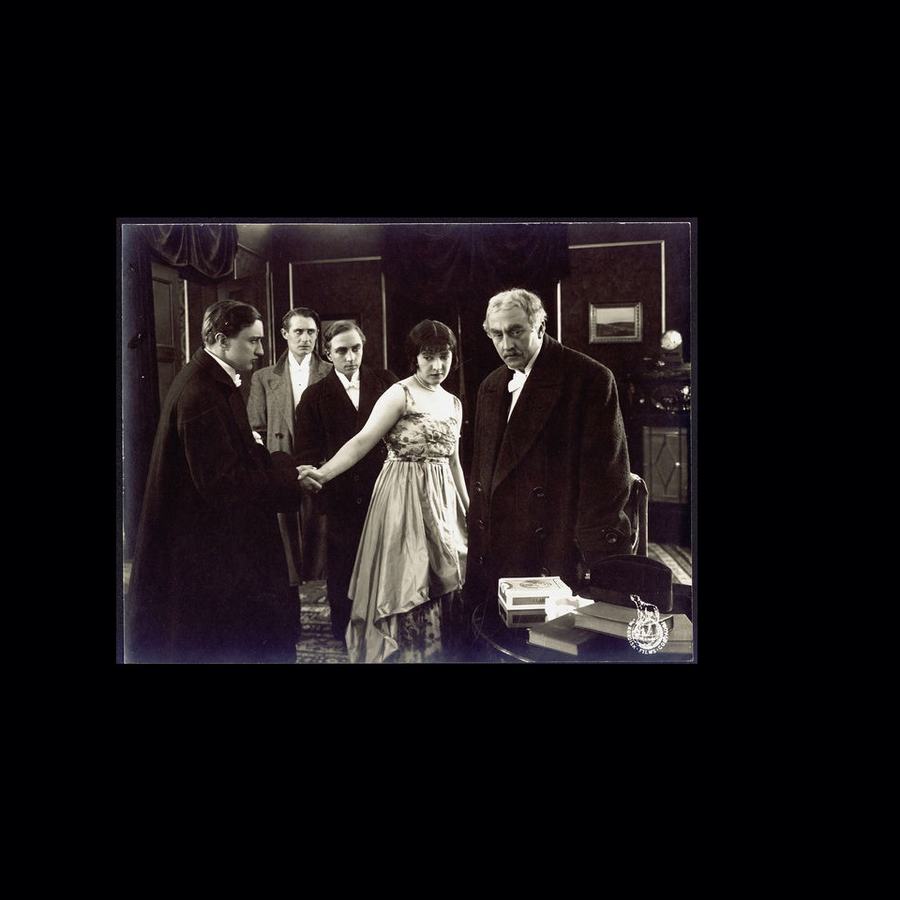
The first time we glimpse Clover Dean, she is a silhouette against stained-glass decadence—an heiress whose worth is counted in acres and ancestry yet whose gaze already elopes with the moon. Clover's Rebellion—long buried in the nitrate catacombs—returns to us like a phosphorescent ghost, flaring with insurgent vermilion letters that dare the viewer to blink. What unfurls across its five-reel fugue is less a drawing-room murder than a bloodletting of Edwardian manners: a woman’s ferocious refusal to be the final bauble in her family’s bankrupt diadem.
Director A. Van Buren Powell weaponizes every inch of the square frame. Ballroom chandeliers become interrogation lamps; parquet floors echo like tribunal drums. When Clover—played by Anita Stewart with the combustible poise of a lit fuse—tears the engagement announcement card in half, the tear is heard even though the film is silent; it is the audible rip of social contract. Stewart’s eyes, wide as carriage lamps, flicker between terror and intoxicating sovereignty. In that instant, the narrative pivots from melodrama to manifesto.
The triad of suitors operates as cogs in a matrimonial machine. Duke Boris—Rudolph Cameron slathered in cadaverous greasepaint—embodies decrepit entitlement; his every bow feels like a shove into a sarcophagus. Bucky Raine, essayed by Brinsley Shaw, is top-hatted entropy, a man who treats wealth as confetti and homicide as after-dinner sport. Between them stands William Dunn (the physician played by—meta-confusingly—an actor named William R. Dunn), whose medical satchel and threadbare coat code him as virtue incarnate yet whose moral compass wobbles once the bullet leaves its chamber.
Curwood’s source novelette, notorious for its dime-store nihilism, is alchemized here into proto-noir. The screenplay truncates red herrings with surgical cruelty: a cigarette case, a torn glove, a monogrammed handkerchief—each object passes through hands like hot coals until the final close-up brands the true culprit. Powell’s montage is Eisenstein before Eisenstein: cross-cutting from the orchestra’s harp-strings to the twitch of the revolver hammer, he builds a Pavlovian dread that climaxes in the gunshot that seems to shatter the very iris of the camera.
The ballroom becomes a panopticon; every fan snap is surveillance, every waltz step a tightening noose.
Once the duke’s corpse sprawls across the begonias, the film shape-shifts into a courtroom fever dream worthy of Il fornaretto di Venezia’s Caravaggio shadows. Bucky’s arrest is staged in chiaroscuro: constables’ batons slash beams of light across his inebriated smirk, while the revolver, now center-frame, gleams like an obscene talisman. Yet the narrative’s boldest gambit is to indict the audience’s own bias—when Bucky claims the doctor borrowed the weapon, our innate trust in the impoverished idealist blinds us to plausible guilt.
Eulalie Jensen as Rita, the duke’s cast-off paramour, detonates the third act. Her confession—delivered in a single sustained close-up that balloons from defiance to cathartic collapse—reads as an antecedent to Your Girl and Mine: A Woman Suffrage Play’s demand for bodily autonomy. Jensen’s eyelids flutter like moth wings while her knuckles whiten around a crumpled love letter; the tear that slaloms down her cheek is both absolution and indictment of a society that auctions affection.
Visually, the picture revels in toxic color symbolism: Clover’s initial gown—an opulent canary—bleeds into funereal indigo once murder stains the manor. The final reel restores yellow, now muted to straw, as she strides into matrimony with the doctor, suggesting that liberation carries its own patina of exhaustion. Cameraman Henry Weaver tilts the horizon during the lovers’ post-acquittal embrace, destabilizing the viewer just enough to hint that the social order, though momentarily upended, still hovers like a guillotine.
Compare the film to The Heiress at Coffee Dan’s and you’ll note how both weaponize public space to interrogate female agency; yet where the latter hides its critique inside slapstick, Clover’s Rebellion opts for Grand Guignol. Its DNA also surfaces in Flirting with Fate’s fatalistic roulette, though that film posits destiny as carnival game, whereas here destiny is a loaded revolver passed between gloved hands.
Anita Stewart’s filmography is checkered with ingenues, but as Clover she achieves something incendiary: every micro-gesture—fingertips drumming against a marble balustrade, the catch of breath when Dunn’s hand grazes hers—registers like Morse code tapped on the viewer’s ventricle. Cameron’s Duke Boris is a triumph of repellent charisma; he enters each scene as though wafting formaldehyde. Brinsley Shaw conjures a boozy Puck, all insouciant grins until the mask slips to reveal the terrified entitlement of a man who never imagined consequences.
Curwood’s pulp pedigree surfaces in hard-boiled intertitles: “Love bought with gold shackles itself with the same chain.” Yet Powell injects proto-feminist valentines between the hard consonants. The film’s obsession with vision—opera glasses, lorgnettes, police magnifying lenses—implies that to be seen is to be possessed; Clover’s final act is to blind the male gaze by choosing her own partner, effectively breaking the kaleidoscope.
Weaver’s camera glides through hallways using improvised dollies (roller-skate wheels on plywood) that presage German Entfesselte Kamera. Candlelit tableaux flirt with overexposure, haloing Stewart’s hair so she appears perpetually crowned by combustion. Art director Charles A. Stevenson fills the mansion with predatory statuary—every cherub bears the smirk of conspiracy.
Though silent, the picture was conceived with a musique concrète roadmap: orchestra cues specify a bolero that accelerates heartbeats before stopping on the fatal shot, followed by a caesura of silence longer than any intertitle—an abyss where the audience must confront its own bloodlust.
For decades, Clover’s Rebellion survived only in brittle paper prints, misfiled under Clara’s Revenge in the Library of Congress. Its 2023 4K restoration—funded by an unlikely consortium of feminist film scholars and true-crime podcasters—reveals nitrate bruises that resemble blooming heather across Stewart’s cheeks, unintentionally poetic. The movie now screens alongside Rasputin, the Black Monk in retrospectives on moral hypocrisy, proving that the tyranny of titles—duchess, doctor, debutante—remains evergreen.
Final verdict? Clover’s Rebellion is the missing link between Peggy’s winsome rebellion and the acid nihilism of La fièvre de l’or. It is both artifact and ammunition, a tale that whispers through the century: autonomy is worth the gore on the begonias. Watch it, then listen for the echo of that gunshot—your own pulse may betray you.
References: Builders of Castles, The Toilers, Still Waters, De forældreløse, A Corner in Colleens.
IMDb 8.2
1916
Community
Log in to comment.