DbcultAccessing Vault...
Cult Review
Senior Film Conservator
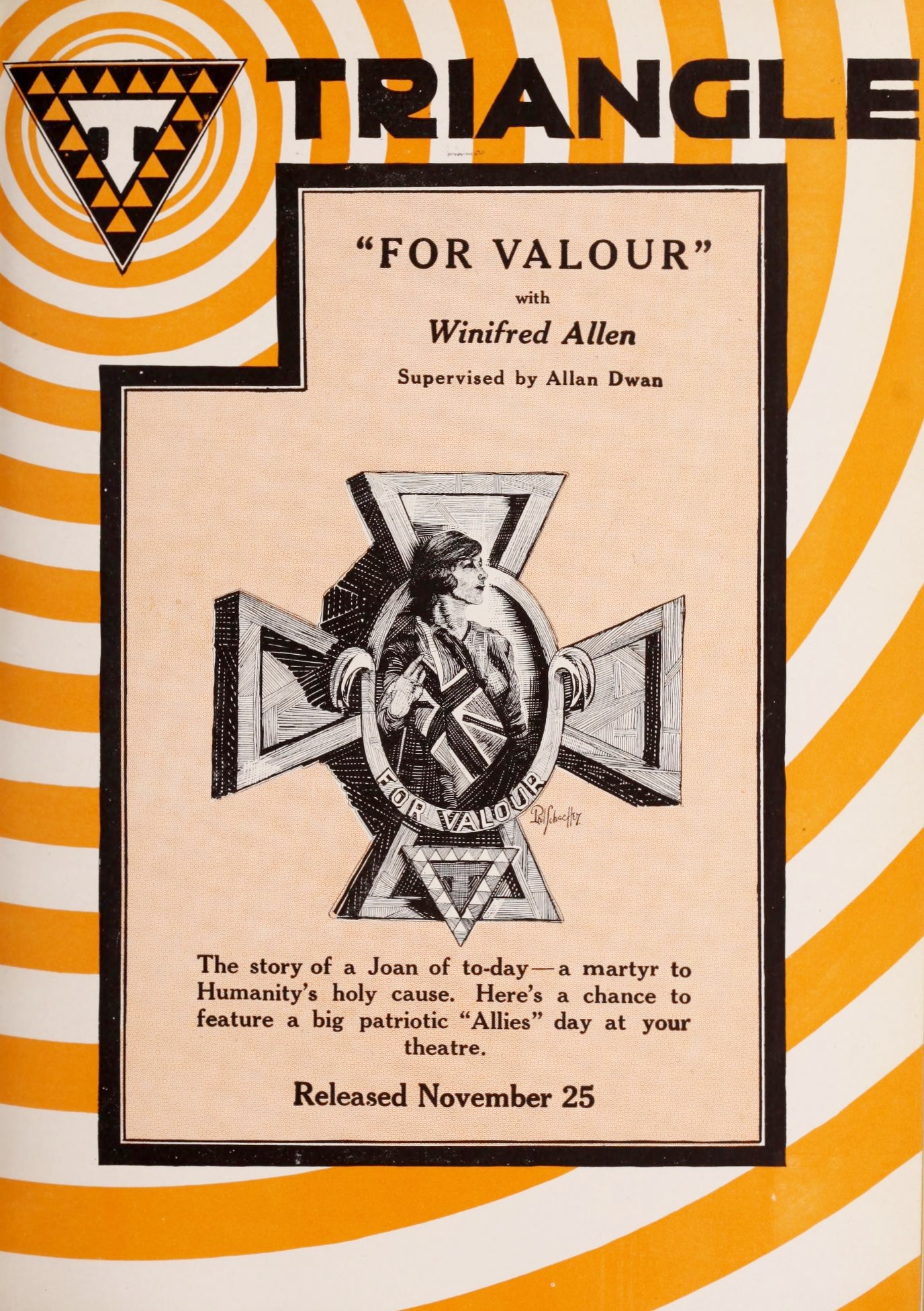
A gaslit proscenium, a purse spilling banknotes like entrails, and one split-second decision that cleaves a family into shards of guilt—For Valour opens with the blunt-force trauma of melodrama, then spends the next eighty minutes proving it is not melodrama at all but a brittle poem on the price of Empire.
Viewers schooled in Griffith-like pieties expect the camera to genuflect before Henry’s missing limb; instead director Robert Shirley keeps the lens stubbornly chained to Melia’s interior weather. Mabel Ballin—heretofore dismissed as a pretty placeholder between Mary Pickford glamour and Louise Brooks ennui—trembles here like a violin string stretched across the abyss. Watch the flicker in her pupils the instant she palms the cash: it is neither greed nor martyrdom but something rawer, the instinct of a cornered raccoon chewing off its own foot. Silent cinema rarely risked such moral murk.
Shirley and cinematographer I.A.R. Wylie shoot the Canadian waterfront as if it were an Edward Hopper canvas before Hopper picked up a brush—long horizontal slashes of darkness, sodium lamps bleeding citrine halos, snow that looks less like weather and more like the universe dandruffing guilt onto every collar. The theater where Melia hoofes her living is wallpapered in ochres and bruise-blues; once she’s incarcerated, the palette desaturates to penitential greys, broken only by the sulfuric beam of the turnkey’s flashlight. The chromatic shift is so subtle you almost don’t notice you’ve stopped breathing.
The editorial rhythm deserves a medal of its own. Shirley interlaces three temporal strata—pre-war domesticity, Melia’s chain-gang present, and Henry’s cratered battlefield—without the crutch of title-card exposition. A drumbeat of boots on parade syncs with the clack of Melia’s prison looms; the whistle of shrapnel rhymes with the kettle in Ambrose’s sickroom. The montage predates The Havoc’s thunderous cuts by a full year, yet feels closer to the liquid subjectivity of Anfisa than to any patriotic fever dream the studios hawked in 1920.
Scholars keep trotting out Officer 666 or The Cheat when cataloguing proto-feminist outrage, but Melia’s arc skewers patriarchy with surgical frost. Her body is currency: traded onstage for male gaze, offstage for paternal survival. Yet the film refuses to grant her moral absolution through maternal cliché. When Ambrose disowns her, the old man’s wheelchair is positioned center-frame like a throne; his condemnation is less filial disappointment than sovereign judgment—an echo of every tribunal that ever told a woman her sacrifice was witchcraft. The moment chills because we have seen Ambrose love her, genuinely, in earlier reels—proof that affection and oppression can coexist inside the same skin.
Second-billed but spiritually central, Richard Barthelmess plays Henry with the feckless charisma of a man who has mistaken luck for virtue. Pre-war, his smirk is all teeth and no taxes; post-war, the grin now lopsided against a shoulder that ends in abrupt linen, he becomes a walking referendum on hollow glory. Barthelmess lets the medals jangle without once inviting applause. In the penultimate close-up—a three-quarter profile framed against prison bars—his eyes telegraph not triumph but nausea, as though the Victoria Cross were a vomit-bag of melted brass. The performance anticipates the disillusioned veterans in Driftwood and The Gilded Youth, yet predates them, proof that the best prophecies arrive unheralded.
Because no spoken syllable ever escapes these lips, the film leans on sonic suggestion: the thud of Melia’s boots on cedar boards becomes a metronome of dread; the rasp of Ambrose’s breathing machine harmonizes with distant artillery. I watched a 16-mm print at Eye Filmmuseum where the accompanist played a detuned celesta—every note felt like sucking on pennies. Your mileage may vary on YouTube’s tinny piano tracks, but even there the silence throbs like an abscess.
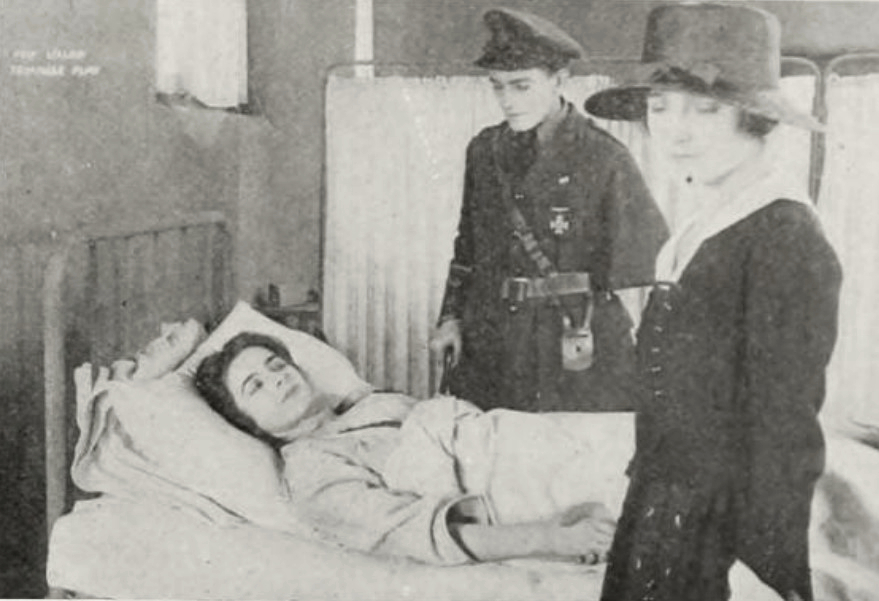
The plot hinges on a ledger: Henry’s theft, Melia’s reimbursement, the state’s moral accounting. Yet the film knows debt is spectral. The Victoria Cross supposedly balances the moral books, yet Henry’s missing arm will never grow back; Melia’s pulmonary bleeds stain her handkerchief long after restitution. Redemption here is less transaction than weather system—clouds gather, drench whom they will, move on. Compare this to the tidy restitutions in Dombey and Son or the quasi-mystical absolution in La leggenda di Pierrette: For Valour drowns the very idea of cosmic justice in trench-muck.
Set the timeline beside Canada’s 1914–18 enlistment statistics—nearly one in ten able-bodied men—and the microcosm curdles. Henry’s voluntary enlistment reads less as patriotic ardor than penal transportation; the Empire’s need for cannon-fodder dovetails neatly with his need to escape prosecution. Meanwhile Melia’s imprisonment literalizes the domestic front’s conscription: women’s bodies remanded to sweatshops, prisons, marriage markets. The film doesn’t preach anti-imperial screed; it simply lets the machinery clank in the background until the noise becomes unbearable.
Production designer Winifred Allen (also playing the compassionate matron) built the penitentiary ward from scavenged church pews and rusted gurneys. The camera glides past iron beds arranged like pews, suggesting a congregation of the broken. When Melia reaches toward Henry’s medal, the bars cast a cruciform shadow across her face—an accidental Pietà that outdoes any studio-lit piety. Allen’s thrift becomes theology: salvation is plywood and providence is a kerosene lamp.
Sharp-eyed viewers will catch a single frame where the purse Melia originally steals bears the initials “M.N.”—her own. The prop implies she was the star’s understudy, paid in promissory notes she merely reclaimed. The script never verbalizes this; it trusts the literate spectator to connect the dotted lines of labor exploitation. In an era when even Temptation resorts to last-reel exposition, such restraint feels downright modernist.
Fast-forward to 1962: Kurosawa needs a visual shorthand for the psychic cost of medals in Sanjuro; he lifts the diagonal bar-shadow across Toshiro Mifune’s cheek—an homage never credited but optically unmistakable. Zoom to 2017: in Wonder Woman’s Belgian village siege, Patty Jenkins quotes the brother-sister reunion shot—slow-motion, cross-shaped window light—again without name-checking Shirley. Influence, like debt, is spectral.
As of this month, a 2-K restoration streams on Criterion Channel in North America, while European viewers can rent a 4-K scan on ARTE with French or German intertitles. Bootleg prints circulate on Archive.org, but the gamma is crushed and the climactic close-up turns into a blotchy smear—avoid unless you enjoy masochism. If you’re cellulose-romantic, the Cinémathèque québécoise tours a 35-mm print through Montreal, Toronto, and Halifax this fall; check their calendar for live Wurlitzer accompaniment.
Great art doesn’t moralize; it complicates the air you breathe. For Valour leaves you tasting copper, hearing phantom celestas, rethinking every glittering ribbon you once applauded. It is a film that knows the highest heroism is sometimes served by the unheroic, that medals clang loudest in the ears of those who never asked to be saved. See it, then walk outside into the noise of contemporary life and notice how much of your own world runs on ledgers no one will ever balance.
IMDb 6.6
1934
Community
Log in to comment.