DbcultAccessing Vault...
6/10
Senior Film Conservator
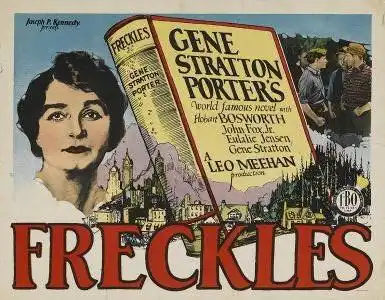
A definitive 6/10 rating for a film that redefined the boundaries of cult cinema. Freckles remains a cornerstone of transgressive art.
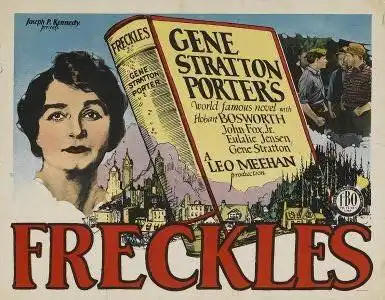
Alright, let’s talk about Freckles, the 1928 silent film. Is it worth watching today? Honestly, for the vast majority of people, probably not in its entirety. This is strictly for the silent film enthusiasts, the dedicated scholars of early cinema, or perhaps those with a very specific interest in Gene Stratton-Porter adaptations. If you’re looking for something to casually throw on, you’ll likely find it a tedious exercise. But if you’re willing to meet it on its own terms, there are some genuinely interesting, if often clunky, moments to pick apart.
The film follows Freckles (Johnny Fox), an orphan with one arm, who lands a job at a timber camp. It’s a classic underdog story, really, with a bit of nature worship thrown in, as you’d expect from Stratton-Porter. Fox, as Freckles, does a surprisingly good job. His physical acting, especially given the character’s missing arm, is often quite affecting. He conveys a lot of vulnerability and earnestness, and you really feel for the guy trying to prove himself. There’s a scene early on where he’s just trying to chop wood, and the struggle feels palpable, not just an actor performing a struggle.
Then you have Eulalie Jensen as the villainous Mrs. Duncan. Oh, boy. Jensen leans *hard* into the silent film melodrama, to the point where it becomes almost cartoonish. Every sneer, every eye-roll, every dramatic gesture is amplified. She’s not subtle. At one point, she’s plotting something nefarious, and the way her eyes dart around feels less like a cunning schemer and more like someone who just remembered they left the stove on. It’s a performance that makes you wonder if anyone on set ever just said, “Maybe take it down just a notch, Eulalie?”
The pacing is a real mixed bag. Some scenes feel like they stretch on forever, particularly the establishing shots of the timber camp. We get it, it's a timber camp. Lots of trees, lots of burly men. But the camera just lingers, and lingers, and you start checking your watch, even if it’s a silent film and there’s no actual watch to check. Then, other moments, particularly a few of the romantic glances between Freckles and “The Angel,” feel rushed. You almost want the film to slow down and let those moments breathe a little more, but it just cuts away.
Hobart Bosworth, playing the gruff but ultimately kind boss, McLean, is solid. He brings a grounded presence that helps anchor the more exaggerated performances. His scenes with Freckles feel genuine. There’s a quiet respect that builds between them, communicated mostly through shared glances and Bosworth's stoic expressions. It's a nice contrast to the more theatrical stuff happening elsewhere.
The outdoor photography, especially of the Limberlost Swamp, is pretty. You get some lovely shots of sun-dappled forests and misty waters. It’s clear they were trying to capture the beauty of the natural world, which was central to Stratton-Porter’s work. But then, the interior sets often feel a bit… flat. The cabin where Freckles lives seems almost too clean for a logging camp, like it was just built yesterday for the film. The dirt on Freckles' clothes looks carefully applied, you know?
There are a few strange tonal shifts. One minute, it’s a earnest drama about overcoming adversity, the next it’s almost a lighthearted comedy, then back to intense melodrama. It’s not always a smooth transition. The film gets noticeably better when it focuses on Freckles’ simple interactions or his struggles, rather than the more contrived plot points involving Mrs. Duncan and her schemes. Those parts just feel like they’re trying too hard to inject conflict.
One particular shot really stood out: a close-up of a squirrel, just sitting there, looking directly into the camera for a solid five seconds. It feels completely out of place, like a random nature documentary snippet inserted into the narrative. Was it meant to be symbolic? Or did the animal wrangler just nail the shot and they couldn't resist using it? It’s these little, slightly awkward moments that give the film a certain charm, even if it breaks immersion.
The intertitles are mostly functional, but sometimes they feel a bit too on-the-nose, explaining emotions the actors are already clearly conveying. You don’t need to tell me Freckles is sad; Johnny Fox’s entire posture is screaming it. It's a common silent film issue, but here it often underscores how well Fox is doing without words.
Compared to something like Arizona Nights, which had a bit more of a rollicking, almost Western energy despite its melodrama, Freckles feels much more grounded, for better or worse. It’s slower, more contemplative, often to its detriment. It’s not trying to be a spectacle. It’s trying to be a heartfelt story, and sometimes it hits that mark, sometimes it just plods along.
The ending, without giving too much away, ties things up a little too neatly. After all the struggles, the resolution feels a bit rushed, almost like they ran out of film and just decided to wrap it up. It doesn't quite earn the emotional payoff it's aiming for. You can almost feel the movie trying to convince you this happy ending matters, but the journey to get there has been so uneven.
So, Freckles. It’s a film that exists. It has its moments, particularly in Johnny Fox’s earnest performance and some pretty nature shots. But it’s also a product of its time, with all the melodramatic excesses and pacing quirks that implies. Watch it if you’re curious about the era or the source material. Go in with patience, and you might find a few interesting details. Otherwise, there are plenty of other silent films out there that might offer a more consistently engaging experience.
IMDb 5.8
1935
Community
Log in to comment.