DbcultAccessing Vault...
Cult Review
Senior Film Conservator
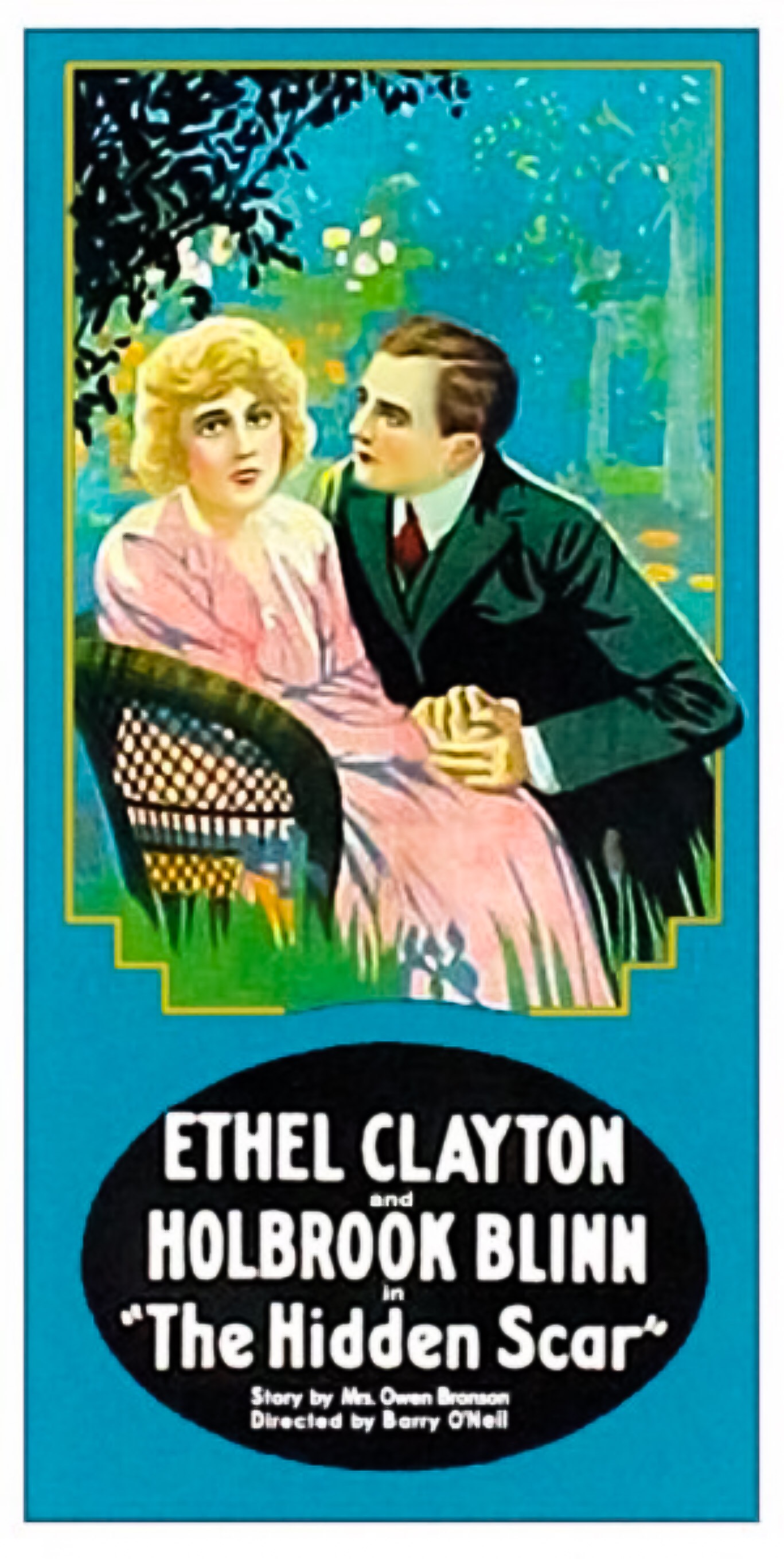
Frances Marion’s screenplay for The Hidden Scar lands like a velvet-covered brick: sumptuous to the eye, bruising to the conscience. Shot through with the chiaroscuro morality of post-Victorian America, the narrative weaponizes the very vocabulary of church parables—confession, penance, resurrection—then detonates them inside a marriage that was never given honest foundations.
From the first iris-in on Janet (Ethel Clayton) silhouetted against a rain-streaked window, director Irving Cummings announces his intent: this is not a tale that will coddle the righteous. The camera lingers on Janet’s trembling hand as she folds a tiny sweater—her child’s, sired in the shadowy margins of respectability—while the church bell across the square tolls a tinny benediction. The irony is as caustic as lye.
Enter Dale Overton, essayed by Holbrook Blinn with the kind of patriarchal serenity that curdles instantly under scrutiny. His courtship sermons—delivered in a set that replicates a New England chapel so faithfully you can almost smell the varnished pine—become the film’s moral battleground. Marion’s intertitles, lettered in faux-scripture font, crown him “an exemplar of compassions divine,” a pronouncement that will later hiss like radiator steam when compassions collapse.
The marriage proposal sequence is a masterclass in silent-era psychology. Dale stands in a doorway backlit by haloed sunlight; Janet occupies the foreground amid quilting scraps, her bastard child literally under the table, clutching her skirt. Cummings cross-cuts between Dale’s outstretched hand and the child’s ink-black eyes until the spatial triangulation feels like jurisprudence: accept the hand, exile the child; keep the child, lose salvation. The montage freezes on Janet’s nod—a consent extracted under metaphysical duress.
Once wed, the film’s palette shifts from sepia piety to tungsten tension. Cinematographer Gilbert Warrenton floods parlors with jaundiced light that pools like spilled confession. Shadows of latticework wallpaper stripe Janet’s face, a visual scar prefiguring the verbal one to come. The child—sent to live with a paid guardian—becomes the repressed that always returns, first as a letter stamped RETURN TO SENDER, then as village gossip whispered behind lace fans.
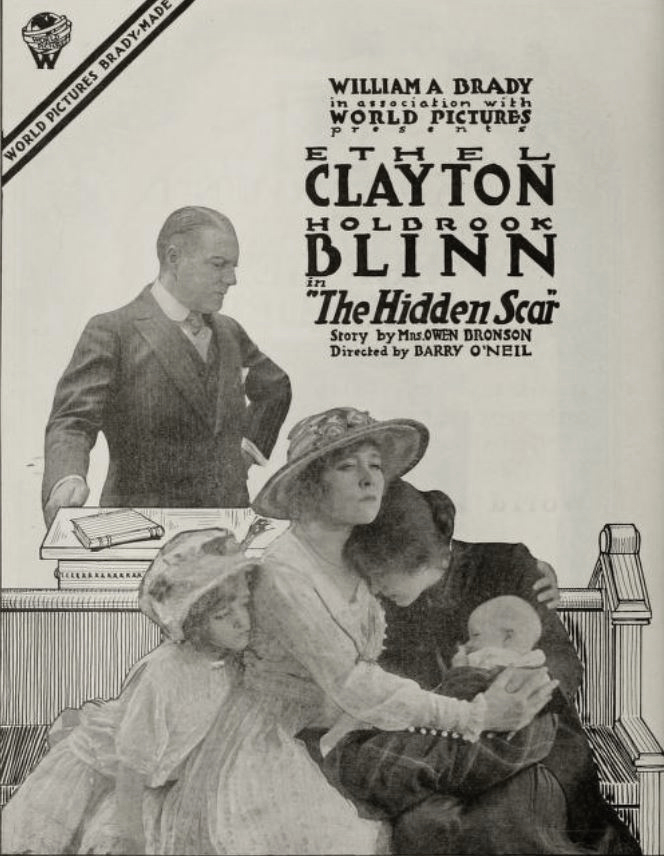
The moment of disclosure is staged like a secular crucifixion. During a harvest fair, Stuart Doane (Montagu Love)—a cynical doctor whose atheism is played with seductive swagger—presents Dale with a battered locket containing the infant’s portrait. Cummings pushes the camera so close to Blinn’s face that every capillary dilates; the minister’s smile ossifies into a rictus. In a bravura flourish, the director superimposes Henry Dalton’s deathbed visage over Dale’s own, suggesting that the cuckolded ghost has possessed the cuckolder. The intertitle detonates: “You preached mercy—now practice it.”
What follows is a marital autopsy performed in public view. Dale drags Janet before the congregation, invoking Deuteronomy with spittle-flecked zeal. The crowd, sketched by extras whose faces oscillate between pity and carnivorous curiosity, becomes a Greek chorus in gingham. Notice how Cummings positions the camera at pew-height: the onlookers’ legs form prison bars across the frame, trapping Janet in a pillory of crinoline and moralism.
Janet’s breakdown—rendered through a barrage of dissolves, double-exposures, and stroboscopic cuts—pushes the film into expressionist terrain. Trees bend like supplicants; hymnals flap like crows. Clayton’s performance here is fearless: her eyes sink into bruised crescents, her hands flutter as though plucking invisible harp strings. Contemporary critics dismissed it as hysterionics; today it reads as an unflinching portrait of postpartum shame weaponized by spiritual abuse.
Stuart’s moral reckoning supplies the film’s intellectual spine. Love delivers a monologue—written on a single intertitle of nearly 70 words—that indicts pulpit piety as “theatrical empathy, curtain-called every Sunday.” The camera circles him in a 360-degree pan, a kinetic rarity for 1920, as if cinematography itself is orbiting the logic of his argument. The sequence crescendos with Dale alone in the chapel at dawn, sunlight slicing through stained glass to pattern his hands like blood-guilt. His eventual plea for forgiveness—whispered in a medium-close-up so intimate you can count his beard-shadow—feels less like narrative closure than survival pragmatism.
Comparative context enriches the experience. Viewers who admired the frontier penance of Damon and Pythias will find The Hidden Scar bleaker, less convinced of fraternal loyalty. Conversely, fans of The Unpardonable Sin will recognize a shared obsession with female transgression as social litmus test, though Marion’s script is more surgical in exposing the double standard.
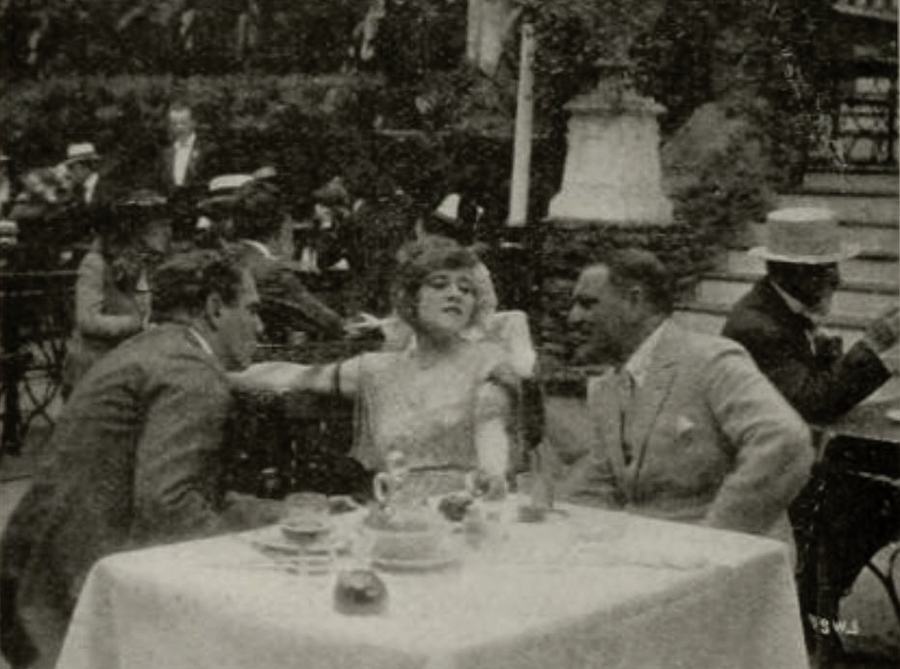
The final reel tracks Janet’s convalescence in a seaside sanatorium. White curtains billow like baptismal sheets; the roar of surf replaces church bells. Dale reads her poetry aloud—“I have been faithful to thee, Cynara, in my fashion”—the decadent irony of Dowson underscoring how tardy absolution can be. When Janet finally stands unaided, Cummings frames her against a window where gulls wheel like white commas punctuating the sky. The last shot—a slow track-in on the couple walking the tideline, holding the now-legitimized child—refuses triumph. Their footprints are erased by each wave, suggesting that redemption is iterative, not conferred.
Performances across the board scintillate. Clayton navigates a 180-degree emotional arc without the aid of spoken word, relying on micro-gestures: the flare of a nostril, the slackening of a shoulder. Blinn essays the minister’s descent from smug certitude to ravished penitent with such gradation that one frame you despise him, the next you glimpse the frightened boy within. Montagu Love supplies wry levity, his cigarette-holder wielded like a secular crosier. Even bit players—Madge Evans as the town’s chief gossip, Edward Kimball as the tremulous deacon—etch indelible cameos.
Technically, the film straddles two cinematic epochs. Its interior sets still bear the floral clutter of 1910s melodrama, yet location footage of Atlantic breakers anticipates the outdoor realism that would flower later in the decade. The tinting strategy is purposeful: amber for domestic interiors, viridian for moments of moral panic, cobalt for the asylum scenes—an early form of chromatic scoring. A restored 4K print, screened at Pordenone in 2019, revealed texture so tactile you could read the salt-spray on Janet’s hospital gown.
Thematically, The Hidden Scar prefigures modern debates about purity culture, pastoral abuse, and the weaponization of forgiveness. Its refusal to cast Janet as either penitent Magdalene or unblemished martyr feels startlingly contemporary. She remains, like most humans, a welter of yearning and error, deserving neither unconditional absolution nor perpetual ostracism. That the film lands this moral without sanctimony is its enduring miracle.
Caveats? The middle act lurches under the weight of parallel subplots (a church roof fund, a minor theft), and the asylum sequence, visually arresting, drags narratively. Yet these are quibbles against the film’s cumulative wallop. Compared to the bombastic redemption arcs of Pilgrim’s Progress or the colonialist moralizing of Conn, the Shaughraun, The Hidden Scar opts for the messier gospel: grace that costs, forgiveness that scars.
Criterion rumor-mongers have long whispered about a Blu-ray boxed set; until then, a passable 1080p rip circulates in the darker alcoves of the internet. Seek it out, but temper expectations for soundtrack: most homebrew scores drown the film in maudlin strings. Better to watch in silence, letting the click of the projector become its own benediction.
Ultimately, The Hidden Scar lingers because it understands sin less as discrete act than as relational rupture, forgiveness less as celestial transaction than as daily, bone-weary labor. Ninety-some years after its premiere, its central inquiry still chafes: can love survive the corrosive light of absolute transparency? The film declines to answer with a catechism, offering instead the image of two bruised adults negotiating the surf—an icon of ongoing penance, footprints washing clean again and again.

IMDb —
1924
Community
Log in to comment.