DbcultAccessing Vault...
Cult Review
Senior Film Conservator
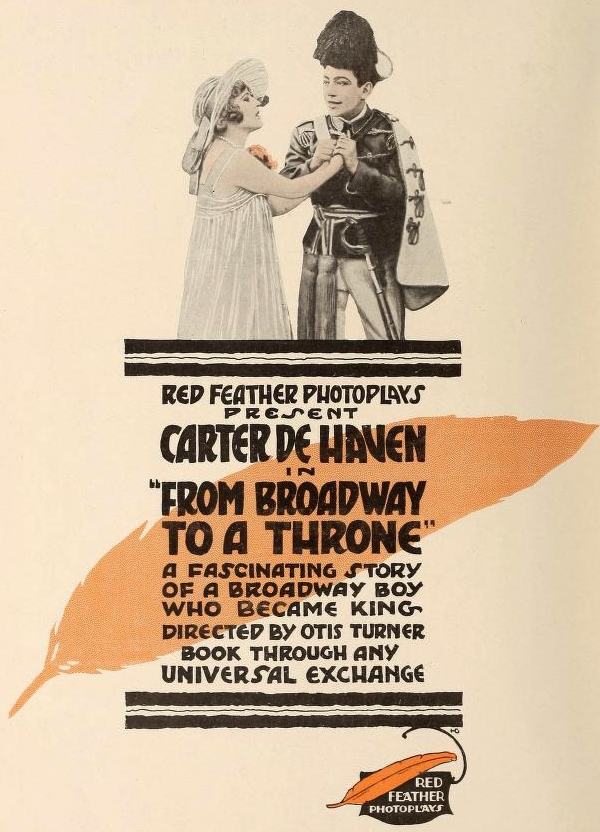
The annals of early cinema are replete with narratives that blur the lines between aspirational fantasy and grim reality, often delivered with a theatrical flourish that belies their sometimes humble production. "From Broadway to a Throne", a cinematic confection penned by Elliott J. Clawson and William J. Bauman, is precisely such a film. It’s a compelling, if occasionally dizzying, journey into the subconscious of a man grappling with his place in the world, his dreams, and the unexpected twists of fate, or rather, the vivid machinations of his own mind.
At its core, this is a story about "Battling" Jimmie, portrayed with a commendable blend of grit and guile by Marvel Spencer. Jimmie is not merely a prizefighter; he is a romantic, a man whose fists aim not just for glory in the ring, but for the stability and love embodied by Bess, his intended. The forthcoming bout against "Killer" Briggs looms large, a gateway to the championship, a substantial purse, and crucially, the means to marry Bess. This setup, a classic rags-to-riches, love-conquers-all trope, immediately grounds the audience in a relatable human drama. It’s a narrative engine that has powered countless stories, from the earnest struggles depicted in a film like "The Remittance Man", where an individual strives for dignity against societal odds, to the more overtly dramatic aspirations seen in other silent-era melodramas.
The narrative, however, takes an abrupt and delightful turn into the utterly fantastical. Enter "Silent" Billie, a newspaper reporter down on his luck, whose gift of a lucky coin to Jimmie becomes the catalyst for an epic, if entirely subjective, adventure. This isn't just any coin; it bears the distinctive mark of a royal emblem. The true architect of this narrative pivot, however, is Herman Marlex, Billie's foster father, an eccentric musician and writer brought to life with an almost unsettling intensity by Albert MacQuarrie. Upon seeing the emblem, Marlex unveils a backstory so outlandish it borders on the absurd: twenty years prior, he kidnapped the heir to the mythical kingdom of Magonia, and that heir, he insists, is none other than Billie. The sheer audacity of this revelation, delivered by a character who seems perpetually on the cusp of sanity, immediately injects a dose of surrealism into the otherwise grounded boxing drama. It’s a moment that could easily be dismissed as mere exposition, but within the context of the film's later dream sequence, it becomes the very fabric of Jimmie's internal odyssey.
Billie, admirably portrayed by Carter DeHaven, promptly dismisses Marlex’s elaborate tale as the ramblings of a man lost in his own delusions. This moment of rational dismissal serves to underscore the upcoming plunge into the irrational. The audience, much like Jimmie, is left to ponder the thin veil between truth and fiction, sanity and madness. The stage is set for the fight, a physical contest that will soon give way to a far grander, albeit imagined, struggle.
The pivotal moment arrives in the second round: a devastating blow renders Jimmie unconscious. It is here that the film truly transcends its initial premise, embarking on a sprawling, vivid dream sequence that forms the bulk of the narrative. This is not merely a brief fantasy; it is an elaborate, multi-layered journey into Jimmie's deepest fears and most extravagant desires. The initial segment of this dream is a poignant reflection of Jimmie's immediate anxieties: the loss of the fight, the dashing of his hopes for Bess, and a self-imposed exile from New York until he can "make good." It’s a remarkably human moment, showcasing the vulnerability beneath the boxer's tough exterior, a stark contrast to the escapist fantasies often presented in contemporary cinema, like the purely adventurous spirit of "Colorado".
The dream then escalates into a full-blown royal melodrama. Jimmie, overhearing a commotion from Marlex’s room, stumbles into a scene straight out of a political thriller. Three emissaries from Magonia are demanding the kidnapped prince from Marlex. The old man, fearing they intend to abscond with the reward, defiantly refuses, leading to his binding and gagging. It’s a sequence rich with dramatic tension, reminiscent of the cloak-and-dagger intrigue one might find in a classic mystery like "The Hound of the Baskervilles", albeit with a more farcical undertone.
In a stroke of narrative brilliance, Jimmie’s intervention leads to a profound case of mistaken identity. The emissaries, spotting the royal emblem on his sweater – the very coin that started this whole mess – immediately conclude he is the king. This accidental ascension to the Magonian throne is where the film truly embraces its comedic and fantastical potential. Jimmie, a Broadway boxer, finds himself thrust into the intricate politics of a foreign kingdom, desperately trying to convince King Felix that he is not the prince. The king, however, remains stubbornly unconvinced, perhaps blinded by his own desire for a rightful heir, or perhaps simply by the sheer theatricality of Jimmie's arrival. This delightful absurdity is a testament to the script's willingness to lean into its own premise, creating a situation ripe with both humor and dramatic irony.
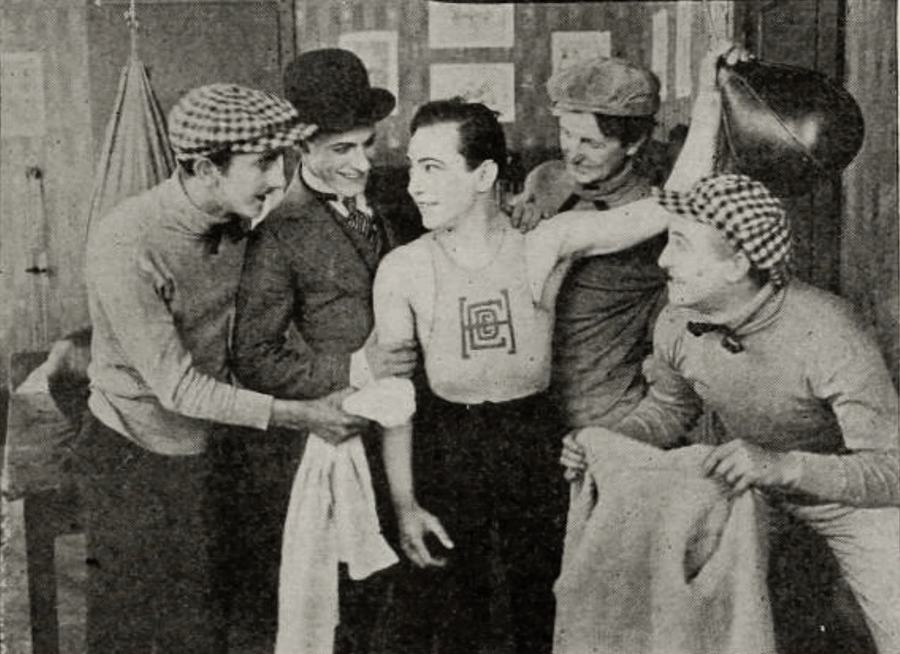
Jimmie's unexpected presence as the "alleged prince" immediately throws Heldone, the pretender to the Magonian throne (played with suitable villainy by T.D. Crittenden), into disfavor. This sparks a conspiracy that rapidly escalates into a full-blown revolt against King Felix. The dream-world of Magonia is now a volatile stage for political upheaval, a grand opera of power struggles and betrayals. The film expertly juggles this high-stakes drama with the more intimate, personal journey of Jimmie, demonstrating a surprising narrative dexterity for its era.
Meanwhile, the real world, or at least a parallel dream version of it, continues to unfold. Bess, Jimmie's fiancée (Yona Landowska, delivering a charming performance), finds herself employed by Princess Iona of Magonia, who is visiting the United States. This convenient coincidence brings Iona into contact with Billie, the actual kidnapped prince. In a swift, almost perfunctory manner, Iona convinces Billie of his true lineage. What follows is a whirlwind journey as Princess Iona, Billie, Bess, and Marlex all depart for Magonia, their arrival timed with exquisite dramatic precision to coincide with the very moment Heldone’s revolution breaks out. The convergence of these disparate plotlines – Jimmie's mistaken identity, Heldone's revolt, and the return of the true prince – creates a narrative crescendo that is both dizzying and exhilarating.
The climax of Jimmie's dream is a chaotic, thrilling spectacle. The returning party's amazement at finding Jimmie on the throne is quickly overshadowed by the storming of the palace by revolutionaries. A "terrific fight" ensues, a melee of swords and fists, culminating in Jimmie being knocked senseless by a sword blow. It's a violent, definitive end to his brief, accidental reign, a jarring return to the physical realities of combat, albeit within the confines of his dream.
And then, just as abruptly as it began, the dream shatters. Jimmie awakens, not to the clamor of a Magonian revolution, but to the harsh reality of the prize ring. He has been counted out. The grand, fantastical adventure evaporates, leaving behind only the cold, hard truth of defeat. This sudden return to reality is a potent narrative device, highlighting the illusory nature of his royal aspirations. It’s a technique that allows for immense creative freedom, much like the imaginative sequences in "The Pursuit of the Phantom", where reality and illusion often intertwine.
However, the dream, for all its unreality, has served a purpose. It has, perhaps, allowed Jimmie to explore the furthest reaches of his ambition, only to find that his true happiness lies elsewhere. In the immediate aftermath of his defeat, Jimmie makes a life-altering decision: he accedes to Bess's earlier request to join her in vaudeville. They plan to marry at once. This denouement, while seemingly a step down from a throne, is in fact a profound victory. It signifies Jimmie's embrace of a more grounded, shared future, one built on love and partnership rather than the fleeting glory of the ring or the fantastical burden of a crown. The transition from prize ring to vaudeville stage, from battling opponents to charming audiences, represents a shift in Jimmie's understanding of success and fulfillment. It is a testament to the film's underlying message: that true happiness often resides not in the grand, improbable dreams, but in the simpler, more attainable joys of companionship and shared endeavor.
The performances, while typical of the silent era's often broad strokes, carry the narrative effectively. Marvel Spencer imbues Jimmie with a compelling blend of naiveté and earnestness, making his journey, both real and imagined, thoroughly engaging. Albert MacQuarrie’s Marlex is a memorable, almost unsettling figure, whose eccentricities fuel much of the plot's fantastical elements. Carter DeHaven's Billie is a charming foil, while Yona Landowska's Bess provides the emotional anchor for Jimmie's aspirations. The ensemble cast, including T.D. Crittenden, Walter Belasco, Frank MacQuarrie, Malcolm Blevins, William Canfield, and Duke Worne, contribute to a lively and often humorous tapestry of characters that populate both Jimmie's waking and dreaming worlds.
From a technical perspective, the film, given its likely vintage, would have relied heavily on intertitles to convey dialogue and exposition, a common practice in an age before synchronized sound. The effectiveness of the dream sequence hinges on visual storytelling, perhaps employing dissolves, superimpositions, or other cinematic tricks to differentiate it from the "waking" reality. The shift in settings, from the grimy boxing ring to the opulent (or imagined opulent) Magonian palace, would have required a keen eye for art direction, even if on a limited budget. The dramatic fight scenes, both in the ring and during the revolution, would have been choreographed to maximize visual impact, a hallmark of action sequences in early cinema. The film's ability to transition seamlessly between these disparate worlds, even within a dream, speaks to the creative ambition of its filmmakers.
Thematic resonance abounds in "From Broadway to a Throne." It explores the intoxicating power of ambition, the allure of an imagined destiny, and the ultimate comfort found in simple, authentic love. Jimmie's journey from a hopeful boxer to a reluctant king and finally to a vaudeville performer is a profound commentary on identity and self-discovery. The film suggests that while grand fantasies can offer temporary escape, true fulfillment often lies in embracing one's genuine passions and forging a life with those who matter most. It’s a timeless message, wrapped in a wonderfully convoluted, dream-laden package. The film serves as a fascinating example of how silent cinema, even without the benefit of spoken dialogue, could weave intricate, emotionally resonant tales that captivated audiences with their blend of drama, comedy, and fantastical escapism. It’s a delightful oddity, a charming relic that reminds us of the boundless imagination that fueled the early days of filmmaking, proving that sometimes, the most extraordinary adventures are found not across oceans, but within the confines of one's own mind.
IMDb 3.8
1911
Community
Log in to comment.