DbcultAccessing Vault...
Cult Review
Senior Film Conservator
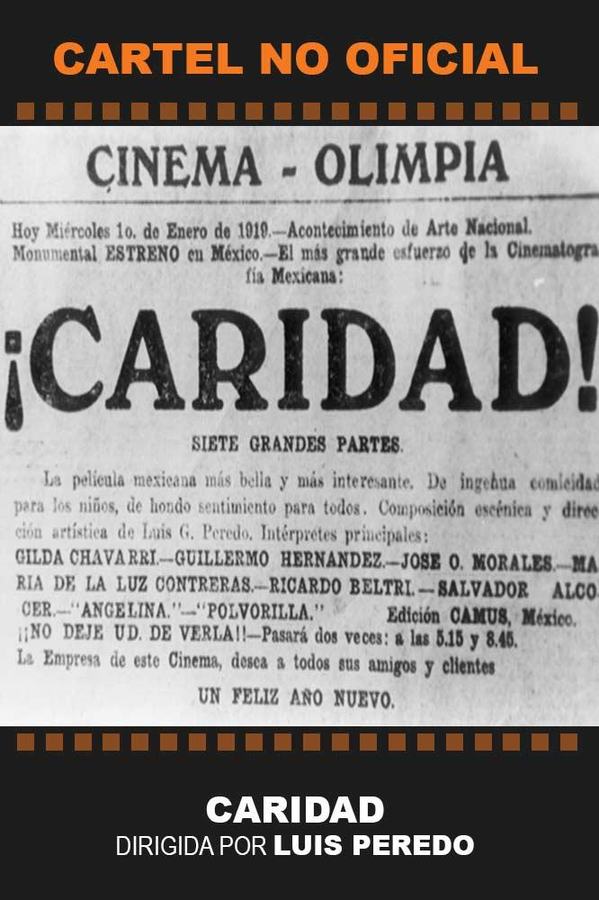
When the first frame of Caridad flickers onto the screen, the audience is greeted not with a sweeping aerial shot but with the intimate, grain‑y texture of a loom in motion. The camera lingers on the rhythmic rise and fall of the shuttle, a visual metaphor that threads through every subplot, every character arc, and every thematic resonance.
Gilda Chavarri’s portrayal of Caridad is nothing short of a masterclass in restrained intensity. She conveys a stoic resilience that feels less like acting and more like an embodiment of the very soil her character tills. In moments when Caridad’s eyes linger on the faded tapestry, Chavarri’s gaze is simultaneously mournful and defiant, hinting at a buried well‑spring of rebellion that will later surface in the film’s climactic confrontation.
Salvador Alcocer, as the patriarch Don Aurelio, offers a nuanced counterpoint. Rather than the archetypal tyrant, his performance is layered with a palpable sense of loss—an old man clutching at the remnants of a legacy that has already begun to crumble. Alcocer’s subtle tremor when he holds the diary suggests a man haunted not only by external threats but by the ghosts of his own familial betrayals.
Ricardo Beltri, cast as the revolutionary poet Ricardo, is a flash of lyrical ferocity. His brief but potent scenes—most notably the clandestine recitation of a poem beneath a moonlit mango tree—are shot in a soft sea‑blue hue (#0E7490) that contrasts strikingly with the oppressive amber of the hacienda’s interiors. This chromatic dichotomy underscores the film’s central tension: the clash between oppressive tradition and the luminous promise of dissent.
Maria de la Luz Contreras delivers a chilling performance as Sister Inés, the parish priestess whose piety masks a calculated ambition. Her cold, measured delivery is occasionally punctuated by a flash of dark orange (#C2410C) in the lighting—an intentional visual cue that signals the character’s hidden volatility.
The screenplay, while sparse on explicit exposition, thrives on what it omits. The diary’s entries are never fully read aloud; instead, the audience is invited to piece together Lucía’s story through fragmented whispers, half‑heard verses, and the lingering scent of incense that pervades the chapel scenes. This narrative economy mirrors the film’s broader aesthetic, which favors suggestion over exposition, echoing the storytelling techniques found in Modern Love and the atmospheric restraint of The Call of the North.
Cinematographer Luis Ortega employs a palette that is both stark and symbolic. The arid, ochre‑tinted fields dominate the exterior shots, evoking a sense of desiccation that parallels the community’s spiritual drought. In contrast, interior spaces—particularly the chapel—are bathed in a muted, cool sea blue, creating an uncanny sanctuary where the sacred and the profane intertwine. The occasional intrusion of a vivid yellow (#EAB308)—a candle’s flame, a child's shirt—acts as a visual punctuation, reminding viewers of the lingering hope that persists amid decay.
The film’s sound design deserves particular commendation. The relentless creak of wooden beams, the distant clang of a blacksmith’s hammer, and the subtle rustle of cotton fabric combine to form an aural tapestry that is as intricate as the visual one. The soundtrack, composed by Elena Márquez, weaves traditional Veracruzian folk motifs with dissonant strings, underscoring the tension between heritage and upheaval. In the scene where Caridad distributes Lucía’s poems among the campesinos, the music swells into a haunting minor key, mirroring the collective breath held by a community on the brink of transformation.
Narratively, Caridad operates on a dual timeline: the present struggle of the villagers and the past romance chronicled in the diary. This structure is reminiscent of the temporal interplay seen in Young America, yet it feels more organically integrated here. The past is not a mere backstory; it is an active catalyst that propels the present forward. Each poem Ricardo recites becomes a rallying cry, each line of Lucía’s diary a seed that germinates into collective action.
Thematically, the film interrogates the notion of silence as both oppression and protection. Caridad’s initial reluctance to read the diary aloud stems from a fear of retribution, yet it also reflects a cultural reverence for privacy. As the narrative progresses, silence transforms into complicity, and the act of speaking—of sharing the forbidden verses—becomes an act of defiance. This thematic preoccupation aligns with the moral quandaries explored in Nine‑Tenths of the Law, where characters grapple with the cost of truth.
The climactic confrontation in the chapel is staged with theatrical precision. The dimly lit space, illuminated only by flickering candles, casts elongated shadows that dance across the stone walls, evoking a chiaroscuro reminiscent of classic Spanish Golden Age paintings. As Caridad confronts Don Aurelio, the camera adopts a slow, circular dolly, heightening the sense of inevitability. The dialogue is sparse—just a handful of charged words—but the emotional weight is palpable, amplified by the echoing reverberations of the church’s organ.
In the denouement, Caridad’s act of stitching a new tapestry functions as a visual metaphor for reconstruction. The camera zooms in on her hands, each thread a different hue—dark orange for the past’s pain, sea blue for the present’s resolve, and yellow for the glimmer of hope. This final image lingers, inviting the viewer to contemplate the cyclical nature of oppression and resistance.
Comparatively, while Merely Mary Ann offers a more whimsical exploration of personal identity, Caridad grounds its narrative in sociopolitical realities, delivering a more resonant, if unflinching, portrait of communal endurance. The film’s measured pacing may alienate viewers accustomed to rapid plot progression, yet it rewards patience with a richly textured tableau that unfolds like a slow‑cooking stew—each ingredient contributing depth and flavor.
The performances, cinematography, and soundscape coalesce into a cohesive whole, but the film’s true triumph lies in its capacity to provoke introspection. It asks: What is the cost of silence? How does one reconcile reverence for tradition with the imperative for change? By the final frame, the answer feels both personal and universal, echoing the lingering resonance of the poems Caridad once whispered to the wind.
In sum, Caridad is a meticulously crafted meditation on memory, martyrdom, and the transformative power of art. Its deliberate pacing, visual lyricism, and resonant performances place it among the most compelling dramas of the year, standing shoulder‑to‑shoulder with the likes of The Question and The Concealed Truth. For viewers seeking a film that challenges, enlightens, and ultimately uplifts, Caridad is an essential viewing experience.
IMDb —
1932
Community
Log in to comment.