DbcultAccessing Vault...
Cult Review
Senior Film Conservator
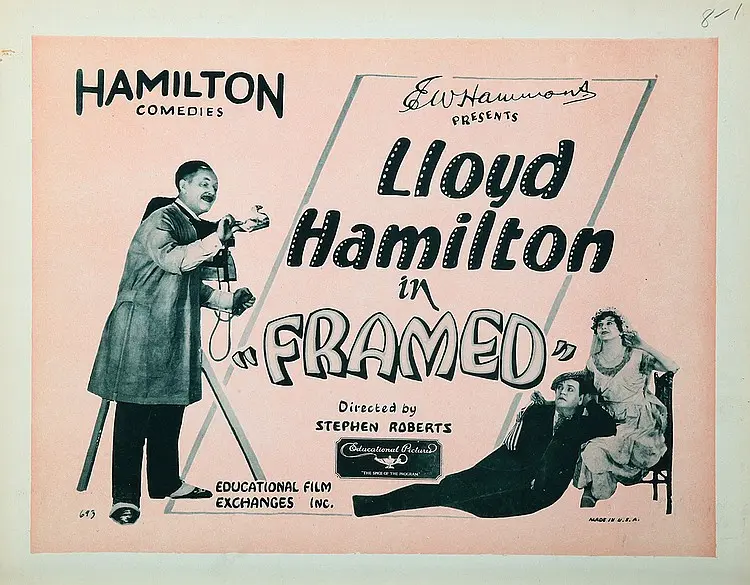
Is Framed a lost masterpiece of the silent era? Short answer: No, but it is an essential piece of physical comedy history that deserves a modern audience for its sheer commitment to chaos. This film is for viewers who find catharsis in the systematic destruction of expensive things; it is not for those who require a complex, emotionally resonant plot or the poetic nuance of a Chaplin feature.
While many audiences today flock to the high-budget spectacles of The Four Horsemen of the Apocalypse, there is a distinct, visceral joy to be found in the smaller, meaner comedies of the late 1920s. Framed represents the pinnacle of the 'destruction gag,' a sub-genre where the narrative exists solely to facilitate the dismantling of a set. Lloyd Hamilton, often overshadowed by the 'Big Three' (Keaton, Chaplin, Lloyd), brings a specific, abrasive energy here that feels surprisingly modern.
Yes, Framed is worth watching if you appreciate the technical precision of silent slapstick and want to see a comedian who operates with a different 'gravity' than his peers. It is a lean, mean comedy machine that doesn't waste time on sentimentality.
1) This film works because Hamilton’s timing turns simple accidents into rhythmic percussion, creating a snowball effect of disaster that feels earned rather than forced.
2) This film fails because the middle act lacks the narrative glue to justify the jump from the photography studio to the parlor, feeling more like two joined shorts than a cohesive featurette.
3) You should watch it if you want to see a man accidentally dismantle a house with the precision of a demolition crew while maintaining the face of a confused owl.
Lloyd Hamilton’s performance in Framed is a study in what I call 'passive-aggressive slapstick.' Unlike Buster Keaton, who is often a victim of the world around him, or Charlie Chaplin, who uses his environment to dance, Hamilton’s character is a localized hurricane. He doesn't mean to break things, but his very presence seems to weaken the structural integrity of any room he enters. In the opening sequence at the photography gallery, we see this in full effect.
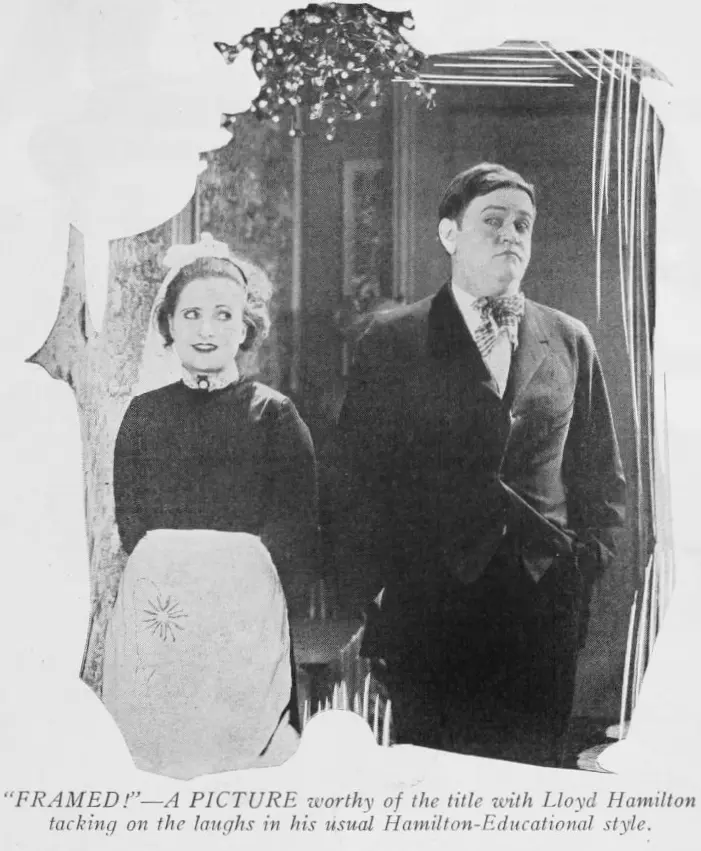
Hamilton enters the gallery with a stiff, almost aristocratic gait—a sharp contrast to the loose-limbed energy seen in Let's Go. He is trying to be a gentleman. However, when he interacts with the photographer’s tripod, he doesn't just trip; he entangles himself in a way that suggests the wood and metal have a personal vendetta against him. The way he tries to 'fix' the initial mistake only leads to the total collapse of the studio’s backdrop. It is a brutal, funny, and strangely rhythmic sequence of events.
One specific moment stands out: Hamilton attempts to adjust his tie in a mirror, but instead knocks over a heavy decorative vase. Rather than catching it, his attempt to mitigate the fall results in him punching a hole through a canvas painting. It is an unconventional observation, but Hamilton’s comedy is rooted in the failure of physics. He is the anti-engineer. Every action has an opposite and tripled reaction of destruction.
The film is essentially a diptych of disaster. The first half, set in the photography studio, is a masterclass in 'contained chaos.' The space is small, the props are fragile, and the stakes are low. This allows the audience to focus on the minutiae of Hamilton’s movements. It lacks the melodrama of Assunta Spina, opting instead for a cold, clinical approach to the gag.
The second half shifts the scale. By moving the action to a rich man’s home, director and writer (though uncredited in many records, the style is unmistakably Hamilton’s creative circle) raise the social stakes. Now, Lloyd isn't just breaking property; he is breaking social norms. The presence of the magician is a brilliant narrative device. It provides a 'reason' for things to disappear or explode, which Lloyd then amplifies through his own incompetence.
When the magician pulls a rabbit out of a hat, Lloyd’s reaction isn't wonder—it’s a clumsy attempt to replicate the trick that ends with a chandelier being pulled from the ceiling. This escalation is what keeps Framed from feeling like a repetitive loop. It moves from the personal to the public, from the specific to the structural. By the time the house is a wreck, the audience has been conditioned to expect nothing less.
The interaction between Lloyd and the magician is the film's strongest asset. Often in silent comedy, the protagonist is the one performing the 'magic' of stunts. Here, the magician represents order and artifice, while Lloyd represents the entropy of the real world. Every time the magician performs a clean, rehearsed trick, Lloyd follows it with a messy, unrehearsed catastrophe.
There is a scene where the magician 'disappears' a deck of cards. Lloyd, trying to be helpful, accidentally 'disappears' a tray of drinks into the lap of a wealthy guest. The contrast is sharp. It’s a critique of high-society boredom; the guests want to be entertained by fake magic, but they are horrified by the real, chaotic 'magic' of Lloyd’s clumsiness. This is a much more cynical take on the upper class than you might find in The Sporting Venus.
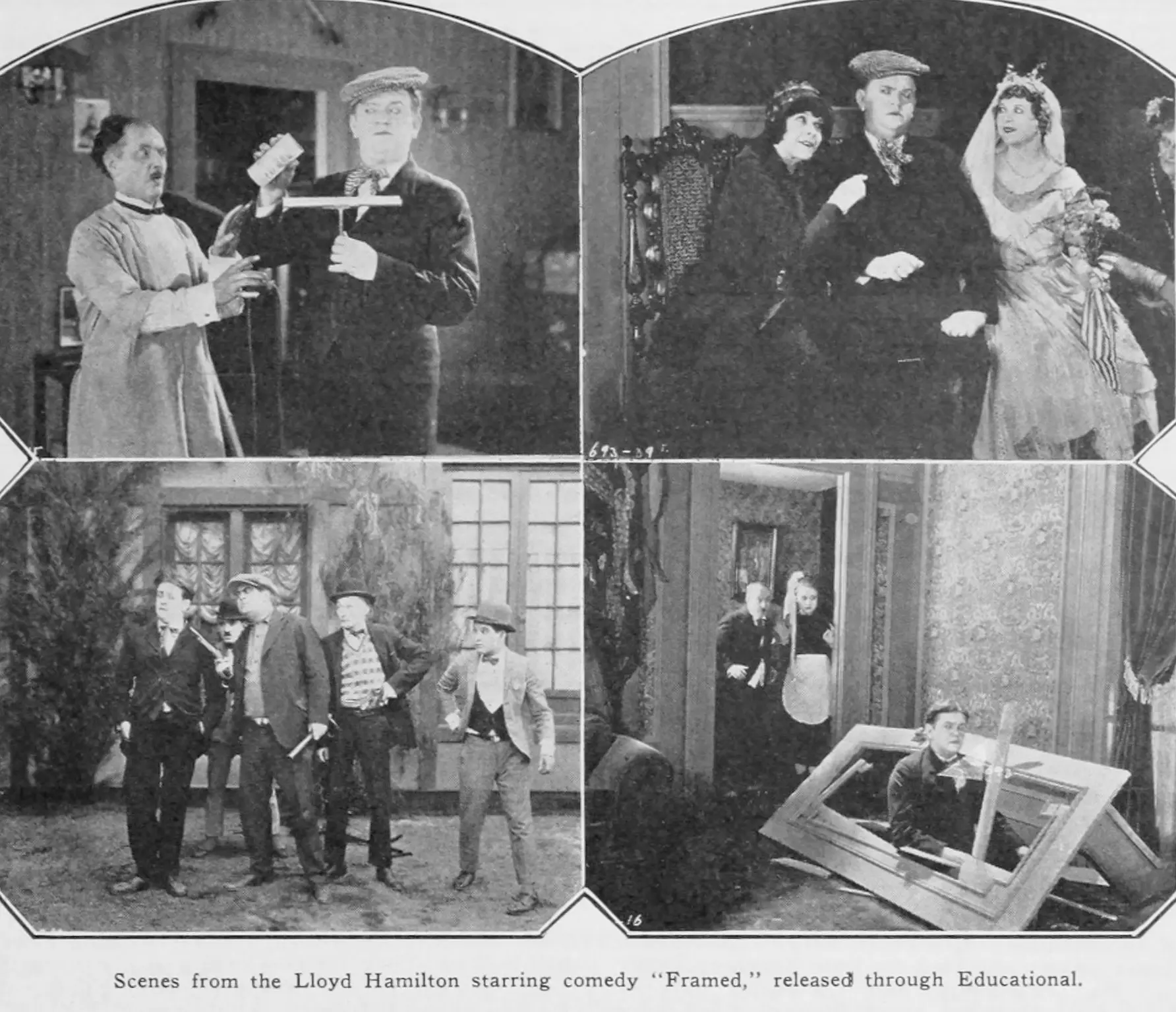
The magician, played with a wonderful pomposity by the supporting cast (likely Otto Fries, though the ensemble is tight), becomes the perfect foil. His frustration grows in direct proportion to the audience’s laughter. It works. But it’s flawed. The flaw lies in the magician’s persistence; why would he keep Lloyd as the butt of the jokes after the third vase breaks? But in the logic of slapstick, the show must go on until the roof falls in.
Visually, Framed is functional rather than experimental. Unlike the expressionistic shadows of Shattered Idols, the lighting here is flat and bright. This is intentional. In slapstick, you need to see the entire frame to understand the geometry of the gag. If the lighting were too moody, you’d miss the wire Lloyd is about to trip over or the precarious position of the piano.
The pacing, however, is where the film shines. The editing is crisp, cutting on the action of the 'break' to maximize the impact. There is a specific shot where Lloyd is caught in the magician’s cabinet, and the camera stays wide. This allows us to see the entire house beginning to shake as he struggles inside. It’s a brave choice—many directors would have cut to a close-up of his panicked face, but keeping the wide shot emphasizes the 'man vs. environment' theme.
Compared to Plain Clothes, which relies more on narrative tension, Framed is pure kinetic energy. It doesn't care about Lloyd’s character growth. It cares about how many chairs can be broken in a ten-minute span. This purity of purpose is refreshing, even if it feels a bit shallow by modern standards.
If you are looking for a deep emotional experience, look elsewhere. But if you want to understand the DNA of physical comedy, Framed is a vital watch. It captures a moment in time when cinema was still discovering the joy of pure, unadulterated destruction. It is a loud film for a silent one.
The performance by Virginia Vance provides a necessary, if underutilized, anchor. She represents the 'normal' world that Lloyd is inadvertently destroying. Her reactions—alternating between horror and a strange, lingering affection for Lloyd—give the film its only shred of humanity. Without her, it would just be a demolition reel.
Pros:
- Lloyd Hamilton’s unique 'deadpan' physical presence.
- High production value for the 'destruction' scenes—they didn't skimp on the breakaway furniture.
- Excellent pacing in the final ten minutes.
Cons:
- The supporting characters are somewhat one-dimensional compared to Hamilton.
- The magician’s act goes on slightly too long before the payoff.
- Minimal narrative depth.
Framed (1927) is a fascinating artifact of a time when a man falling through a table was the height of entertainment. While it lacks the heart of Alone in London or the social weight of Chickie, it succeeds as a pure comedy. Lloyd Hamilton is a forgotten giant, and this film proves why he was once considered a peer to the greats. It is a chaotic, messy, and ultimately hilarious twenty minutes of cinema. It is not a masterpiece, but it is a riot. Watch it for the history, stay for the broken glass.
IMDb —
1927
Community
Log in to comment.