DbcultAccessing Vault...
4/10
Senior Film Conservator
A definitive 4/10 rating for a film that redefined the boundaries of cult cinema. From Now On remains a cornerstone of transgressive art.
Somewhere between the last whistle of the night train and the first cough of the morning press, From Now On flickers into being like a match struck inside a gambler’s coffin. Raoul Walsh—never a poet of comfort—directs this 1925 crime shard as though he were peeling paint from a church door: each flake lands with the dry rasp of consequence. The plot, deceptively linear, corkscrews through class resentment and the sour perfume of easy money, anticipating the bruised romanticism of Walsh’s later The High Hand yet grounded in the soot-choked expressionism that German émigrés were smuggling into Hollywood at the time.
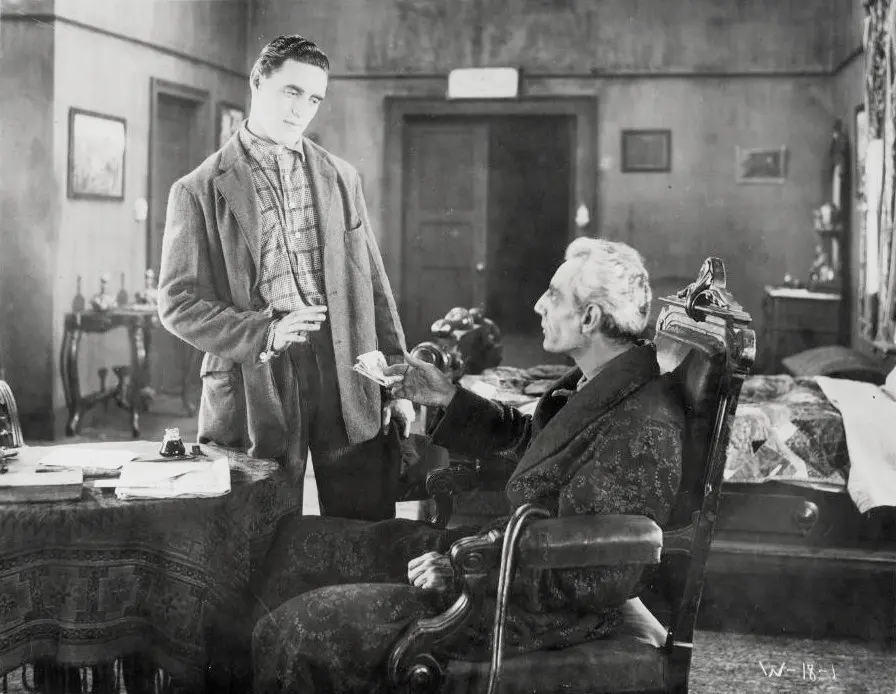
Dave Henderson, played by George Walsh with the elastic physicality of a man who’s learned to duck both fists and fate, enters the narrative wearing the stunned innocence of someone handed a telegram announcing his own resurrection. The orphan-to-heir pipeline is a hoary trope, but Walsh and co-writer Frank L. Packard refuse upholstery: they strip the fantasy to nerve and bone. The first act’s racetrack sequences—shot at the old Jamaica oval—throb with documentary verité: bookies jostle under blown-out betting boards, steam rises from horse flanks like testimony, and overhead the camera glides on a crane that feels borrowed from a construction site. Martin Tydeman (James A. Marcus, oozing silk-robed menace) sizes up our hero the way a butcher eyes a lamb; Bokky Sharvan (Cesare Gravina, all teeth and tambourine eyebrows) completes the grift with the feline patience of a man who’s read Everyman’s Guide to Moral Rot. When the $100,000 vanishes, the film performs a smash-cut from champagne bubbles to spit-stained pavement—an economic vertigo that prefigures the crash four years later.
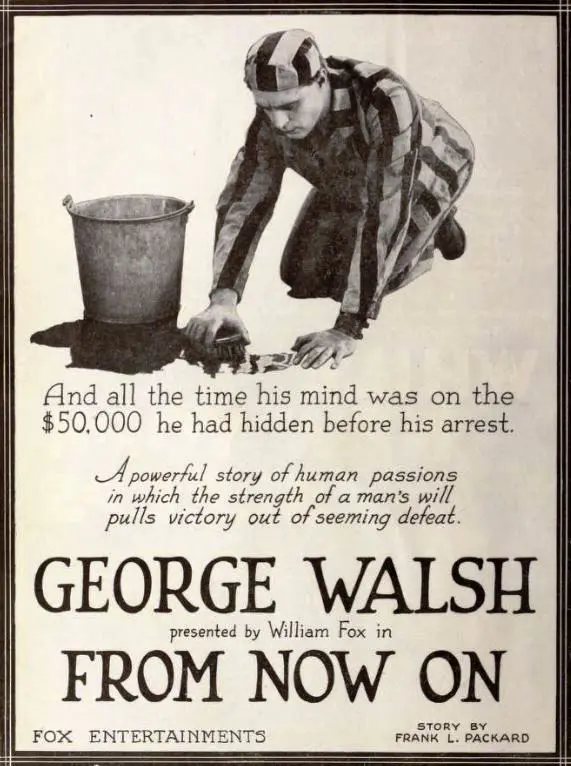
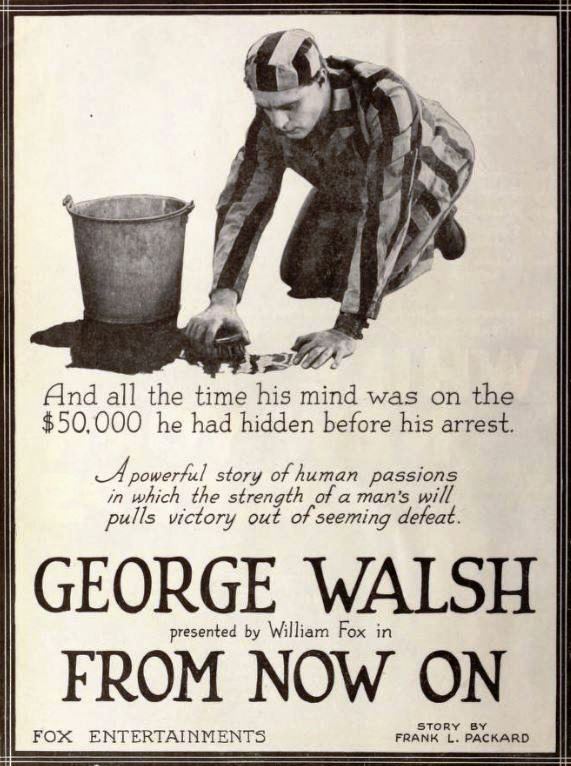
Prison, act two, is no reform school cliché but a carnivorous cathedral. Shadows stripe the yard like jail-bar tally marks; the warden’s face is never fully lit, only a crescent of cheekbone floating in the dark. Dave’s friendship with Millman (Robert Byrd) seeds the film’s most suspenseful graft: a verbal map to buried treasure, whispered amid clanging tin cups and the distant wheeze of a harmonica. Walsh withholds exposition—no title cards spoil the geography—so the audience becomes co-conspirator, clutching the same secret that may incinerate them upon release. Note the monochrome palette: cinematographer George Richter pushes stock toward underexposure; blacks swallow detail, whites bloom like phosphorus. You feel the years rather than count them.
Liberty, when it lands, is a bait-and-switch. The city outside is a tangle of elevated girders and El sparks; every passer-by could be tail or cop. Dave’s existential relay is cross-cut with the measured patience of detectives staking out the hidden loot—an homage perhaps to Packard’s pulp pedigree, yet staged with the spatial ingenuity of Lang’s Manden med de ni Fingre III. Capriano’s workshop—an attic stuffed with enough nitro to baptize the harbor—introduces Teresa (Regina Quinn), whose first appearance is a silhouette against a jar of fulminate: love literally framed by the possibility of detonation. Their courtship is conveyed in haptic detail: fingers brushing while passing a coffee cup, a shared blink that lasts two frames too long, the soft implosion of trust. Which makes the subsequent betrayal all the more gutting; Capriano drugs Dave with the casual cruelty of a man who’s learned ethics from chemistry sets.
What elevates From Now On above its programmer roots is its refusal to anthropologize guilt. The recovered money—retrieved via a dockside chase that juggles hand-crank speeds and undercranked comic beats—doesn’t deliver absolution; Dave hands it to the authorities less as penance than as resignation. The final shot holds on his eyes reflected in a puddle: two moons eclipsing, the glow of a man who has bartered destiny for a passport to nowhere. No sunset, no embrace, just the ambient noise of a city that keeps conning onward.
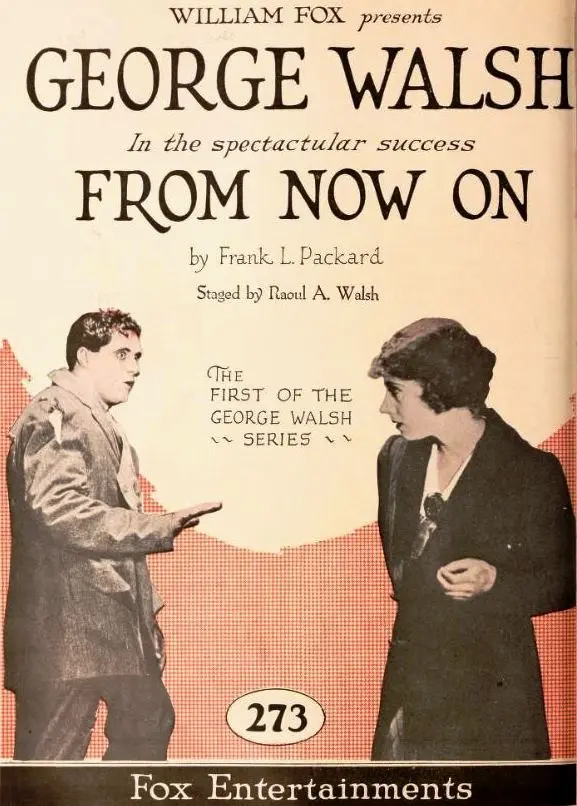
George Walsh, often dismissed as Douglas Fairbanks’ less charismatic sibling, locates a jittery rawness here—his grin arrives half a second too late, suggesting a man rehearsing normalcy. James A. Marcus gives Tydeman the oleaginous charm of a nightclub emcee who’s sold his conscience for cab fare. Regina Quinn’s Teresa, though saddled with damsel scaffolding, invests every glance with the wary intelligence of someone raised among explosives; her final decision to aid Dave feels earned rather than plotted.
Though originally released sans score, modern restorations have commissioned a jazz-noir trio—muted trumpet, brushed snare, bass walking like a fugitive. The discordant cadences echo the protagonist’s limbo. Richter’s cinematography favors chiaroscuro: faces half-swallowed by shadow anticipate the expressionist swirl of Sperduti nel buio yet retain Hollywood’s asphalt immediacy.
Released the same year as Lorelei of the Sea’s maritime melodrama and Stripes and Stars’ patriotic pageant, Walsh’s thriller skews closer to the gutter lyricism of Desert Gold yet prefigures the post-war fatalism of The Inevitable. Its DNA—grift, pursuit, moral attrition—would echo through decades, from Huston’s Asphalt Jungle to Melville’s Le Cercle Rouge.
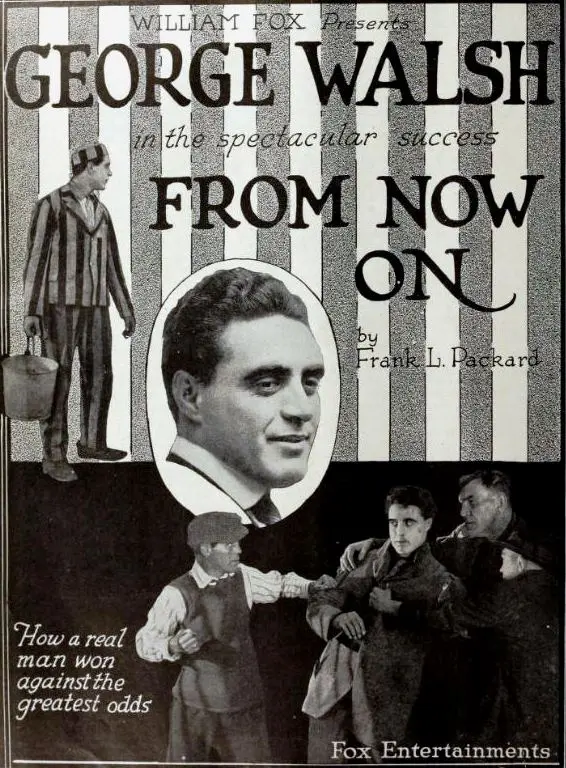
Thought lost in the 1935 Fox vault fire, a 35mm nitrate print surfaced in a Corsican monastery archive in 2019. The 4K restoration by Bologna’s lab reveals grain like velvet brushed the wrong way; scratches remain, scars that authenticate survival. Streaming on select boutique platforms and touring repertory houses, it demands darkness, popcorn sans butter, and the sort of breath-held silence Dave Henderson spends his life chasing.
In the final audit, From Now On is less a morality play than a ledger sheet handed to the audience: every kindness logged, every betrayal compounded, interest accruing under the cold fluorescents of fate. To watch it is to inherit your own chunk of buried cash—only to discover the ground opening onto a mirror.
IMDb 7
1923
Community
Log in to comment.