DbcultAccessing Vault...
Cult Review
Senior Film Conservator
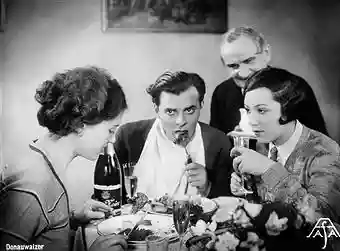
Alright, let's talk about Donauwalzer. This one, from way back in 1930, isn't for everyone today. It’s a real time capsule, a **deep dive** into early talkie cinema that silent film buffs or folks curious about film history will probably get a kick out of. But if you’re looking for fast-paced modern storytelling, you’ll likely find yourself checking your watch. It’s a slow burn, charming in its own way, but _definitely_ not for a casual Friday night watch. Think of it as a museum piece you actually get to watch move.
The film, as the name suggests, has this very Viennese feel. Lots of elegant settings, people in fancy clothes, and a general air of, well, *drama*. You can almost hear the waltz music in the background, even when there's no orchestra playing. It's a world where a knowing glance or a slight hesitation means everything, because people didn't just blurt things out back then. Or, at least, not in movies like this.
One thing that really sticks out is the acting. It's a mix, honestly. You've got Adele Sandrock, who just **commands** the screen every time she appears. She plays this older, slightly formidable character, and you just know she's seen it all. Her expressions, even just a raised eyebrow, speak volumes. I kept thinking about her, watching her, even when the main plot was doing its thing. She has this _gravitas_ that anchors everything.
Then there are moments where the acting feels a bit… stagey. Like everyone is still performing for the back row of a theater. A lot of grand gestures. The way some characters throw their arms up or dramatically turn their heads. It’s a stark reminder of that transition period in film, when they were still figuring out what worked for the camera versus the stage. One scene, where a character is supposed to be heartbroken, they just stand there, *perfectly still*, for what feels like ages. It’s almost funny how long it goes on, waiting for something to happen.
The story itself, it’s all about love and misunderstandings, as you’d expect. Who loves who, who *thinks* they love who, and who’s just being a bit silly about the whole thing. There’s a particular scene involving a garden party, where everyone is just a little too polite, and you can practically feel the unspoken tension hanging in the air. It’s quite _clever_, actually, how much they manage to say without saying it.
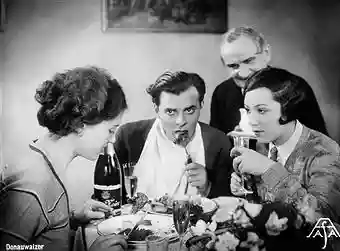
Visually, some parts are really quite striking. The shots of the city, even if they’re just studio backdrops, have a certain charm. And the costumes! Oh, the costumes are fantastic. Every dress, every suit, perfectly captures that era’s elegance. You almost want to reach out and touch the fabric. There’s one shot of a woman’s hat, just for a second, but the detail on it is incredible. You don't see that kind of craftsmanship in films much anymore, not in the same way.
The pacing, well, it’s not exactly zippy. More of a gentle drift, you know? It takes its time. Sometimes, it feels like it takes *too much* time. There are these long, quiet stretches where not a lot happens, and you're just left to observe the characters existing. It allows you to really soak in the atmosphere, I guess. Or maybe just zone out a little. It depends on your mood, really.
And the dialogue, it’s very formal. Very proper. Sometimes it feels a little stilted, like they’re reading from a play. But then there are these little gems, these sharp lines that cut through all the politeness. Usually from Adele Sandrock, naturally. She has this way of delivering a line that makes it sound like she’s just thought of it, even if it’s clearly scripted. A real pro, that one.
There's a recurring motif of the Danube River, not just in the title. You see glimpses of it, or characters talk about it. It gives the whole film a sense of place, a solid anchor. It makes you want to visit Vienna, honestly, even if the film is more about the people _inside_ the grand buildings than the city itself. One shot of a bridge, very quick, but it felt important somehow.
So, is Donauwalzer a masterpiece? Probably not in the conventional sense. But it's a fascinating look at where film was, what it was trying to be, almost a hundred years ago. It’s got its quirks, its slow bits, and some acting choices that might make you chuckle. But it’s also got moments of genuine charm, beautiful visuals for its time, and a central performance that’s truly captivating. If you’ve got a spare afternoon and a soft spot for early cinema, give it a whirl. You might just find yourself tapping your foot along to the unseen waltz.
IMDb —
1920
Community
Log in to comment.