DbcultAccessing Vault...
Cult Review
Senior Film Conservator
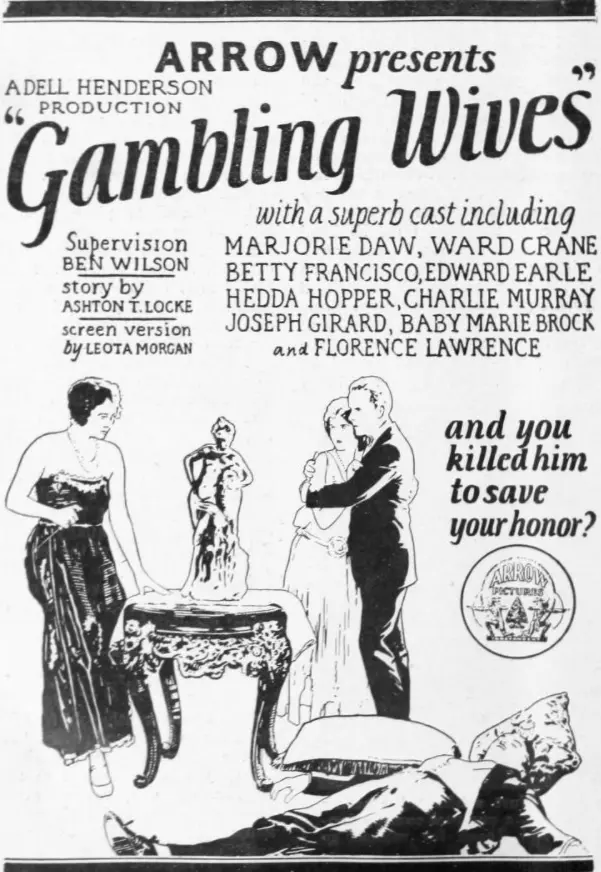
Stepping back into the roaring twenties, the silent era presented a fascinating canvas for exploring the burgeoning complexities of modern life, and few films capture the era's moral anxieties quite like Gambling Wives. Released in 1924, this cinematic endeavor, penned by the insightful duo of Leota Morgan and Ashley T. Locke, delves into the treacherous landscape of marital fidelity, financial ruin, and the seductive, destructive power of vice. It's a film that resonates even today, offering a stark reminder of how easily ambition can curdle into obsession, and how quickly a stable life can unravel under the weight of poor choices.
At its core, Gambling Wives is a morality play, but one delivered with the dramatic flair and nuanced performances characteristic of the period's best productions. The narrative centers on Vincent Forrest, a bank clerk portrayed with a compelling blend of naiveté and burgeoning desperation by Edward Earle. Earle's portrayal is pivotal; he embodies the everyman caught in an increasingly perilous web, his initial fascination with the illicit world of gambling slowly transforming into a full-blown addiction that threatens to consume his entire existence. His descent is not sudden but a gradual erosion, making his character's journey all the more believable and tragic. The film masterfully illustrates how a seemingly innocuous foray into a gambling den can become a vortex, swallowing not just money but also integrity and familial bonds.
The den itself is a character, a smoky, dimly lit realm of temptation, presided over by the formidable Madame Zoe, brought to life with an almost predatory grace by Hedda Hopper. Hopper, even in the silent medium, exudes an aura of sophisticated danger, her expressions conveying a world of experience and calculated manipulation. She is the spider at the center of the web, her allure as potent as the promise of quick riches. Her provider, Van Merton, played by Ward Crane, complements her perfectly – a slick, charming opportunist whose smooth demeanor hides a ruthless pragmatism. Crane's performance is a study in understated villainy, making Merton a truly compelling antagonist whose actions drive much of the plot's escalating tension. The interplay between Hopper and Crane creates a palpable sense of menace and allure, drawing both Vincent and, later, Ann, into their orbit.
Vincent's wife, Ann, portrayed by the expressive Marjorie Daw, is the emotional anchor of the film, and her journey is perhaps the most complex. Daw imbues Ann with a vulnerability that quickly hardens into a steely resolve born of despair and betrayal. When she discovers Vincent's ruinous gambling habits and, more painfully, his growing infatuation with Madame Zoe, her reaction is a visceral blend of hurt and anger. This emotional maelstrom leads her down a path of her own, a dangerous retaliatory affair with Van Merton. It’s a classic tragic turn, where one spouse's transgression inadvertently pushes the other into similar moral compromises. Ann's decision to engage with Merton is not merely an act of revenge; it's a desperate cry for attention, a misguided attempt to reclaim agency in a marriage that feels increasingly out of her control. Daw handles this intricate emotional landscape with remarkable subtlety, her expressive eyes and gestures communicating volumes without a single spoken word.
The film deftly explores the cyclical nature of addiction and betrayal. Ann, in her entanglement with Merton, also finds herself drawn to the gambling tables, suffering heavy losses that mirror Vincent’s initial downfall. This symmetry is crucial to the film's thematic depth, highlighting how easily individuals can succumb to the same vices they condemn in others, especially when fueled by emotional turmoil. It’s a powerful commentary on human frailty and the ripple effect of destructive choices. While films like The Evil Thereof (1916) explored the insidious nature of temptation and moral decay, Gambling Wives elevates this theme by intertwining it with the very fabric of marital trust, showing how personal failings can poison the most intimate relationships.
Beyond the central trio, the supporting cast provides essential texture to this narrative. Lee Moran, Betty Francisco, Dorothy Brock, Joseph W. Girard, and the legendary Florence Lawrence (often credited as "The First Movie Star") all contribute to the vibrant, albeit morally ambiguous, world of the film. Their presence, whether as denizens of the gambling house or concerned onlookers, helps to ground the more melodramatic elements of the plot in a recognizable social context. Even Buddy the Dog makes an appearance, a common trope in silent films to inject moments of levity or emotional resonance, though in this context, Buddy often serves as a silent witness to the unfolding domestic tragedy, his innocent presence contrasting sharply with the human failings around him.
The direction, while uncredited in many historical accounts, manages to maintain a taut pace and a consistent tone throughout. The use of intertitles is effective, not just for dialogue but also for conveying internal thoughts and contextual information, a hallmark of skilled silent film storytelling. Cinematography plays a crucial role in establishing mood, with stark lighting often used to emphasize the moral shadows that envelop the characters. The gambling den, for instance, is often framed in a way that highlights its claustrophobic and captivating atmosphere, drawing the viewer in just as it does the characters. This visual storytelling is a testament to the era's technical and artistic prowess, capable of conveying complex emotions and intricate plots without spoken dialogue.
What makes Gambling Wives particularly compelling is its ultimate message of redemption, however hard-won. Vincent’s belated realization of Ann’s plight and his own role in it is the turning point. It’s a moment of profound clarity, a sudden awakening from his self-absorbed stupor. This realization isn't presented as a miraculous cure but as a difficult, necessary step towards accountability and the arduous process of rebuilding. The film suggests that true happiness and marital harmony cannot be restored until both parties acknowledge their mistakes and actively work to rectify them. This theme of self-awareness and the arduous path to redemption echoes through cinematic history, finding parallels in films that explore the consequences of moral failings and the possibility of a second chance. One might even draw a comparison to the intricate character studies found in films like Her Reckoning (1923), which similarly delves into a woman's struggle against societal pressures and personal tribulations, though Gambling Wives places a stronger emphasis on the dual collapse and potential restoration of a marital unit.
The film’s portrayal of women, specifically Ann and Madame Zoe, is also noteworthy. Ann is not merely a passive victim but an active participant in her own fate, albeit one driven by desperation. Her agency, however misguided, makes her a more complex and relatable figure. Madame Zoe, on the other hand, is a woman who has carved out a position of power in a male-dominated world, even if that world is the underworld. Her intelligence and control are undeniable, challenging traditional gender roles of the era. While the film ultimately steers towards a conservative resolution of marital reconciliation, the journey there is paved with moments of female defiance and strength, offering a glimpse into the evolving perceptions of women in early 20th-century society.
Looking at Gambling Wives in the broader context of silent cinema, it stands as a solid example of the period's dramatic output. While it may not possess the epic scope of a The Birth of a Nation (1915) or the experimental artistry of some European contemporaries, it excels in its focused character study and its clear articulation of universal themes. It’s a film that would have resonated deeply with audiences of its time, reflecting anxieties about changing social mores, the allure of urban temptations, and the enduring importance of family. The performances, particularly from Earle, Daw, Hopper, and Crane, are uniformly strong, carrying the emotional weight of the narrative without the benefit of spoken dialogue, relying solely on their physicality, facial expressions, and the skillful direction.
The film’s resolution, while perhaps predictable by modern standards, feels earned within its own narrative logic. Vincent's awakening is not a sudden epiphany but the culmination of a series of painful experiences. His efforts to save Ann and restore their happiness are portrayed with a sense of urgency and genuine remorse, making the final scenes impactful. It underscores the idea that relationships, once broken, require immense effort and mutual understanding to mend. The title itself, Gambling Wives, initially seems to point to Ann's actions, but in a deeper sense, it also hints at the risky bets made by both spouses on their own desires and the future of their marriage. It’s a clever, if subtly ironic, title that encapsulates the film's core themes.
In conclusion, Gambling Wives is more than just a relic from the silent film era; it's a potent drama that speaks to enduring human struggles. The meticulous craftsmanship of Leota Morgan and Ashley T. Locke's screenplay, combined with the compelling performances of Edward Earle, Marjorie Daw, Hedda Hopper, and Ward Crane, create a captivating experience. It’s a film that deserves to be rediscovered for its dramatic tension, its insightful characterizations, and its timeless exploration of temptation, betrayal, and the arduous road to redemption. For those interested in the social dramas of the 1920s, and particularly the nuanced storytelling of silent cinema, Gambling Wives offers a rich and rewarding viewing experience, proving that some stories, and the moral quandaries they present, truly transcend the ages.
IMDb 5.5
1930
Community
Log in to comment.