DbcultAccessing Vault...
Cult Review
Senior Film Conservator
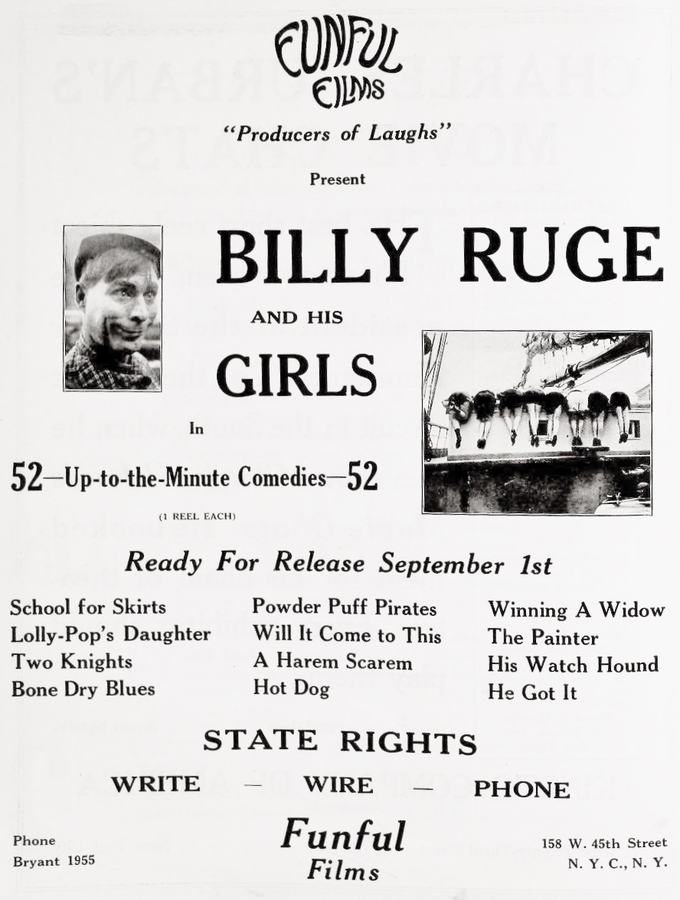
In the bustling, often frenetic, landscape of early 20th-century cinema, where innovation was the daily bread and narratives were still finding their voice, a delightful flicker of celluloid emerged, bearing the unassuming title of 'Hot Dog'. Far from being a mere culinary reference, this film, propelled by the inimitable physical prowess of Billy Ruge and the sharp wit of writer Tom Bret, stands as a testament to the enduring power of silent comedy. It’s more than just a series of gags; it’s a vibrant, kinetic painting of urban life, a poignant yet uproarious exploration of the human (and canine) condition, wrapped in a package of expertly choreographed chaos. As we peel back the layers of this cinematic frankfurter, we discover a rich tapestry of social commentary, character brilliance, and technical ingenuity that continues to charm and provoke thought decades later.
'Hot Dog' plunges us headfirst into the precarious world of Bartholomew "Barty" Bumble, a street vendor whose livelihood hinges on the ephemeral allure of his sizzling sausages. Billy Ruge embodies Barty with a captivating blend of earnestness and exasperation, a quintessential 'everyman' whose daily grind is a perpetual tightrope walk. His nemesis, or perhaps his unwitting muse, is Frank, a scruffy terrier whose olfactory senses are perpetually tuned to the aroma of Barty's wares. What begins as a simple nuisance – a dog’s persistent begging – rapidly escalates into a symphony of comedic mishaps. Frank's insatiable hunger triggers a domino effect of escalating absurdity: a spirited chase through a crowded marketplace, where Barty's cart, laden with his precious inventory, becomes a projectile of condiments and bread; a bewildered police officer, a formidable socialite, and an assortment of bewildered bystanders are swept into the vortex of this escalating pandemonium. The film brilliantly orchestrates a climactic, food-flinging melee, transforming the mundane street into a veritable battlefield of comedic proportions. Tom Bret's screenplay, devoid of spoken dialogue yet rich in visual storytelling, masterfully builds these situations, allowing each incremental disaster to feel both inevitable and hilariously unexpected. It’s a narrative structure that, while seemingly simple, demands a precision of timing and visual clarity that many contemporary films still struggle to achieve. Much like the carefully constructed, yet seemingly spontaneous, chaos seen in early Chaplin shorts or even the more elaborate set pieces of Buster Keaton, 'Hot Dog' demonstrates a sophisticated understanding of visual rhythm and comedic escalation. While it might not possess the grand scale of a film like The Midlanders, which sought to capture broader societal canvases, 'Hot Dog' finds its epic scope in the microcosm of a single street vendor's daily battle for survival and dignity.
At the heart of 'Hot Dog's' enduring appeal is the performance of Billy Ruge. Ruge, a name that perhaps doesn't resonate with the same immediate recognition as Keaton or Lloyd, was nonetheless a formidable talent in the silent era, possessing a unique blend of athleticism, expressiveness, and an almost child-like vulnerability. As Barty, he is a whirlwind of frantic energy, his body language speaking volumes where words were absent. His wide-eyed despair as a sausage vanishes, his desperate lunges to reclaim his runaway cart, and his exasperated shrugs to the camera are all delivered with a precision that belies the apparent spontaneity of slapstick. Ruge understood the grammar of silent film; his face, a canvas for every fleeting emotion, and his physique, a tool for acrobatic comedy, were perfectly attuned to the medium. He doesn’t just perform; he embodies the very essence of comedic struggle. One can draw parallels between Ruge’s physical commitment and the earnest, yet often misguided, efforts of the protagonist in The Little Fool, where a character's inherent good nature is often undermined by circumstance or their own naivete. However, Ruge adds a layer of kinetic artistry that elevates Barty beyond mere foolishness into a figure of resilient, if perpetually flustered, determination. His ability to convey complex emotions through exaggerated gestures and subtle facial shifts is a masterclass, demonstrating why silent acting was its own distinct art form, far removed from stage theatrics. The physicality is so pronounced that it almost feels animated, a concept explored in a different context by films like How Animated Cartoons Are Made, yet here, it's a living, breathing, sweating human being pushing the boundaries of physical comedy. Ruge's portrayal of Barty is not just funny; it’s a deeply felt performance of a man perpetually on the edge, clinging to his livelihood with every fiber of his being, making his moments of accidental triumph all the more satisfying and his defeats all the more empathetic.
While specific directorial credits for many early shorts can be elusive, the visual language of 'Hot Dog' speaks volumes about the creative minds behind the camera. The film exhibits a keen understanding of comedic staging and dynamic shot composition. The use of wide shots to capture the full scope of the street chaos, allowing the audience to appreciate the intricate choreography of the chase, is particularly effective. Conversely, closer shots on Ruge's face highlight his priceless reactions, drawing us into his personal plight amidst the wider pandemonium. The editing, crucial for pacing in slapstick, is crisp and precise, accelerating the action during the chases and allowing moments to breathe for maximum comedic impact. This rhythmic cutting ensures that the gags land with optimal force, never overstaying their welcome nor feeling rushed. The camera often acts as an impartial observer, a silent witness to Barty's escalating misfortunes, yet its placement is always calculated to enhance the comedic effect. The film's aesthetic, while simple by modern standards, is incredibly effective in conveying the energy and grittiness of urban life. The bustling street scenes, filled with extras and period details, create a believable backdrop for the outlandish events. This attention to environmental detail grounds the surreal comedy in a tangible reality, a technique that allows the audience to invest more deeply in the unfolding farce. It’s a far cry from the more stylized, almost theatrical, compositions seen in dramas like Sapho or Madonnas and Men, which relied on elaborate sets and dramatic lighting. Instead, 'Hot Dog' embraces the raw, unfiltered energy of location shooting, leveraging the natural dynamism of a city street to its comedic advantage. The visual storytelling here is robust, a testament to the early filmmakers who were constantly experimenting with how best to communicate narrative without the benefit of synchronized sound. The film’s ability to conjure such vivid imagery and evoke strong reactions through purely visual means is a masterclass in the foundational principles of cinema.
While 'Hot Dog' is unequivocally a comedy, its underlying themes resonate with a surprising depth. It’s a subtle yet potent commentary on the precariousness of the working-class hustle. Barty’s struggle is universal: the relentless pursuit of a meager living, constantly under threat from external forces – be it a hungry dog, a chaotic crowd, or the indifferent march of urban life. The hot dog itself becomes a potent symbol: a humble, accessible pleasure, representing both Barty's livelihood and the simple joys often denied to those on the fringes. The film also explores the unpredictable nature of fate, how a seemingly insignificant event – a stray dog’s hunger – can unravel an entire day, or even a life. There's a certain anarchic charm to this unpredictability, a recognition that life, particularly in the bustling metropolis, is often beyond one's control. The unexpected bonds that form, or are tested, amidst this pandemonium – between man and beast, vendor and customer, individual and society – add layers of human interest. The film, in its own comedic way, touches upon the same urban anxieties and societal pressures that more serious dramas of the era, such as Sunken Rocks or even the social commentary inherent in The Law That Failed, might have explored. But 'Hot Dog' delivers its insights with a spoonful of sugar, making the bitter pill of everyday struggle a little easier to swallow. It’s a film that speaks to the resilience of the human spirit, the capacity for humor in the face of adversity, and the unexpected moments of connection that can arise from the most chaotic circumstances. The portrayal of the city as a vibrant, sometimes overwhelming, character in itself, is also a recurring motif in early cinema, and 'Hot Dog' captures this dynamism with an infectious energy. It’s a slice of life, albeit an exaggerated and hilarious one, reflecting the dreams and dashed hopes of countless individuals navigating the burgeoning urban landscape.
The brilliance of 'Hot Dog' owes a significant debt to its writer, Tom Bret. In the silent era, the screenplay was less about dialogue and more about visual storytelling, character arcs conveyed through action, and the meticulous construction of comedic scenarios. Bret’s script for 'Hot Dog' is a masterclass in this form. He understands the mechanics of escalation, beginning with a simple premise and gradually adding layers of complexity and absurdity. The pacing is impeccable; the film rarely lags, moving from one gag to the next with an almost musical rhythm. Each scene builds upon the last, creating a cumulative effect that culminates in the glorious, food-flinging finale. Bret doesn't just present a series of jokes; he weaves them into a coherent, albeit comedic, narrative arc for Barty. The character’s initial frustration, his fleeting moments of hope, and his ultimate resignation (or perhaps, a weary acceptance) are all clearly delineated through the actions and reactions scripted for Ruge. This structural integrity is what elevates 'Hot Dog' beyond mere sketch comedy. It has a beginning, a middle, and a satisfying, if chaotic, end. Compared to some of the more fragmented narratives seen in experimental shorts of the period, or even the straightforward plot progressions of a film like The Thoroughbred, Bret's work here demonstrates a sophisticated understanding of how to sustain comedic tension and deliver a cohesive experience. The ingenuity lies in how he transforms mundane street life into a vibrant, anarchic ballet, where every spill and stumble serves a narrative purpose. His writing ensures that even without words, the story is always clear, the emotions palpable, and the humor universal. This is the hallmark of truly effective silent screenwriting: the ability to communicate implicitly, relying on visual cues and character interaction to drive the plot forward. Bret’s contribution is foundational to the film’s success, providing the robust framework upon which Ruge’s physical comedy could so spectacularly flourish.
'Hot Dog' may not be as widely celebrated as some of its silent film contemporaries, but its charm and craftsmanship are undeniable. It represents a particular strain of early 20th-century comedy: the street-level farce, rooted in the everyday struggles of ordinary people. Its comparison to other films of the era highlights its unique position. While it lacks the epic romance of Romeo and Juliet (1916) or the dramatic tension of The Black Circle, 'Hot Dog' offers a different kind of cinematic pleasure: pure, unadulterated joy derived from expertly executed physical comedy. It shares a spirit with other character-driven comedies like In Wrong, where the protagonist's misadventures drive the narrative, but 'Hot Dog' brings its own distinct flavor of urban chaos. The film reminds us that before the advent of sound, filmmakers were incredibly adept at using visual cues, physical performances, and clever editing to tell compelling stories and evoke powerful emotions. It's a snapshot of a bygone era, capturing the hustle and bustle of city life with an endearing authenticity. The themes of perseverance, the unpredictability of life, and the surprising resilience of the human spirit are timeless, ensuring that Barty Bumble’s plight still resonates today. The film’s simple premise belies its sophisticated execution and its lasting ability to entertain. It’s a testament to the fact that great storytelling, regardless of the technological constraints of its time, can transcend generations. 'Hot Dog' continues to sizzle with an infectious energy, a delightful reminder of the foundational artistry of silent cinema and the enduring power of a good laugh.
In an age saturated with digital spectacle and complex narratives, there’s a refreshing purity to 'Hot Dog'. It offers a glimpse into the foundational elements of cinematic comedy, showcasing how much could be conveyed with just a camera, a talented performer like Billy Ruge, and a clever script from Tom Bret. It’s a film that deserves to be rediscovered, not just as a historical artifact, but as a vibrant, genuinely funny piece of art that continues to speak to the universal human experience of trying to make it through the day, one hot dog at a time. The kinetic energy, the nuanced performance, and the sheer joy of its chaotic narrative make 'Hot Dog' a truly special, albeit perhaps overlooked, gem in the vast treasury of silent cinema. Its simple charm and profound observations about life's little absurdities ensure that its legacy, though perhaps not as loudly proclaimed as others, burns bright for those willing to seek it out.
IMDb 6
1928
Community
Log in to comment.