DbcultAccessing Vault...
Cult Review
Senior Film Conservator
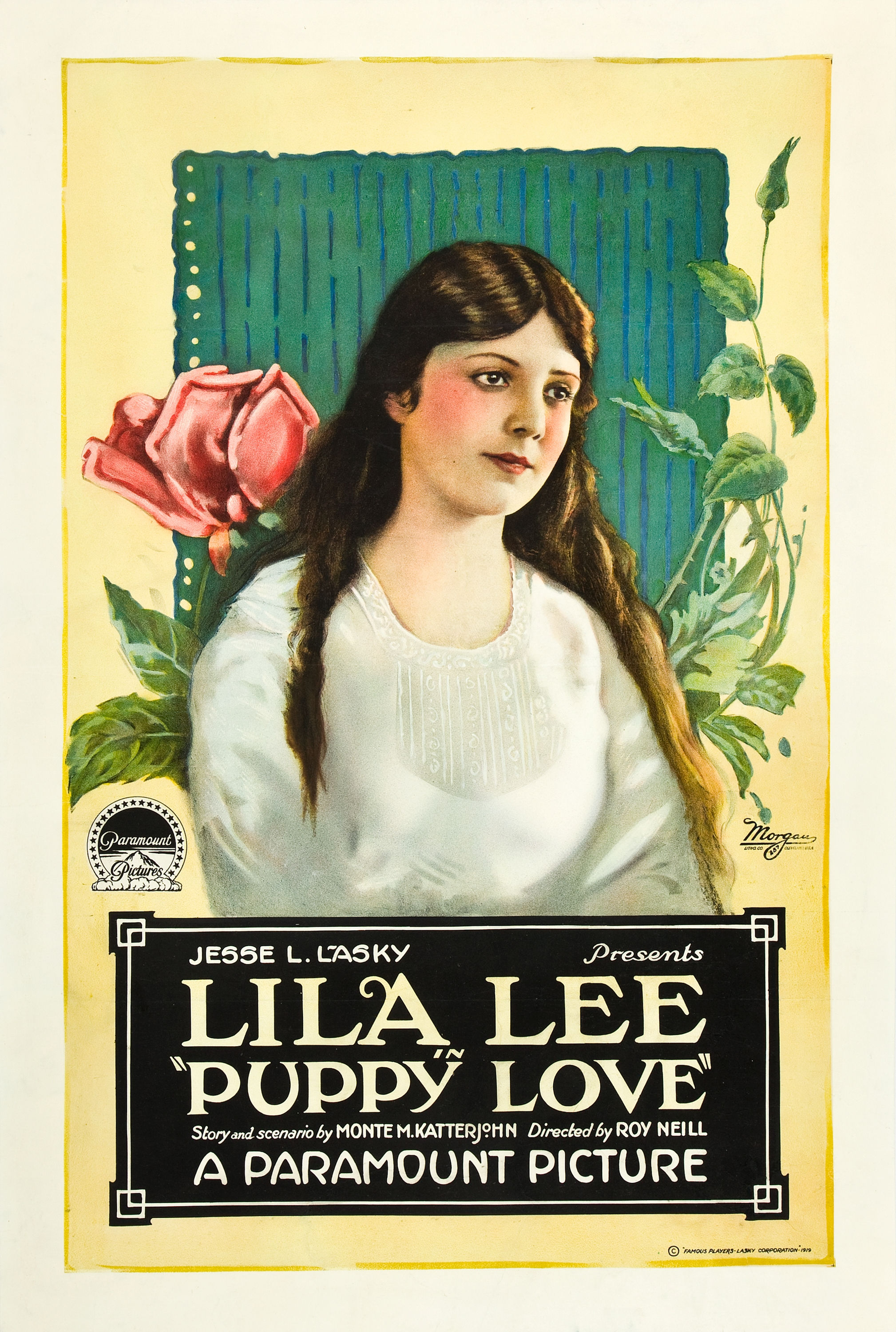
In the pantheon of silent cinema, few films capture the awkward, shimmering transition from childhood innocence to the precipice of adulthood with as much idiosyncratic charm as Puppy Love (1919). Directed by Roy William Neill and scripted by the formidable Monte M. Katterjohn, this piece of celluloid history is far more than a mere romantic comedy. It is a biting, albeit lighthearted, commentary on the performative nature of maturity and the often-absurd barriers erected by the preceding generation. While contemporary audiences might initially view the plot as a standard 'star-crossed lovers' trope, a deeper excavation reveals a sophisticated interplay between urban ambition and provincial stagnation.
The film introduces us to Gloria O’Connell, portrayed with a radiant vulnerability by Lila Lee. Her performance provides the emotional anchor for a story that frequently threatens to veer into the realm of the grotesque. Opposite her, Harold Goodwin’s James Oliver embodies the burgeoning American spirit of the era—resourceful, slightly arrogant, and deeply committed to the theatricality of his own desires. Their chemistry is the engine that drives the narrative forward, making the parental decision to separate them feel not just like an inconvenience, but like a fundamental disruption of a natural law.
The shift in setting to the small town where Gloria’s aunts reside serves as a brilliant narrative pivot. These three 'spinster' aunts—played with a chillingly precise domesticity by Josephine Crowell, Alice Knowland, and Helen Dunbar—represent the potential future Gloria faces if she succumbs to the societal expectations of her gender. The film uses their home as a sort of purgatory for the young protagonist. Unlike the thematic weight found in The Blindness of Love, where affection is often clouded by tragic circumstance, Puppy Love treats the lack of romantic fulfillment as a localized epidemic.
Katterjohn’s screenplay takes a sharp, almost cynical turn when James arrives in town as a reporter. His mission to document the 'old-maid population' is a fascinating meta-commentary on the burgeoning power of the press. James isn't just a lover; he is a manipulator of narratives. This adds a layer of complexity to his character that we rarely see in similar films like Mr. Fix-It, where the protagonist's motives are often more singular. James’s willingness to exploit the town’s social fabric for his own professional gain—and as a smokescreen for his romantic pursuit—paints him as a modern anti-hero in a silent film’s clothing.
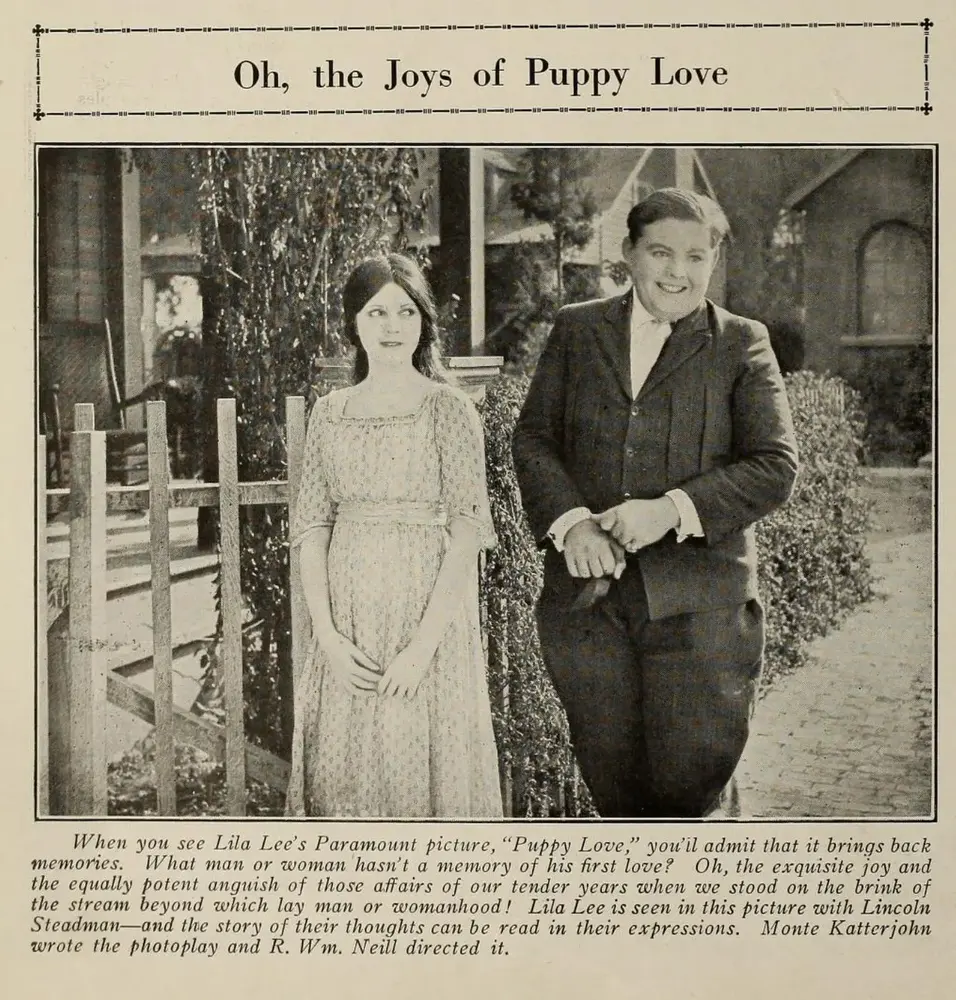
The introduction of 'Hippo' Harger, played by Lincoln Stedman, injects a necessary dose of physical comedy and rivalry. Harger is the antithesis of James: he is stationary, physically imposing in a way that suggests lethargy rather than strength, and deeply entrenched in the town’s status quo. The rivalry between James and Hippo is not merely over Gloria’s hand; it is a battle between the dynamic, evolving world of the city and the static, self-satisfied world of the province.
The duel scene is a masterclass in silent film pacing. It subverts the traditional notions of chivalry found in earlier cinematic efforts such as The Velvet Paw. Instead of a dignified clash, we are presented with a farcical encounter that highlights the absurdity of masculine ego. This sequence serves as the film’s tonal peak, balancing the high stakes of the romance with the ridiculousness of the characters' methods. It is here that Neill’s direction shines, utilizing the frame to emphasize the physical disparity between the two suitors and the sheer panic of the impending confrontation.
The narrative's climax is precipitated by the publication of James’s story. In a move that feels surprisingly contemporary, the town’s 'disgruntled old maids' do not take the insult lying down. Their hunt for the author is portrayed with a frantic, almost Keystone Cops-esque energy, yet there is an underlying pathos to their anger. They are the victims of a narrative they didn't write, much like the characters in Barriers of Society.
Gloria’s reaction to the chaos—a fit of pique that leads her to the office of the justice of the peace with Hippo—is perhaps the film’s most human moment. It isn't a decision made out of love, but out of a desperate need for agency in a world that has treated her as a pawn. The rescue by James is not just a romantic gesture; it is a restoration of the narrative balance. The fact that the film concludes with parental understanding suggests a softening of the generational divide, a recognition that the 'puppy love' of the youth might actually possess more substance than the cynical arrangements of the elders.
Visually, Puppy Love benefits from the crisp cinematography typical of the late 1910s. The lighting in the aunts' home is particularly noteworthy, often using shadows to create a sense of claustrophobia that mirrors Gloria’s internal state. Compared to the more expansive, rugged landscapes of Where the Trail Divides, this film is an exercise in domestic intimacy. Every prop, from the dusty lace of the aunts' parlor to the chaotic ink-stained desks of the newspaper office, tells a story of its own.
The pacing, managed by editor-director collaboration, ensures that the 1500-odd feet of film never feel stagnant. There is a rhythmic quality to the intertitles, which Katterjohn uses to inject a dry wit that elevates the material. While it may not have the philosophical depth of Dukhovnye ochi, it possesses a vitality and a sense of humor that makes it incredibly accessible even a century later.
Puppy Love is a significant work because it refuses to patronize its young protagonists. It acknowledges the intensity of their feelings while gently mocking the world that tries to contain them. It stands as a testament to Lila Lee’s burgeoning stardom and Monte M. Katterjohn’s ability to weave social critique into the fabric of popular entertainment. For those interested in the evolution of the romantic comedy, or simply in a well-told story of rebellion and reconciliation, this film is an essential watch. It reminds us that while the technology of storytelling changes, the fundamental human experience of falling in love—and the chaos it creates—remains delightfully, frustratingly constant.
Reviewed by the Cinephile's Archive – 2024 Edition.
IMDb —
1922
Community
Log in to comment.