DbcultAccessing Vault...
6.5/10
Senior Film Conservator
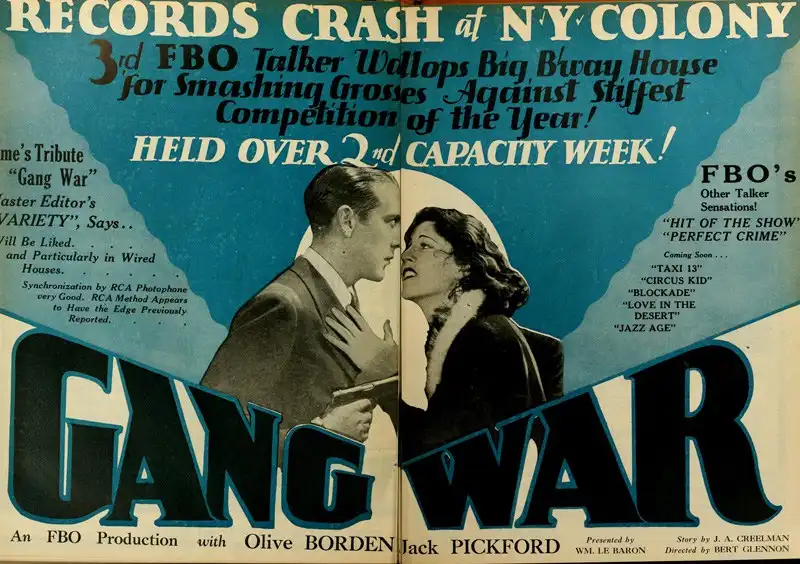
A definitive 6.5/10 rating for a film that redefined the boundaries of cult cinema. Gang War remains a cornerstone of transgressive art.
For most casual viewers, Gang War, a silent crime drama from 1928, will feel like a relic, its pacing and storytelling conventions demanding patience. However, for those with a genuine interest in silent cinema, early gangster films, or the careers of its lead actors—particularly the magnetic Olive Borden—it offers enough compelling moments to justify a viewing. If you're accustomed to modern narrative speeds and rely on spoken dialogue, this film will likely test your resolve. But if you appreciate the visual storytelling and unique performance styles of the era, there are certainly elements to appreciate.
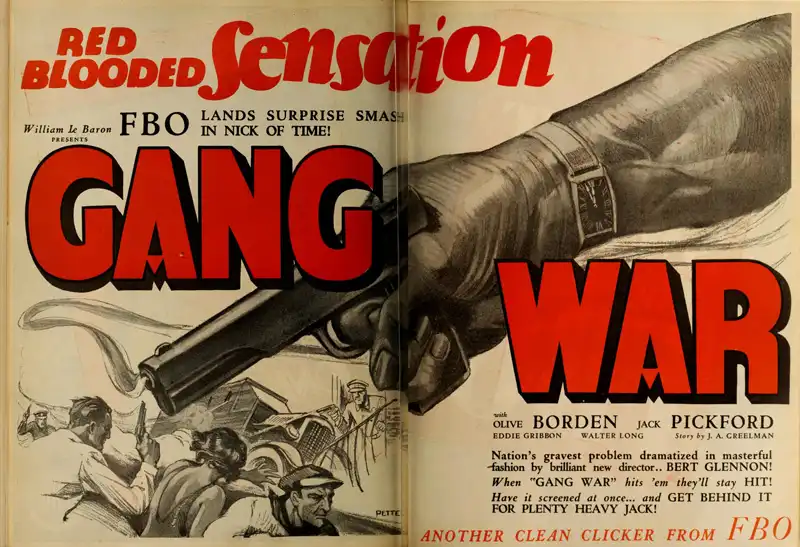
The film's emotional core, and often its most engaging aspect, rests squarely on the shoulders of its cast. Olive Borden as Flowers is the standout. Her performance is a masterclass in silent film acting, conveying a complex mix of vulnerability, defiance, and burgeoning affection primarily through her expressive eyes and subtle shifts in posture. She manages to imbue Flowers with a genuine sense of agency, even when caught between two powerful men. There's a particular scene where she first realizes Blackjack's true nature; the way her face subtly hardens, a flicker of fear mixed with a nascent resolve, speaks volumes without a single intertitle.
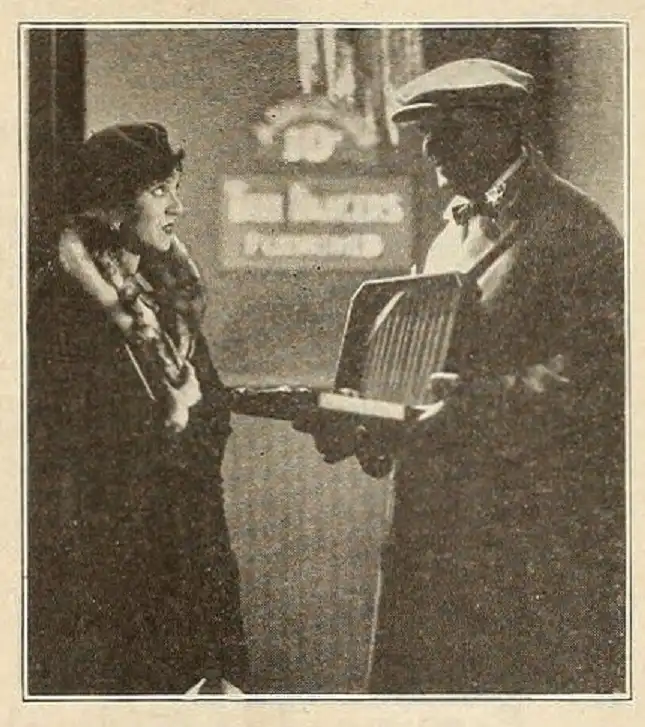
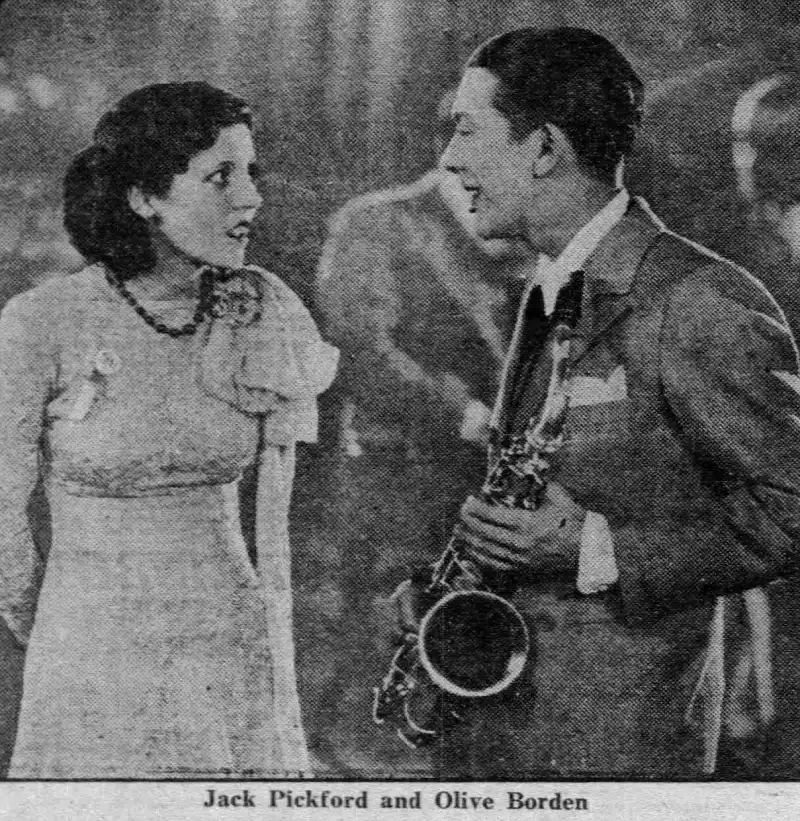
Jack Pickford, as the saxophone player Clyde, delivers a more uneven performance. He’s charming enough in his lighter scenes, particularly when teaching Flowers to dance, where his physical awkwardness adds a touch of endearing realism. Yet, when the narrative demands more intense emotionality or heroic action, Pickford often struggles to convey the gravitas required. His moments of rage or despair sometimes feel more posed than truly felt, lacking the raw intensity that Borden brings to her role. It’s a performance that hints at potential but doesn't always fully deliver.
The true menace of the film comes from Walter Long as Blackjack. Long, a veteran of many silent villain roles, plays the gang leader with a brutish physicality that is genuinely intimidating. He doesn't rely on overt theatrics; instead, his presence is a constant, simmering threat. The sheer size of him, combined with his piercing gaze, makes every interaction with Flowers feel precarious. His performance is a reminder of how effectively silent actors could build a character through pure physicality and a well-timed glare.
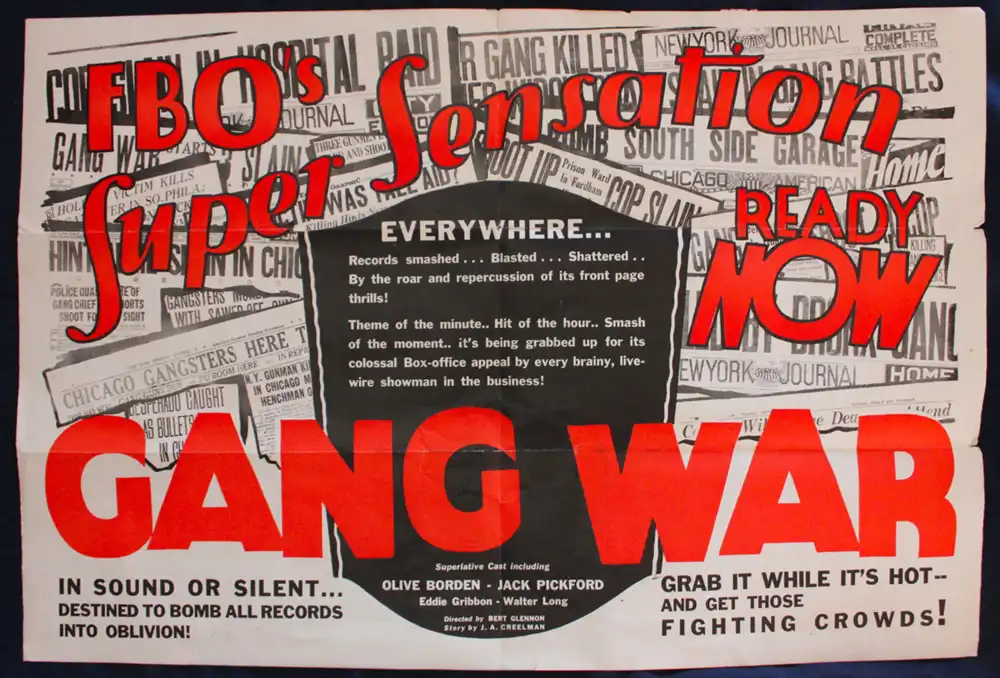
Gang War often struggles with its own narrative momentum. The opening sequences, establishing Clyde's life on the waterfront and his initial encounters with Flowers, are leisurely paced, allowing for a pleasant, if somewhat slow, build-up of their relationship. However, once Blackjack enters the picture and the love triangle solidifies, the film oscillates between moments of genuine tension and prolonged stretches where the plot feels stuck in neutral. There’s a specific sequence involving a gang raid on a dance hall that, despite its potential for chaos, feels surprisingly static, relying on repetitive shots of characters hiding rather than dynamic action.
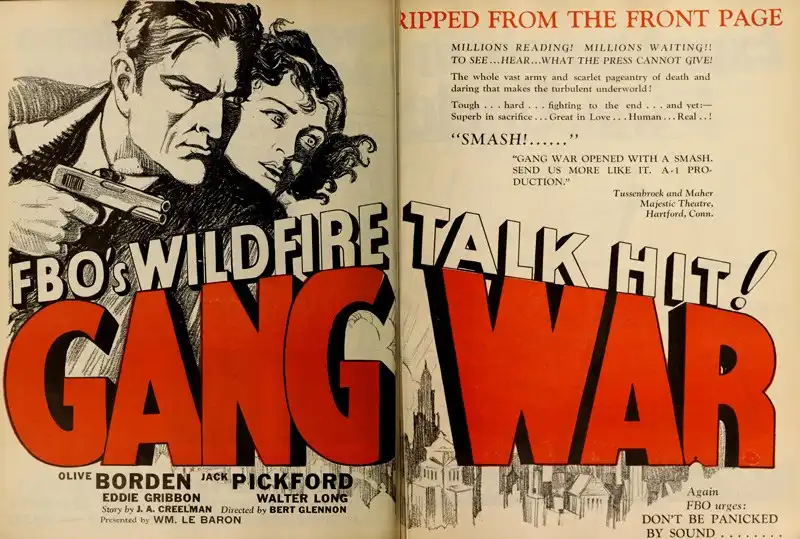
The tonal shifts are also notable. The film attempts to balance a gritty urban crime drama with a more romantic melodrama, and it doesn't always succeed gracefully. The romantic interludes between Clyde and Flowers, while sweet, sometimes deflate the hard-boiled atmosphere established by Blackjack's presence. There are moments where the film leans too heavily into sentimentality, particularly in its resolution, which feels a little too neat and abrupt after the escalating violence preceding it. The final confrontation, while visually engaging, feels rushed, almost as if the filmmakers weren't quite sure how to wrap up the threads of violence and romance simultaneously.
Visually, Gang War offers some compelling glimpses into late 1920s San Francisco and the conventions of silent filmmaking. The cinematography, particularly in the exterior shots of the waterfront, evokes a strong sense of place. The fog-laden docks, the bustling activity, and the stark contrast between the city's glamour and its underbelly are well-captured. There's a noticeable effort to use lighting to convey mood, with shadowy interiors for Blackjack's lair and brighter, more open compositions for Clyde and Flowers' romantic scenes.
One particular visual detail that stands out is during the scene where Clyde teaches Flowers to dance. The camera often focuses tightly on their feet, emphasizing the intricate steps and the physical connection forming between them, almost as if the dance itself is a silent dialogue. This close-up on their footwork, rather than just their faces, is a subtle but effective way of communicating their growing intimacy before any romantic intertitles appear. The film also makes good use of its set pieces, especially the crowded dance halls, which feel vibrant and authentic, providing a lively backdrop to the unfolding drama.
Gang War is a film of notable highs and frustrating lows. Its primary appeal lies in the strength of Olive Borden and Walter Long's performances, which provide a compelling anchor to an otherwise somewhat meandering plot. While it doesn't quite achieve the iconic status of other silent crime dramas, it's a valuable piece for those looking to explore the genre's early days. If you're a silent film devotee, it’s worth watching for Borden alone. For everyone else, approach with an understanding of its historical context and a willingness to appreciate its visual storytelling over its narrative consistency. It’s not a masterpiece, but it’s far from a lost cause, offering enough specific pleasures to warrant a look for the right audience.
IMDb 6.6
1936
Community
Log in to comment.