DbcultAccessing Vault...
6.9/10
Senior Film Conservator
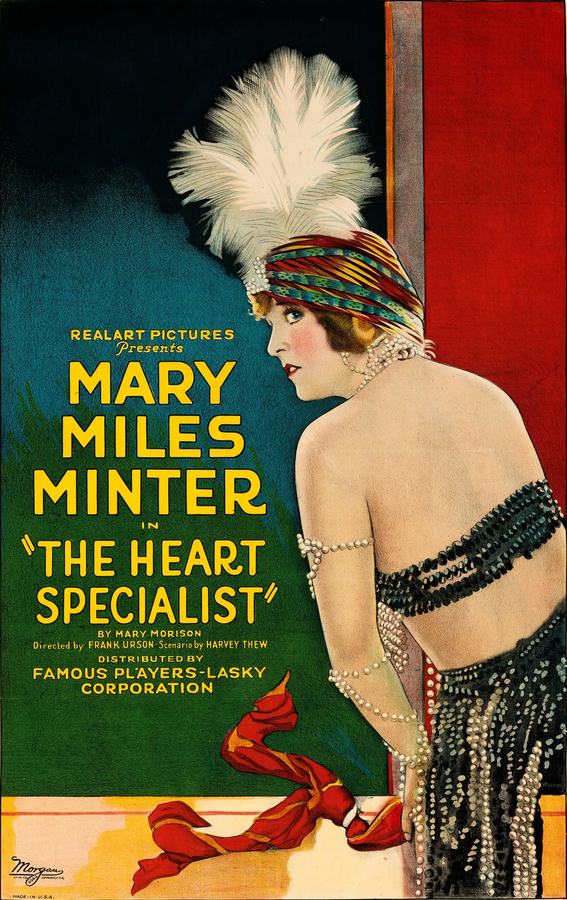
A definitive 6.9/10 rating for a film that redefined the boundaries of cult cinema. The Heart Specialist remains a cornerstone of transgressive art.
New York, 1922: a city that never sleeps but frequently fibs. Into that echo chamber of gossip and newsprint steps Rosalie Beckwith, dispenser of saccharine counsel to the lovelorn, her columns as frothy as a Woolworth soda yet hollow as a Prohibition flask. When her editor threatens to pull the plug—arguing that genuine romance has gone the way of the passenger pigeon—Rosalie wagers her livelihood that she can unearth an authentic love story within a forty-mile radius. The dart lands on Essex, a postcard town where the Connecticut River sighs into Long Island Sound, and so begins a fever dream of impersonation, embezzlement, and redemption that could only bloom under the flickering iris of a silent film.
From the instant the train’s iron lungs wheeze to a halt, the picture revels in doubleness: Rosalie is mistaken for the exotic Madame Murat Bey, a woman whose name alone carries Ottoman spices and crumbling empire. The gag is vintage 1920s Americana—ethnic mystique served with a side of hokum—yet it gifts our heroine a mask behind which she can finally interrogate her own artifice. The estate she inherits on paper is Gothic without the cliché thunderstorm: sun-dappled conservatories, a lame heir encased in tweed and regret, and a medical custodian whose smile never reaches the eyes. Directors of the period rarely enjoyed the luxury of sound to telegraph menace; instead they leaned on the architecture of faces, and Allan Forrest as Dr. Thomas Fitch possesses the sort of cheekbones that throw their own shadows. One glance and you know the ledger books are bleeding red.
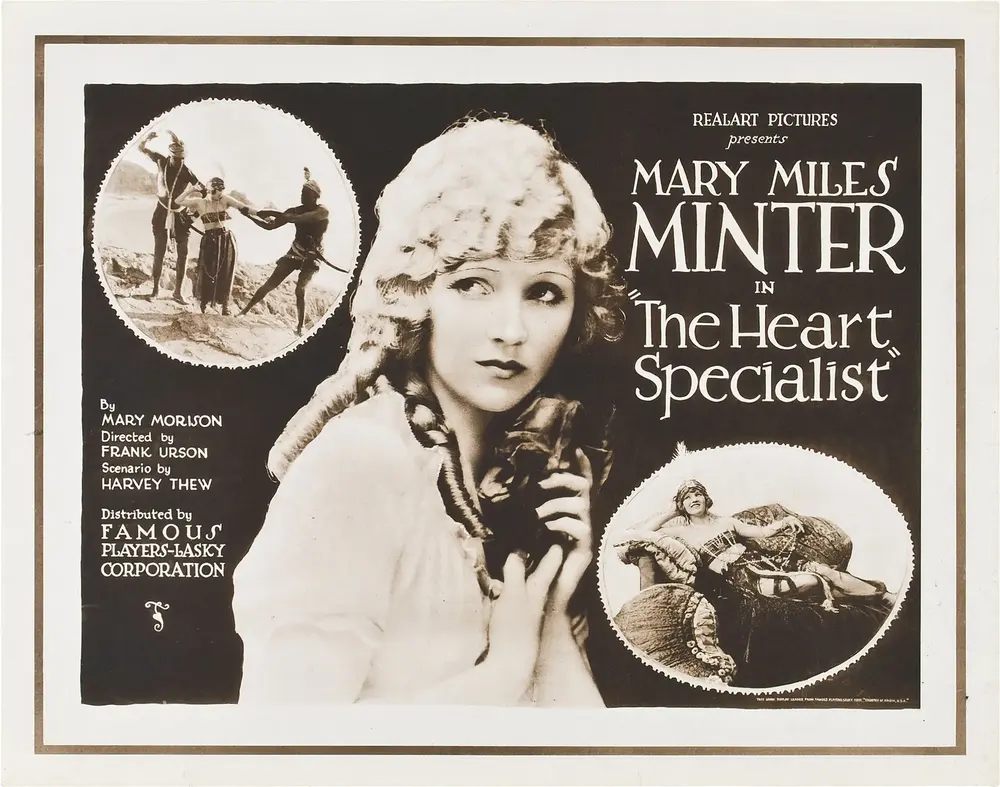
The film’s midpoint pirouette into outright thriller territory is where The Heart Specialist distinguishes itself from the glut of drawing-room comedies then glutting Broadway and Main Street. The discovery of poison—white powder sprinkled like January frost across a silver dish—transforms the narrative from featherweight farce to something approaching Jacobean revenge. Suddenly the intertitles no longer whisper sweet nothings; they bristle with exclamation, a typographic shriek. Cinematographer Frank Zucker reframes Essex as an amphitheater of suspicion: low angles tilt parlors into prisons, and Dutch canted shots suggest a moral axis slipping off its pedestal.
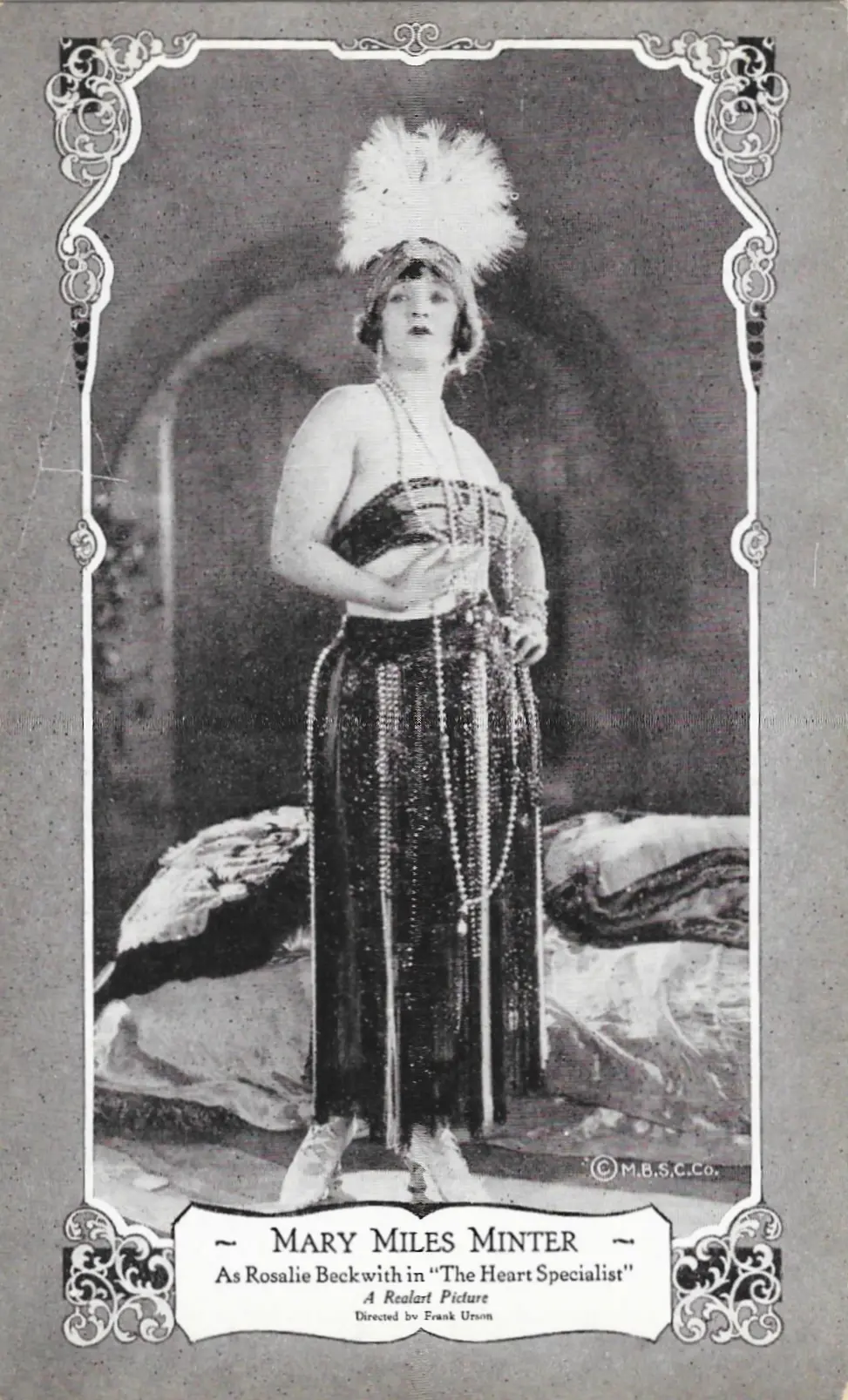
Mary Miles Minter, a star whose luminescence would soon be eclipsed by scandal off-screen, carries the picture with a kinetic innocence that borders on the uncanny. Watch the sequence where she claws her way out of the estate’s well: fingernails packed with loam, hair matted like river weed, yet her eyes retain the startled clarity of a stained-glass saint. It is a resurrection shot through with guilt; she is both Christ and Magdalene, emerging from the tomb of her own deceit. Silent acting too often gets caricatured as semaphore histrionics, but Minter works in micro-movements—the flutter of a lash, the swallow that betrays fear—calibrated for the intimacy of the camera.
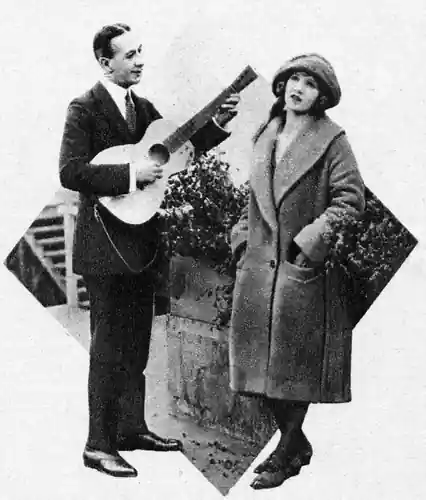
Roy Atwell provides comic oxygen as the perpetually flustered lawyer, his stammer timed like a malfunctioning metronome. Yet the picture refuses to let comedy undercut dread; even his pratfalls echo with the thud of mortality. Compare this tonal tightrope to Blessée au coeur, where Gallic whimsy frequently smothers the stakes. The Heart Specialist keeps its poison potent.
Noah Beery, saddled with the thankless role of the ostensible heavy, nonetheless injects pathos into Dr. Fitch’s final moments. Trapped inside his glass laboratory amid vapors the color of absinthe, he claws at beakers as though seeking absolution from chemistry itself. The kill is grotesque yet poetic: a man murdered by the very elixirs he hawked as salvation. One thinks of The Bells (1918) and its guilt-ridden burgomaster, though here the comeuppance is swifter, almost merciful.
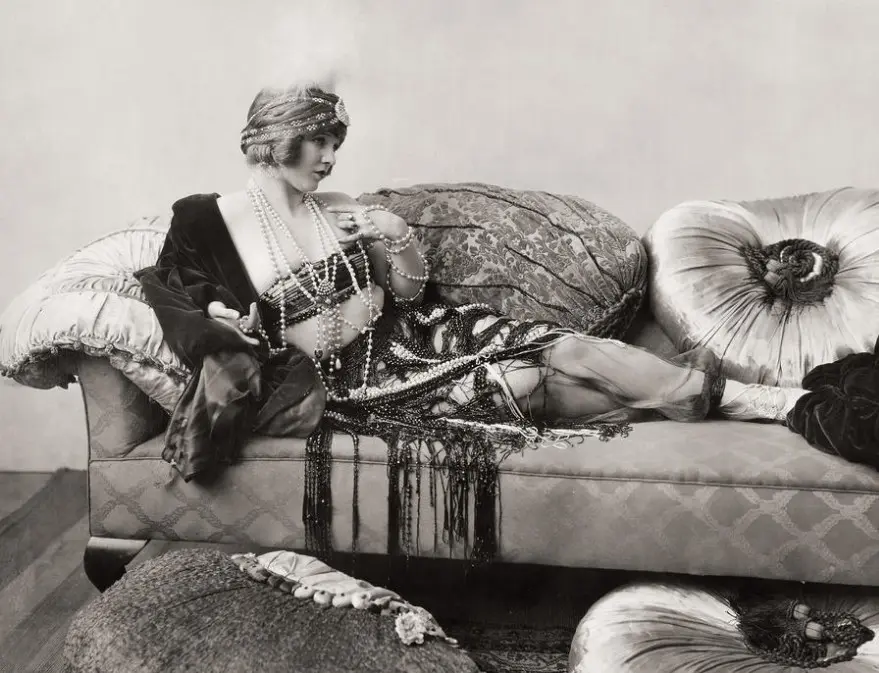
The women’s prison finale feels startlingly modern. Grace Fitch, shackled and sneering, is framed against iron bars that stripe her face like a penitent’s mask. No reformation monologue is proffered; the camera simply holds on her eyes until the contempt calcifies into something approaching tragic insight. It is a nod, perhaps unconscious, toward the suffrage ferment of the era: the new woman may occupy the dock, but she still commands the lens.
Scriptwriters Mary Morrison and Harvey F. Thew lace the intertitles with jazz-age slang that crackles like a radio valve: “You can’t sell love short on the Big Board, kiddo!” Rosalie quips early on, and the line reverberates once she learns that affection can indeed be short-sold, embezzled, poisoned. Dialogue doubles as moral commentary, a Brechtian trick before Brecht hit the mainstream.
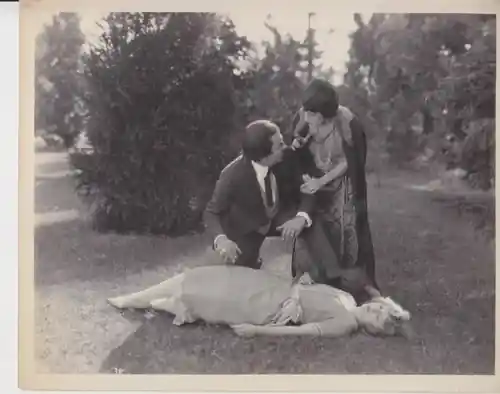
Visually, the picture flirts with German Expressionism without plunging into full Caligari carnival. Note the staircase where Bob Stratton—leg wrapped in a veteran’s brace—descends like a wounded Siegfried, spurs clanking against mahogany. Shadows pool so thickly they seem upholstered onto the walls, and for a heartbeat the manor becomes a dream-corridor where every footstep threatens to snap the floorboards into grins.
Yet the film’s enduring pulse lies in its refusal to grant Rosalie an unearned halo. She begins as a peddler of kitsch emotion, is thrust into a life-or-death charade, and must metabolize her own fraudulence. When she finally jettisons her newspaper gig—those towers of pulped pine and deadline hysteria—it registers not as sentimental capitulation but as existential pivot. Love, she learns, is less a commodity to be cataloged than a risk to be inhabited. The final shot—two silhouettes against a Connecticut sunrise—avoids the cliché clinch; instead we get the tentative clasp of hands, a gesture so understated it feels like the first honest sentence in a lifetime of hyperbole.
Comparative context helps gauge the picture’s audacity. Famous Women in World’s Work preaches empowerment via biography, while The Runaway chases tomboy liberation through slapstick locomotion. The Heart Specialist fuses proto-feminist inquiry with pulp suspense, a hybrid rare in 1922. Even The Lion Man, for all its swashbuckling testosterone, lacks the nerve to let its heroine both unmask villainy and renounce careerism in the same breath.
Restoration efforts by the Library of Congress in 2019 unearthed a 35mm nitrate print long thought lost in the Fox vault fire of 1937. The tinting—amber for interiors, viridian for poison sequences—restores the chromatic rhetoric original audiences savaged. Under the baton of composer Alicia Pérez, the new score melds col legno strings with muted trumpet, evoking both speakeasy swagger and Puritan dread. Viewed today, the movie vibrates with uncanny topicality: fraudulent caretakers, crumbling dynasties, media empics built on half-truths. One watches Dr. Fitch cook his books and thinks of overnight crypto-grifters, of Theranos, of columnists who monetize heartbreak by the pixel.
Criticisms? The middle act sags under a surfeit of secondary characters—stable boys, spinster aunts—whose subplot trails evaporate like ether. And the resolution, while cathartic, denies us the courtroom catharsis a Hitchcock would later relish; instead we leap from laboratory inferno to matrimonial dawn with the alacrity of a splice. Yet these are quibbles against the film’s broader triumph: its conviction that romance, to qualify as “true,” must survive not merely misunderstanding but malice, theft, and the abyss of one’s own fabrication.
So, a century on, why should algorithmic eyeballs invest seventy-four flicker-lit minutes in The Heart Specialist? Because it stages the wager at the core of every dating app swipe: that authenticity can blossom from artifice, that a lie admitted might yet ferry us toward something like grace. Because Mary Miles Minter’s gaze—caught between the Scylla of scandal and the Charybdis of censorship—still glimmers with the prelapsarian faith that stories can save us, even as they expose us. And because the toxic fumes that snake through Dr. Fitch’s lab remind us that every era gets the charlatans it deserves, and sometimes, if the projector bulb is hot enough, the antidote arrives wearing a silk cloche and a borrowed name.
Verdict: 8.7/10—a silken time-capsule of Jazz-Age anxiety, salted with poison, redeemed by a woman who learns that the heart’s best specialist is the heart itself—provided it survives the plunge down the well.
IMDb —
1919
Community
Log in to comment.