DbcultAccessing Vault...
Cult Review
Senior Film Conservator
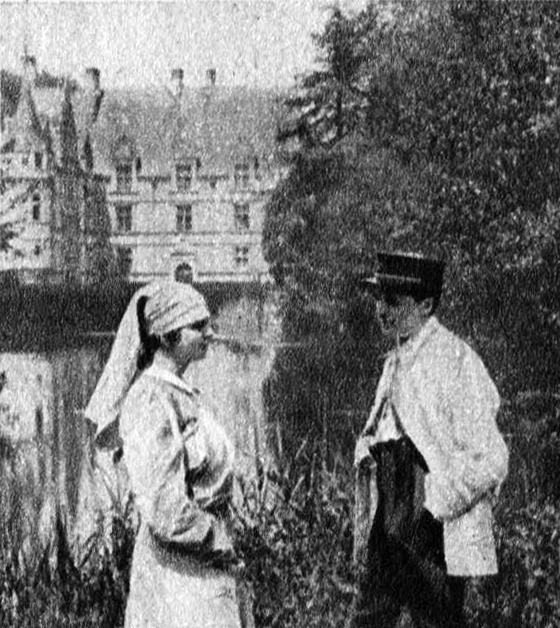
To witness Trois familles is to step into a time capsule that vibrates with the anxieties of a world rebuilding itself. Released in the wake of the Great War, this 1919 production stands as a monumental achievement in French silent cinema, a period where the medium was shedding its theatrical origins and embracing a more nuanced, purely visual vocabulary. René Jeanne, primarily known as a historian and critic, brings a rigorous intellectualism to the script, ensuring that every narrative thread serves a larger thematic purpose. Unlike the more escapist fare of the era, such as The Hell Cat, Jeanne’s work here is grounded in a gritty, almost tactile reality that prioritizes social commentary over spectacle.
The performance of Séverin-Mars is nothing short of transcendent. In an era where silent acting often leaned into broad, pantomimic gestures, he offers a masterclass in subtlety and interiority. His face becomes a landscape of suppressed emotion, conveying the crushing weight of ancestral duty and the silent agony of a man watching his world dissolve. There is a specific scene in the second act—where he sits alone in a library, the shadows lengthening across his face—that rivals the psychological depth found in contemporary psychological dramas like Fedora. His presence anchors the film, providing a steady pulse to a narrative that might otherwise feel overly sprawling.
Supporting him is Suzanne de Behr, whose portrayal of a woman caught between her desires and her social obligations is equally compelling. She avoids the clichés of the 'damsel in distress' or the 'femme fatale'—archetypes often explored in films like Saint, Devil and Woman. Instead, de Behr imbues her character with a quiet resilience, a recognition that her survival depends on her ability to navigate the treacherous waters of French high society. The chemistry between the cast members, including the reliable Henri Bosc and Suzanne Bianchetti, creates an ensemble dynamic that feels lived-in and authentic.
Technically, Trois familles is a marvel of its time. The cinematography utilizes a sophisticated play of light and shadow, a chiaroscuro effect that mirrors the moral ambiguity of the characters. While it may lack the frantic energy of Louis Feuillade’s Tih Minh, it compensates with a deliberate, painterly composition. Every frame feels curated, from the opulent, overstuffed salons of the aristocracy to the cramped, dimly lit quarters of the urban poor. This visual juxtaposition is not merely aesthetic; it is a didactic tool that reinforces the film’s central thesis on the disparity of the human condition.
The production design also deserves significant praise. The attention to detail in the costumes and sets provides a level of immersion that was rare for 1919. We see the stiff collars and restrictive corsets of the upper class as physical manifestations of their rigid social codes, contrasting sharply with the loose, worn garments of the laboring class. This attention to the material reality of the characters' lives reminds one of the grounded approach seen in The Reform Candidate, though Jeanne’s work is significantly more ambitious in its scope.
The structure of the film—dividing the focus between three distinct family units—allows for a panoramic view of French society. This isn't just a story about individuals; it's a story about systems. We see how the decisions made in a sun-drenched chateau ripple outward, affecting the lives of those who will never step foot inside its gates. It shares a certain thematic DNA with The Two Brides, yet it avoids that film’s more sentimental tendencies. René Jeanne is interested in the cold, hard truths of economic and social pressure.
The intercutting between the three families is handled with surprising modernism. The editor (whose work here is foundational) creates a sense of simultaneous action that builds tension without relying on the traditional tropes of the chase or the fight. Instead, the tension is psychological. Will the secret be revealed? Will the financial ruin of one family lead to the salvation of another? It is a slow-burn narrative that rewards the patient viewer, much like the atmospheric tension found in Das Geheimschloss.
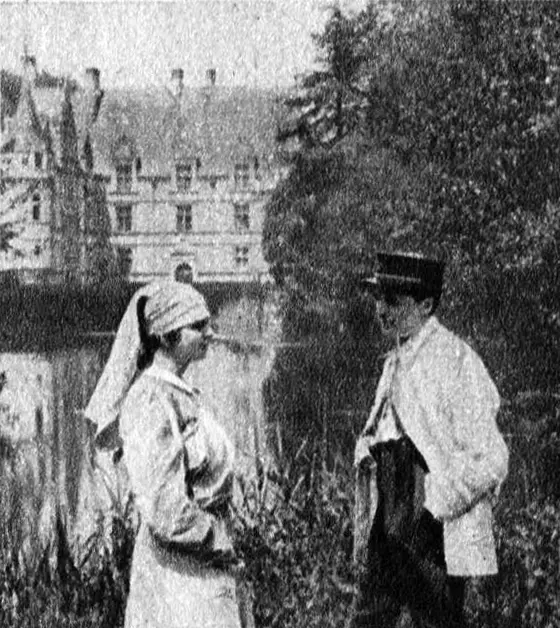
At its heart, Trois familles is haunted by the ghost of World War I. While the war is rarely mentioned directly, its presence is felt in the hollowed-out lives of the characters and the general sense of malaise that permeates the film. The old world is dying, and the new world is struggling to be born. This existential dread is something we also see in German expressionist works of the same period, but here it is filtered through a uniquely Gallic lens of stoicism and social propriety. It lacks the whimsical charm of Der müde Theodor, opting instead for a somber reflection on the cost of progress.
The film also touches upon the concept of the 'unbreakable' man or the survivor, a theme explored in a very different context in The Life Story of John Lee, or The Man They Could Not Hang. In Jeanne’s world, however, the 'hanging' is social and financial. The characters are trapped in a metaphorical gallows of their own making, bound by the expectations of their class. The resolution of the film is neither entirely happy nor entirely tragic; it is, quite simply, inevitable. It is the logic of the world asserting itself over the desires of the individual.
When comparing Trois familles to other films of the era, such as the gritty The Outlaw's Revenge or the sentimental Little Orphant Annie, its sophistication becomes even more apparent. While American cinema was perfecting the art of the individualist hero, French cinema was delving into the collective experience. Jeanne’s film is a precursor to the poetic realism that would dominate French cinema in the 1930s. It shares the same DNA as the works of Renoir or Carné, focusing on the intersection of the personal and the political.
Furthermore, the film’s exploration of corruption and political maneuvering within the middle class provides an interesting counterpoint to The Senator or the bureaucratic critiques in Superintendents. In Trois familles, the corruption is not just institutional; it is moral and familial. It is a rot that starts at the dinner table and spreads to the counting-house. This internal decay is what makes the film so hauntingly relevant even a century later.
It is a tragedy of film history that works like Trois familles are so rarely discussed in the same breath as the titans of the silent era. It lacks the overt propaganda of Outwitting the Hun or the supernatural thrills of Alone with the Devil, but what it offers is far more enduring: a truthful, unvarnished look at the human spirit under the pressure of societal collapse. René Jeanne and his cast have created a work of profound empathy and sharp-eyed observation.
For the modern viewer, the film requires a shift in perspective. One must move away from the expectation of rapid-fire plot points and instead settle into the rhythm of the characters' lives. The rewards are plentiful. From the exquisite lighting to the powerhouse performance of Séverin-Mars, Trois familles remains a vital piece of cinematic heritage. It is a reminder that even in the infancy of the medium, filmmakers were already grappling with the most complex questions of our existence: Who are we when the masks of class and status are stripped away? And can we ever truly escape the families that made us?
In the grand pantheon of silent cinema, this film deserves a seat at the head of the table. It is a rigorous, beautiful, and deeply moving exploration of the ties that bind—and the ties that break.
IMDb —
1916
Community
Log in to comment.