DbcultAccessing Vault...
Cult Review
Senior Film Conservator
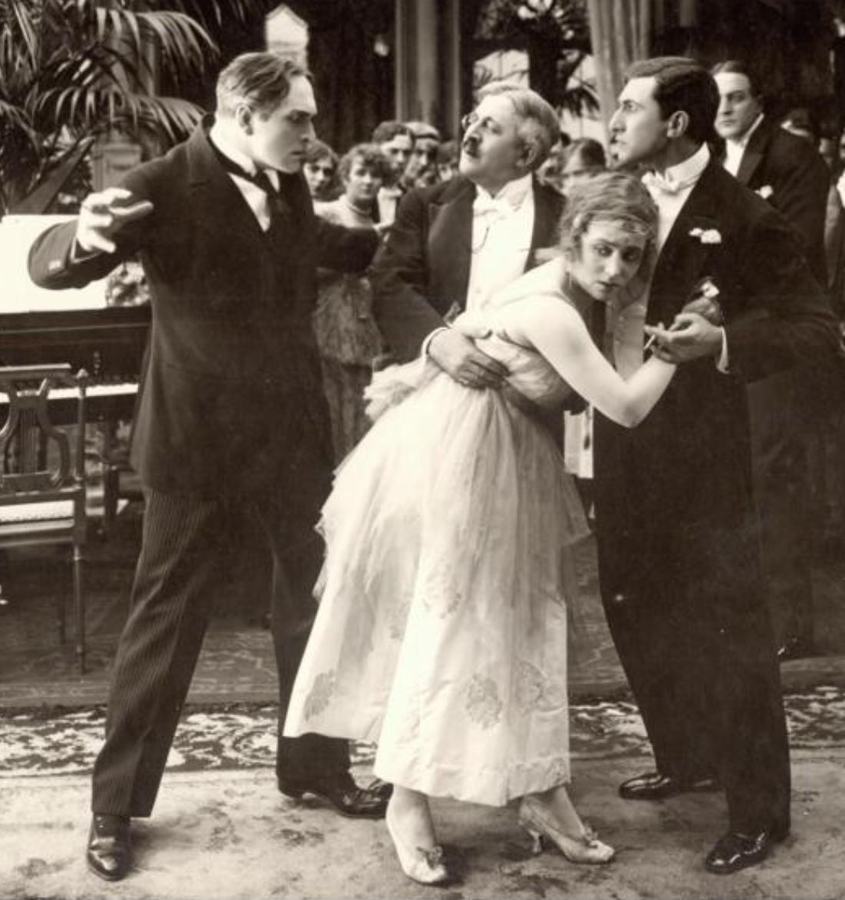
Stepping back into the nascent days of cinema, one often encounters narratives that, despite their technological limitations, possess an astonishing emotional potency. Fritz Magnussen’s Gengældelsens ret, a Danish silent film from an era brimming with dramatic experimentation, stands as a testament to this enduring power. More than a mere period piece, it’s a profound exploration of societal strictures, the crushing weight of familial duty, and the long, unforgiving shadow cast by a singular act of injustice. As a critic, I find myself drawn not just to its historical significance, but to the raw, universal human emotions it so eloquently — and silently — portrays. It's a film that whispers tales of love lost and justice sought, a narrative tapestry woven with threads of yearning and eventual reckoning.
At its core, Gengældelsens ret unfurls a classic tale of forbidden romance, tragically thwarted by the rigid class distinctions prevalent in early 20th-century society. We are introduced to Jan Hemkirk, a young procurator, whose heart has been captured by Majken Huysmann, the daughter of a powerful and influential consul. Their love, tender and clandestine, blossoms in stolen moments, a fragile bloom in the harsh glare of societal expectations. It's a setup as old as time, yet Magnussen imbues it with a particular Danish sensibility, a quiet intensity that feels deeply authentic. The initial scenes, depicting their burgeoning affection, are steeped in an almost idyllic innocence, a fleeting happiness that we, as viewers, instinctively know is doomed to be fleeting.
The catalyst for their undoing is both mundane and devastating: a chance encounter in the bustling harbor, a tender farewell witnessed by Majken's brother. This accidental discovery, far from being a minor inconvenience, sets in motion a chain of events orchestrated by the formidable Consul Huysmann. The consul, a figure of imposing authority and unyielding social conservatism, views his daughter's affections for a mere procurator as an affront to his family's standing, a stain upon their prestigious name. His reaction is swift, brutal, and entirely devoid of empathy: Jan Hemkirk is dispatched, without consultation or choice, on a distant mission to India. This forced exile, a geographical banishment disguised as a professional assignment, serves as the narrative's central turning point, transforming a simple love story into a poignant drama of separation and the slow-burning embers of resentment.
The performances in Gengældelsens ret, typical of the silent era, rely heavily on expressive physicality and nuanced facial gestures, yet they transcend mere melodrama to convey genuine emotional depth. Valdemar Møller as Jan Hemkirk masterfully portrays the young procurator's journey from hopeful lover to a man marked by injustice. His initial idealism gives way to a hardened resolve, a quiet determination that hints at the film's titular theme. Møller's eyes, even through the grainy lens of early cinema, communicate a profound sense of loss and a nascent desire for justice that resonates long after the intertitles fade. His transformation is not merely physical but spiritual, a testament to the character's internal struggle.
Opposite him, Clara Pontoppidan, a celebrated star of Danish silent cinema, delivers a compelling performance as Majken Huysmann. Her portrayal is a delicate balance of vulnerability and quiet strength. We witness her initial joy, her agonizing heartbreak at Jan's forced departure, and her enduring loyalty. Pontoppidan’s ability to convey complex emotions with a mere tilt of the head or a subtle shift in gaze is remarkable, making Majken a deeply sympathetic figure. Her suffering is palpable, yet she never descends into mere victimhood; there is a resilience in her sorrow that speaks volumes.
The antagonist, Consul Huysmann, brought to life by Cajus Bruun, is a formidable presence. Bruun embodies the rigid, unforgiving patriarchy of the era, his every gesture radiating power and an unshakeable belief in his own righteousness. He is not a mustache-twirling villain, but a man driven by a misguided sense of honor and social preservation, making his actions all the more chillingly believable. The consul's son, whose unwitting role as a spy precipitates the tragedy, also adds a layer of complexity, embodying the societal pressures that can turn even familial bonds into instruments of control. The ensemble, including talents like Augusta Blad and Olaf Fønss, contribute to the rich tapestry of supporting roles, each adding texture to the film's social landscape.
Fritz Magnussen, as both writer and director, demonstrates a keen understanding of cinematic storytelling in Gengældelsens ret. His direction, while adhering to the conventions of the silent era, feels remarkably sophisticated. He masterfully utilizes intertitles not merely to convey dialogue, but to advance the plot, articulate internal monologues, and provide crucial exposition, often with a poetic flair. The cinematography, though characteristic of its time with its static shots and occasional grand vistas, is effective in establishing mood and place. The stark contrast between the bustling Danish harbor and the exotic, perhaps lonely, landscapes of India would have been visually striking to contemporary audiences, emphasizing Jan's displacement and the vastness of his exile.
The film's visual language is particularly adept at conveying emotion without spoken words. Close-ups are strategically employed to highlight a character's anguish, determination, or internal conflict. The use of light and shadow, a fundamental tool in early cinema, is often employed to underscore dramatic tension or to symbolize emotional states. For instance, scenes depicting the consul's machinations might be bathed in a harsher, more foreboding light, while moments of Jan and Majken’s shared affection might be softer, more diffused. This attention to visual detail elevates the narrative beyond simple melodrama, giving it a timeless quality.
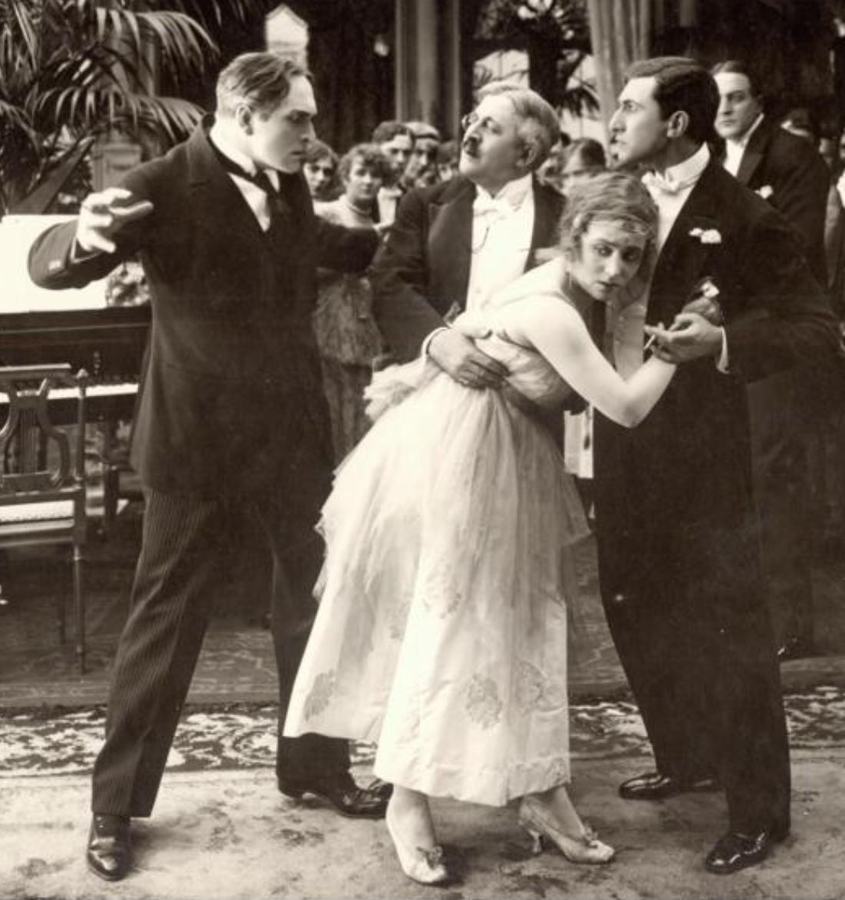
The film's title, Gengældelsens ret, which translates to 'The Right of Retaliation' or 'The Right of Revenge,' is not merely a descriptive label; it is a thematic declaration. It immediately primes the audience for a narrative where wrongs will be righted, and past deeds will inevitably demand their due. This isn't necessarily a simplistic 'eye for an eye' scenario, but rather a deeper exploration of consequence, fate, and the psychological impact of injustice. Does Jan return seeking vengeance, or has his time in India transformed his understanding of justice? The ambiguity inherent in the title allows for a richer, more nuanced interpretation of the narrative's ultimate trajectory.
This thematic preoccupation with the consequences of actions and the yearning for justice finds echoes in other films of the era, albeit with different narrative frameworks. One might consider the grand, sweeping moral questions posed in Civilization, which grappled with the morality of war and peace, or the personal struggles against oppressive forces seen in The Dormant Power. While not direct parallels in plot, these films collectively speak to a period where cinema was grappling with fundamental human dilemmas. Similarly, the societal constraints on love and marriage, though presented differently, resonate with the dramatic tension found in films like La marcia nuziale, where personal desires clash with social expectations. The enduring appeal of such narratives lies in their universal relatability; who hasn't felt the sting of injustice or yearned for a wrong to be righted?
To fully appreciate Gengældelsens ret, one must engage with the unique artistry of silent cinema. It's a medium that demands a different kind of viewership, one that tunes into visual cues, exaggerated expressions, and the emotional resonance of a live musical score (which would have accompanied the film's original screenings). The absence of spoken dialogue forces the audience to become more active participants, interpreting gestures and expressions, filling in the gaps with their own understanding of human emotion. This active engagement often leads to a deeper, more personal connection with the characters and their plight.
The pacing, too, is distinct. Silent films often allowed for longer takes, slower reveals, and a more deliberate build-up of tension, a stark contrast to the rapid-fire editing of modern cinema. This measured rhythm in Gengældelsens ret allows the emotional weight of each scene to fully sink in, making Jan’s separation from Majken, and his subsequent exile, feel profoundly impactful. One can imagine the collective gasp of an early 20th-century audience as the consul's cruel decree unfolds, or the palpable tension as Jan embarks on his unknown fate. The power of a film like this lies not just in its plot, but in its ability to evoke such strong, shared emotional experiences through purely visual means.
Comparing it to other silent films provides further context. While it might not possess the epic scale of The Battles of a Nation, its dramatic intensity is no less compelling. It shares a common thread with films like Jane Eyre (though from a different literary source and national cinema) in its exploration of a protagonist navigating societal class barriers and personal hardship to find their rightful place. The struggle for agency and the fight against overbearing authority are timeless themes that resonate across various cinematic expressions of the period, from grand historical dramas to more intimate character studies like The Gentle Intruder.
In an age dominated by CGI and surround sound, the quiet eloquence of Gengældelsens ret might seem quaint to some. Yet, its power remains undiminished. It serves as a vital historical document, offering a glimpse into the social mores, aesthetic sensibilities, and narrative preoccupations of early Danish cinema. More importantly, it reminds us of cinema's fundamental ability to tell compelling stories, to evoke deep emotion, and to explore complex human experiences regardless of technological advancements. The themes of forbidden love, social injustice, forced separation, and the quest for retribution are as relevant today as they were a century ago.
Fritz Magnussen, along with his talented cast including Peter Malberg and Oscar Nielsen in supporting roles, crafted a film that is both a product of its time and remarkably timeless. It’s a film that asks us to consider the long-term repercussions of hasty decisions, the resilience of the human spirit in the face of adversity, and the often-circuitous path that justice, or 'retaliation,' can take. Viewing Gengældelsens ret today is not merely an act of historical appreciation; it is an immersive experience into a narrative that continues to resonate with its profound understanding of the human condition. It’s a compelling argument for the enduring artistic value of silent film, proving that true drama needs no dialogue to speak volumes.
Ultimately, Gengældelsens ret is more than just a revenge plot; it’s a meditation on fate, choice, and the societal forces that shape our lives. It’s a powerful reminder that even in silence, stories can scream, and emotions can reverberate across generations. Its enduring legacy is a testament to the masterful storytelling of Fritz Magnussen and the expressive power of its actors, solidifying its place as a gem within Danish cinematic history. It beckons us to remember a time when the visual narrative reigned supreme, demonstrating that the right of retaliation, whether personal or societal, often finds its ultimate expression in the relentless march of time and consequence.
IMDb —
1926
Community
Log in to comment.