DbcultAccessing Vault...
Cult Review
Senior Film Conservator
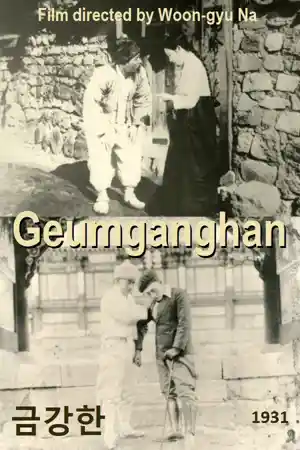
Alright, let’s talk about Geumganghan. Is it worth watching today? Yeah, but with a big asterisk. This one’s for the folks who really dig into film history, especially early Korean cinema, and who don’t mind a slow burn. If you crave sleek, modern narratives, you’ll probably find it a bit of a slog. But for those who can appreciate a certain raw, almost desperate energy, there’s something genuinely compelling here.
It’s a look back, a window into a different time of moviemaking. Not a perfectly polished window, mind you, but a window nonetheless. 🎬
The pacing, for one, is something else. There are moments where the camera just… lingers. Like, on a shot of a river, or a single actor’s face, for what feels like an eternity. It’s not always a bad thing; sometimes it builds this incredible tension. Other times, you just wish they’d cut to the chase.
Woon-gyu Na, who directed and also stars, has this incredible presence. His character, he doesn't say much, but every single movement, every glance, just *screams* determination. You can feel the weight of the world on his shoulders. There’s a scene where he’s just standing on a ridge, looking out over the village, and it goes on about 20 seconds too long. But that silence? It stops being awkward and starts to feel truly heavy, almost like a sigh. That’s when it works.
And Jeong-suk Kim. Wow. Her performance is so big, so expressive. Every emotion is painted on her face. It’s the kind of acting you expect from the silent era, where expressions had to carry everything. Sometimes it felt a bit much, almost theatrical, but then you remember the context.
There’s this particular shot, early on, of a marketplace scene. So much activity, but the camera just zeroes in on an old woman selling rice cakes. You can almost smell them. It’s a tiny detail, easy to miss, but it anchors the whole thing in a real, lived-in world, even with all the melodrama. It felt surprisingly modern for a moment.
The struggle depicted in the film feels so *real*. Not in a hyper-realistic way, but in its emotional core. You can almost feel the movie trying to convince you this moment matters, that every small victory is huge. It really wants you to root for these characters.
I found myself thinking about A Fight to the Finish, actually, just because of that same raw, almost unpolished urgency. It’s a different kind of film, obviously, but that sheer *drive* to tell a story comes through in both.
One reaction shot, during a confrontation with the antagonist, lingers so long it almost becomes funny. You’re just watching the character’s face contort, and you start to wonder if the editor just forgot to cut. But then, you realize the *intent*. It forces you to sit with that character’s distress. It’s a bold choice. Or maybe an accidental one, who knows with these old films! 🤷♀️
The antagonist, played by San-man Won, is just... *so* villainous. He practically oozes menace. He doesn’t have much nuance, really, he’s just a bad guy. But in this context, it totally works. He’s the obstacle, plain and simple, and you want to see him get what’s coming to him.
I remember a scene, late in the film, where the main character just collapses onto the ground after a particularly grueling chase. No music, just the sounds of their labored breathing. It’s a stark moment of quiet. *Very* effective. It gives you a real sense of exhaustion and despair.
Some of the intertitles are a bit clunky, you know? Like, “Alas, fate’s cruel hand grips her tightly!” Very dramatic, very old-school. But it adds to the charm, in a weird way. It's not trying to be subtle, that’s for sure.
The film doesn't wrap everything up in a neat bow. It just kind of… ends. You’re left with questions, still thinking about the characters and their struggles. It’s not the tidy resolution we often expect, and that actually makes it stick with you more. It feels like real life sometimes, things just continue, unresolved. 🤔
This movie gets noticeably better once you accept its rhythms and its particular style. It stops trying to be something it’s not, and you stop expecting it to be. It’s a piece of history, imperfect but full of heart. It really makes you appreciate how far filmmaking has come, but also what was good about those early, raw efforts.
If you're a film student, or just someone curious about the roots of Korean cinema, absolutely give Geumganghan a look. Otherwise, maybe start with something a little more contemporary.
IMDb 6.5
1928
Community
Log in to comment.