DbcultAccessing Vault...
6.5/10
Senior Film Conservator
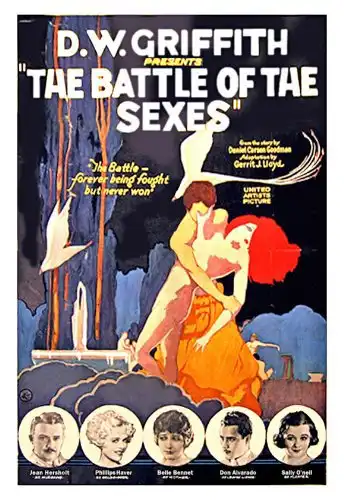
A definitive 6.5/10 rating for a film that redefined the boundaries of cult cinema. The Battle of the Sexes remains a cornerstone of transgressive art.
D.W. Griffith’s 1928 version of The Battle of the Sexes is a film that feels caught between two worlds. On one hand, you have the Victorian morality that Griffith could never quite shake—the idea of the 'sanctity of the hearth' and the fallen man. On the other, you have the high-energy, cynical, gum-chewing reality of the late 1920s. Is it worth watching today? Yes, primarily for fans of silent-era character acting and those interested in how the 'jazz age' was depicted by the older generation. It’s a sharp, well-paced domestic drama that avoids the bloated runtimes of Griffith’s earlier epics, even if its moral compass feels a bit dusty.
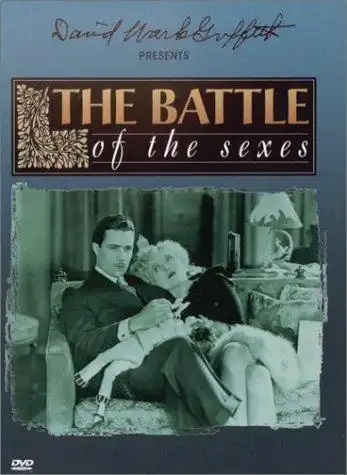
If you are looking for a deep psychological study, you won't find it here. This is a movie about archetypes: the Foolish Father, the Long-Suffering Wife, and the Vamp. However, the film is saved from being a total cliché by the sheer magnetism of Phyllis Haver. If you liked the social maneuvering in The Riddle: Woman, you will find the power dynamics here equally engaging, though significantly more focused on the 'gold-digger' trope.
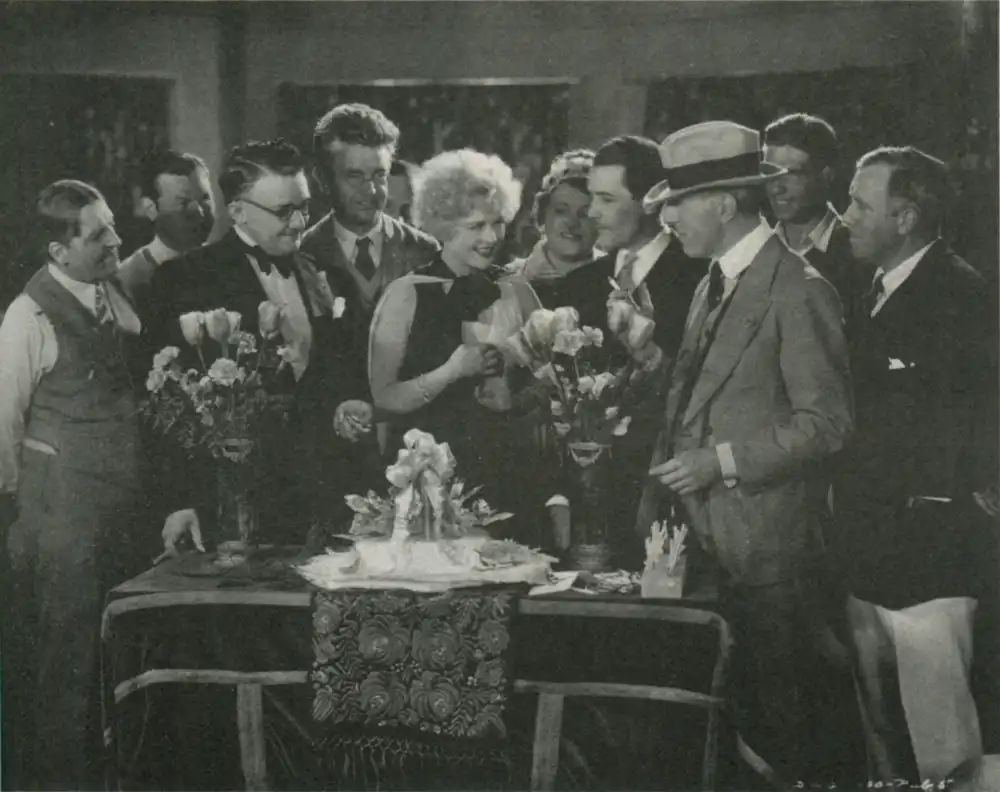
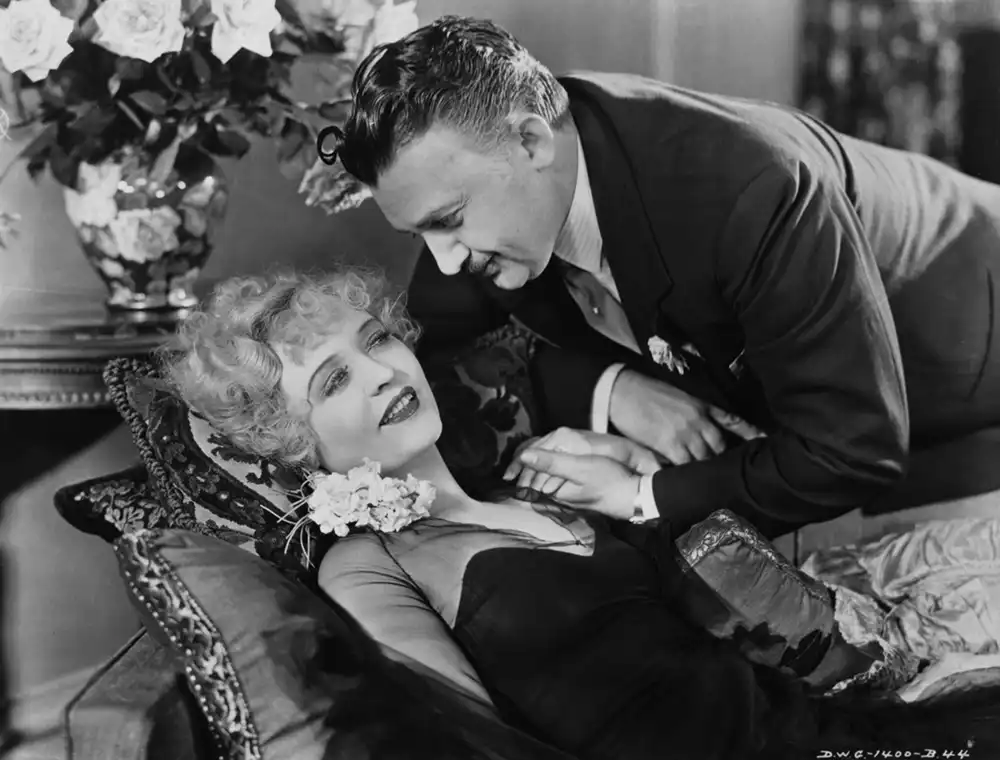
The movie belongs entirely to Phyllis Haver as Marie Skinner. From the moment she appears on screen, frizzy-haired and aggressively chewing gum, she brings a modern energy that the rest of the film struggles to keep up with. There is a specific scene early on where she contrives to meet William Judson (Jean Hersholt) in the hallway of their apartment building. The way she uses her eyes—not just batting them, but narrowing them with a predatory calculation—is a masterclass in silent film performance. She doesn't just play a flirt; she plays a woman who views a middle-aged man as a bank vault to be cracked.
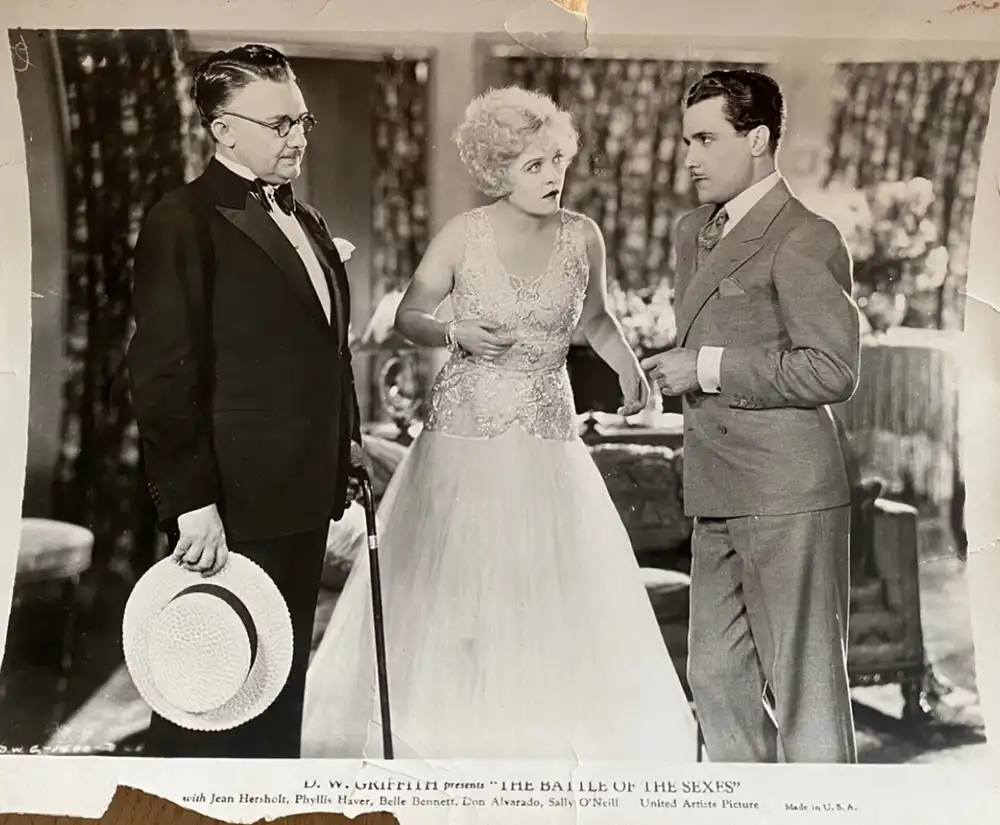
Jean Hersholt is equally good, though in a much more pathetic way. He plays Judson with a soft-bellied vulnerability. You can see the exact moment his ego takes over. When Marie flatters him about his physique or his taste in music, Hersholt lets a subtle, goofy grin spread across his face that tells you everything you need to know about his character's mid-life crisis. He isn't a bad man; he’s just a vain one, and Griffith captures that vanity through tight close-ups of Judson adjusting his tie or preening in front of a mirror.
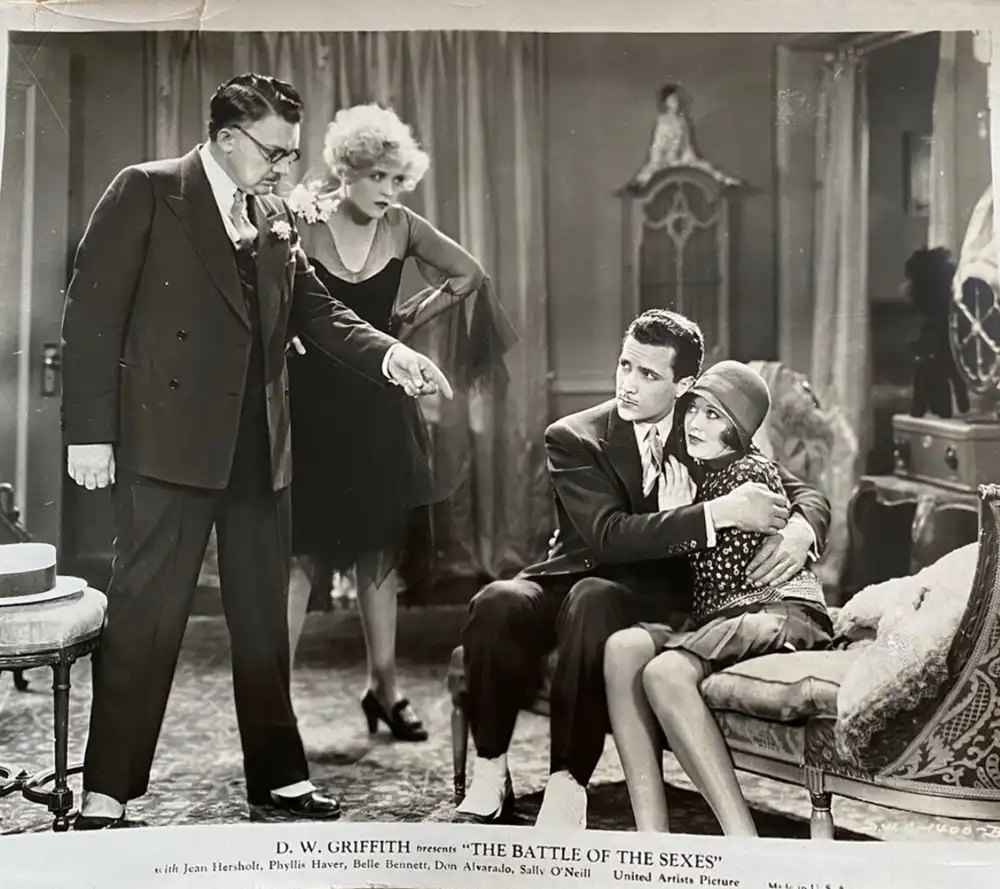
Griffith’s direction here is more restrained than in his earlier works, which actually helps the story. The contrast between the Judson family home—all soft lighting, heavy drapes, and domestic stability—and Marie’s apartment is stark. Marie’s space feels cluttered, modern, and slightly dangerous. There’s a wonderful bit of visual storytelling involving Marie’s boyfriend, Babe (Don Alvarado). He’s the quintessential 'jazz hound,' lounging around in silk robes and coaching Marie on how to fleece the 'old bird.' The chemistry between Haver and Alvarado is oily and convincing; they feel like a genuine pair of grifters who have done this a dozen times before.
The nightclub scenes are where the film really captures the era's energy. The editing rhythm picks up, reflecting the frantic pace of the music and the flashing lights. When the wife (Belle Bennett) spots her husband out with Marie, the camera stays on her face for an uncomfortably long time, capturing the slow realization and the subsequent collapse of her world. It’s a moment that could have felt theatrical, but Bennett plays it with a quiet, hollowed-out shock that feels surprisingly grounded.
The film isn't without its flaws. The pacing drags significantly in the middle act when the 'worthless bonds' plotline is introduced. It feels like a standard melodramatic trope meant to raise the stakes, but it isn't nearly as interesting as the emotional betrayal. Also, Griffith’s heavy-handedness regarding the wife’s despair—including a sequence where she contemplates suicide—feels a bit like it belongs in a much older movie. It’s the kind of 'virtue in distress' storytelling that Griffith leaned on for decades, and by 1928, it was starting to feel repetitive.
The ending also feels a bit rushed. The confrontation between the daughter (Sally O'Neil) and Marie is high-octane and features some great, aggressive blocking, but the resolution of the father’s 'redemption' happens almost too quickly to be believed. One minute he’s ready to throw his life away for a flapper; the next, he’s back at the dinner table as if nothing happened. It’s a tidy ending for a messy situation.
The Battle of the Sexes is a fascinating snapshot of a director trying to stay relevant in a changing cinematic landscape. It succeeds because it leans into the character of Marie Skinner and the specific, grubby details of her scheme. Watch it for the costume design, the expressive performances of Haver and Hersholt, and the way it captures the tension between old-world values and new-world appetites. It’s a solid piece of late-silent cinema that proves Griffith still had an eye for human frailty, even when he was wrapping it in a somewhat predictable package.
IMDb 6.8
1936
Community
Log in to comment.