DbcultAccessing Vault...
Cult Review
Senior Film Conservator
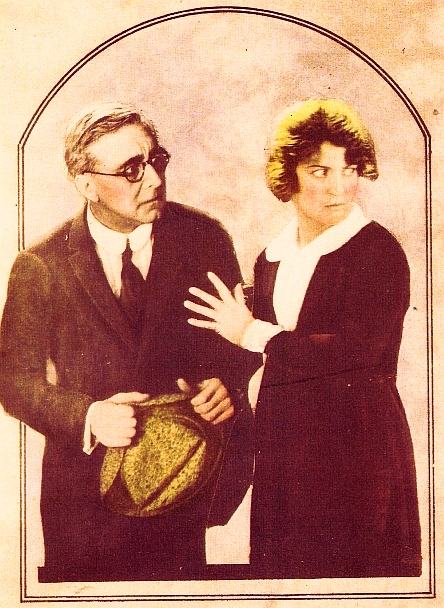
Ghost City is less a title than a condition—a state of being where every ridge hides a rifle barrel and every promise glints like mica in fool’s-gold deceit. George Rix’s screenplay, laconic on paper yet volcanic onscreen, distills the entire American mythos into forty-two minutes of nitrate nitroglycerin. The film opens on a lung-shot panorama: jagged peaks clawing at a sky the color of cauterized iron, while a lone wagon wheezes upslope like a consumptive itself. Inside, Anne Schaefer’s Nada cradles her father’s spectacled head, her eyes already sharpened to the stiletto resolve that will come to define her. Jack Connolly’s cinematography refuses pastoral softness; he shoots the landscape as if it were a courtroom exhibit—every rock a verdict, every cloud a corroborating witness.
What follows is not merely pursuit but palimpsest: layers of history—personal, national, geological—scraped raw by greed. The bootleggers, Clark and Hendricks, swagger out of a Matthew Brady negative, all stovepipe shadows and derby menace; they distrust federal agents because they themselves are the trespassers federal agents were invented to erase. Their moonshine stills bubble in mountain hollows like witches’ cauldrons, and when they espy Nada’s city-cut coat and geological map, they project onto her every revenue stamp they ever feared. Misrecognition becomes destiny.
The map itself—torn from a 19th-century surveyor’s journal—functions as both MacGuffin and metaphysician. Its creases harbor mercury droplets that refuse to dry; its margins bleed sepia ink that might be blood. When Nada unfolds it beside a campfire, the flame turns dark orange, the same hue that will later devour Hendricks in his own hubris. Schaefer plays the moment with fingers that tremble not from fear but from reverence, as though she were handling a relic that could sanctify or damn. The performance is silent, yet her jawline pronounces entire soliloquies on patrimony, debt, and the feminine right to prospect her own future.
Enter Dick Carroll—surveyor, loner, possible cipher—played by Leo D. Maloney with a hawkish reserve that offsets Schaefer’s flint. Their first encounter is a masterpiece of misplaced agency: Nada leaps from shadow, pistol first, eyes wildfire; Dick raises his hands not in surrender but in appraisal, as though measuring the angle of her desperation. She lashes him to a chair with a rope that might as well be the social contract itself—tight, fraying, and easily gnawed through once mutual peril eclipses suspicion. The gag between his teeth is a strip of oilcloth; when Nada later chews it loose, the camera lingers on a single thread of saliva catching yellow lamplight—an intimation that trust, like gold, must be extracted laboriously.
Hendricks’ arrival detonates the scene. Tom London, channeling a young Lon Chaney sans prosthetics, imbues the bootlegger with a reptilian languor; his limbs seem to arrive half a beat after his intent, creating an uncanny valley of menace. He rifles the cabin for the map, swigs from a jug marked XXX—an act of secular communion—and discovers too late the contents are wood alcohol laced with strychnine. His death is operatic: convulsions syncopated to the flicker of a kerosene lamp, pupils blown wide like bullet holes through tin. The fire he inadvertently ignites is not mere combustion but historical reckoning; it licks at Wanted posters, at ledgers of unpaid taxes, at the very celluloid we are watching. The cabin becomes a proscenium for America’s auto-da-fé, and we, the voyeurs of 1923, are invited to inhale the smoke of our own complicity.
All three escape, but the geometry has shifted. Dick now carries Hendricks’ revolver like an inherited guilt; Nada clutches the map as if it were a birth certificate she must authenticate in blood. Their subsequent trek toward the silver vein is shot in high-contrast day-for-night, the snow reflecting an unearthly sea blue that makes the landscape resemble the ocean floor. Here Rix indulges in a moment of pure visual lyricism: Nada’s silhouette against a glacier, her breath crystallizing into tiny moons that ascend and vanish—an evanescent rosary for every woman who ever dared to own the earth she stands on.
The climax refuses catharsis. Dick subdues the smoldering Hendricks not with a bullet but with a theodolite to the skull—an instrument of measurement turned blunt instrument, as though the very act of surveying were violent inscription. Nada, meanwhile, discovers the vein: not a cavernous glitter but a thin seam of argent glinting like a vein in an elderly wrist. She chips free a nugget no larger than a tooth, pockets it, and turns away. The implication is seismic: wealth enough to transfigure lives, yet she chooses the horizon. The final shot—wagon wheels cresting a ridge as the title card reads “The city of ghosts lies behind us; the city of dreams lies ahead”—is both benediction and curse. We realize the silver was never metal but possibility, and possibility, once actualized, ceases to haunt.
Comparative glances enrich the experience. Where A Tray Full of Trouble treats misrecognition as slapstick, Ghost City weaponizes it into ontology. The Kid and the Cowboy sentimentalizes the outlaw; Rix strips sentiment down to sinew. Vdova lingers on maternal grief; here paternity is a consumptive ghost whose only bequest is a map to his daughter’s self-reinvention. Even The Light in Darkness, for all its chiaroscuro piety, cannot match the theological bleakness of a salvation bought with poisoned whiskey.
Anne Schaefer deserves canonization in the pantheon of silent heroines. Watch her eyes when she first sights the silver seam: pupils contract not with avarice but with recognition—she sees herself reflected in the ore, unpolished yet incalculably precious. It is a moment that outleaps the film’s own epoch, prefiguring the feminist claim to public space that would not find mainstream voice for another half-century. Maloney’s Dick, meanwhile, embodies a masculinity in transition: neither the swaggering cowboy nor the neurasthenic dude, but a man who calculates angles and emotions with equal precision. Their eventual partnership is less romance than joint-stock venture, a merger of competencies that feels startlingly modern.
The restoration by Film Preservation Associates deserves applause. Tints oscillate between cyanotype nocturnes and tobacco daylight, while the new tintinnabular score—composed for solo piano and sampled bootleg-still clanks—underscores every creak of timber with metronomic dread. The 2K scan reveals details previously muddied: the filigree on Nada’s pocket watch, the razor burn on Hendricks’ neck, the way emulsion cracks resemble fault lines—an unintended metaphor for a nation still quaking from its own making.
Yet the film’s true genius lies in its refusal to resolve. Ghost City is not a place you leave; it is a jurisdiction you carry. When the credits iris out on an empty ridge, we sense the bootleggers’ widows already gathering like buzzards, the federal agents reloading, the mountain reconfiguring its mineral entrails. Nada and Dick ride toward a horizon that recedes at the speed of desire, and we, the audience, realize we have been watching not a chase but a Möbius strip—every exit an entrance, every treasure map a palimpsest of loss.
See it on the largest screen possible. Let the nitrate breathe. Let the orange fire reflect in your corneas, the yellow lamplight pool in your palms, the sea blue snow chill your marrow. Ghost City is not nostalgia; it is a prophecy delivered in a bottle, stoppered with ash, set adrift on a century that has yet to outgrow its appetite for ghosts.
IMDb —
1913
Community
Log in to comment.