Summary
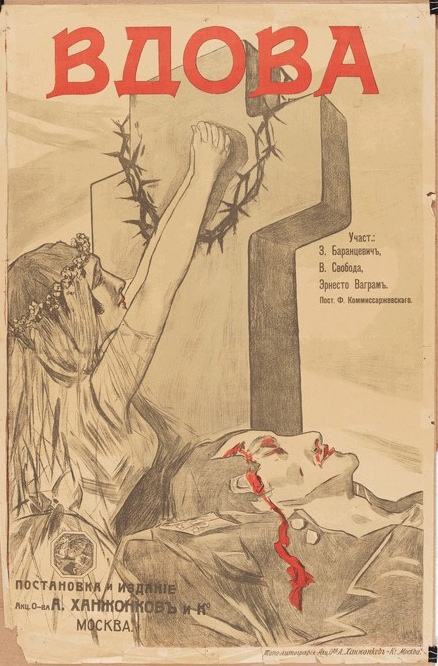
In the stark, expressionistic landscape of early 20th-century Russian cinema, "Vdova" (The Widow) plunges its audience into the psychological maelstrom engulfing Anya, a young woman abruptly cast into the desolate grandeur of widowhood. Her husband, Boris, a reclusive industrialist, met an untimely end—a precipitous fall from a cliff edge, officially ruled accidental. Anya, however, quickly finds herself ensnared not merely by the crushing weight of grief but by the oppressive silence and spectral memories permeating their sprawling, isolated estate, "Blackwood Manor." The very architecture of the house seems to breathe with an unsettling sentience, each elongated shadow and creaking floorboard a potential harbinger of a truth more sinister than simple tragedy. As Anya navigates the labyrinthine corridors of her new reality, she is increasingly haunted by Boris's enigmatic past and the unsettling, almost predatory presence of his distant, inscrutable cousin, portrayed with chilling subtlety by Theodor Komisarjevsky. The line between her burgeoning paranoia and a genuine, lurking danger blurs with each passing day. Objects in her private chambers subtly rearrange themselves; fragmented whispers seem to emanate from empty rooms; and a recurring, melancholic melody, once Boris's cherished tune, appears to waft from the very walls, twisting her perception of sanity. The film masterfully employs stark visual metaphor and nascent expressionistic cinematography to dissect the suffocating grip of suspicion, the profound fragility of the human mind, and the predatory nature of human desire often cloaked beneath the veneer of familial concern, culminating in a harrowing, almost existential revelation that shatters Anya's understanding of her late husband and her own precarious existence, leaving an indelible mark on the viewer's psyche.
Review Excerpt
"
Unveiling the Shadow Play of "Vdova": A Masterclass in Silent Psychological Intrigue
In the annals of early cinematic art, where the nascent language of film was still finding its voice, a rare gem like "Vdova" emerges not just as a historical artifact but as a profound testament to the medium's capacity for psychological depth. Released during an era when narratives often relied on broad strokes and overt melodrama, "Vdova" dared to delve into the intricate labyrinth of the h..."