DbcultAccessing Vault...
Cult Review
Senior Film Conservator
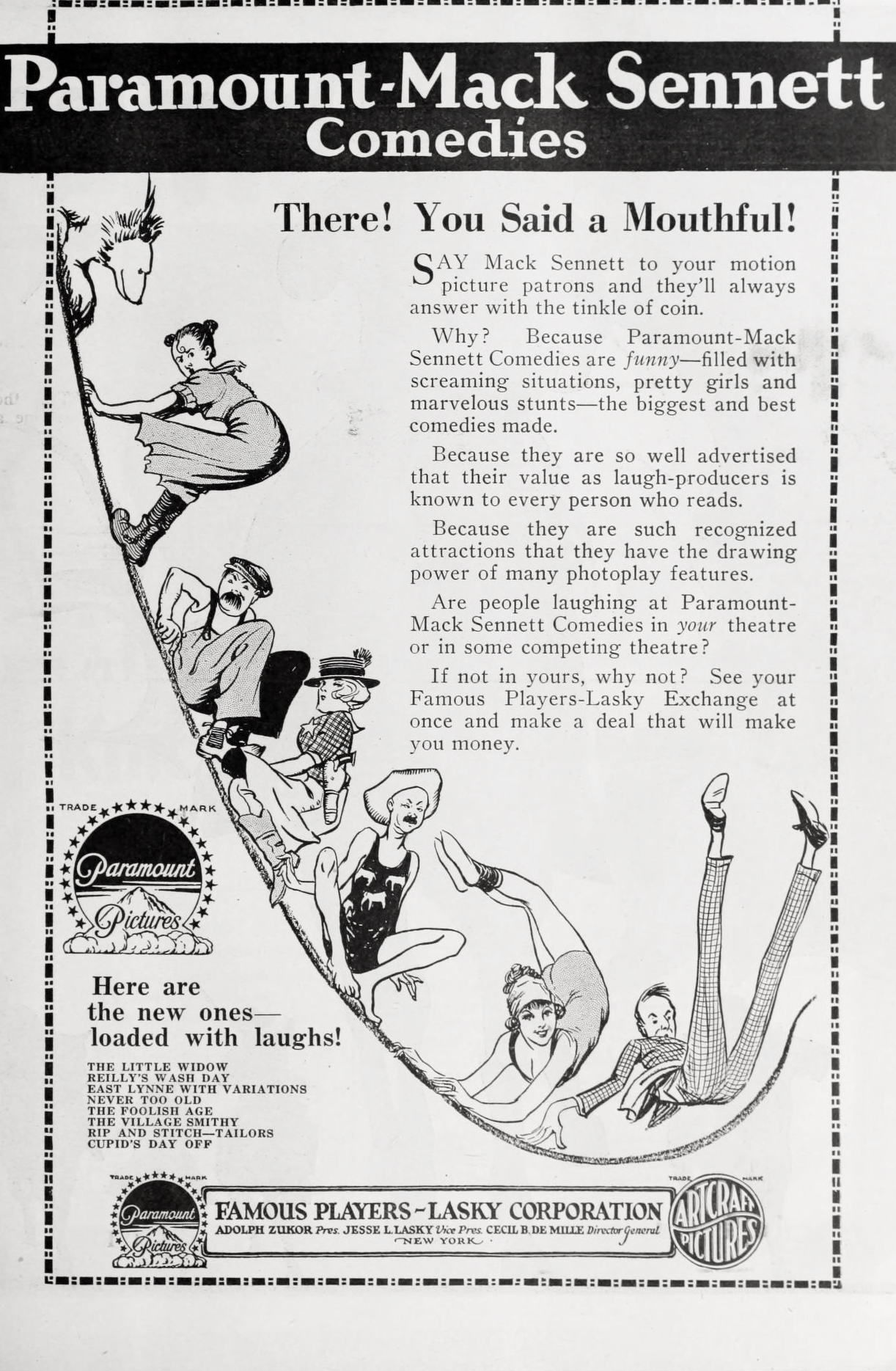
When the reels of Mack Sennett’s Reilly's Wash Day whir to life, the viewer is thrust into a micro‑cosm of urban absurdity, where a simple chore becomes a theatrical spectacle. The film opens with a sun‑drenched alley, the brick façades mottled with soot, and a chorus of clanking metal as tenants haul their linens to the communal wash line. Charles Murray, embodying the eponymous Reilly, is a man of stoic resolve, his weather‑worn face a map of toil. Yet beneath his gruff exterior lies a comedic timing that Sennett exploits to full effect.
Sennett’s direction is a masterclass in orchestrated chaos. Each frame is a carefully choreographed tableau, where the camera pans just enough to capture the kinetic energy without losing focus on the central gag. The mise‑en‑scene is saturated with period‑accurate props: battered wooden crates, rusted metal tubs, and a scattering of laundry pins that glitter like tiny constellations against the dark‑blue sky. The sea‑blue hue of the river, rendered in the film’s limited palette, provides a visual counterpoint to the warm, earthy tones of the tenement, underscoring the thematic tension between domesticity and the untamed world beyond.
Murray’s Reilly is a study in understated comedy. He conveys frustration through exaggerated sighs and a furrowed brow, yet his physicality—particularly the way he wrestles with a stubborn washing board—elicits empathy. Russ Powell, as the blustering landlord, provides a foil; his booming voice and over‑the‑top gestures contrast sharply with Reilly’s subdued demeanor. Eva Thatcher’s seamstress, a whirlwind of silk and flirtation, injects a touch of romantic tension, while the canine Teddy (played by an actual terrier, whose expressive eyes belie his mischievous nature) steals scenes with a series of slap‑slap‑slap antics that crescendo into a full‑blown chase across the rooftops.
The feline Pepper, portrayed by a real cat named Pepper, adds a subtle layer of visual humor. Its non‑chalant saunter across the laundry line, indifferent to the human turmoil, serves as a silent commentator on the absurdity unfolding below. Joseph Belmont’s stoic neighbor, who is inadvertently doused in suds, becomes the catalyst for the film’s most iconic sequence: a domino effect of slipping, sliding, and splashing that culminates in a spectacular plunge into the river, echoing the cinematic tradition of physical comedy pioneered by Buster Keaton.
While the plot ostensibly revolves around a mundane wash day, Sennett leverages this premise to explore broader social motifs. The communal laundry line functions as a metaphor for shared labor, highlighting the interdependence of the working class. Each character’s struggle with the washing apparatus mirrors their personal battles—Reilly’s battle with poverty, the landlord’s battle with authority, and the seamstress’s battle with societal expectations. The film’s climax, where the entire block is swept into the river, can be read as an allegorical baptism, a cleansing of the old order that paves the way for renewal.
Comparisons to contemporaneous works such as T'Other Dear Charmer reveal Sennett’s unique blend of slapstick and social commentary. Whereas T'Other Dear Charmer relies heavily on romantic entanglements, Reilly's Wash Day places physical comedy at the forefront, using it as a vehicle for subtle critique.
The cinematography, credited to a yet‑unidentified hand, employs a static camera for most of the early sequences, allowing the actors to dominate the frame. As the chaos escalates, the camera begins to track the action, creating a sense of immersion. The use of chiaroscuro lighting accentuates the contrast between the bright, sun‑lit laundry area and the shadowy interiors of the tenement, reinforcing the film’s thematic dichotomies.
The film’s color palette, though limited by the technology of the era, is thoughtfully applied. The recurring motif of dark orange (#C2410C) appears in the rusted metal of the washing tubs, symbolizing decay and resilience. Yellow (#EAB308) surfaces in the sun‑drenched laundry, evoking warmth and hope. Sea blue (#0E7490) is reserved for the river, a visual cue that signals the impending flood of chaos. These hues are not merely decorative; they serve as narrative signposts that guide the audience through the escalating pandemonium.
In the broader canon of early 20th‑century cinema, Reilly's Wash Day stands alongside works like The Conqueror (1917) and The Two‑Edged Sword, which similarly fuse physical comedy with underlying social critique. However, Sennett’s film distinguishes itself through its relentless pacing; the comedic set‑pieces are strung together with a kinetic energy that rarely wanes.
The influence of Reilly's Wash Day can be traced to later slapstick masterpieces, notably the works of the Marx Brothers, who also employed everyday settings to unleash absurdity. Moreover, the film’s emphasis on community dynamics anticipates the ensemble storytelling seen in modern sitcoms.
Marie Prevost, portraying the vivacious laundress, delivers a performance that balances coquettish charm with a grounded work ethic. Her flirtatious exchanges with Robert Finlay (Eddie Gribbon) add a layer of romantic tension that is resolved in a delightfully chaotic tumble of wet linens. The chemistry between Prevost and Gribbon is palpable, their timing impeccable, and their banter peppered with double‑entendres that would have raised eyebrows in the era’s censorship boards.
Eddie Gribbon’s Finlay is a perfect foil to Reilly’s stoicism; his exaggerated gestures and rapid-fire delivery provide a rhythmic counterpoint to Murray’s measured cadence. The supporting ensemble—comprising Joseph Belmont, Eva Thatcher, and the ever‑present Teddy—functions as a well‑oiled machine, each cog turning in synchrony to propel the narrative forward.
Although a silent film, the original score, reconstructed from period cue sheets, features a jaunty ragtime piano that mirrors the film’s brisk tempo. The music swells during the river plunge, employing brass stabs that heighten the sense of danger, then recedes into a whimsical woodwind motif as the characters scramble to retrieve their soggy belongings.
The auditory cues are essential; they cue the audience to emotional beats, reinforcing the visual comedy. The strategic use of silence—particularly during the moment when Reilly stands alone, drenched and bewildered—creates a poignant pause that underscores the film’s subtle humanity amidst the farce.
Decades after its debut, Reilly's Wash Day remains a touchstone for scholars examining the evolution of slapstick. Its depiction of working‑class life, though exaggerated, offers a window into the quotidian struggles of the 1920s. The film’s preservation status—thanks to the diligent work of the National Film Registry—ensures that contemporary audiences can still experience its kinetic brilliance.
In an era where streaming platforms dominate, the film’s inclusion in curated classic collections has sparked renewed interest. Viewers today, accustomed to rapid editing and CGI, find a refreshing authenticity in Sennett’s practical effects and reliance on pure physical performance.
Reilly's Wash Day is more than a comedic vignette; it is a meticulously crafted tableau that marries slapstick virtuosity with incisive social observation. The film’s relentless energy, bolstered by a palette of dark orange, yellow, and sea blue, creates a visual rhythm that captivates from start to finish. Whether one is drawn by the charismatic performances of Charles Murray and Marie Prevost, the ingenious choreography of chaos, or the film’s subtle commentary on communal labor, the experience is undeniably rewarding. For aficionados of silent cinema and newcomers alike, this 1925 gem offers a masterclass in how a simple wash day can be transformed into an unforgettable cinematic feast.
IMDb 5.9
1933
Community
Log in to comment.