DbcultAccessing Vault...
4.8/10
Senior Film Conservator
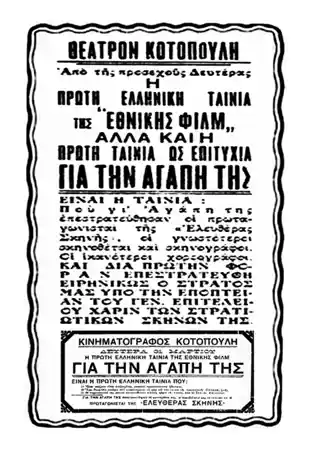
A definitive 4.8/10 rating for a film that redefined the boundaries of cult cinema. Gia tin agapi tis remains a cornerstone of transgressive art.
Alright, so look. Gia tin agapi tis, or 'For Her Love' as you’d say it, is *not* for everybody. If you usually skip over black-and-white films, or anything before, oh, 1950, then you’re probably gonna struggle here. This one’s for the folks who genuinely dig into early cinema, maybe even those who can appreciate a good melodramatic sigh from an actor in a close-up. If you expect quick pacing and subtle acting, you’ll likely be quite bored.
The setup is pretty straightforward: it's World War I, and we’ve got a woman, Despina Panayotidou as Eleni, caught between two fellas. One is her childhood sweetheart, Alexis Minotis playing Stefanos, who’s off fighting. The other is a dashing, maybe a little bit pushy, officer named Apostolos (Fotis Argyropoulos), who’s right there, ready to sweep her off her feet.
There are a lot of longing glances. And I mean, *a lot*. One scene, Eleni just stares out a window for what felt like ages. You can almost feel the movie trying to convince you this moment matters. It’s effective in its own quiet way, you know?
The performances are definitely… *of their time*. Alexis Minotis, as the soldier Stefanos, really throws himself into the suffering. His eyes get wide, his hands clench. You can tell he’s giving it his all, every single moment.
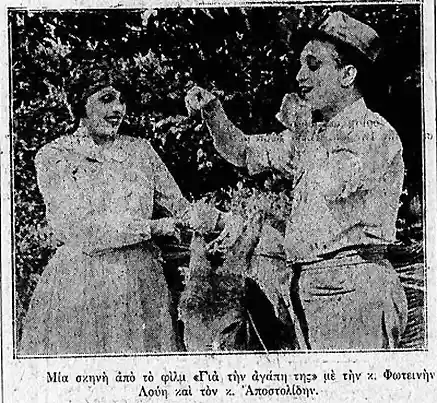
Apostolos, though, played by Fotis Argyropoulos, has this slightly unsettling charm. He’s always there, always pushing, and sometimes you wonder if Eleni even *likes* him that much, or if she’s just kinda resigned to his presence. The way he smiles? A little too confident, maybe.
The war itself feels very much in the background. It’s more of a plot device, a reason for Stefanos to be away and for letters to be exchanged. There aren't huge battle scenes or anything. Just uniforms and talk of duty.
One little thing I noticed: the costumes are actually pretty neat for a film this old. Eleni’s dresses, simple as they are, feel authentic. Even the soldiers’ uniforms, though they don't see much action, look well-made. 🧵
There’s this moment where Stefanos writes a letter from the front, and the camera lingers on his face. He's trying to be brave, but his eyes just betray *everything*. It’s a powerful, silent beat. Almost makes you feel a bit sad for the poor guy.
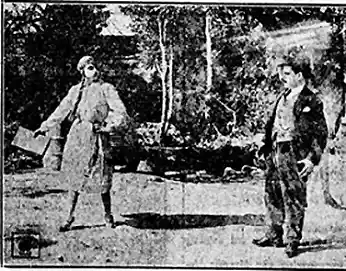
And then there are the moments that feel a bit staged. The way characters enter a room, for example. It’s like they’re waiting for their cue, then they walk in, pause, and deliver their line. Not quite natural, but again, that’s just how films were back then. It’s part of the charm, if you let it be.
The ending, without giving anything away, wraps things up pretty cleanly. Maybe *too* cleanly? After all that emotional turmoil, it feels like it just clicks into place. But hey, sometimes you want that. A little bit of resolution after all the drama.
I wouldn't recommend this for a casual Friday night movie. You really need to be in the mood for it, ready to slow down and appreciate a very different kind of storytelling. It’s a window into an older style, and for that alone, it has value.
IMDb —
1920
Community
Log in to comment.