DbcultAccessing Vault...
6.3/10
Senior Film Conservator
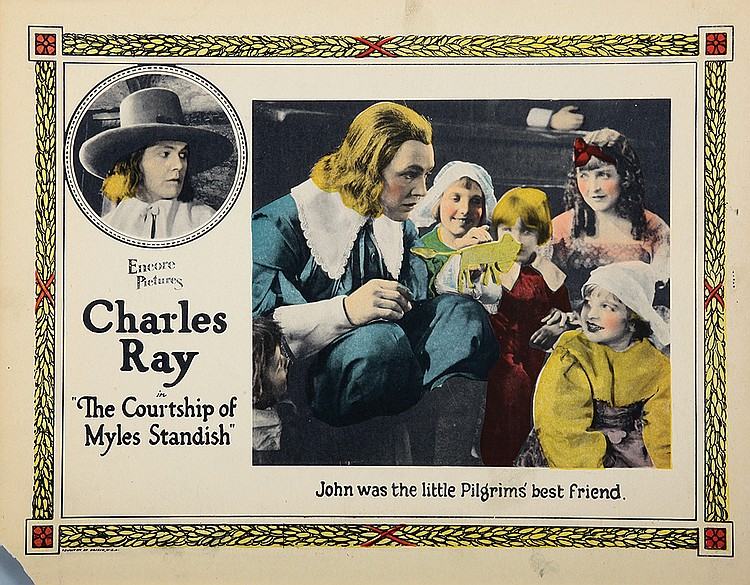
A definitive 6.3/10 rating for a film that redefined the boundaries of cult cinema. The Courtship of Myles Standish remains a cornerstone of transgressive art.
The 1923 silent feature The Courtship of Myles Standish stands as a rare confluence of poetic ambition and early Hollywood’s fascination with colonial mythos. Adapted from Longfellow’s eponymous verse, the picture attempts to capture the lyrical cadence of a 19th‑century ballad while negotiating the visual constraints of the silent era. The result is a work that oscillates between theatrical grandiosity and intimate, almost documentary‑like moments of pioneer life.
\n\nAt its structural core, the film adheres faithfully to Longfellow’s three‑stanza composition, but it expands each lyrical segment into a sequence of episodic tableaux. The opening act, a storm‑riven crossing of the Atlantic, is rendered with chiaroscuro lighting that accentuates the creaking timbers and the desperate faces of the pilgrims. The cinematographer employs low‑angle shots to amplify the sense of an indifferent sea, while intertitles, rendered in a crisp, black‑letter typeface, echo the poem’s archaic diction.
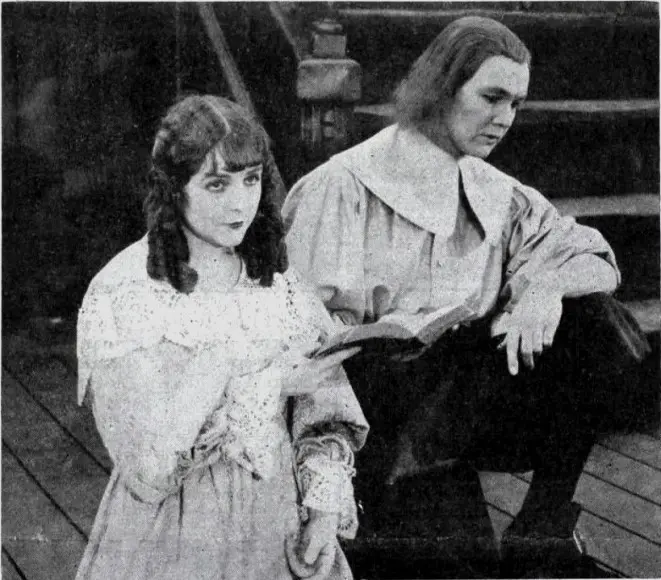
Following the landing, the narrative bifurcates into two intertwined threads: the external conflict with the Indigenous tribes and the internal emotional duel between Alden, Standish, and Priscilla. The film’s treatment of the Native American characters is regrettably filtered through the period’s stereotypical lens, yet occasional moments—such as the silent exchange of gifts beneath a towering oak—hint at a nuanced, if underdeveloped, attempt at cultural reciprocity.
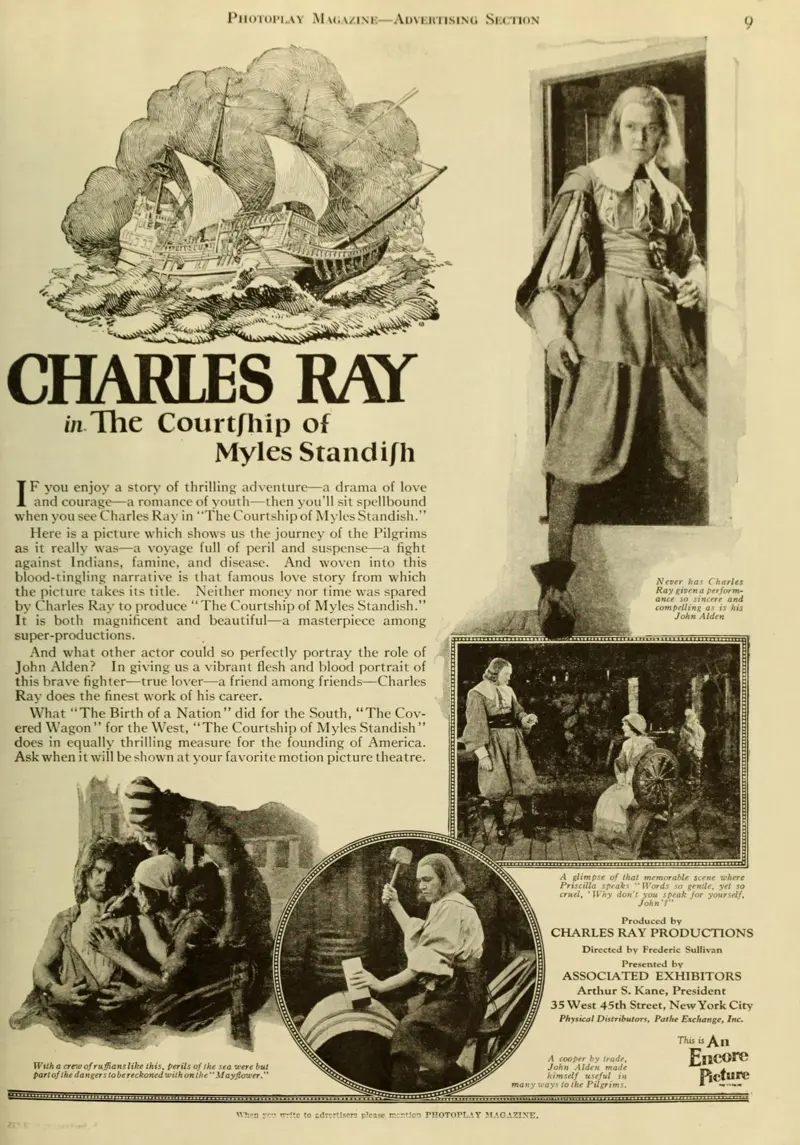
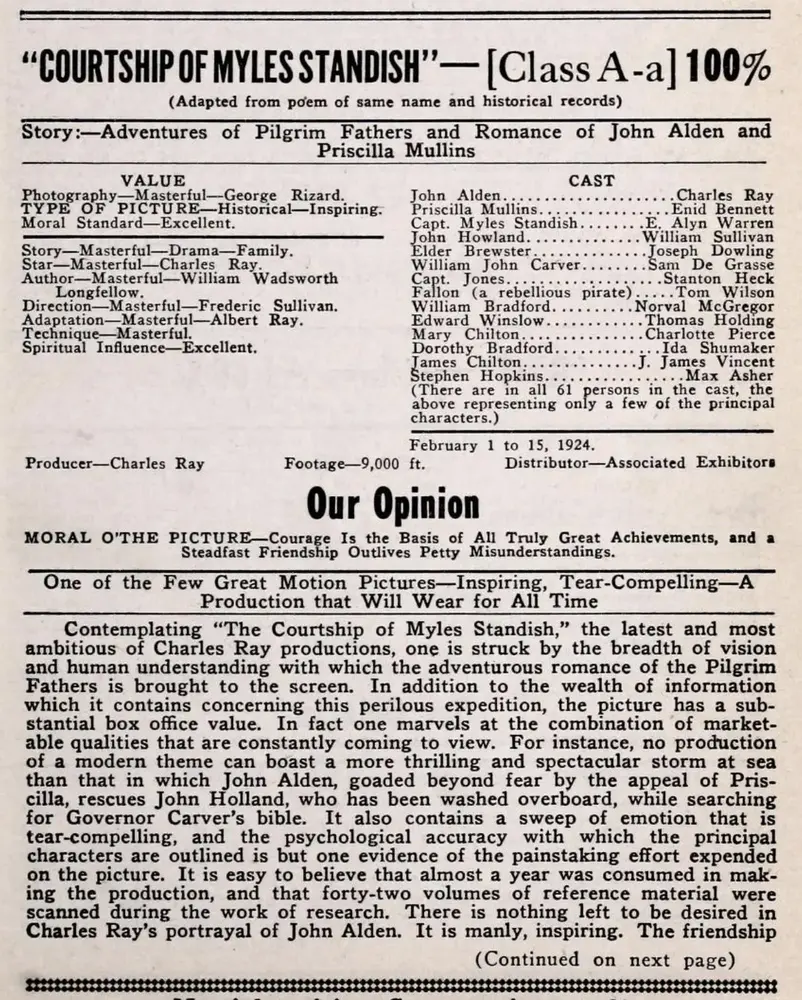
\n\nJoseph J. Dowling, cast as Myles Standish, imbues the military commander with a rigid, almost militaristic poise. His angular gestures and measured pacing convey a man whose emotions are regimented as his troops. In stark contrast, Marian Nixon’s Priscilla radiates a luminous vulnerability; her eyes, often framed by a soft focus, betray a yearning that transcends the silent medium. The chemistry between Nixon and Charles Ray, who portrays John Alden, is the film’s most compelling asset. Ray’s expressive eyebrows and the subtle tilt of his head communicate a conflicted loyalty that the intertitles merely echo.
The supporting cast, including the sprightly Carmencita Johnson as a youthful observer and the stoic Norval MacGregor as the village elder, provide texture without overwhelming the central drama. Their performances, though brief, are calibrated to reinforce the communal atmosphere of the early settlement.
\n\nAlthough the film was shot in black‑and‑white, the director’s use of tinting—particularly the sea‑blue hue (#0E7490) applied to maritime sequences—creates a visual lexicon that differentiates the oceanic realm from the earthy settlement scenes, which are bathed in a muted sepia. This chromatic distinction, though subtle, guides the audience’s emotional geography, underscoring the peril of the voyage versus the tentative stability of the colony.
The set design, credited to an unheralded art department, reconstructs the cramped thatched cottages of Plymouth with painstaking detail. Wooden beams, low‑hanging lanterns, and hand‑woven tapestries populate the frame, lending authenticity that rivals contemporary historical epics such as The Gift Girl. The camera often lingers on these textures, allowing the audience to absorb the tactile reality of 17th‑century life.
\n\nThe editing rhythm mirrors the poem’s meter: brisk during the sea‑borne peril, measured during the courtship’s introspection, and crescendoing at the climactic confession. Cross‑cutting between Alden’s solitary contemplation and Priscilla’s solitary prayers creates a visual dialogue that compensates for the absence of spoken word.
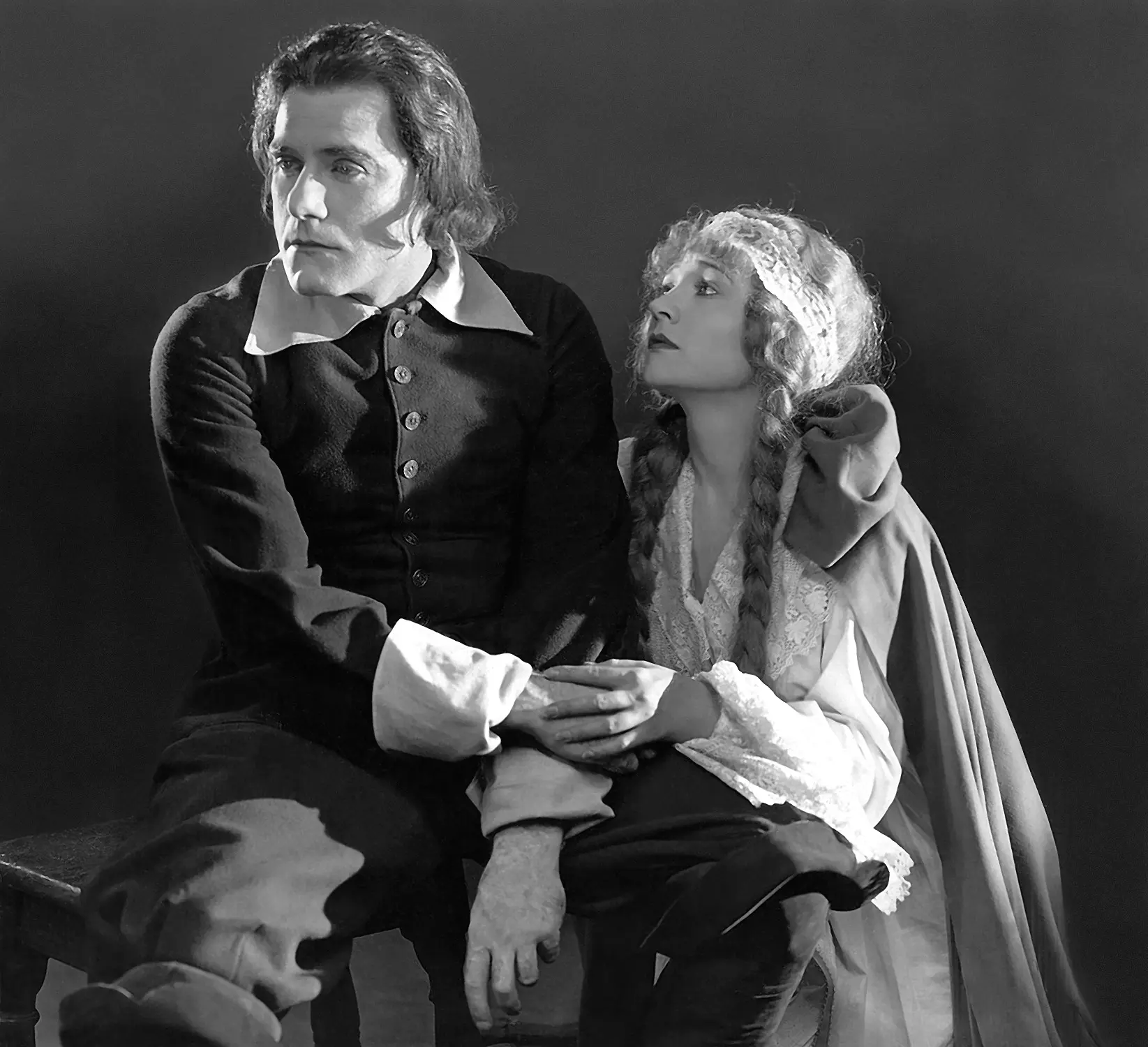
A particularly striking sequence is the midnight rendezvous beneath the village’s central fire. The frame is washed in a warm, dark orange tint (#C2410C), casting flickering shadows that dance across the actors’ faces. This chromatic choice amplifies the intimacy of the moment, turning a simple exchange of glances into a tableau of unspoken longing.
\n\nThe film walks a delicate line between factual representation and poetic embellishment. While the arrival of the Mayflower and the subsequent settlement are rendered with commendable accuracy—down to the period‑correct clothing and the depiction of communal worship—the romantic subplot is heavily dramatized. Historical records suggest that the real John Alden and Priscilla Mullins did indeed marry, but the film’s portrayal of Standish as a jealous suitor is an invention that serves Longfellow’s narrative rather than archival truth.
In this regard, the picture aligns with other contemporary reinterpretations of colonial lore, such as Creation (1921), which similarly blends mythic romance with period detail. The decision to foreground the love triangle reflects early Hollywood’s appetite for melodrama, yet it also underscores the film’s ambition to render an American origin story that is both accessible and emotionally resonant.
\n\nAlthough silent, the film was originally accompanied by a full orchestral score, parts of which survive in archival recordings. The music employs a recurring leitmotif—a plaintive violin line—that mirrors Priscilla’s inner turmoil. Brass fanfares punctuate the battle scenes, while a delicate harp arpeggio underscores the tender exchanges between Alden and Priscilla. The auditory texture, when reconstructed, adds a layer of emotional depth that the visual narrative alone cannot fully convey.
\n\nWhen placed beside other silent dramas of the early 1920s, The Courtship of Myles Standish distinguishes itself through its literary pedigree and its ambitious scope. Films like His Blooming Bloomers and The Little Shoes excel in comedic timing and domestic storytelling, yet they lack the epic gravitas that this film attempts. Conversely, the German expressionist work Das lebende Rätsel offers visual daring but eschews historical narrative. Standish occupies a middle ground, marrying grand historical tableau with the intimate melodrama characteristic of its peers.
\n\nModern scholars have revisited the film as a case study in early American myth‑making on screen. Its portrayal of Puritan piety, coupled with an undercurrent of romantic idealism, anticipates later Hollywood treatments of the colonial era, most notably in the 1960s epic Little Women. While the film’s pacing may feel languid to contemporary viewers, its commitment to visual storytelling—relying on composition, tinting, and expressive acting—offers a masterclass in silent‑era craftsmanship.
\nThe film also serves as a valuable artifact for studying gender dynamics in early cinema. Priscilla’s agency, though constrained by the period’s expectations, is subtly asserted through lingering glances and decisive gestures. This nuance aligns her with other silent heroines who navigate patriarchal structures while asserting personal desire, a theme explored in Ali Baba and Why America Will Win.
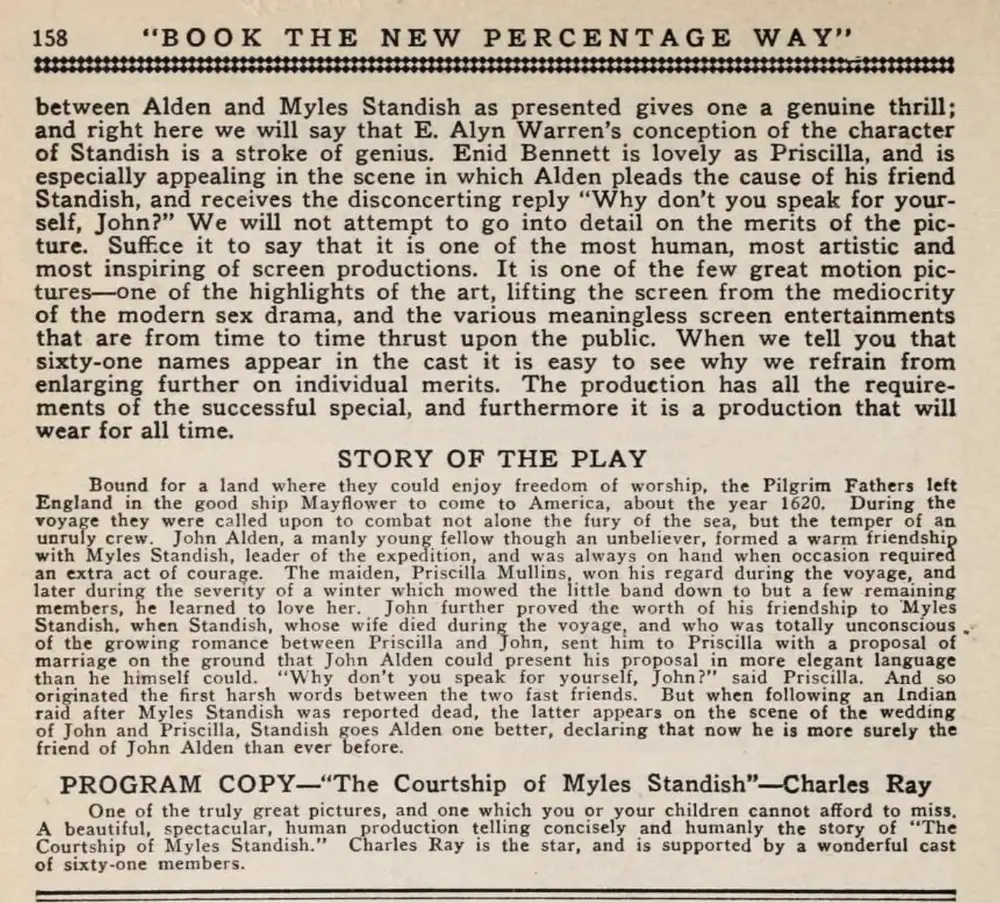
\n\nIn sum, The Courtship of Myles Standish is a film that rewards patient viewing. Its visual palette—accentuated by strategic tinting in dark orange, sea blue, and occasional yellow highlights—creates a mood that is both nostalgic and immediate. The performances, especially the nuanced interplay between Nixon and Ray, elevate a script that otherwise leans heavily on its poetic source. Though the narrative occasionally succumbs to melodramatic excess, the film’s ambition to fuse literature, history, and early cinematic technique renders it a noteworthy entry in the silent canon.
\nFor cinephiles interested in the evolution of American historical drama, the picture offers a glimpse into how 1920s Hollywood grappled with nation‑building myths, employing the silent medium’s unique strengths to convey love, loss, and the forging of a new world. Its enduring relevance lies not merely in its fidelity to Longfellow’s verse, but in its capacity to evoke the timeless tension between duty and desire—a tension that continues to animate storytelling across mediums.
IMDb —
1932
Community
Log in to comment.