DbcultAccessing Vault...
5.2/10
Senior Film Conservator
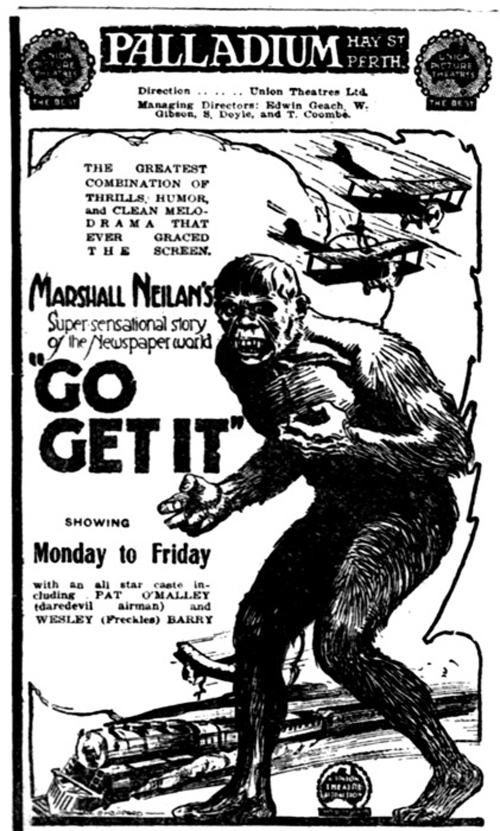
A definitive 5.2/10 rating for a film that redefined the boundaries of cult cinema. Go and Get It remains a cornerstone of transgressive art.
In the annals of silent cinema, where nascent storytelling often grappled with the limitations and boundless potential of a new art form, certain films emerge as audacious anomalies. "Go and Get It" (1920), a title that itself crackles with an almost desperate urgency, stands as one such cinematic curiosity, a genre-bending spectacle that dares to fuse the burgeoning conventions of journalistic thrillers with the nascent dread of scientific horror. It's a film that, even a century later, retains an unsettling power, not just for its outlandish premise, but for its surprisingly nuanced exploration of identity, culpability, and the monstrous implications of human ambition.
The very conceit of the film is enough to give one pause, or perhaps, a delighted shiver. Imagine, if you will, a world teetering on the brink of scientific enlightenment, yet still deeply rooted in a fascination with the macabre. Here, a brilliant, albeit morally compromised, scientist performs an unthinkable experiment: transplanting the brain of a recently deceased, criminally inclined human into the formidable skull of a powerful gorilla. This isn't merely a creature feature; it's a profound, if pulp-tinged, meditation on the very essence of self. Is the gorilla now human? Is it a monster of pure instinct, or a tragic vessel for a transplanted evil? These are the questions, unspoken yet palpable, that ripple beneath the film's sensational surface.
The narrative thrust is provided by an intrepid newspaper reporter, a quintessential figure of the era, embodying the public's hunger for truth, no matter how grotesque. This reporter, brought to life with a compelling blend of cynicism and dogged determination, finds himself embroiled in a series of brutal, perplexing murders that have gripped the city in a vice of fear. The killings are savage, inexplicable, bearing the hallmarks of something utterly inhuman, yet executed with an unnerving precision that hints at a darker, more intelligent force at play. It's a classic setup for a whodunit, but one twisted into a genuinely unsettling 'what-is-it' that challenges the very framework of conventional detective work.
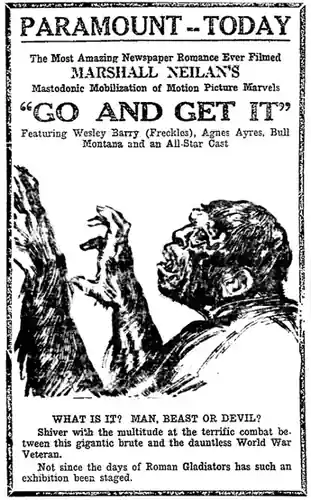
The film, co-written by the prolific and masterful Frances Marion and Marion Fairfax, demonstrates an acute understanding of suspense. The pacing, though occasionally deliberate, builds a pervasive sense of dread, allowing the audience to slowly piece together the horrifying implications alongside the reporter. Unlike the more straightforward social dramas of the time, such as Where Are My Children?, which tackled overt societal ills, "Go and Get It" delves into a more primal, existential horror, exploring the terror that lurks not just in the shadows, but within the very fabric of scientific progress unchecked by ethical boundaries.
The performances are crucial in a film of such bizarre premise, particularly in the silent era where nuance was conveyed through gesture, expression, and carefully crafted intertitles. While the full cast, including luminaries like Arthur Brisbane (who lends a gravitas to the journalistic pursuit) and Agnes Ayres (whose presence often humanizes the escalating terror), delivers solid turns, it is perhaps Bull Montana as the gorilla who truly embodies the film's central tragedy. Montana, a former wrestler known for his imposing physique, brings a visceral, almost heartbreaking physicality to the role. His performance transcends mere costumed menace; there's a palpable sense of the creature's internal struggle, the clash between its animalistic form and the alien consciousness forced upon it. This isn't just a monster; it's a victim, a tortured soul trapped in a body not its own, forced to commit heinous acts.
The supporting cast, featuring familiar faces like Noah Beery and Walter Long, adds layers of intrigue and danger to the unfolding mystery. Their reactions, their fear, and their complicity (or lack thereof) in the scientific hubris amplify the central horror. Even the brief appearances by figures like Ring Lardner and Irvin S. Cobb, celebrated writers and personalities of the time, lend a certain meta-textual weight, blurring the lines between the film's sensationalism and the real-world fascination with such tales. Their inclusion, perhaps a nod to the era's cross-media celebrity, subtly grounds the fantastical narrative in a recognizable cultural landscape.
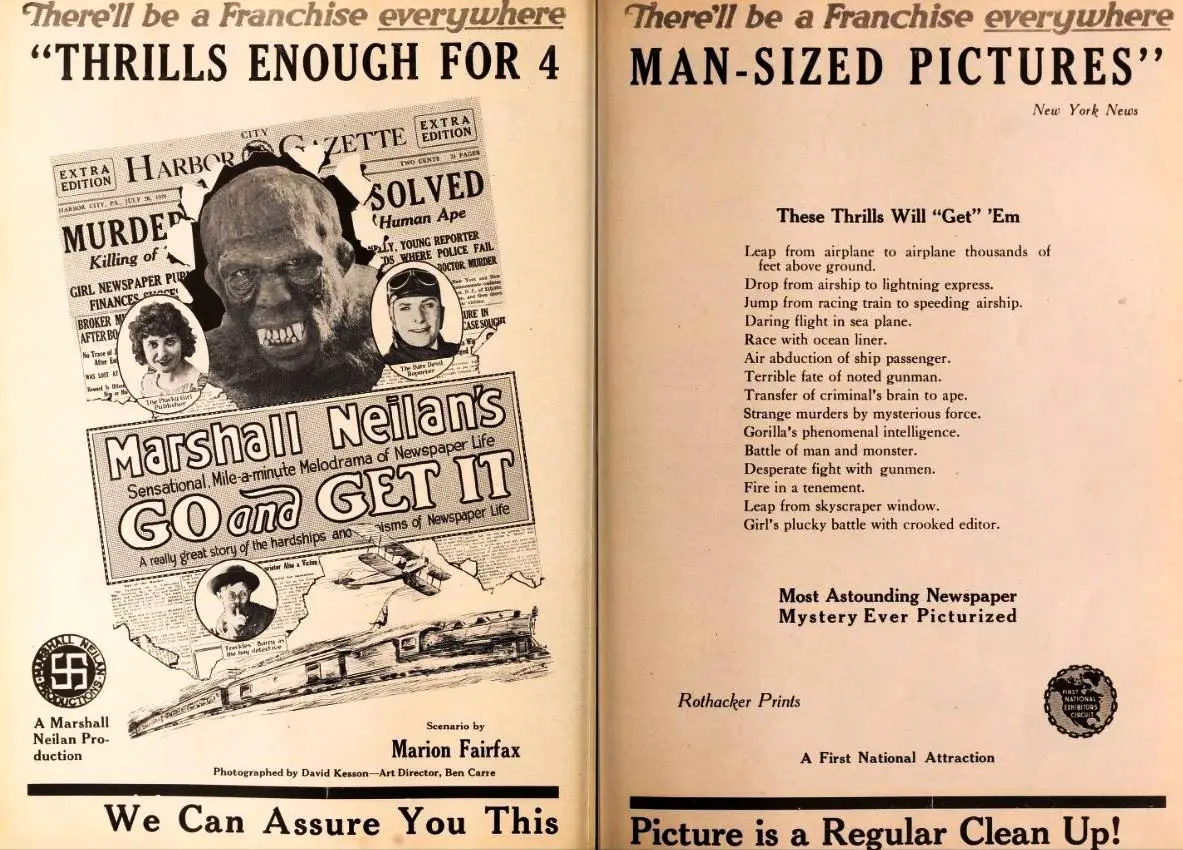
At its heart, "Go and Get It" grapples with themes that resonate far beyond its pulp origins. The question of identity – what makes us human, what constitutes a soul, and where the line between instinct and intellect truly lies – is relentlessly explored. The gorilla, imbued with a human brain, becomes a living philosophical paradox. Is it the original human's consciousness continuing its evil deeds, or a new, monstrous entity born of scientific transgression? This ethical quagmire is what elevates the film from mere spectacle to a thought-provoking piece of early horror, arguably paving the way for later explorations of similar themes in films like The Piper's Price, which, while distinct in genre, also delved into the psychological complexities of identity and moral choice.
The film also serves as a cautionary tale about scientific hubris. The pursuit of knowledge, when untethered from ethical considerations, can unleash unimaginable horrors. The scientist, driven by a thirst for discovery, inadvertently creates a terror that he cannot control, a common trope that would become a cornerstone of the horror genre for decades to come. This aspect of the narrative feels surprisingly contemporary, anticipating modern anxieties about genetic engineering and artificial intelligence. It's a testament to the foresight of writers Marion Fairfax and Frances Marion that they could imbue such a sensational plot with such enduring thematic weight.
For a film of its vintage, the direction and cinematography are remarkably effective in building atmosphere. The use of shadow and light, the deliberate framing of the gorilla's menacing presence, and the frantic energy of the newsroom scenes all contribute to a rich tapestry of suspense. The silent medium, far from being a limitation, enhances the psychological horror. The lack of spoken dialogue forces the audience to project their own fears onto the screen, to interpret the nuanced expressions of the actors, and to fill the silence with their own dread. This is particularly evident in the scenes involving the gorilla, where its actions speak volumes, often more terrifyingly than any spoken threat could.
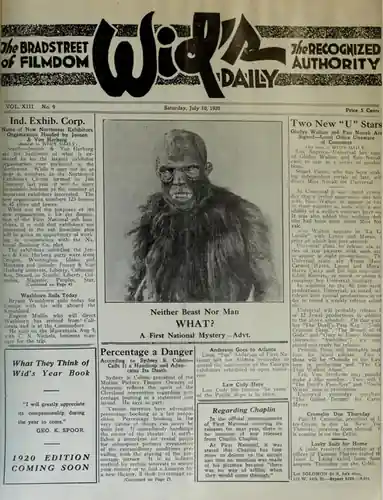
While not a direct comparison in plot, the way "Go and Get It" masterfully uses visual storytelling to evoke tension can be seen as a precursor to techniques refined in later suspense films. One might even draw a distant parallel to the melodramatic yet effective suspense found in a film like Under the Gaslight, which, despite its stage origins, understood the power of visual spectacle and heightened emotion to keep audiences on the edge of their seats. The difference here is the sheer audacity of the premise, pushing the boundaries of what audiences were willing to accept as cinematic reality.
The film's exploration of the urban landscape, particularly the bustling newsrooms and the shadowy corners where the murders occur, paints a vivid picture of a city both modern and menacing. It captures the zeitgeist of an era fascinated by crime and scientific breakthroughs, often conflating the two in sensational newspaper headlines. This historical context is vital to appreciating the film's impact. It wasn't just a fantasy; it tapped into very real public anxieties and curiosities, much like how social commentaries of the time, such as A Successful Failure, mirrored societal concerns, albeit through a different lens.
"Go and Get It" is a testament to the pioneering spirit of early Hollywood, a period where filmmakers were unafraid to experiment, to push boundaries, and to tell stories that defied easy categorization. It is a film that could only have been born in the silent era, a time when the visual spectacle and the power of suggestion held sway, before sound often domesticated the more outrageous aspects of cinematic storytelling.
While it might not enjoy the widespread recognition of more conventional classics like The Merry Widow, its influence, however subtle, can be traced through the lineage of creature features, mad scientist tales, and psychological thrillers that followed. It reminds us that horror, even in its most outlandish forms, can be a powerful vehicle for exploring profound questions about humanity, morality, and the thin veneer of civilization. It stands as a vibrant, if sometimes unsettling, reminder of a period when cinema was truly finding its voice, unafraid to scream into the void with stories that challenged, intrigued, and utterly terrified.
To simply dismiss "Go and Get It" as mere B-movie fodder would be a disservice. It is a bold, imaginative work that, despite its occasional rough edges, possesses an undeniable charm and a chilling resonance. It invites viewers to suspend disbelief and confront the primal fear of the unknown, the terror of science run amok, and the tragic fate of a creature caught between two worlds. It's a film that demands to be seen, discussed, and appreciated for its sheer audacity and its enduring contribution to the evolving lexicon of cinematic horror. Go and get it, indeed, and prepare to be unnerved by this audacious relic of the silent screen.
IMDb 6.6
1926
Community
Log in to comment.