DbcultAccessing Vault...
5.4/10
Senior Film Conservator
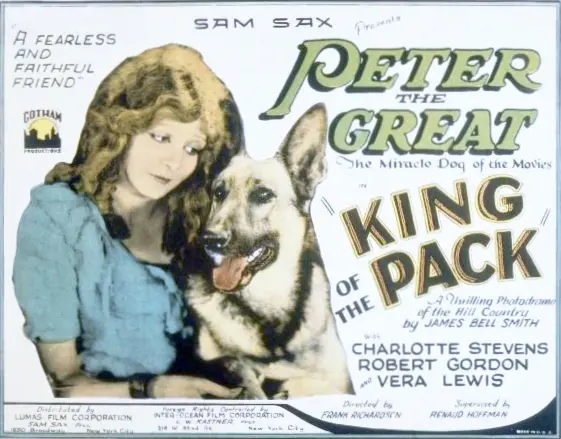
A definitive 5.4/10 rating for a film that redefined the boundaries of cult cinema. King of the Pack remains a cornerstone of transgressive art.
Is 'King of the Pack' worth watching today? Short answer: yes, but with significant caveats that demand a specific palate. This film is a fascinating artifact for silent cinema scholars, early animal film enthusiasts, and those with a deep appreciation for the foundational narratives of American cinema.
It is emphatically not for viewers seeking modern pacing, sophisticated character development, or high production values. If you're accustomed to the rapid-fire storytelling of contemporary cinema, or if melodramatic narratives grate on your sensibilities, then 'King of the Pack' might feel like an arduous journey.
Directed by Frank Brownlee and written by Delos Sutherland and James Bell Smith, 'King of the Pack' (1926) emerges from an era where cinema was still finding its voice, literally and figuratively. It’s a melodrama, pure and simple, leaning heavily into archetypes and broad strokes to convey its narrative. Set against the backdrop of the rugged Tennessee mountains, the film pits innocence against malevolence, with a four-legged hero at its heart.
The story of Selah Blair, an orphan subjected to the cruelty of her stepmother, "Widder" Gasper (Vera Lewis), and her lecherous, bootlegging stepbrother, Bud (Robert Gordon), is a familiar one. It’s a Cinderella story stripped of its fairy godmother, replaced instead by a loyal canine companion, King, portrayed by the remarkable Peter the Great.
The film’s central conflict escalates when Selah's act of kindness towards a stranded Broadway actress, Kitty Carlyle (Mary Cornwallis), yields a $1000 reward. This sum, a monumental fortune in Selah's impoverished world, becomes the catalyst for intensified villainy from her step-family. King, with an almost human-like understanding, intervenes, hiding the money and setting the stage for Selah's eventual rescue by her sweetheart, Cliff Sifton (Danny Hoy), aided, of course, by the titular hero.
This film works because of its unvarnished portrayal of good versus evil and the truly exceptional performance of Peter the Great. Its raw, almost primal storytelling taps into universal themes of loyalty, injustice, and perseverance. It fails because of its simplistic characterizations, which, while effective for its time, feel underdeveloped by modern standards, and a plot that, while engaging, offers few surprises. You should watch it if you are a silent film completist, interested in the history of animal actors in cinema, or simply appreciate a straightforward, heartfelt melodrama.
The ensemble cast of 'King of the Pack' delivers performances characteristic of the silent era: expressive, often exaggerated, and designed to convey emotion without dialogue. Vera Lewis, as "Widder" Gasper, embodies the quintessential wicked stepmother. Her scowls and grasping gestures leave no doubt as to her character's villainy. It’s a performance that doesn’t invite nuance, but rather demands a visceral reaction of distaste, and she achieves it with aplomb.
Robert Gordon's Bud is equally effective in his portrayal of a rural brute. His leering glances towards Selah and his general air of menace paint a clear picture of a man driven by base desires. While today's audiences might find these performances a tad over-the-top, they were perfectly calibrated for the theatricality of silent film, where every emotion had to be writ large on the screen.
However, the true star, and arguably the most compelling performer, is Peter the Great as King. His intelligence and training are genuinely astonishing. From the subtle ways he interacts with Selah, conveying comfort and understanding, to the more complex actions like taking the $1000 check and hiding it in a hole, his performance is a masterclass in animal acting. There's a particular scene where King assesses the situation, then deliberately takes the money, that showcases a level of animal intelligence rarely seen, even in contemporary cinema. He doesn't just react; he seems to understand the stakes.
I’d argue that 'King of the Pack' is less a story of human triumph and more a testament to the enduring, unwavering spirit of a good dog. His presence elevates the film beyond simple melodrama.
The human actors, while competent, often fade into the background when King is on screen. Danny Hoy as Cliff Sifton, Selah's sweetheart, provides a sturdy, if somewhat bland, heroic presence. His rescue mission, while pivotal, feels more like a plot device than a deeply emotional arc for his character. Charlotte Stevens as Selah Blair, the damsel in distress, elicits sympathy through her vulnerability, but her character isn't given much agency beyond suffering and being rescued. This is a common trope of the era, but it does mean the film relies heavily on external forces and the dog's actions for its forward momentum.
Frank Brownlee’s direction is straightforward, focusing on clear narrative progression. He understands the power of visual storytelling in a silent medium, utilizing intertitles effectively to bridge gaps in action or convey internal thoughts. There's an economy to his filmmaking; every shot serves a purpose, moving the story forward without much embellishment.
The cinematography, while not groundbreaking, does a commendable job of capturing the rugged beauty and isolation of the Tennessee mountains. The outdoor sequences feel authentic, providing a stark contrast to Selah's confined existence under the "Widder's" roof. We see wide shots that establish the vastness of the natural world, juxtaposed with tighter frames that emphasize the claustrophobia of Selah's plight.
There's a gritty realism to the depiction of the Gasper household, which feels lived-in and appropriately squalid. This attention to setting grounds the melodrama, making the stakes feel more tangible. While it lacks the artistic flourishes of a film like Greed, or the innovative techniques of Les Vampires, 'King of the Pack' successfully uses its environment as more than just a backdrop; it's an active participant in Selah's struggle for freedom.
The camera work is functional, prioritizing clarity over artistic experimentation. This isn't a film that seeks to redefine visual language; rather, it aims to tell its story as effectively as possible. The framing of shots, particularly those involving King, often highlights his perspective or his critical role in the unfolding events, a subtle but effective choice that reinforces his status as the true hero.
The pacing of 'King of the Pack' is brisk, almost relentless. Silent films often moved at a clip to maintain audience engagement without dialogue, and this film is no exception. Events unfold rapidly: Selah's initial suffering, Kitty Carlyle's accident, the reward, the money's hiding, Selah's imprisonment, and the eventual rescue. There’s little time for reflection or lengthy character development.
This fast pace ensures that the melodrama never lingers too long, preventing it from becoming overly sentimental or tedious. The film is a series of escalating conflicts and resolutions, designed to keep the audience emotionally invested in Selah's predicament and King's heroic efforts. The tone is consistently earnest, never winking at its own conventions.
It's a straightforward good-versus-evil narrative, and the film embraces this with unwavering conviction. There are no shades of gray, no morally ambiguous characters. The "Widder" and Bud are purely villainous, Selah is purely innocent, and King is purely heroic. This clarity of purpose, while perhaps simplistic, contributes to the film's enduring appeal for those seeking uncomplicated moral tales.
The emotional beats are amplified through the performances and the accompanying musical score (which, though not part of the original silent presentation, is crucial to modern screenings). The tension during the money hiding scene, for instance, is palpable, driven by the urgency of King's actions and the fear of discovery. The relief of Selah's rescue feels earned, even if the means are a touch convenient.
Yes, 'King of the Pack' is worth watching, particularly for specific audiences. It offers a valuable window into early 20th-century American cinema. It showcases the remarkable capabilities of animal actors. The narrative, while familiar, is executed with a heartfelt sincerity. It's a testament to simple, powerful storytelling. This film provides insight into the popular entertainment of its time. It works. But it’s flawed. Its strengths lie in its historical context and its canine star.
At its core, 'King of the Pack' is a stark morality play. It's a world where virtue is rewarded, and vice is punished, albeit after a period of intense suffering for the virtuous. The film doesn't shy away from depicting the harsh realities of Selah's life, highlighting themes of abuse, poverty, and the desperation that can drive human actions.
The $1000 check, a symbol of hope and a chance at a better life for Selah, is also the ultimate test of character for the Gasper family. Their immediate desire to steal it underscores their depravity and the corrupting influence of greed. This simple narrative device effectively drives the entire second act of the film.
What's perhaps most interesting, from a thematic standpoint, is the elevation of King to a truly heroic status. He is not merely a pet; he is an active agent of justice, a moral compass in a world where human morality has clearly failed. His actions are selfless, driven by loyalty and an innate sense of right. This speaks to a deeply ingrained human desire to see pure goodness triumph, often personified by animals in cinema.
While its moral compass is as blunt as a hammer, its emotional impact, for those attuned to its frequency, remains surprisingly resonant. It feels like a fable brought to life, unburdened by the complexities that modern narratives often embrace.
The involvement of the Boy Scouts and Cliff Sifton in the rescue also touches upon themes of community and collective action, though these are secondary to King's individual heroism. It’s a classic damsel-in-distress scenario, but it’s the unconventional hero, the dog, who makes it memorable. The film posits that sometimes, the purest form of loyalty and courage comes not from man, but from his best friend.
'King of the Pack' is more than just a relic; it's a charming, if unsophisticated, piece of cinematic history. Its primary draw is undoubtedly Peter the Great, whose performance transcends the limitations of its era and often outshines his human co-stars. While it won't challenge your intellect or subvert genre expectations, it offers a sincere and engaging melodrama that’s easy to follow and deeply rooted in the simple pleasures of good triumphing over evil.
For those willing to adjust their expectations to the conventions of silent film, it's a worthwhile watch, particularly for its unique take on animal heroism. It's a film that reminds us that sometimes, the most profound stories are found in the purest expressions of loyalty and courage, embodied perfectly by a dog named King. It may not be a cinematic masterpiece, but it's an important piece of the puzzle in understanding early American filmmaking and the enduring appeal of a canine hero.
IMDb —
1915
Community
Log in to comment.