DbcultAccessing Vault...
Cult Review
Senior Film Conservator
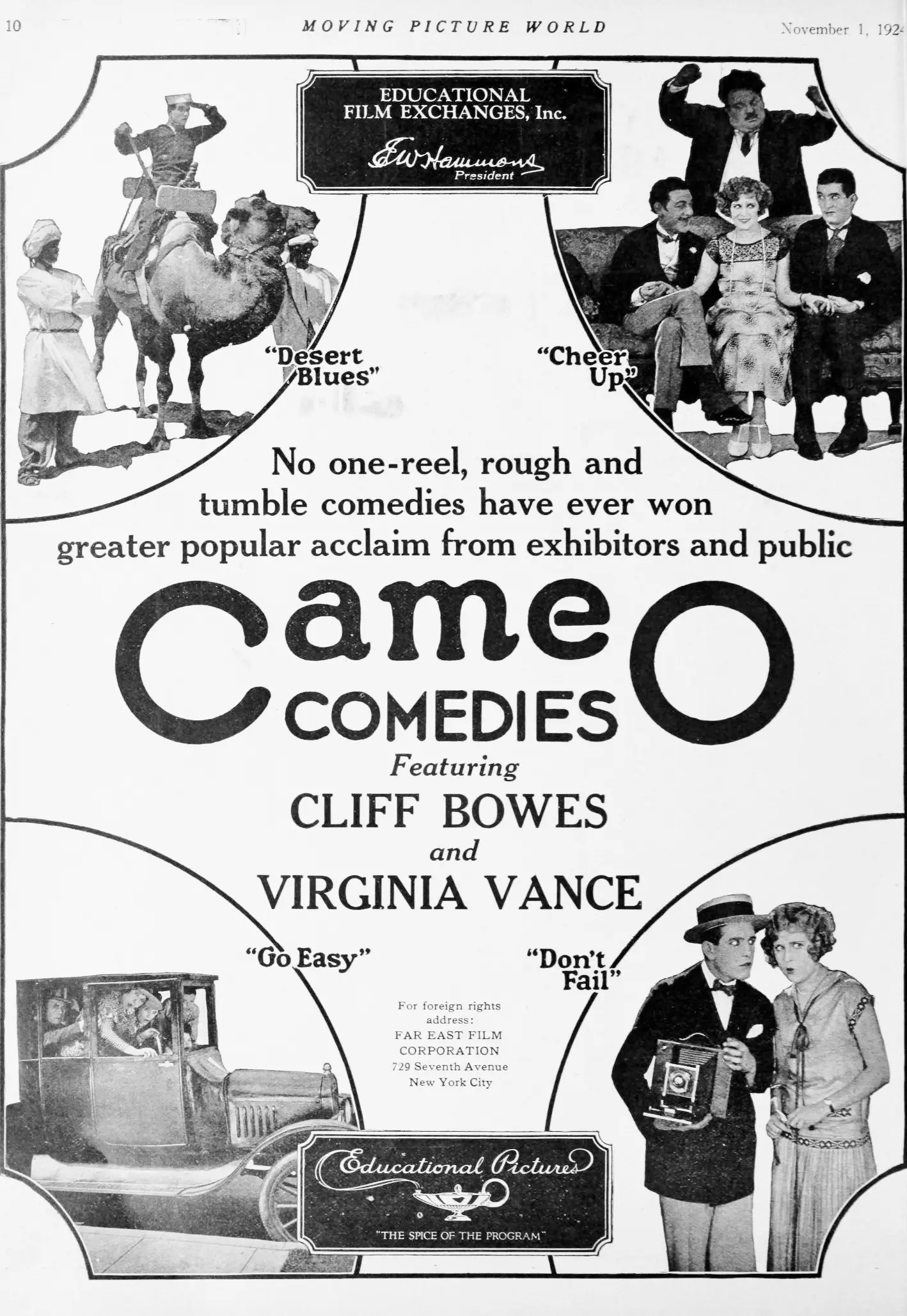
In the annals of silent cinema, where physical comedy reigned supreme and the narrative often hinged on escalating misfortune, 1920's 'Go Easy' stands as a testament to the era's unique comedic genius. This unassuming picture, starring the ever-earnest Cliff Bowes, the charming Virginia Vance, and the delightfully flustered Sidney Smith, is more than just a series of unfortunate events; it's a meticulously crafted study in the art of the snowballing disaster, a comedic crescendo that leaves audiences both empathetic and utterly convulsed with laughter.
The film opens with a premise as simple as it is timeless: a young man, head over heels in love, seeks to impress his sweetheart and, crucially, her entire family. This seemingly innocuous desire forms the bedrock of a narrative that quickly spirals into a maelstrom of vehicular wreckage, aquatic mishaps, and general societal chaos. Cliff Bowes, with his wide-eyed optimism and dogged persistence, embodies the archetypal silent film protagonist – a figure perpetually at the mercy of a capricious universe, yet always ready to pick himself up, dust himself off, and plunge headfirst into the next calamitous endeavor.
The initial act of 'Go Easy' introduces us to the first major hurdle: transporting the beloved and her sizable kin. Our hero's chosen conveyance, a humble Ford sedan, becomes an immediate character in itself, a symbol of hopeful ambition straining under the weight of an impractical reality. The subsequent and utterly predictable disintegration of the vehicle is a masterclass in visual comedy. Each creak, groan, and eventual structural capitulation is played for maximum effect, the car shedding its components piece by piece like a dying organism. This isn't just a car breaking down; it's the physical manifestation of the protagonist's dreams crumbling before his very eyes, each lost wheel or detached fender a blow to his romantic aspirations. The humor derives not just from the spectacle of destruction, but from the sheer incredulity of the family crammed within, and Bowes's increasingly desperate attempts to hold the automotive leviathan together with sheer willpower.
This particular sequence echoes the broader societal fascination with the automobile in the early 20th century. Cars were still relatively new, a symbol of freedom and modernity, yet also prone to spectacular and often public failure. Silent comedies frequently capitalized on this, turning the mechanical marvel into a source of slapstick gold. Films like 'Squabs and Squabbles', while perhaps not featuring such a dramatic automotive demise, often revelled in the chaotic potential of new technologies in everyday life.
With the Ford reduced to a pile of scrap, the narrative escalates, a hallmark of effective silent comedy. The protagonist, undeterred, procures a hired car, a seemingly more robust solution to his transportation woes. However, 'Go Easy' is not content with mere mechanical failure. It introduces an element of grander, more destructive spectacle: a train collision. The sheer audacity of this gag, the complete and utter annihilation of the replacement vehicle, pushes the boundaries of comedic misfortune into the realm of the absurd. It's a moment designed to elicit gasps before the laughter, a testament to the filmmakers' understanding of pacing and the art of the unexpected. The train, a powerful symbol of industrial might and unstoppable force, becomes an unwitting participant in the protagonist's personal comedy of errors, a force of nature (or rather, technology) that simply cannot be reasoned with.
The use of such destructive gags was a common, if expensive, trope in the era. Audiences flocked to see cars, trains, and even buildings meet their demise on screen. It was a visual feast, a cathartic release, and a demonstration of cinematic prowess. While direct comparisons might be difficult without knowing the exact stunts in 'The Phantom Fortune' or 'The Devil-Stone', the underlying principle of spectacle and dramatic incident as a narrative driver is undeniably present across many genres of the time.
Just when one might think the series of transportation disasters has reached its zenith, 'Go Easy' introduces its most memorable and truly farcical incident: the taxi, the wharf, and the father's involuntary baptism. The scene is meticulously staged, building tension as the taxi inches precariously close to the edge. Sidney Smith, as the father, delivers a masterclass in physical comedy, his portly figure and bewildered expressions amplifying the humor of his sudden, undignified descent into the water. The subsequent rescue, a chaotic scramble involving ropes, flailing limbs, and general pandemonium, is a testament to the ensemble's comedic timing and the director's ability to orchestrate delightful disorder.
This aquatic gag is a classic trope, often used to deflate pomposity or to add an unexpected twist to a seemingly mundane situation. The father's fall is not just funny; it's emblematic of the entire outing's trajectory – everything that can go wrong, will go wrong, and usually in the most publicly embarrassing way possible. It's a moment that resonates with the universal experience of a bad day, magnified to cinematic proportions. The vulnerability of the characters, particularly the father's, in such an absurd situation makes the comedy both broad and surprisingly relatable.
The success of 'Go Easy' hinges not just on its ingenious gags but on the stellar performances of its cast. Cliff Bowes, with his unassuming charm and resilient spirit, anchors the film. His facial expressions, a crucial element in silent film acting, convey a spectrum of emotions from hopeful anticipation to utter despair, often within the span of a few seconds. He’s the everyman caught in an impossible situation, and his plight is both hilarious and, at times, genuinely pitiable.
Virginia Vance, as the object of his affection, provides a gentle counterpoint to the chaos. Her reactions, often a mix of concern and bemusement, ground the fantastical elements in a semblance of reality. She's not just a pretty face; her presence provides the motivation for Bowes's heroic (if ultimately futile) efforts. Sidney Smith, however, steals many scenes as the beleaguered father. His physical comedy, particularly during the wharf incident, is impeccable. He embodies the exasperated patriarch, his frustrations mirroring the audience's own incredulity at the unfolding events.
The pacing of 'Go Easy' is another crucial element. The film understands the rhythm of slapstick: a slow build-up of tension, a sudden release of chaos, and then a moment of bewildered aftermath before the next disaster strikes. This ebb and flow keeps the audience engaged, allowing them to anticipate the inevitable while still being surprised by the specific nature of each calamity. The editing, while perhaps not as frenetic as later comedies, is precise, ensuring each gag lands with maximum impact. The intertitles are used sparingly but effectively, providing necessary exposition or amplifying punchlines without interrupting the visual flow.
The film's denouement is perhaps its most poignant and quintessentially silent-era comedic touch. After all the trials and tribulations, the family, rescued from their aquatic predicament, departs in a motorboat, leaving our hero stranded on the wharf, burdened with the taxi fare. This final act of abandonment, while cruel in its logic, serves as a perfect comedic punchline. It highlights the protagonist's ultimate isolation in his quest, the thankless nature of his efforts, and the sheer absurdity of his predicament. He remains, a solitary figure against the backdrop of a departing boat, a symbol of good intentions gone spectacularly awry. There's a subtle melancholia here, a recognition that sometimes, despite one's best efforts, fate has other plans.
This kind of bittersweet ending, where the protagonist is left in a state of comedic despair, was not uncommon in silent films. It allowed for a final laugh at the character's expense, while also subtly acknowledging the human condition. It's a stark contrast to the often more triumphant endings of heroic narratives, positioning 'Go Easy' firmly within the tradition of comedic realism, however exaggerated the events may be. The final image of Bowes, alone and accountable, is indelible.
'Go Easy' may not possess the sprawling narrative ambition of a feature-length epic like 'The Holy City' or the dramatic intensity of 'The Sons of Satan', but its brilliance lies in its compact, relentless pursuit of comedic perfection. It's a film that understands the mechanics of a good gag, the power of visual storytelling, and the universal humor found in human struggle against an indifferent world. It's a masterclass in escalating stakes, where each setback isn't just a repeat but an amplification of the previous one, building towards a truly memorable conclusion.
The film's themes—the perils of trying too hard, the unpredictability of modern life, the often-frustrating dynamics of family outings—remain remarkably relevant even a century later. While the specific modes of transport have evolved, the underlying anxieties and comedic potential of a disastrous journey persist. The physical comedy, expertly executed by Bowes and Smith, transcends the lack of dialogue, speaking a universal language of pratfalls, bewildered expressions, and the sheer human capacity for enduring misfortune.
In an era that saw a proliferation of short comedies, 'Go Easy' carves out its own niche through its relentless comedic drive and memorable set pieces. It’s a delightful reminder of the foundational principles of cinematic comedy, a blueprint for how to build laughter through escalating chaos and relatable human foibles. It invites us to laugh, not just at the characters, but with them, at the shared absurdity of life's unexpected detours. For any enthusiast of silent film, or indeed, anyone with an appreciation for pure, unadulterated slapstick, 'Go Easy' is not just a recommendation; it's an essential viewing experience, a joyous testament to the enduring power of a good, old-fashioned comedic disaster.

IMDb 5.5
1924
Community
Log in to comment.