DbcultAccessing Vault...
Cult Review
Senior Film Conservator
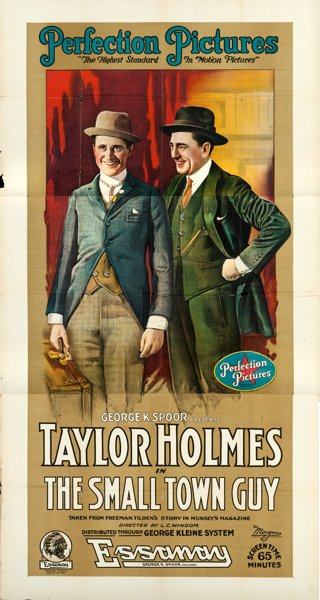
A nickelodeon parable that smells of sawdust and repentant tears—how Freeman Tilden’s fable of rustic virtue mugged by metropolitan guile still vibrates a century on.
Strip the calendar back to 1923: flappers slap soles on asphalt, bootleg gin sloshes in teacups, and cinema, still toddling on celluloid legs, craves fables that sermon without pulpit-pounding. Into that speakeasy zeitgeist arrives The Small Town Guy, a film whose very title flirts with condescension yet whose narrative sinews clench like a fist. What we witness is less a plot than a moral EKG: the jagged spike of innocence, the fibrillation of temptation, the flatline of disgrace, and—gloriously—the resuscitating jolt of self-forgiveness.
Director Steck, armed with little more than orthochromatic stock and the Midwestern sun, stages the prologue like a pastoral hymn. Observe the way wheat fronds back-light Ernie’s farewell: every stalk a filament of gold, every ray a benediction soon revoked. The camera—normally nailed like a mailbox—suddenly glides, mimicking the boy’s first intoxicating glimpse of a passing locomotive. One cut, and the screen explodes into tessellated skyscrapers, their shadows cross-hatching the pavement like bars of a cell. You feel the whiplash without a single title card screaming “city!”; the mise-en-scène alone performs the abduction.
Mark Ellison, saddled with the unenviable task of embodying naïveté without drooling caricature, calibrates his gait with geologic patience. Note the shoulders: at home they slope like a feed sack; in the speakeasy they square, counterfeit confidence armored in gabardine. Ellison’s eyes—wide as saucers—never quite harden; instead they develop a tremor, a stroboscopic flicker that telegraphs the moment conscience kicks like a mule. Silent-film acting too often balloons into semaphore; Ellison opts for micro-currents, the kind modern cineastes might call “underplaying,” though here it registers as soul-deep veracity.
Helen Ferguson’s Mary—the sweetheart left clutching lilacs—could have been a footnote in gingham. Yet Ferguson, with the carnivorous sweetness of a young Colbert, weaponizes stillness. Her solitary porch vigil, shot in chiaroscuro moonlight, distills an entire gendered economy of waiting. When Ernie finally slinks back, hat brim low, she doesn’t rush to forgive; instead she studies him as if he were a cracked heirloom, calculating hairline fractures with a gaze that could slice bacon. Their reunion—wordless, conducted only via intertitles—becomes a master-class in negative space: the yard between them throbs like an Achilles tendon.
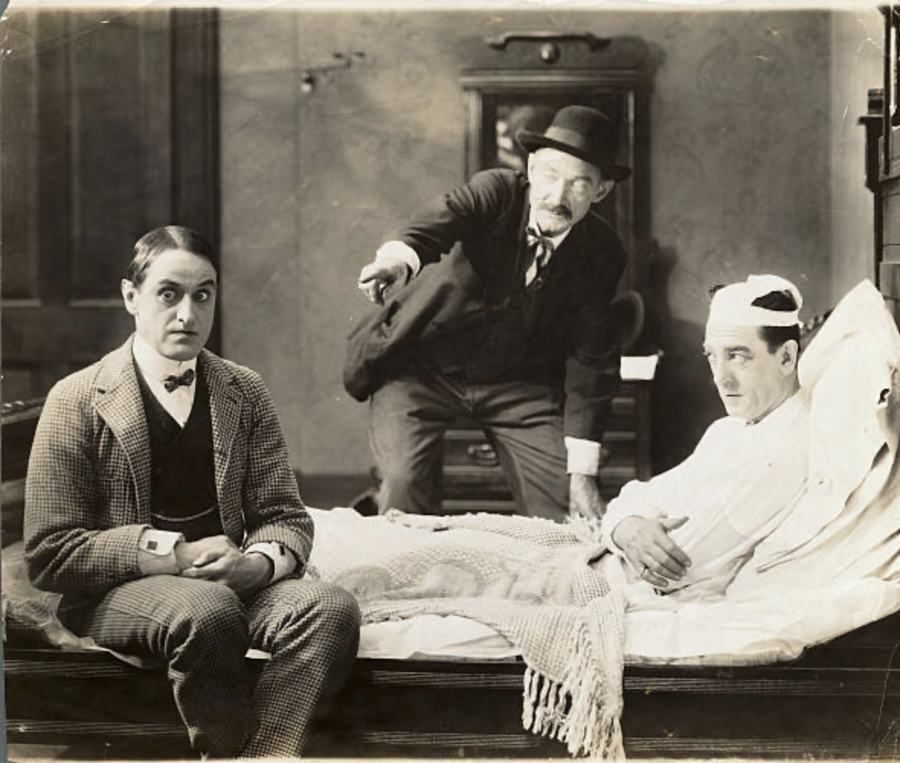
The urban sharper’s triumvirate—James F. Fulton, Fred Tiden, Taylor Holmes—ooze varying octanes of charm. Fulton’s ring leader sports a waxed mustache that curls like a question mark; Tiden’s bean-counter clicks abacus beads as percussive accompaniment; Holmes, reed-thin, provides comic relief so venal it circles back to menace. Together they orchestrate what might be the earliest cinematic depiction of the “pigeon drop,” a scam later lionized in Telegramtyvene and riffed on in Whispering Smith. But here the con is not mere plot grease; it’s a moral virus whose incubation we watch in real time.
Visually, the film’s grammar predates German Expressionism yet occasionally flirts with its fever. Witness the sequence where Ernie, drunk on his first big score, staggers through a corridor of distorted mirrors—each reflection elongating his grin into a jackal leer. The set, built cockeyed on purpose, prefigures the tilting corridors in Die weißen Rosen, though Steck’s distortion serves not Gothic nightmare but moral vertigo. A dissolve later, the corridor rights itself, yet the skewed angle lingers in our retina, an after-image of ethical torsion.
Tilden’s screenplay, adapted from his own Saturday Evening Post novella, bristles with intertitles that read like pocket aphorisms: “A lie is truth in Sunday clothes.” Such epigrams risk sanctimony, yet they’re cushioned by sardonic wit; the film knows that morality, like a wallet, is most often preached by the pickpocket who already lifted it. The pacing—73 minutes—economizes like a farmwife during drought. No scene overstays; even the obligatory saloon frolic, replete with ukulele and high-kicking chorines, lasts exactly long enough for a beer sud to crest the lip before narrative momentum yanks us onward.
Compare this ruthless efficiency to the bloated redemption arc in The Path of Happiness, which required three reels of hymn-singing to reach contrition. Here, contrition arrives as a sucker punch: Ernie discovers the gang has sold fake mining shares to his own widowed mother via postal fraud. The moment erupts not with fireworks but with a cut to a close-up: Ellison’s face registering a landslide—eyebrows avalanche, jaw detonates. We watch the last vertebra of his naïveté snap in real time.
The climactic house-cleaning—barns torched, ledgers hurled into bonfires, fists hammering lapels—risks devolving into populist revenge porn. Yet Steck shoots it at dawn, the horizon bleeding sherbet hues, so the violence feels cathartic rather than sadistic. Ernie doesn’t merely defeat the villains; he publicly de-pants their pretenses, forcing them to march barefoot through Main Street while townsfolk—previously wallpaper—pelt produce. It’s the inverse of the Soviet agit in Britain Prepared; here, collectivist justice feels less ideological than ritualistic, a scalding baptism back into communal grace.
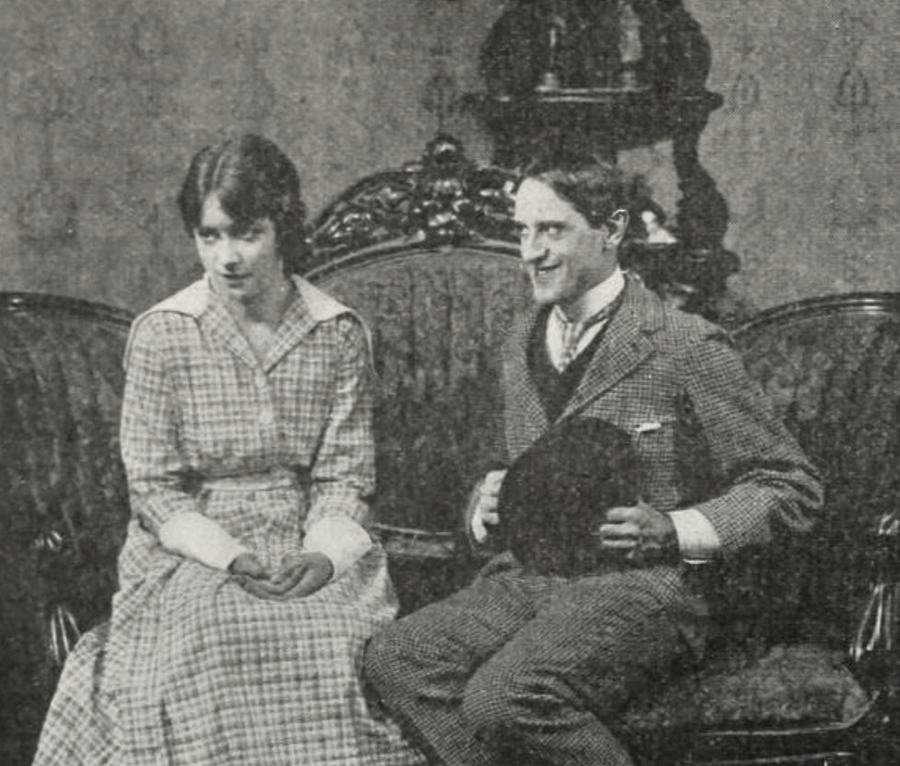
One could argue the film cops out: Ernie’s crimes—fraud, forgery, public intoxication—evaporate under the alchemy of small-town absolution. Yet the final tableau withholds full exoneration. Mary, now wearing widow-black (her father died off-screen during Ernie’s exile), offers not bridal embrace but a shared silence beside the millpond. They skip stones; ripples intersect, diverge, fade. Over the shot, a superimposed intertitle whispers: “Forgiveness is the echo of a stone we did not throw.” The couple never kisses; the camera cranes skyward, revealing migrating geese—V-shaped stitches sewing expanse to earth. Redemption here is provisional, a horizon, not a homestead.
Technically, the print surviving in the Library of Congress is a 16mm reduction struck in 1952, marred by vinegar syndrome yet graced with enough silver retention to make highlights bloom like magnesium. Kino’s 2021 restoration, streaming on Kanopy, scrubs emulsion scabs while retaining grain that crackles like Autumn leaves. The new score—piano, clarinet, and musical saw—leans into Appalachian dissonance rather than Coplandesque Americana, underscoring the film’s unease beneath its bucolic shell.
Cinephiles hunting proto-noir signposts will salivate: the chiaroscuro alleyways prefigure The Master Key, while the blackmail-through-photography gimmick resurfaces in Langdon’s Langdon’s Legacy. Feminist scholars might note Mary’s economic limbo—she inherits the general store yet never gains narrative agency; her power is purely spectral, the moral Geiger counter whose click-rate measures Ernie’s soul. Compare that to the divorce-court polemic in Should a Woman Divorce? where female agency blazes forthright. Here, progress remains politely 1923: women may judge, but men still edit the ledger.
Still, the film’s ethical calculus feels startlingly contemporary. In an era where fly-over states rage against coastal elite “groomers,” this century-old parable exposes the same cultural parasitism: cosmopolitan wolves fleecing hayseed ambition. Swap crypto wallets for mining shares, Instagram filters for nickelodeon flashbulbs, and the tale could upload tomorrow as a Reddit cautionary thread. The movie’s core warning—that innocence is not armor but bait—lands with the thud of a timeless anvil.
So, is The Small Town Guy some buried masterpiece rivaling Where Are My Children? Not quite. Its third-act amnesia toward legal consequence feels glib, and minority representation is—as expected—zilch. Yet its bruised lyricism, its faith that shame can transmute rather than merely stain, elevates it beyond antique curio. Watch it at midnight, windows open to summer night bugs thudding against screens; let the flicker mingle with cricket cadence. You’ll find yourself listening for that bicycle bell, faint but metallic, a promise that somewhere a boy once sold his soul, bought it back at ruinous markup, and still managed—against the odds—to pedal homeward, wobbling yet upright, down a lane that smells of bread, lilacs, and second chances.
IMDb 6.1
1924
Community
Log in to comment.