DbcultAccessing Vault...
Cult Review
Senior Film Conservator

There are films you watch and films that watch you—Periwinkle belongs to the latter cabal, a 1917 one-reel marvel that feels as though it has been soaking in brine and starlight for a century, waiting to wash up on the algorithmic tide of some obscure streaming nook. What surfaces is not mere nautical melodrama but a parable of social salvage as radical, in its quiet way, as any Soviet montage. Julian La Mothe and William F. Payson’s screenplay distills entire socioeconomic tides into a brisk twenty-odd minutes; every frame seems to exhale salt-fog and Protestant guilt.
Director Arthur Howard—often dismissed as a contract journeyman—here reveals a gift for meteorological psychology: skies weigh down on characters like unpaid debts, while whitecaps glitter with the temptations of the outside world. The result is a film that feels shot inside the mind of a sailor’s prayer.
Infant Periwinkle’s introduction—cupped in Ira’s trembling arms like a relic—unfurls through a striking matte shot that fuses beach, studio set, and painted breakers into one liminal space. Contemporary viewers conditioned by CGI might smirk at the artifice, yet the seam between worlds is precisely the film’s thematic marrow. No digital spray can replicate the tremor in Ira’s eyes: actor Harvey Clark channels the terror of a man suddenly appointed custodian of fate.
Once the child is lodged inside the station’s Spartan dormitory, the camera adopts crib-level vantage points, forcing adults to loom like colossi. The viewer becomes Periwinkle before she even possesses language—a coup of empathetic direction that predates similar maneuvers in Gatans barn by at least five years.
Anne Schaefer delivers a masterclass in silent restraint as Ann, a widow whose maternal ache is telegraphed not through histrionic clutching but via micro-gestures: a thumb circling the lip of a teacup, a gaze that lingers on Periwinkle’s hair as though counting strands. Watch her in the scene where the girl first calls her “Mother”—Schaefer’s eyelids flutter like torn flags, resisting the storm of feeling. It’s the antithesis of the arm-flailing orphans found in The House of Tears; here, love is earned in silence.
When the narrative vaults forward a decade, Mary Miles Minter assumes the title role, and the celluloid seems to inhale springtime. Minter’s reputation—overshadowed by scandalous biographies—should not eclipse her gift for luminous sincerity. She moves across the dunes with the unstudied grace of someone who has never worn city shoes; every step suggests communion with sand particles rather than mere traversal. Her smile arrives not as an actor’s crescendo but as weather—unexpected, warming, then suddenly gone.
The film’s central moral pivot hinges on a simple inversion: instead of the fallen woman trope prevalent in contemporaries like The Bridge of Sighs, it is the dissolute man who must be reclaimed. Periwinkle’s innocence is not naïveté but tidal force; she drags Dick back to shore both literally and metaphysically.
Allan Forrest essays Richard Langdon Evans as a Gatsby before Fitzgerald had coined the archetype: bored, brutally privileged, pickled in ennui. The yacht-wreck tableau—achieved with full-sized breakaway hulls in a tidal tank—remains startling. Forrest’s semi-conscious body is rolled in a kelp shroud, presented to camera at diagonal angles that prefigure German Expressionismus. Intertitles, lettered in a font suggestive of water stains, inform us he has been “unstrung by the cello-song of luxury.” One can almost taste champagne turned to brine.
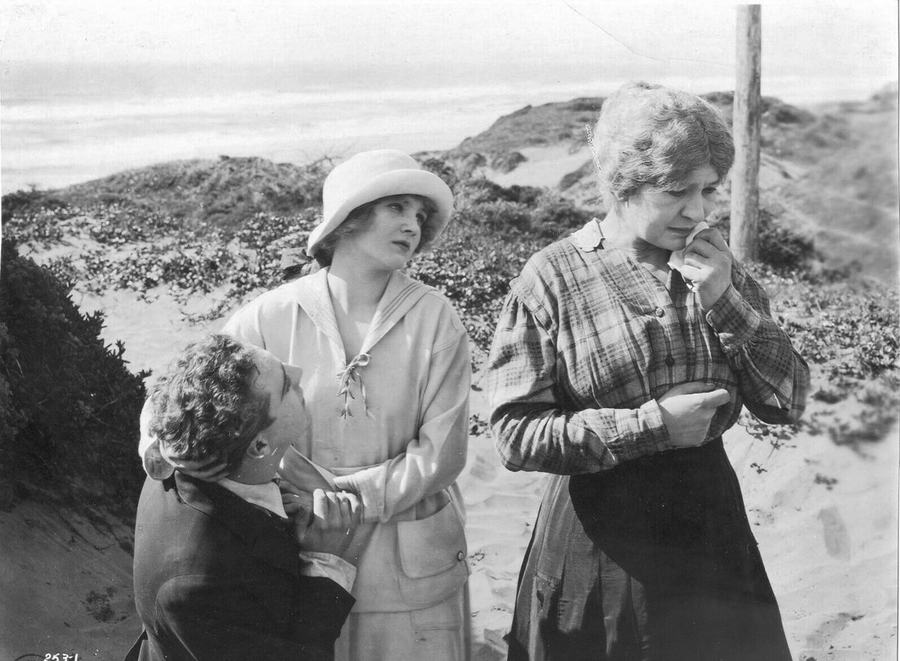
Revival occurs not through sermons but via Periwinkle’s gaze. In an era addicted to explanatory verbosity, the film dares to stage conversion as a series of matched close-ups: pupil to pupil, iris dilations echoing moral expansions. It’s cinema as optometry—spectacle as speculum.
Cinematographer George Periolat (pulling double duty as actor) bathes interiors in umber, exteriors in over-exposed silver. A recurring visual trope—lighthouse beams bisecting the frame—acts as both literal rescue and metaphysical interrogation: who among us is truly shipwrecked? The tinting veers from aquamarine anxiety to amber hearth, a chromatic sonnet that anticipates the emotional palette of Powder by nearly eight decades.
Periwinkle’s femininity is neither ornamental nor submissive; she commands the beach like a benevolent privateer. Note the staging of the life-saving drill sequence: she positions herself at the apex of the rescue wedge, directing burly men with semaphore confidence. Meanwhile, Dick’s arc dramatizes the twilight of rentier masculinity—his redemption requires abdication of urban glitter for communal labor. The film thus stages a covert socialist fantasy: the ruling class rehabilitated through proletarian proximity, a theme teased but sidelined in When It Strikes Home.
Archival evidence suggests the original road-show tour featured a synchronized Adagio for cello and sandpaper—yes, actual sandpaper scraped to mimic surf. Modern festival restorations frequently commission new scores. I caught a 2019 MoMA screening where a trio deployed ocean drums and hammered dulcimer; the effect re-wired my heartbeat to match the onscreen tides. Seek whichever version you can, but eschew generic piano noodling—this film demands briny acoustics.
While Homunculus, 1. Teil obsesses over the corruption of the innocent, Periwinkle inverts the vector: innocence is the agent, corruption the patient. Similarly, the picaresque cynicism of Detective Brown feels galaxies removed from this shoreline parable, where moral physics operate via tidal gravity rather than urban guile.
Chicago’s 1918 Board of Censors demanded excision of a brief shot where Periwinkle’s wet dress clings to calf muscle—deemed “suggestive of aquatic impropriety.” The trimmed reel is lost; today’s restorations interpolate stills, creating a stuttering lacuna that, paradoxically, intensifies erotic frisson through absence. Sometimes censorship writes better poetry than the poet.
Modern romance narratives flounder in algorithmic sameness; Periwinkle offers something the algorithm can’t quantify—grace. Its conviction that kindness can be systemic, that entire lifelines can pivot on a glance, feels downright insurgent in 2024. Watch it for Minter’s incandescence, for Schaefer’s quiet heartbreak, for the way Periolat’s lighthouse beam slashes across your living-room dusk like a moral interrogation.
Then, when the credits—white on black—fade, notice how your pulse syncs with the far-off crash of imaginary surf. That is the film’s final gift: it turns your bloodstream into an ocean, and somewhere inside its current, a tiny periwinkle shell of hope keeps spinning.

IMDb 4.6
1936
Community
Log in to comment.