DbcultAccessing Vault...
Cult Review
Senior Film Conservator
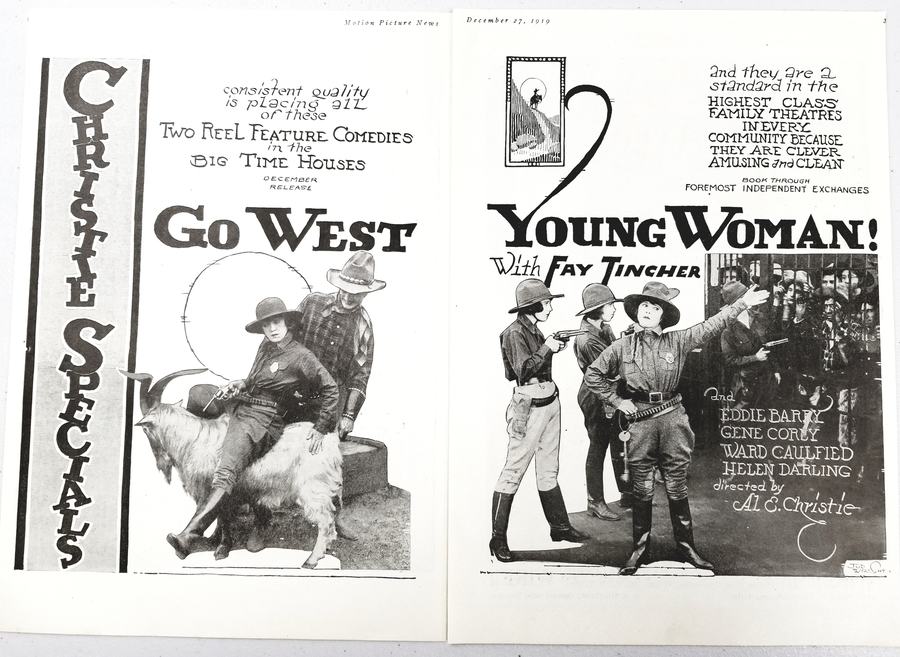
The year 1918 stood as a pivotal juncture for the cinematic arts, a period where the primitive techniques of the previous decade began to coalesce into a sophisticated visual language. Amidst this evolution, Go West, Young Woman emerges not merely as a comedic short, but as a fascinating psychological study wrapped in the trappings of a frontier farce. Directed with a keen eye for physical timing and social satire, this Al Christie production leverages the formidable talents of Fay Tincher to explore the burgeoning anxieties of a nation transitioning between Victorian sensibilities and the roaring modernity that loomed on the horizon.
To understand the resonance of this film, one must first dismantle the structural artifice employed by writers Frank Roland Conklin and Scott Darling. The 'dream sequence' is a trope often maligned in contemporary criticism for its perceived laziness, yet in the context of 1918, it served as a radical tool for exploring the 'id'. Unlike the straightforward morality plays found in Thou Shalt Not Steal, where the boundaries of right and wrong are etched in stone, Go West, Young Woman uses the protagonist's slumber to construct a world where social hierarchies are inverted.
The transition from the train car to the imagined Texas town is handled with a seamlessness that mimics the onset of REM sleep. We are thrust into a landscape that is 'going to the dogs'—a literal and figurative descriptor that the film plays with quite gleefully. The visual of a town overrun by canines provides a surrealist edge that predates the more overt experimentation of films like The Golem and the Dancing Girl. It establishes an immediate sense of 'otherness,' signaling to the audience that the rules of the civilized East no longer apply.
Fay Tincher, an actress whose career often hovered on the periphery of legendary status, delivers a performance here that is nothing short of magnetic. In an era where female leads were frequently relegated to the 'damsel' archetype seen in The Eternal Grind, Tincher’s portrayal of the niece-turned-sheriff is a breath of revolutionary air. She possesses a specific kind of kinetic energy—a mixture of slapstick precision and a steely-eyed determination that makes the 'moral whirlwind' she unleashes feel entirely plausible within the film's internal logic.
When she assumes the role of sheriff, the film shifts from a comedy of errors into a proto-feminist manifesto. The introduction of the female police force is not merely a gag; it is a visual representation of the suffrage movement’s underlying desire for civic purification. The way Tincher manages her troop, capturing bandits with a mixture of tactical ingenuity and brute force, stands in stark contrast to the bumbling male authority figures who preceded her. This dynamic creates a fascinating dialogue with other films of the period, such as The Vigilantes, which often focused on masculine groups reclaiming order through violence. Here, Tincher reclaims order through a systematic dismantling of the 'good old boy' network.
Comparing Go West, Young Woman to its contemporaries reveals a film that was surprisingly ahead of its time in terms of narrative irony. While a film like Look Out Below relies on the visceral thrill of height and physical danger for its laughs, Tincher's vehicle finds its humor in the discrepancy between expectation and reality. The bandit who robs the town whenever the 'notion' takes him is a caricature of the hyper-masculine villains found in The Bulldogs of the Trail. By treating this threat as a nuisance to be tidied up by a reform administration, the film mocks the very foundations of the Western mythos.
Furthermore, the revelation of the ex-sheriff being in league with the robber adds a layer of noir-ish cynicism that one might expect from a later work like Black Friday or even the moral ambiguity of The Master Mind. It suggests that the 'Wild West' isn't just wild because of external threats, but because the institutions meant to protect it are inherently corrupt. This makes the protagonist's dream-self not just a hero, but a revolutionary purging a diseased system.
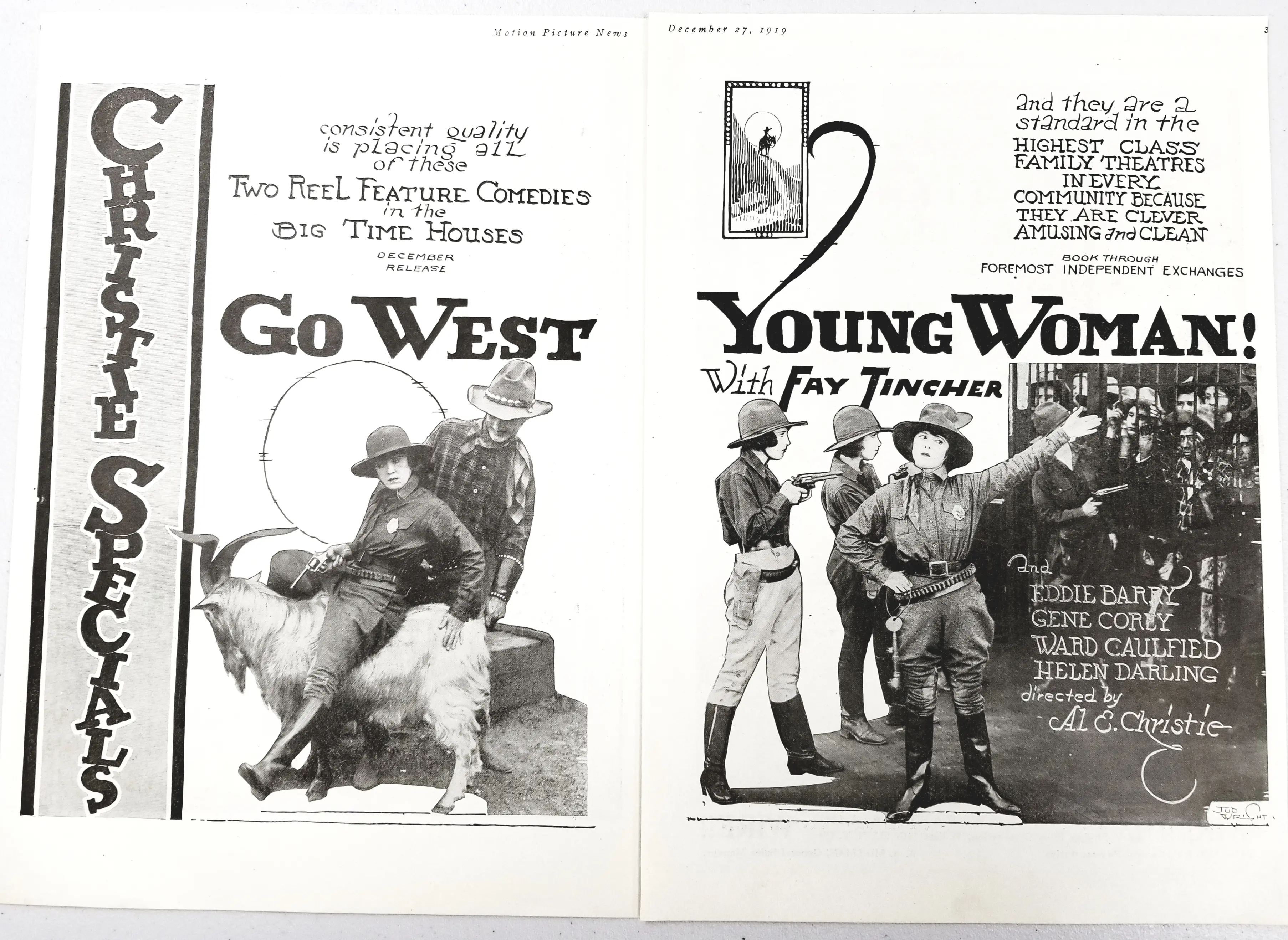
"The brilliance of the film lies in its final act. The 'lively shooting match' is choreographed with a frantic pacing that rivals the best action sequences of the silent era. Yet, the sudden transition back to the quiet station—the 'New England village' in the heart of Texas—serves as a poignant commentary on the death of the frontier. The West was already won, tamed, and manicured by 1918, and Tincher’s dream was perhaps a nostalgic longing for a chaos that no longer existed."
Technically, the film utilizes the limited resources of the Christie Film Company to great effect. The set design of the dream-town is intentionally sparse, emphasizing the 'frontier' aesthetic while allowing the actors' physicality to dominate the frame. The use of depth in the shooting match sequence—characters moving from the background to the foreground amidst puffs of gunsmoke—shows a growing understanding of the cinematic space that was often lacking in more stage-bound productions like Miyama no otome or the Danish Solskinsbørnene.
The lighting, particularly in the train sequences, captures the flickering, rhythmic quality of travel, which helps ground the surrealism of the dream. There is a palpable sense of movement, a feeling that we are heading toward a destination that is both geographical and psychological. This forward momentum is a hallmark of the era's best comedies, ensuring that the 'dull care' (to reference Dull Care) of the everyday is momentarily suspended in favor of high-octane absurdity.
At its heart, Go West, Young Woman is a story about the collision of two Americas. The niece represents the 'civilizing' influence of the East—a recurring theme in early cinema, perhaps most notably explored in a dramatic context in The Golden Chance. However, while other films might treat this influence with reverence, this comedy treats it with a wink. The 'reform' she brings is so extreme that it becomes its own form of madness. The 'moral whirlwind' is just as disruptive as the bandit it seeks to replace.
This nuanced take on reformism reflects the complex social landscape of the late 1910s. With Prohibition on the horizon and the suffrage movement reaching its zenith, the image of a woman cleaning up a town 'gone to the dogs' was both a populist fantasy and a source of comedic anxiety for the male audience. The film manages to play to both sides, celebrating Tincher's competence while ultimately dismissing her crusade as a byproduct of 'bad dreams' and 'apprehension.' It is a fascinating 'have your cake and eat it too' moment in film history, similar to the narrative gymnastics found in O Crime de Paula Matos.
While often overshadowed by the feature-length epics of the time or the later masterpieces of Keaton and Chaplin, Go West, Young Woman deserves a place in the pantheon of significant silent shorts. It lacks the melodrama of The Lost Express or the romantic whimsy of A Pistol-Point Proposal, but it replaces those elements with a sharp, biting wit and a unique perspective on the American mythos.
The film serves as a reminder that the 'Wild West' was, even then, a construct of the imagination—a place where we projected our fears of lawlessness and our hopes for heroism. By framing the entire adventure as a dream, Scott Darling and his team allowed themselves a level of creative freedom that a 'realistic' Western would not have permitted. They gave us a hero in Fay Tincher who was capable, fierce, and utterly in control, even if that control only existed in the quiet moments between train stations. In the end, the niece wakes up to a world that is 'quiet and well-behaved,' but for those twenty minutes of celluloid, she showed us a West that was far more interesting—and far more dangerous—than the reality could ever be.
Final Verdict: A sparkling example of silent-era subversion that remains a testament to the comedic brilliance of Fay Tincher and the innovative spirit of the Christie Film Company.

IMDb 5.2
1936
Community
Log in to comment.