DbcultAccessing Vault...
Cult Review
Senior Film Conservator
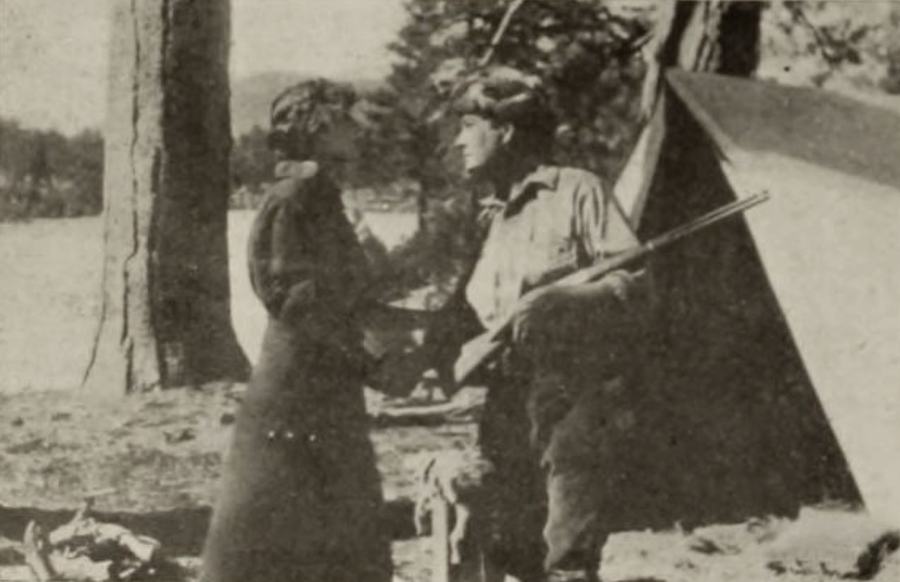
In the annals of early cinema, certain narratives emerge not merely as entertainment, but as profound explorations of human resilience against the backdrop of an indifferent, often hostile, natural world. James Oliver Curwood’s 'God’s Country and the Woman,' adapted for the screen with Agnes Christine Johnston’s deft touch, is one such film. It plunges us into a world where honor is a tangible currency, loyalty a binding force, and the vast, untamed timberlands of the North serve as both crucible and sanctuary. This isn't just a tale; it's an epic poem rendered in moving images, a testament to sacrifice and the enduring power of love, even in its most unconventional forms.
The film introduces us to Josephine Adare, portrayed with a poignant intensity by Nell Shipman, a woman whose very countenance betrays a profound, unspoken sorrow. Her life, steeped in the rugged purity of the North, is a study in quiet suffering. Shipman, a formidable presence in early cinema, imbues Josephine with a strength that transcends her visible anguish, hinting at a deep well of character beneath the surface. Into this world strides Philip Weyman (George Holt), a man seeking solace or perhaps adventure in the wild, who finds himself irresistibly drawn to Josephine’s enigmatic pain. Their initial encounters are less about conventional romance and more about the magnetic pull of two souls destined to intertwine in a narrative far grander than either could anticipate.
Philip's persistence in unraveling Josephine's mystery leads to an extraordinary proposition: a pact of unwavering devotion, an agreement to follow her path without question, seeking no reward beyond her gratitude. This moment is pivotal, defining Philip's character not just as a suitor, but as a man of profound integrity and boundless love. It sets the stage for a journey that defies societal norms, echoing the unconventional heroism seen in films like Heroes of the Cross, where characters commit to a cause far greater than themselves. Their subsequent marriage, a pragmatic arrangement rather than a passionate union, underscores the gravity of Josephine's secret and the extraordinary lengths she is willing to go to protect it. It's a testament to the era's understanding of honor, a theme that resonates deeply throughout the narrative, reminiscent of the societal pressures and moral dilemmas explored in The Crucible, albeit in a vastly different setting.
The introduction of an infant, presented as Josephine’s child and Philip’s own, tests the very fabric of his promise. George Holt’s portrayal of Philip in this scene is particularly effective, conveying the flicker of doubt, the internal struggle between faith and the stark, undeniable reality before him. Yet, his commitment, born of a nascent love and an innate sense of justice, triumphs. This moment solidifies his transformation from an outsider to an integral part of Josephine’s intricate, dangerous world. The subsequent, tragic death of the infant serves not as a resolution, but as an accelerant, stripping away one layer of Josephine's burden while simultaneously intensifying the lurking threats that surround her.
The narrative then shifts, imbued with a palpable sense of foreboding. Philip, now acutely aware of the unseen forces conspiring against Josephine, finds himself in a tense state of watchful waiting. Jean Croisset, Josephine’s half-breed protector, played with a stoic gravitas by William Duncan, becomes a crucial figure, a bridge between the wilderness’s unspoken laws and the human drama unfolding. Jean’s counsel of patience, though frustrating for the impetuous Philip, highlights the intricate dance of survival in this harsh environment. It suggests a wisdom born of deep understanding of both human nature and the unforgiving landscape, much like the seasoned frontiersmen depicted in films such as The Long Chance, where survival often hinges on calculated restraint rather than brute force.
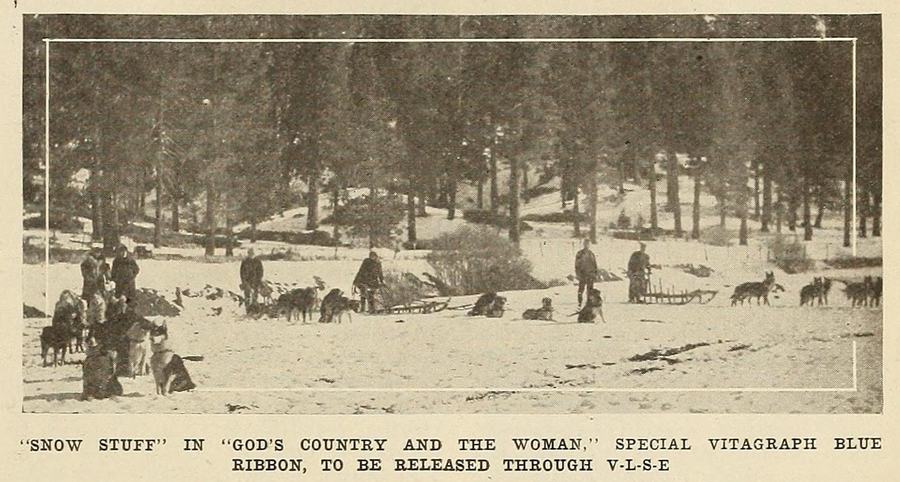
A unique element of this tale is the bond between Josephine, and by extension Philip, and her ferocious wolf-hounds. These aren't mere pets; they are extensions of the wild, creatures of primal instinct whose loyalty, once earned, is absolute. Their presence adds a layer of untamed power to the narrative, a living embodiment of the 'God's Country' ethos. The film masterfully uses these animals as symbols of protection and retribution, foreshadowing their ultimate, decisive role in the climax. This connection to the wild, a recurring motif in Curwood's works, elevates the stakes, reminding us that in this land, nature itself can be an ally or an enemy.
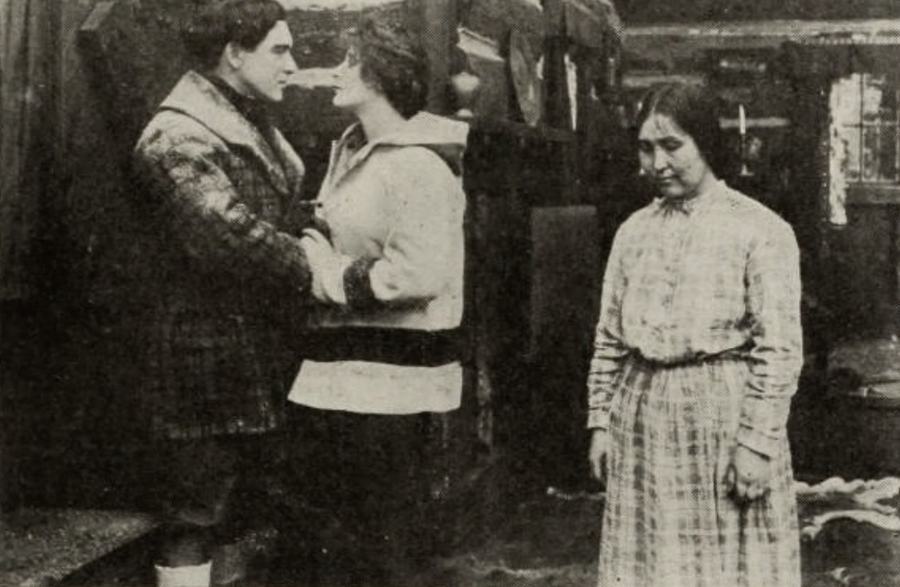
Josephine’s reputation for kindness, particularly towards children, becomes a tragic vulnerability when she is lured to another village and subsequently kidnapped by Lang. This villain, whose malevolence has been a shadowy undercurrent throughout the film, finally steps into the light. The revelation by Jean that Lang is responsible for all Josephine's woes galvanizes Philip. His initial frustration gives way to decisive action, rallying the honest woodsmen of the neighborhood, men whose respect and affection for Josephine are unwavering. Their collective response, bolstered by the aid of a local Native American tribe, transforms the narrative into a full-blown rescue epic. This communal uprising for justice against a predatory force is a powerful statement, echoing the moral clarity often found in early Westerns or frontier narratives, where clear lines are drawn between good and evil.
The journey to 'Devil’s Nest,' Lang’s stronghold, is depicted as a harrowing trek, a race against time and the unforgiving elements. The alliance between the woodsmen and the Indigenous tribe is noteworthy, presenting a unified front against a common enemy, a refreshing departure from some of the more stereotypical portrayals of the era. This coalition underscores the idea that in the face of profound injustice, divisions can be transcended. The eventual confrontation at 'Devil’s Nest' is a masterclass in tension and action, with Lang and his gang barricading themselves against the righteous fury of their pursuers. The ensuing battle is visceral, a clash of wills and weapons, where every shot and every struggle is imbued with the weight of Josephine’s honor and safety.
In the chaos of battle, Jean Croisset is mortally wounded. His dying moments are dedicated to a final, crucial revelation. As he lies bleeding, he summons Philip, his voice fading, to impart the true, tragic story: Josephine’s mother had fallen victim to Lang’s depravity a year prior, and the infant, now deceased, was the result. Josephine, in an act of profound, selfless love and sacrifice, had claimed the child as her own to shield her mother’s honor from societal condemnation. This twist is a narrative bombshell, retroactively illuminating Josephine’s sorrow, Philip’s unwavering commitment, and the entire film’s thematic core. It elevates Josephine from a mysterious figure to a tragic heroine, a woman who bore immense personal suffering to protect her family’s reputation. This kind of deep, personal sacrifice for honor is a potent theme, found in other powerful dramas of the era, such as The Wishing Ring: An Idyll of Old England, where characters often navigate complex moral landscapes.
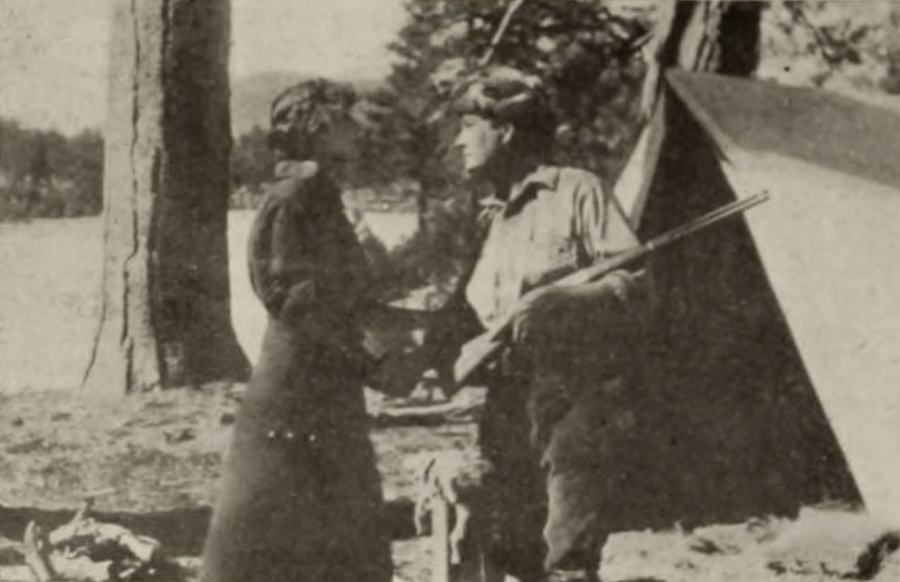
Jean’s final injunction to Philip—to kill Lang and destroy the incriminating papers—transforms Philip’s mission from rescue to righteous vengeance, a quest for ultimate justice. The ensuing lull in the fighting provides Lang a desperate opportunity to escape, taking Josephine as his hostage. This final struggle, a primal confrontation between good and evil, is the film’s emotional crescendo. As Lang gains the upper hand, reaching for his knife to end Philip’s life, Josephine’s ultimate weapon is unleashed: her wolf-hounds. These magnificent beasts, acting as if they intimately understood their mistress’s anguish and the villain’s perfidy, leap into the fray. Their savage, merciless fangs tear into Lang, delivering a swift, brutal justice that is both horrifying and deeply satisfying. It is nature itself, in its most untamed form, enacting retribution, a powerful thematic statement about the wilderness's own moral code.
With Lang dead and the incriminating papers destroyed, Philip reveals to Josephine that he knows the full extent of her sacrifice. The burden she has carried with such grace and fortitude is finally lifted. Nell Shipman’s portrayal of Josephine’s relief and her confession of enduring love for Philip is a moment of profound emotional catharsis. It’s a powerful conclusion to a journey fraught with peril and sorrow, promising a future of hard-won happiness in the very heart of 'God’s Country.' The film’s resolution is not merely a happy ending, but a profound affirmation of love, loyalty, and the triumph of honor over degradation.
The cinematic language of 'God’s Country and the Woman' speaks volumes through its powerful imagery and the nuanced performances of its cast. While George Kunkel, Edgar Keller, Nell Clark Keller, and W.H. Bainbridge provide solid support, it is the central performances and the sweeping grandeur of the natural setting that truly captivate. The film leverages the awe-inspiring beauty and brutal indifference of the northern wilderness to amplify the human drama, making the environment an active character in the story. This is a characteristic often found in early adventure films like The Plunderer, where the landscape is more than just a backdrop; it’s an integral part of the narrative struggle.
In an era marked by burgeoning cinematic techniques, 'God’s Country and the Woman' likely employed innovative cinematography to capture the vastness of its setting and the intensity of its action sequences. The silent film medium, reliant on visual storytelling and expressive acting, would have been perfectly suited to convey the profound emotions and thrilling escapades of Curwood's original tale. The film stands as a testament to the power of narrative to explore complex moral questions, to celebrate the strength of the human spirit, and to remind us that even in the harshest of environments, love and honor can ultimately prevail.
For those who appreciate the foundational narratives of American cinema, particularly those that intertwine human drama with the raw power of nature, 'God’s Country and the Woman' offers a compelling viewing experience. It's a journey into a bygone era, where heroism was often quiet, sacrifice was noble, and the promise of a happy future, earned through immense struggle, felt like the greatest reward of all. It invites us to reflect on the enduring themes of family honor, the depths of a woman’s sacrifice, and a man’s unwavering devotion, all set against a backdrop that is as beautiful as it is brutal. This film, though perhaps overshadowed by later blockbusters, remains a vital piece of cinematic history, a robust and emotionally resonant adventure that continues to speak to the timeless human condition.
The influence of stories like this, where characters are defined by their actions in the face of overwhelming odds, can be seen throughout film history. It's a narrative archetype that continues to captivate audiences, reminding us that true strength often lies not in physical prowess alone, but in the steadfastness of one's moral compass and the courage to protect those we love, no matter the personal cost. The legacy of 'God's Country and the Woman' is in its profound statement on the enduring human spirit, proving that some stories, like the wilderness itself, possess an untameable, eternal power. It is a cinematic experience that transcends its historical context, offering a timeless reflection on the trials and triumphs of the human heart in the wild, rugged embrace of nature.

IMDb 6.2
1920
Community
Log in to comment.