DbcultAccessing Vault...
5.7/10
Senior Film Conservator
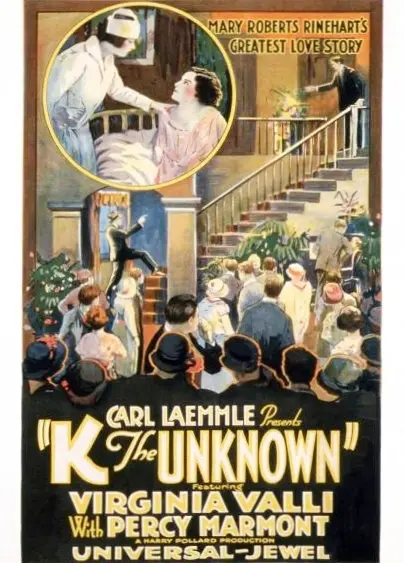
A definitive 5.7/10 rating for a film that redefined the boundaries of cult cinema. K: The Unknown remains a cornerstone of transgressive art.
Stepping back into the cinematic landscape of 1924, one encounters a fascinating array of storytelling, often characterized by grand gestures, dramatic irony, and a profound reliance on visual narrative. Amidst this vibrant era of silent film, K: The Unknown emerges as a compelling artifact, a testament to the period's capacity for intricate romantic melodrama fused with a persistent, almost noir-ish sense of mystery. Directed with a keen eye for human frailty and the burden of secrets, this film, based on the popular novel by Mary Roberts Rinehart, crafts a narrative that is both intimate in its depiction of small-town affections and expansive in its exploration of identity and sacrifice. It’s a work that, even today, resonates with an emotional truth that transcends the absence of spoken dialogue, inviting modern audiences to appreciate the nuanced artistry of a bygone era.
The Tapestry of Suspense: Unraveling the PlotThe narrative of K: The Unknown unfurls in a quaint, seemingly idyllic community, where the lives of its inhabitants are inextricably intertwined. At the heart of this intricate web is Sidney Page, portrayed with luminous charm by Virginia Valli, a young nurse whose inherent beauty and compassionate disposition render her the undisputed object of several young men's fervent admiration. Her presence acts as a magnetic force, drawing suitors into her orbit, each vying for her affection with varying degrees of earnestness and intensity. This delicate balance of romantic pursuit, however, is dramatically disrupted by the introduction of K, a figure brought to life with a captivating blend of reserve and intensity by Percy Marmont. K is an outsider, shrouded in an almost impenetrable veil of mystery. His past is a blank slate to the townsfolk, fueling whispers and speculation, yet his devotion to Sidney is palpable, a silent but potent force in the romantic competition.
The film's central conflict, a masterstroke of melodramatic tension, ignites when one of K's primary rivals for Sidney's hand suffers a sudden, life-threatening affliction. The medical emergency is dire, and in a cruel twist of fate that only such narratives can orchestrate, the unfortunate suitor's very survival becomes contingent upon a single, agonizing condition: K must finally divest himself of the profound, long-guarded secret that has shadowed his entire existence. This ultimatum transforms K's personal enigma into a matter of life and death, forcing him into an unbearable ethical quandary. He is compelled to weigh his meticulously preserved anonymity against the immediate imperative of saving another man's life – a man who, ironically, stands directly in the path of his own romantic aspirations. The revelation of his past, whatever its nature, promises to irrevocably alter the course of his life, potentially shattering his carefully constructed persona and, by extension, the fragile, burgeoning connection he shares with Sidney. The film, through this ingenious plot device, delves deep into the psychological toll of hidden truths and the profound sacrifices demanded by love and conscience, all while maintaining a gripping sense of suspense that keeps the audience riveted, eager to uncover the 'unknown' that defines its central character.
Portraits in Shadow: The Enigmatic CastThe success of any silent film hinges significantly on the expressive capabilities of its cast, and K: The Unknown is fortunate in its ensemble. Virginia Valli, as Sidney Page, embodies the quintessential ingenue of the era, yet with a refreshing depth. Her beauty is not merely superficial; Valli imbues Sidney with a quiet strength and an inherent goodness that makes her appeal to multiple suitors entirely believable. Her expressions, often subtle, convey a spectrum of emotions—compassion for her patients, genuine affection for K, and perhaps a touch of perplexity at the romantic entanglements surrounding her. She is not merely an object of desire but a moral compass, her reactions guiding the audience's understanding of the unfolding drama. Valli’s performance is a masterclass in silent screen emoting, managing to convey complex feelings without resorting to excessive histrionics, a common pitfall of the period.
Then there is Percy Marmont as the eponymous K, a character designed to be a walking enigma. Marmont's portrayal is crucial, as the entire dramatic tension hinges on the audience's curiosity about his past. He plays K with a compelling blend of reticence and intensity, his eyes often betraying a haunted quality that hints at the burden he carries. His movements are measured, his gestures deliberate, all contributing to the aura of mystery that surrounds him. Marmont avoids the trap of making K merely aloof; instead, he suggests a man constantly wrestling with an internal conflict, a man who yearns for connection but is held captive by a secret too potent to reveal. The climactic moments, where K's past is finally unveiled, rely heavily on Marmont's ability to convey profound vulnerability and the weight of his decision, and he delivers with understated power.
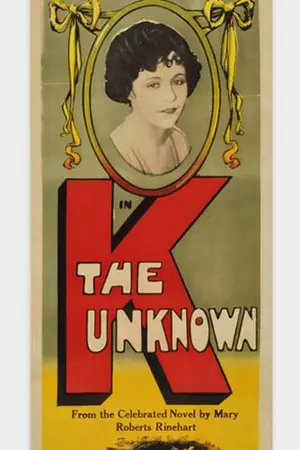
The rival for Sidney's affections, played by John Roche, serves as the critical catalyst for the film's dramatic climax. While perhaps less developed as a character than Sidney or K, Roche effectively portrays the earnestness and vulnerability of a man deeply in love, whose sudden illness thrusts the narrative into high gear. His plight is not just a plot device; it provides the ethical crucible that forces K's hand, elevating the romantic rivalry from mere competition to a matter of life, death, and moral imperative. The supporting cast, including Margarita Fischer, Myrtle Vane, Maurice Ryan, William A. Carroll, and Donald Keith, each contribute to the rich tapestry of the small town, providing texture and context to the central drama. Their reactions, their gossip, and their supportive roles help to ground the more melodramatic elements of the plot, making the community feel like a living, breathing entity where secrets are hard to keep and reputations are easily made or broken. Their collective presence underscores the social pressures that K faces, making his dilemma all the more poignant.
Echoes of the Human Condition: Thematic ResonanceAt its core, K: The Unknown is a profound exploration of several timeless human themes. Love, naturally, is paramount, depicted not just as romantic longing but also as a powerful motivator for sacrifice. Sidney's love for K, and K's love for Sidney, drive their actions, pushing them towards difficult choices. The theme of sacrifice is particularly potent; K is faced with an agonizing decision between protecting his personal truth and saving a life, illustrating the ultimate cost of love and moral duty. This ties directly into the theme of identity. Who is K without his secret? Does revealing his past diminish or redefine him? The film suggests that true identity is not merely a collection of past events but the sum of one's choices in the face of adversity. The burden of secrets is vividly portrayed, showing how hidden truths can isolate individuals and dictate their lives, creating a psychological prison from which escape is only possible through painful revelation. The small-town morality and its inherent pressures also play a significant role. In such a close-knit community, anonymity is almost impossible, and reputation is everything. The town's collective gaze amplifies K's dilemma, making his secret not just a personal burden but a public vulnerability. Finally, the film embraces melodrama, using heightened emotional stakes and dramatic coincidences to explore these themes, a common and effective storytelling device of the silent era that still manages to evoke genuine feeling.
A Painter's Lens: Direction and CinematographyThe visual storytelling in K: The Unknown is emblematic of the sophisticated techniques evolving in the mid-1920s silent cinema. The director, with a keen understanding of the medium's strengths, employs a variety of cinematographic choices to convey mood and narrative without relying on spoken dialogue. Close-ups are judiciously used to highlight emotional intensity, drawing the audience into the characters' inner turmoil, particularly K's conflicted expressions. Medium shots establish the relationships between characters, while wider shots effectively depict the insular nature of the small town, often emphasizing K's isolation within it. The pacing is deliberate, allowing moments of suspense to build gradually, punctuated by intertitles that deliver crucial dialogue or exposition. These intertitles are not merely functional; they are crafted to maintain the film's dramatic tone, sometimes using evocative language to underscore the emotional weight of a scene. Lighting is utilized to create atmosphere, with shadows often playing a role in enhancing K's mysterious aura or symbolizing the dark secret he harbors. The film's aesthetic contributes significantly to its emotional impact, demonstrating how visual cues, combined with strong performances, could create a compelling and deeply felt experience for audiences of the era, truly embodying the power of silent narrative.
From Page to Screen: The Literary FoundationThe compelling narrative of K: The Unknown finds its origins in the popular novel by Mary Roberts Rinehart, a prolific and highly regarded American writer known for her mystery novels and romantic suspense. Rinehart's work, often characterized by strong female protagonists and intricate plots involving hidden pasts and moral dilemmas, was a natural fit for cinematic adaptation during an era hungry for engaging stories. The screenwriters, Hope Loring, Raymond L. Schrock, and Louis D. Lighton, faced the challenge of translating Rinehart's intricate prose and character psychology into a purely visual medium. Their adaptation, while undoubtedly condensing certain elements, appears to have successfully retained the core essence of Rinehart's mystery and romantic tension. The structure of the screenplay is particularly effective, building suspense gradually around K's identity and leveraging the small-town setting to heighten the stakes of his secret. The intertitles, carefully crafted, serve as the narrative voice, guiding the audience through the story's twists and turns while preserving the dramatic impact of Rinehart's original storytelling. The fidelity to the source material's spirit, combined with the screenwriters' adeptness at visual translation, is a significant factor in the film's enduring appeal as a well-told story, demonstrating the collaborative artistry involved in bringing a literary work to the silent screen.
A Glimpse Through Time: Historical Context and Cinematic KinTo fully appreciate K: The Unknown, it’s essential to place it within the roaring twenties, a decade of profound social and cultural transformation. Silent cinema was at its peak, evolving rapidly in terms of narrative complexity, directorial sophistication, and star power. Films of this era often reflected societal anxieties and desires, from the flapper's newfound freedom to the lingering Victorian moral codes. K: The Unknown, with its blend of romance, mystery, and moral quandary, fits squarely into this rich tapestry, offering a glimpse into the emotional landscape of the time. The emphasis on reputation, the small-town gossip, and the dramatic weight of a hidden past were themes that resonated deeply with audiences of the period.
When considering its cinematic
IMDb 4.8
1921
Community
Log in to comment.