DbcultAccessing Vault...
7.5/10
Senior Film Conservator
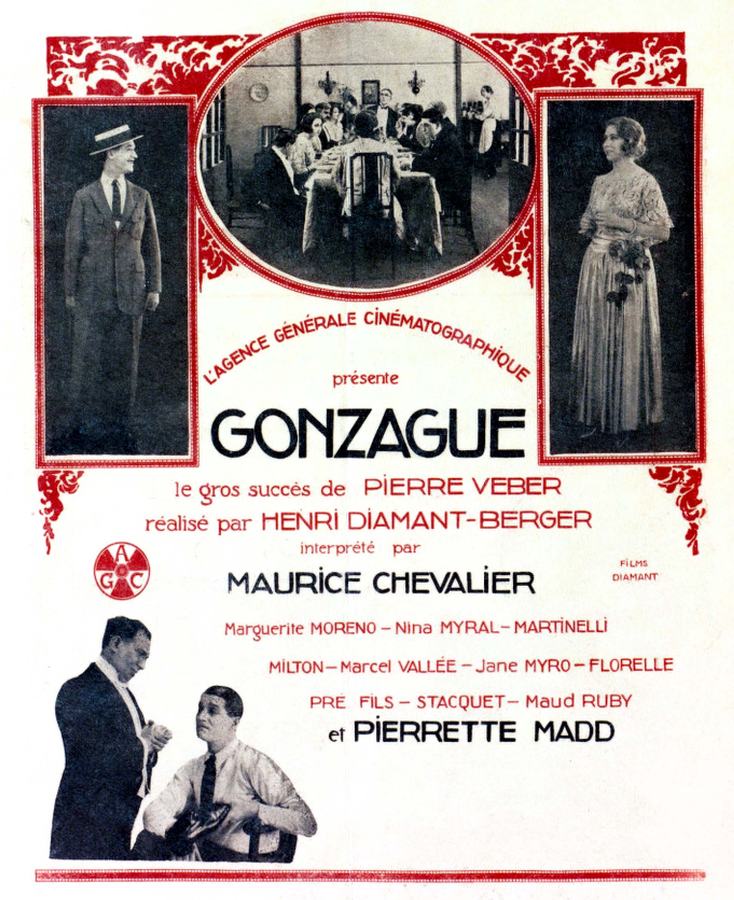
A definitive 7.5/10 rating for a film that redefined the boundaries of cult cinema. Gonzague remains a cornerstone of transgressive art.
In the annals of classic French cinema, where charm often intertwines with cunning, few narratives capture the delicate dance of romantic subterfuge quite like 'Gonzague.' This film, a delightful confection from a bygone era, casts the inimitable Maurice Chevalier in a role perfectly suited to his charismatic persona: a man unafraid to bend the rules of decorum for the sake of love. It’s a narrative that, at its core, explores the audacious lengths to which one might go to ignite a spark, even if it means cloaking one's true intentions under a veneer of professional diligence. Chevalier, with his signature twinkle and effortless grace, transforms what could be a morally ambiguous premise into a whimsical exploration of human connection.
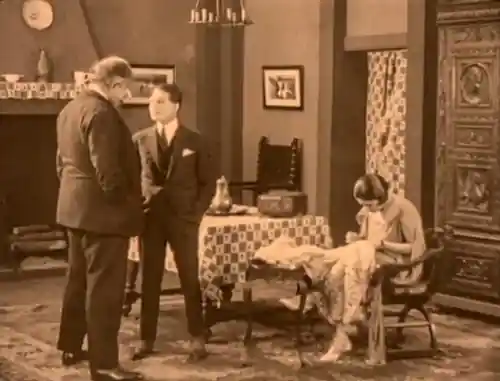
The central conceit of 'Gonzague' is disarmingly simple, yet it unfurls with layers of comedic potential and romantic tension. Maurice, smitten by a young woman (Jane Myro) beyond his immediate social sphere or perhaps simply out of reach through conventional means, concocts an elaborate ruse. He assumes the identity of a piano tuner, a profession that grants him not only legitimate entry into her home but also a plausible reason for repeated, intimate visits. This choice of disguise is particularly inspired; a piano tuner’s work is inherently meticulous, requiring patience, precision, and an almost tactile understanding of delicate mechanisms. Maurice, in his feigned role, becomes a master of observation, using the instrument’s alleged maladies as a pretext to linger, to converse, to absorb the nuances of her personality and surroundings.
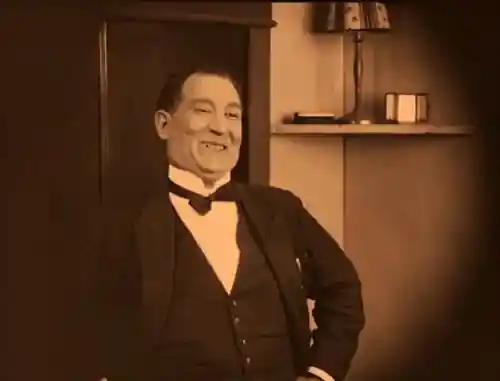
This ingenious deception allows Maurice a unique vantage point. He is not merely a suitor but an almost invisible observer, privy to the rhythms of her daily life, her family dynamics, and her unguarded moments. The piano, ostensibly the object of his attention, becomes a silent accomplice, a prop in his elaborate theatrical production. Each adjustment of a hammer, every tightening of a string, is imbued with a double meaning, serving both the superficial task and the deeper, amorous objective. The brilliance lies in how the film leverages this pretense to build genuine, albeit initially manipulated, intimacy. Maurice’s charm, already formidable, is amplified by the perceived innocence of his professional guise, creating a fertile ground for affection to blossom, even amidst the fertile soil of artifice.
Maurice Chevalier, a titan of French entertainment, truly anchors 'Gonzague.' His performance as Maurice is a masterclass in understated comedy and overt charm. Chevalier doesn't just play a character; he embodies a force of nature, a man whose sheer joie de vivre is infectious. His portrayal skillfully navigates the tightrope between mischievous deceit and genuine affection. One never doubts his sincerity, even as he perpetrates a rather grand fib. His facial expressions, the subtle shifts in his gaze, and his effortless command of the screen convey a sense of a man deeply committed to his romantic quest, yet also fully aware of the absurdity of his situation. He makes the audience complicit in his scheme, rooting for his success despite the questionable ethics of his methods.
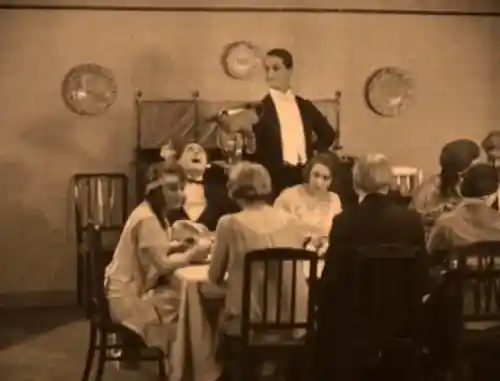
Chevalier’s signature vocalizations, though not explicitly tied to singing in the plot summary, undoubtedly contribute to the rhythm and musicality of his dialogue, making every line delivery a performance in itself. His interaction with the piano, feigning expertise, adds layers to the humor. He’s a performer playing a performer, a meta-narrative that elevates the film beyond a simple romantic comedy. It’s this nuanced portrayal that prevents Maurice from becoming a mere cad; instead, he emerges as an endearing rogue, driven by a passion that, however misguided in its initial execution, feels profoundly human. His ability to convey both the cunning of his plan and the burgeoning tenderness of his heart is a testament to his unparalleled star power, making 'Gonzague' an essential entry in his filmography.
While Chevalier undeniably takes center stage, the success of 'Gonzague' is also indebted to its finely tuned supporting cast. Jane Myro, as the unsuspecting object of Maurice's affection, delivers a performance that is both graceful and subtly observant. She imbues her character with an innocence that makes Maurice’s deception all the more daring, yet also with an intelligence that suggests she might not remain entirely oblivious. Her reactions, a blend of polite curiosity and growing comfort, provide the perfect foil to Chevalier’s audacious charm, allowing the romantic tension to simmer effectively.
The film benefits from a rich tapestry of character actors who flesh out the world around Maurice and Myro. Charles Martinelli, Antoine Stacquet, Nina Myral, and Florelle likely contribute to the familial or social milieu, adding layers of authenticity and potential obstacles to Maurice's plans. Louis Pré Fils, Maud Ruby, and Pierrette Madd, through their perhaps smaller but no less significant roles, help establish the societal norms and expectations that Maurice is so cleverly circumventing. Albert Préjean, another notable name, alongside Marguerite Moreno, Georges Milton, and Marcel Vallée, further rounds out the ensemble, each bringing their distinct presence to the narrative. Their collective performances create a believable and vibrant backdrop against which Maurice’s romantic escapade unfolds, ensuring that the comedic beats land and the emotional stakes feel genuine. The interplay between these characters, whether they are suspicious, amused, or simply oblivious, adds texture and depth to Pierre-Gilles Veber’s carefully constructed narrative.
The cleverness of 'Gonzague' extends deeply into its screenplay, meticulously crafted by Pierre-Gilles Veber. Veber, known for his ability to weave intricate plots with sparkling dialogue, demonstrates a keen understanding of human nature and the mechanics of romantic comedy. The narrative isn't merely a series of events; it's a carefully orchestrated progression of encounters, near-misses, and escalating intimacy. Veber's writing allows for moments of genuine humor arising from Maurice's precarious position, as well as tender instances that hint at the authenticity of his burgeoning feelings. The dialogue, undoubtedly sharp and reflective of the period's wit, would have been crucial in conveying Maurice's quick thinking and his ability to charmingly deflect suspicion.
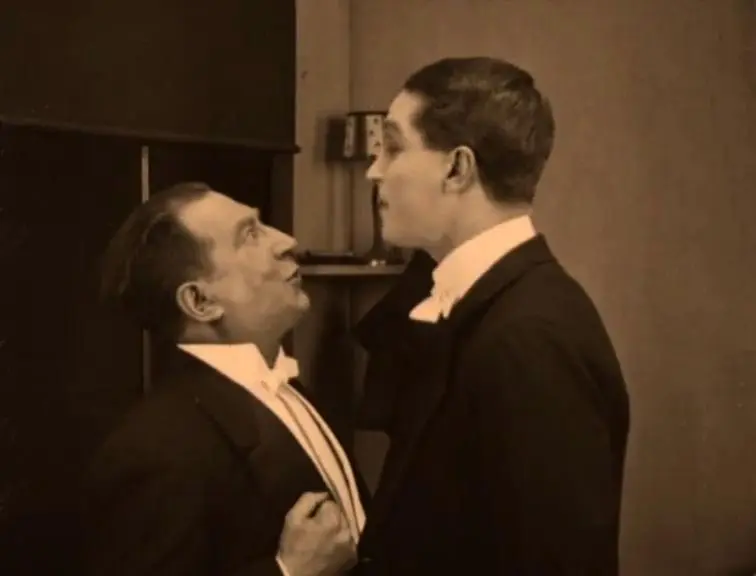
What distinguishes Veber's approach is his refusal to simply paint Maurice as a one-dimensional trickster. Instead, he imbues the character with a vulnerability that makes his deception understandable, if not entirely excusable. The script likely builds tension through subtle clues and close calls, keeping the audience on edge, wondering when and how Maurice’s true identity will be revealed. This narrative dexterity ensures that 'Gonzague' is more than just a lighthearted romp; it’s a thoughtfully constructed exploration of the lengths to which passion can drive an individual, and the delicate balance between appearance and reality in the pursuit of affection. Veber's contribution is pivotal in elevating the film from a simple premise to a memorable cinematic experience.
Beyond its captivating performances and sharp writing, 'Gonzague' offers a delightful glimpse into the aesthetic sensibilities of its era. The film’s visual language, from its cinematography to its set design and costuming, contributes significantly to its charm and authenticity. One can imagine the meticulous attention to detail in recreating early 20th-century Parisian interiors, with their ornate furnishings, delicate fabrics, and the ubiquitous presence of a grand piano – the very instrument central to Maurice’s elaborate scheme. The costumes would have been period-appropriate, highlighting the fashions and social distinctions of the time, further immersing the audience in its world.

The cinematography, while perhaps less overtly experimental than some of its contemporaries, would have been designed to capture Chevalier’s magnetic presence and the intimate dynamics between the characters. Lighting would likely emphasize the romantic glow of the domestic settings, contrasting with the subtle tension of Maurice’s deception. The overall mood would be one of elegant lightheartedness, a visual counterpart to the film’s comedic and romantic tone. These visual elements are not mere backdrops; they are integral components of the storytelling, enhancing the narrative’s believability and enriching the viewer’s experience, transporting them to a time when charm and wit were paramount.
At its heart, 'Gonzague' delves into universal themes that transcend its period setting. The film provocatively asks: can love born of deception ever truly flourish? Maurice’s elaborate charade forces a contemplation of authenticity in relationships. Is the initial attraction based on a false premise, or does the genuine connection he forges through his sustained presence eventually overshadow the deceit? The narrative cleverly plays with the notion of identity – Maurice is both himself and the professional he pretends to be, blurring the lines between who he is and who he presents himself to be. This duality creates a fascinating psychological undercurrent, suggesting that perhaps, in love, we all adopt certain roles or present idealized versions of ourselves.
The film also touches upon societal expectations and class distinctions, subtly questioning the barriers that might prevent a straightforward courtship. Maurice’s choice of disguise could be seen as a commentary on the performative nature of social interaction itself, where appearances often dictate access and acceptance. In this respect, 'Gonzague' shares a thematic thread with films that explore characters adopting new personas to navigate social landscapes or achieve romantic goals. While perhaps less overtly dramatic than Below the Surface in its exploration of hidden depths, 'Gonzague' certainly delves into the concealed aspects of human motivation. It's a testament to the film's enduring appeal that these questions about truth, illusion, and the nature of love continue to resonate with audiences, making it more than just a charming period piece but a thoughtful examination of the human heart.
Placing 'Gonzague' within the broader tapestry of French cinema reveals its unique position as a charming example of the era's romantic comedies. French cinema of this period was often characterized by its sophisticated wit, its exploration of human relationships, and its embrace of stars like Maurice Chevalier. 'Gonzague' perfectly encapsulates these qualities, offering a blend of lighthearted entertainment and subtle social commentary. It stands as a testament to the period's ability to craft narratives that, while seemingly simple, carried deeper emotional and thematic weight. Its focus on a romantic pursuit driven by a clever, if slightly illicit, scheme aligns it with a tradition of European cinema that often delighted in the intricacies of human interaction and the playful subversion of social norms.
The film’s approach to character and narrative also offers interesting parallels or contrasts with other works of its time. For instance, while not a direct comparison in plot, the underlying theme of a character adopting a role or having their true self revealed through interaction resonates with films like Suds, which often explored transformations of identity or circumstance. The inherent charm and lightheartedness of 'Gonzague' might also find a distant echo in the more whimsical romantic comedies of the time, perhaps even sharing a spirit with the playful spirit seen in His Pajama Girl, despite their distinct cultural contexts. 'Gonzague' doesn't just entertain; it provides a valuable cultural artifact, reflecting the societal values and cinematic techniques prevalent during its production. It reminds us of a time when elegance and wit were paramount in storytelling, establishing a legacy that continues to captivate those who appreciate the finesse of classic French filmmaking.
'Gonzague' endures not merely as a historical artifact but as a vibrant piece of cinematic art that continues to charm new generations of viewers. Its timeless appeal lies in its universal exploration of love, desire, and the human propensity for elaborate schemes in the pursuit of affection. Maurice Chevalier’s performance remains as captivating today as it was decades ago, a testament to his enduring star power and the quality of the film’s direction and writing. The film serves as a delightful reminder of French cinema’s rich heritage, showcasing its unique blend of wit, romance, and sophisticated storytelling. It’s a film that proves that a well-told story, anchored by compelling performances and resonant themes, can transcend the boundaries of time and continue to enchant audiences with its singular magic.
A truly delightful and cunning romantic escapade, 'Gonzague' strikes a harmonious chord in the grand symphony of classic cinema.
IMDb —
1919
Community
Log in to comment.