DbcultAccessing Vault...
Cult Review
Senior Film Conservator
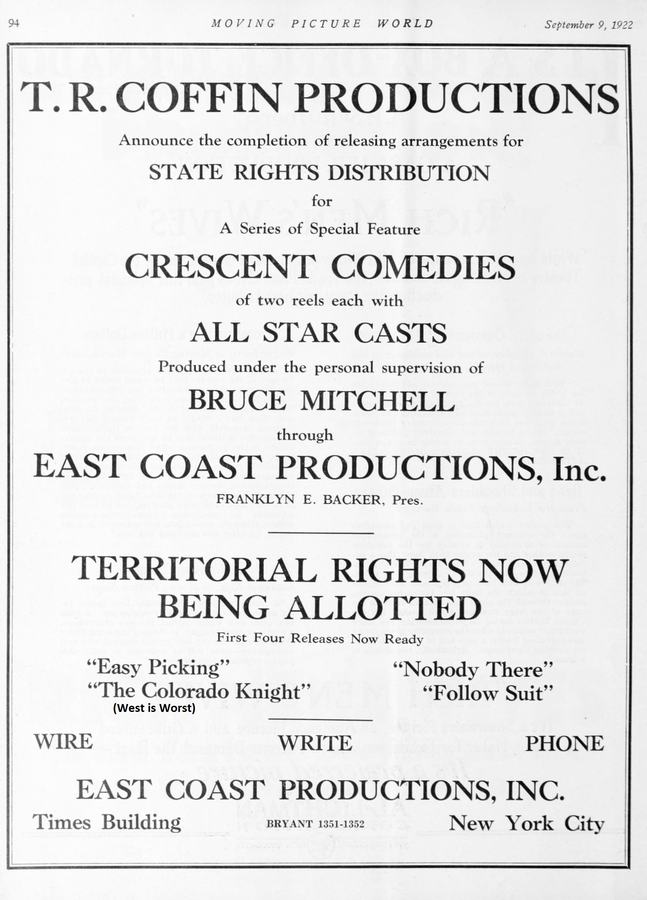
The silent era of cinema frequently grappled with the dichotomy between the effete, often decadent urbanite and the rugged, unvarnished morality of the American West. In West Is Worst, we witness a comedic yet poignant exploration of this cultural friction. Gordon Gynn, portrayed with a frantic, rubber-limbed energy by Eddie Barry, serves as the quintessential 'wayward son.' His existence is a choreographed dance of irresponsibility, culminating in a drunken evening where he manages to propose to three separate women. This isn't merely a plot device; it’s a scathing indictment of the Jazz Age’s early excesses, where the weight of one's word was often drowned in a bottle of bootleg spirits.
When Gynn’s father—played with a stern, patriarchal gravitas by Spottiswoode Aitken—decides to ship his offspring to Colorado, the film shifts gears from a domestic farce into a frontier satire. The transition is jarring, intentionally so. The vast, indifferent landscapes of the West serve as a stark contrast to the claustrophobic parlors of Gynn’s previous life. Unlike the atmospheric tension found in The Halfbreed, where the landscape reflects internal racial and social strife, West Is Worst utilizes the setting as a comedic anvil upon which Gynn’s character is forged.
The local cowpunchers, the self-appointed gatekeepers of Western masculinity, immediately identify Gynn as a 'tenderfoot.' Their attempts to 'frame him up'—a series of elaborate hazing rituals—provide the film with its most kinetic sequences. There is a palpable sense of physicality here that modern CGI-laden comedies fail to replicate. Barry’s performance during these trials is a masterclass in reactionary acting; he is the perpetual victim of gravity and circumstance, yet he possesses a resilient buoyancy that prevents the character from becoming truly pathetic.
One cannot discuss this film without acknowledging the presence of Gale Henry. Often overshadowed by her male contemporaries, Henry was a titan of silent comedy, possessing a face that could contort into expressions of existential dread or manic glee with terrifying speed. In West Is Worst, she provides a necessary counterpoint to Barry’s frantic energy. While the plot ostensibly focuses on Gynn’s redemption, Henry’s comedic timing often steals the frame, reminding the audience that the 'West' was not just a playground for men, but a space for eccentric, formidable women as well.
The romantic subplot, involving the kidnapping of the 'goil' (Helen Darling), follows the traditional melodramatic beats of the era. However, the film avoids the saccharine sentimentality found in The Power of Love. Instead, the stakes feel grounded in the absurd. The villain—John J. Richardson—is a mustache-twirling archetype, yet his villainy serves a greater purpose: it forces Gynn to move beyond his self-centered neuroses and engage in an act of genuine, albeit clumsy, heroism.
The climax of the film is a fascinating artifact of its time. As Gynn is thrown from a car during the rescue attempt, his impact with the earth doesn't result in injury, but in the discovery of oil. This 'black gold' resolution is a recurring trope in early 20th-century Americana, reflecting the national obsession with sudden, transformative wealth. It suggests that merit and hard work are secondary to the sheer, dumb luck of the American soil. While films like The Upheaval might deal with social restructuring through more traditional means, West Is Worst posits that the ultimate redemption is financial.
"The film doesn't just ask if a man can change; it asks if the land itself can forgive him by vomiting forth its riches. It is a cynical yet celebratory take on the American Dream."
The technical aspects of the film, directed with a brisk pace, leverage the natural lighting of the Colorado plains to great effect. The cinematography captures the dust and the grit, making Gynn’s polished, city-bred appearance look increasingly ridiculous. This visual storytelling is far more effective than the intertitles, which occasionally lean too heavily on the slang of the day. Unlike the more staged, theatrical feel of Squibs or the period-heavy The Three Musketeers (1916), West Is Worst feels surprisingly modern in its cynicism toward its protagonist.
When we compare Gynn’s journey to the characters in The Uplifters, we see a divergence in the philosophy of reform. In The Uplifters, there is a concerted effort toward moral improvement through social engineering. In West Is Worst, reform is accidental. Gynn doesn't necessarily become a better man through introspection; he becomes a better man because the environment demands a different set of survival skills. It’s a Darwinian approach to comedy. He survives the cowpunchers not because he is stronger, but because he is more adaptable (and luckier).
Furthermore, the film’s treatment of the 'villain' is notably different from the supernatural or psychological threats seen in The Evil Eye (1920) or the mystery-driven The Teeth of the Tiger. Here, the villain is merely an obstacle to be overcome, a physical manifestation of Gynn’s past failures. The kidnapping is less a crime of passion and more a narrative necessity to facilitate Gynn’s final 'strike'—both against the villain and into the oil-rich ground.
The ensemble cast, including Helen Darling and John J. Richardson, performs with a synchronized efficiency. Richardson, in particular, manages to avoid the more tiresome tropes of the Western heavy by infusing his character with a certain level of pathetic desperation. He isn't just a bad man; he’s a man who is being outpaced by a world that is beginning to favor the 'lucky' urbanite over the 'hardworking' outlaw. This subtle subtext adds a layer of complexity to what could have been a standard 'rescue the girl' finale.
Eddie Barry’s physical comedy deserves further scrutiny. His ability to convey internal panic through micro-expressions, even in wide shots, is remarkable. He occupies the space with an awkwardness that feels authentic. When he is thrown from the car, the stunt is performed with a commitment that makes the audience feel the impact. It is that very impact—the literal collision of the man and the earth—that provides the film's resolution. It is a violent, clumsy birth into a new life of wealth and respectability.
In the broader canon of silent Westerns, West Is Worst stands as a testament to the genre’s versatility. It doesn't possess the epic scale of Valdemar Sejr or the gothic undertones of The Ghost House, but it captures a specific moment in American cultural history. It was a time when the frontier was closing, and the oil derricks were rising. The film suggests that the 'Wild West' was being replaced by a 'Wealthy West,' and that even the most wayward of sons could find a place in this new order, provided they fell in the right spot.
The film’s title, West Is Worst, is a delicious irony. For Gordon Gynn, the West was initially his punishment, his 'worst' nightmare. Yet, it became the source of his salvation. It stripped him of his pretenses and replaced them with a crude, oily reality. While it may lack the sophisticated social commentary of Idolators or the sheer innocence of Patsy's Jim, it remains a vital piece of comedic history. It reminds us that sometimes, the only way to go is down—directly into a pool of oil.
Ultimately, West Is Worst is a celebration of the accidental hero. It acknowledges that we are often the architects of our own destruction, but sometimes, the universe intervenes with a well-timed kidnapping and a subterranean geyser. It is a film that refuses to take itself seriously, and in doing so, it captures a truth about the human condition: that we are all just one stumble away from disaster, or incredible fortune.
IMDb —
1919
Community
Log in to comment.