DbcultAccessing Vault...
Cult Review
Senior Film Conservator
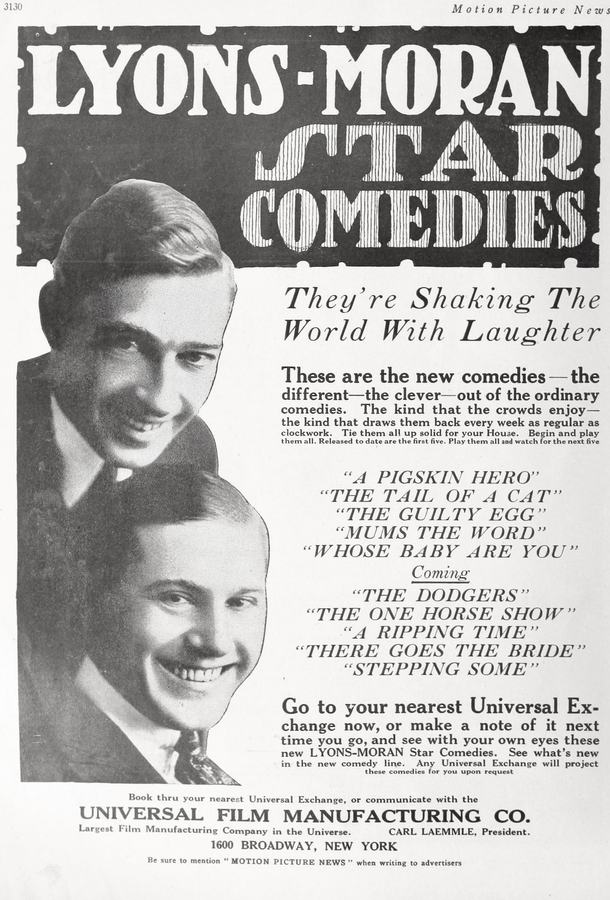
Stepping back into the cinematic landscape of 1920, one encounters films that, despite their age, resonate with an almost startling modernity. Mum's the Word, a picture conceived with a keen eye for societal absurdities and directed with understated brilliance, is precisely one such artifact. It's not merely a tale spun for the flickering screen; it's a mirror held up to the evolving, often tumultuous, dynamics of early 20th-century matrimony, daring to explore themes that many contemporary productions would shy away from. This silent drama, or perhaps more accurately, social satire, unfurls a narrative so audacious in its premise that it commands attention even a century later. It posits a radical reimagining of domestic harmony, challenging conventional notions of fidelity and the permanence of marital vows in a manner both provocative and strangely compelling. The film manages to be both a product of its time and remarkably ahead of it, offering a glimpse into the changing social fabric as individuals began to assert their desires for personal happiness over rigid societal expectations. It's a testament to the power of cinema to reflect, and sometimes even shape, the cultural conversations of an era.
At its heart, Leslie T. Peacocke’s script for Mum's the Word unfurls a narrative audacious for its time: the complete marital reshuffling of two prominent households. We are introduced to the Blacks and the Whites, names that, in their very simplicity, suggest archetypes rather than individuals, allowing the audience to project universal marital woes onto their specific predicaments. Each couple is mired in its own brand of quiet desperation, their domestic spheres less havens of peace and more battlegrounds of unspoken grievances, petty squabbles, and profound emotional disconnect. The film doesn't shy away from depicting the slow, agonizing decay of these unions, rendering the eventual divorces not as shocking ruptures, but as inevitable, almost merciful, conclusions to long-suffering partnerships. The brilliance, however, lies in what happens next. Where many narratives might end with the painful dissolution, Peacocke and the film's anonymous director, with a stroke of narrative genius, orchestrate a bizarre, almost mathematical, realignment. Mr. Black, shedding the shackles of his previous discontent, finds an unexpected kinship and perhaps even genuine affection with Mrs. White. Concurrently, his erstwhile spouse, Mrs. Black, equally liberated, discovers a new, more harmonious partnership with Mr. White. This symmetrical swap isn't played for cheap laughs alone; it's a profound, if subtly delivered, commentary on compatibility, the arbitrary nature of initial attractions, and the potential for happiness beyond conventional boundaries. It suggests that perhaps, the 'right' partner isn't always the one initially chosen, but the one discovered through the crucible of experience and self-awareness. This daring premise alone places Mum's the Word in a lineage of films that dared to question societal norms, much like the introspective drama of The Discard, which similarly grappled with unconventional personal choices and their ramifications. The film’s title itself, 'Mum's the Word,' becomes a loaded phrase, hinting at the societal pressure to keep marital unhappiness private, or perhaps the quiet, unspoken understanding between those who dare to defy convention. It’s a film that asks, without explicitly stating, whether genuine contentment is worth the societal whispers, and in its era, that was a truly radical inquiry.
The ensemble cast, a veritable who's who of the era's character actors, carries this audacious premise with remarkable conviction, demonstrating the sophisticated art of silent acting. Edith Roberts, as one half of the initially discontented wives, delivers a performance brimming with understated frustration and, later, a burgeoning sense of liberation. Her expressions, often subtle yet powerfully communicative, convey a woman yearning for something more fulfilling than her current marital stasis. Roberts masters the delicate balance of portraying a woman trapped by circumstance who gradually finds the courage to redefine her own happiness, a transformation conveyed through nuanced shifts in her posture and gaze. Opposite her, Lee Moran brings a compelling blend of exasperation and eventual relief to his role, expertly navigating the emotional shifts required by the narrative. Moran's ability to convey a character's internal monologue through physical comedy and dramatic gesture is a highlight, making his character's journey from marital misery to unexpected contentment entirely believable. The genius of silent cinema, often underestimated, lies in its reliance on pure physicality and facial nuance, and Moran exemplifies this with his nuanced portrayal of a man rediscovering joy. Similarly, Margaret Whistler and Eddie Lyons, as the other half of this marital quartet, contribute equally compelling performances, each embodying the weariness of a failing marriage and the tentative hope of a new beginning. Whistler's portrayal of quiet dignity amidst turmoil, and Lyons's depiction of a man grappling with his own marital failings, add depth and pathos to the narrative. Their interactions, though devoid of spoken dialogue, speak volumes about the intricate dance of human relationships, the unspoken resentments, and the eventual, liberating sighs of relief. Even supporting players like Gertrude Astor and Bartine Burkett add layers of societal texture, their presence underscoring the broader community's reactions to these unconventional arrangements, often with knowing glances or subtle disapproval. One might draw parallels to the expressive performances in Diane of the Follies, where the actors similarly had to convey complex emotions through gesture and gaze alone, proving the enduring power of visual storytelling in the absence of sound. The collective effort ensures that despite the film's somewhat outlandish premise, the emotional core remains authentic and relatable.
Leslie T. Peacocke’s screenplay is, without doubt, the beating heart of Mum's the Word. His audacious narrative concept, which transcends mere melodrama to venture into the realm of social satire, is meticulously structured. The script refuses to judge its characters for their pursuit of happiness outside conventional boundaries; instead, it presents their choices with a disarming objectivity, a rare quality for its time. This analytical approach to human relationships, particularly those as fraught as divorce and remarriage, was remarkably progressive for 1920, a period often characterized by more rigid moralistic cinematic narratives. Peacocke doesn't offer easy answers or moralistic pronouncements; rather, he invites the audience to ponder the complexities of companionship and the often-illusory nature of 'happily ever after.' He crafts a world where personal fulfillment is prioritized, even if it means challenging the very institutions that define societal order. The visual execution of Peacocke's vision, handled by an uncredited but clearly capable director, is equally commendable. The pacing, crucial for silent cinema, is expertly managed, allowing moments of dramatic tension to breathe while propelling the plot forward with a brisk efficiency that keeps the audience engaged. The use of intertitles is economical yet impactful, providing necessary exposition and character insights without overwhelming the visual storytelling. Each title card feels thoughtfully placed, enhancing rather than interrupting the flow of the narrative. This masterful blend of narrative ingenuity and visual clarity sets it apart, much like the carefully crafted scenarios found in The Heart of Ezra Greer, where every narrative beat feels intentional and resonant. The film's overall design, from set pieces to character blocking, reinforces Peacocke's central themes, creating a cohesive and thought-provoking cinematic experience that lingers long after the final frame.
Beyond the superficial plot of partner swapping, Mum's the Word delves into profound thematic territory, offering a surprisingly nuanced social commentary. It’s a quiet rebellion against the rigid societal expectations of marriage prevalent in the early 20th century. The film subtly critiques the notion that once a vow is made, happiness becomes secondary to adherence to that vow, suggesting instead that individual well-being holds significant weight. It champions, in its own understated way, the pursuit of individual contentment and the right to rectify mistakes in one's personal life, a sentiment that would resonate strongly with an increasingly modernizing populace. The unspoken 'mum's the word' of the title might refer to the quiet suffering endured in unhappy marriages, the unspoken truths behind closed doors, or perhaps the discreet societal whispers surrounding such unconventional changes. It’s a commentary on the burgeoning independence of individuals, particularly women, who were beginning to assert their desires for personal fulfillment beyond their prescribed roles as wives and homemakers. This thematic bravery, exploring the grey areas of morality and personal choice, resonates with the challenging narratives seen in films like Passion, which similarly dared to explore forbidden desires and societal constraints, or even the complex emotional landscapes depicted in La morte che assolve. The film asks us to consider what truly constitutes a successful partnership, challenging the notion that longevity automatically equates to happiness. It's a remarkably progressive stance for a film of its period, making it a valuable historical document of shifting social attitudes towards marriage and divorce.
Technically, Mum's the Word showcases the evolving artistry of silent filmmaking, even if it doesn't boast the grand spectacles of some of its contemporaries. While perhaps not pushing the boundaries of experimental cinematography in the vein of a Nankyoku tanken katsudô shashin with its documentary realism or the dramatic flair of a Panopta II, its visual language is clear, effective, and serves the narrative impeccably. The framing is often intimate, focusing on the actors' faces to capture their nuanced emotional states, a hallmark of compelling silent drama. This close attention to facial expressions and subtle gestures allows the audience to connect deeply with the characters' internal struggles and eventual triumphs. Editing is precise, ensuring that the story flows seamlessly from one emotional beat to the next, preventing any lag that might detract from the audience's engagement. The cuts are purposeful, driving the narrative forward without feeling abrupt or disjointed. The sets and costumes, while not ostentatious, are meticulously detailed, grounding the narrative in a believable social milieu of the time. They reflect the characters' status and personalities without becoming overly distracting. The film’s ability to evoke complex emotions and convey intricate plot developments without spoken dialogue is a testament to the power of pure visual storytelling and the skill of its production team. It’s a masterclass in economy, much like the impactful brevity found in episodes such as Beatrice Fairfax Episode 7: A Name for a Baby, where a concise narrative still manages to deliver significant emotional punch. The lighting, too, plays a crucial role, often highlighting key characters or creating a mood that underscores the dramatic tension or newfound lightness of a scene, adding another layer to the film's expressive power.
In the grand tapestry of 1920s cinema, Mum's the Word might not possess the epic scale of a D.W. Griffith production or the avant-garde flair of European imports, but its significance lies in its incisive social commentary and its daring narrative structure. It’s a film that speaks directly to the transitional period of the early 20th century, where traditional values were being challenged by changing social mores and an increasing emphasis on individual autonomy. The decade was a crucible of transformation, with women gaining more rights and independence, and societal norms around marriage and divorce slowly beginning to liberalize. This film captures that zeitgeist perfectly, reflecting the quiet revolution happening in homes across America. It's a reminder that even in the nascent years of cinema, filmmakers were grappling with complex human issues, often with a subtlety and sophistication that belies the common misconception of silent films as simplistic melodramas. Its exploration of divorce and remarriage, particularly in such a symmetrical fashion, was remarkably forward-thinking, paving the way for future cinematic explorations of modern relationships and challenging the conventional 'happily ever after' trope. It stands as a compelling counterpoint to films that clung to more conventional narratives, much like the distinct approach taken by Law of the Land, which explored different facets of societal governance and personal freedom, or the psychological depth found in The Decoy. Its quiet audacity and willingness to explore uncomfortable truths make it a valuable, if often overlooked, piece of cinematic history, offering a window into the evolving social consciousness of its era. This film, like Once to Every Man, delves into the personal choices that define a life, but with a unique twist that makes it stand out.
Ultimately, Mum's the Word is far more than a historical curiosity; it is a remarkably insightful and surprisingly modern piece of cinema. Its bold narrative, nuanced performances, and keen social observations make it a compelling watch for anyone interested in the evolution of film and the enduring complexities of human relationships. It challenges the viewer to look beyond superficial judgments and consider the deeper currents of compatibility and personal happiness, prompting a re-evaluation of what constitutes a 'successful' marriage. While it may not be as widely celebrated as some of its contemporaries, such as the more overtly dramatic The Haunted House or the instructional How Uncle Sam Prepares, its quiet audacity and thematic depth ensure its place as a fascinating, often overlooked, gem of the silent era. It’s a testament to the power of storytelling, proving that sometimes, the most profound statements are made when 'mum's the word' is ironically, the title of a film that speaks volumes about the human condition and the pursuit of contentment. It echoes the quiet transformations found in films like Baronat or the initial spark of connection explored in At First Sight, but then boldly pushes the narrative further into uncharted territory. This film is a compelling argument for revisiting the silent era, not just for historical context, but for genuinely engaging and thought-provoking narratives that continue to resonate today.
IMDb —
1927
Community
Log in to comment.