DbcultAccessing Vault...
5.2/10
Senior Film Conservator
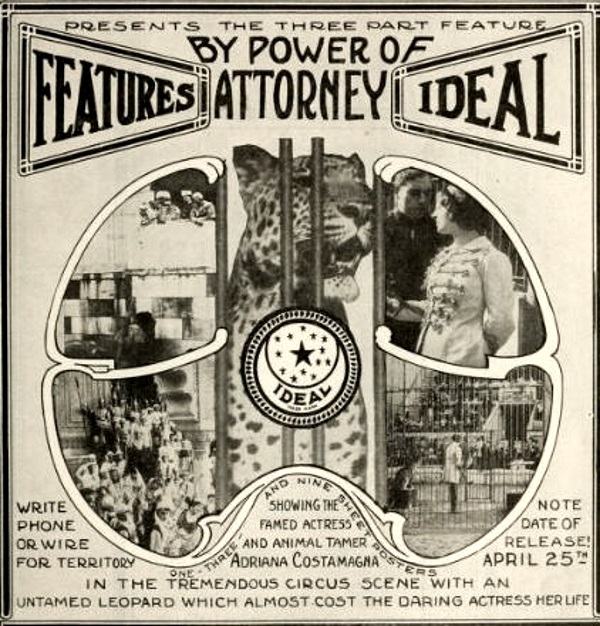
A definitive 5.2/10 rating for a film that redefined the boundaries of cult cinema. By Power of Attorney remains a cornerstone of transgressive art.
Charles Darlington’s fever-dream screenplay—shot in the last gasp of the Italian one-reel boom—opens on a parade ground bathed in Tyrrhenian mercury, where officers in snow-white gibus hats look like porcelain figurines awaiting the hammer. Jack Hilton, played with matinée-idle stiffness by Ubaldo Maria Del Colle, is introduced through a iris-in that feels suspiciously like a naval cannon’s mouth. Enter Adriana Duncan—Adriana Costamagna in her only surviving celluloid role—swirling a cat-o’-nine-tails while a black-maned cat pads circles around crinoline ankles. Poverty and «humiliating occupation» are the familial battle-cries hurled at her, but the camera lingers on her sinewy forearms, fetishizing the labour that polite society finds indecent.
The Marquis—Mario Mariani under a cotton-wool beard worthy of Victorian panto—keels over in a death-rictus so abrupt the cinematographer simply freezes the frame, letting the iris close on his open mouth like a coin-slot. Because the ink never meets parchment, Jack becomes heir to marble staircases, gilt pianos, enough ancestral coin to purchase a small principality. Darlington engineers the irony with savage glee: wealth arrives precisely when the groom, already posted to chart the “Sacred River,” is incapable of signing his own name to claim it.
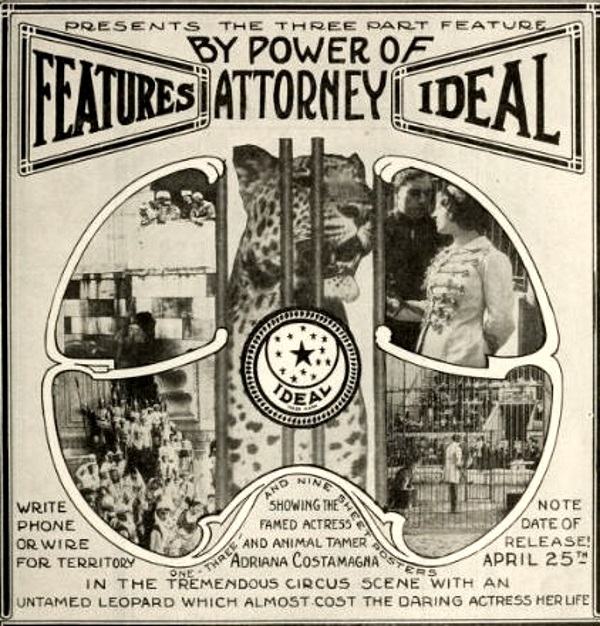
Thomas Trevalny—Arturo Garzes channeling a boulevardier Rochefort—boards the same compartment, all sideway smiles and carnation scent. One cut later he is pruning roses outside the Hilton villa, a gardener in patent-leather shoes, intercepting parchment like a postal black-hole. The film’s geography folds here: continents telescope thanks to a map-dissolve that superimposes the words “CALCUTTA TOMORROW” across Adriana’s tear-streaked face. Silent cinema has rarely rendered distance as emotional rather than nautical mileage; the device prefigures the trans-continental despair of Quo Vadis by a full year.
The Indian middle third—filmed, legend claims, in the citrus groves of Liguria—bursts into hand-stencilled saffron whenever the Rajah’s cavalry appears. Tinting becomes storytelling: saffron for zealotry, viridian for jungle, cobalt for Fedorah’s veiled nocturnes. Jack’s imprisonment inside the Court of Lions anticipates every cliffhanger serial of the twenties, yet the bestial co-habitants are shot with quasi-documentary candour; the beasts pace, yawn, even sniff the lens, grounding the melodrama in zoological fact.
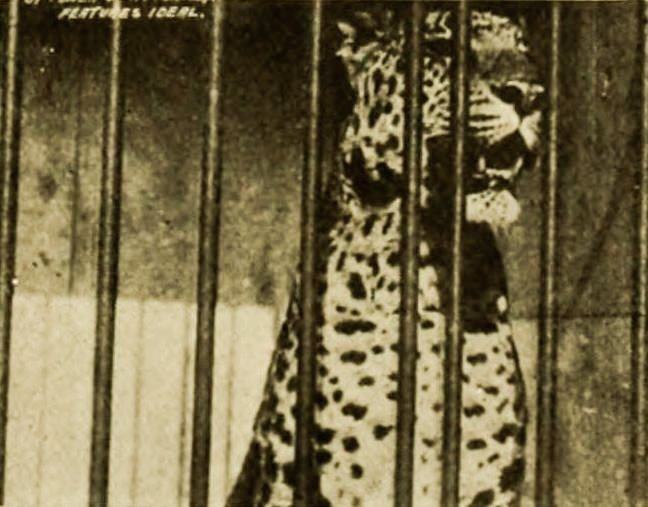
Back home, Adriana re-enters the sawdust circle out of sheer maternal ferocity. Every whip-crack is a reminder that Victorian respectability is purchased on the bruised backs of performers. Darlington refuses to sentimentalise: the circus tent leaks, the leopard’s fur is mottled with eczema, the coins she earns are clinking props in Trevalny’s extortion scheme. When the usurper purchases the menagerie—paperwork literally signed with Jack’s forged signature—he becomes ringmaster of her body, her labour, her future. The narrative transmutes capitalism’s sleight-of-hand into Grand-Guignol spectacle: ownership of the means of production manifests as ownership of the woman who jumps through flaming hoops.
Cineteca di Bologna’s 2019 2K restoration reinstates the original blood-orange intertitles, each card trembling like a haemorrhaging sunset. The accompanying score—percussion, hurdy-gurdy, a lone bass flute—avoids orientalist clichés, opting for a pulsing minimalism that makes every lion-roar feel like tectonic plates shifting. Viewers coming from Dante’s Inferno’s Wagnerian bombast will be startled by the asceticism; it matches the film’s bruised emotional palette.
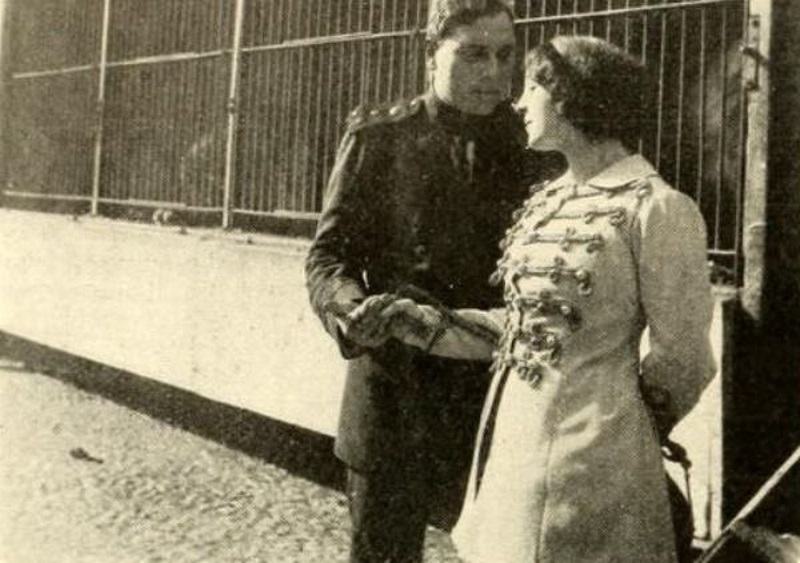
Del Colle’s Jack is all jawline and epaulettes—intentionally so. His bodily rigidity contrasts with Costamagna’s feral grace; when they kiss, the frame halves marble against sinew, privilege against precarity. Garzes has the most modern eyes: they glint with startup-CEO narcissism, a reminder that fin-de-siècle villainy wears cologne, not mustache wax. Watch the tiny flicker when he pockets the power of attorney: a smile so brief it could be an emulsion scratch, yet it annihilates three lives.
In the film’s most audacious tableau, Adriana barricades herself inside a cage with her leopard while Trevalny prowls outside, cane tapping iron bars. The animal—neither pet nor weapon—becomes arbiter of chastity, its low growl a boundary wall. When the spotted creature finally lunges at the usurper, the cut on action is so precise you feel the swish of whiskers against your own cheek. Censors in Milan reportedly demanded the excision of this shot; the leopard, they claimed, embodied «anarchic female urges». The footage survives only in the Bologna restoration, a victory for feral feminism circa 1912.
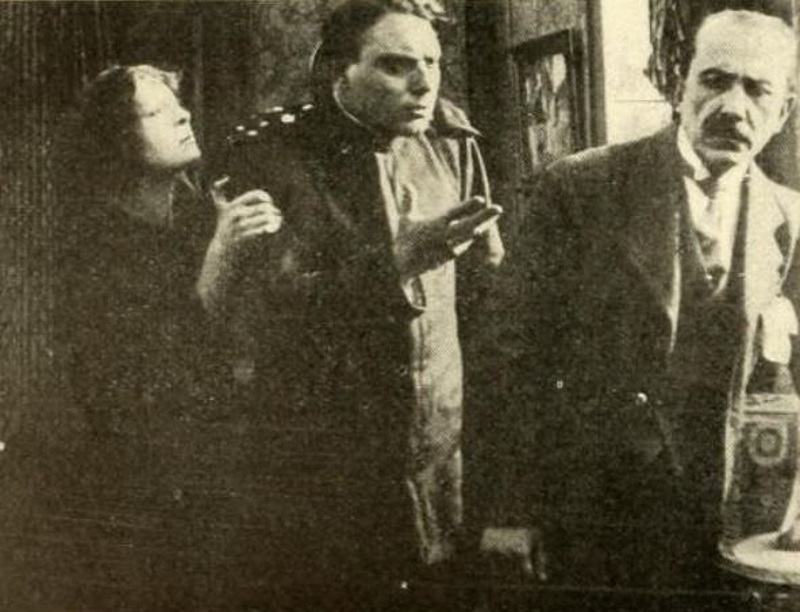
Modern eyes will flinch at the barefoot sepoys storming the expedition camp, swords raised like shiny punctuation marks. Yet Darlington undercuts triumphalism: the massacre is staged in a single, chaotic long-take where European cadaflaws flop unglamorously into river mud, their maps fluttering away like wounded gulls. The Rajah’s verdict—burning alive commuted to life-imprisonment via erotic plea—exposes colonial jurisprudence as personal whim draped in Sanskrit scrolls. Compared to the pith-helmet fantasies of With Our King and Queen Through India, the sequence feels almost anticolonial, albeit through the accidental honesty of budgetary restraints.
Jack’s return—shot day-for-night with charcoal filters—ushers in one of silent cinema’s great domestic invasions. He does not knock; he splinters Trevalny’s baroque doors, sending plaster Cupids crashing. The fight choreography is brutish: two men in evening kit wrestling on a Persian rug until waistcoats rip and studs ricochet like shrapnel. Adriana’s intervention—arms wide, hair unpinning in Medusa coils—halts the murder mid-throttle. The police arrive not through civic duty but narrative necessity: audiences of 1912 demanded lawful closure, not blood-spattered catharsis.
Viewed alongside The Adventures of Kathlyn or What Happened to Mary, By Power of Attorney stands as a missing link between Victorian morality pageants and the white-knuckle cliffhanger serials that would conquer nickelodeons within months. Its DNA persists in the peril-plot grammar of Pauline, in every tied-to-railroad-track cliché, yet its emotional engine is class resentment rather than mere sensation.
Bologna’s restoration tours festivals; a 1080p Blu-ray with English subtitles is slated for 2025 via Il Cinema Ritrovato. For contextual heft, pair with:
Bottom line: By Power of Attorney is a nitrate grenade—fragmented, flickering, yet potent enough to scorch modern retinas. It dramatizes how a single sheet of parchment, mislaid in the roar of empire, can reroute bloodlines, fortunes, fates. Watch it for the leopard’s amber eyes, stay for the chill realisation that paperwork is the original wild beast.
IMDb —
1922
Community
Log in to comment.