DbcultAccessing Vault...
6.4/10
Senior Film Conservator
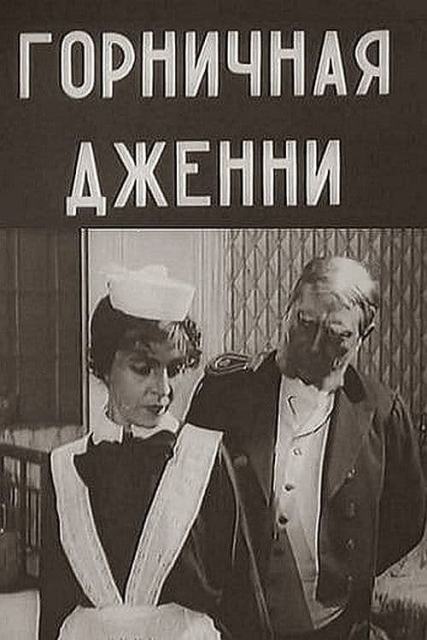
A definitive 6.4/10 rating for a film that redefined the boundaries of cult cinema. Gornichnaya Dzhenni remains a cornerstone of transgressive art.
In the dimly lit parlors of early 20th-century Russian cinema, few titles pulse with as much visceral tension as *Gornichnaya Dzhenni* (1914). Yakov Protazanov’s masterwork transcends its era, offering a searing dissection of social stratification through the lens of a young woman’s survival. Long before the thunderous waves of Soviet montage theory, Protazanov crafts a narrative that lingers in the shadows of grand estates, where power is a currency spent in whispers and glances. Here, the camera becomes a silent accomplice, framing the protagonist’s journey not as a linear ascent or fall, but as a slow, suffocating immersion into a world where every act of servitude is a rebellion in disguise.
Olga Gzovskaya, as the eponymous maid, delivers a performance that is both restrained and explosive. Her face, a canvas of suppressed rage, tells stories that words cannot. In one of the film’s most arresting sequences, she stands at the threshold of the baroness’s chambers, her posture rigid as a statue, yet her fingers twitch like leaves in a storm. This duality—stillness and impending motion—defines the film’s aesthetic. Protazanov’s direction is meticulous in its attention to detail: the creak of a floorboard, the tremor of a candle’s flame, the way a hand brushes against a silver tray with the weight of a thousand unspoken grievances.
The narrative structure, while deceptively simple, is a labyrinth of moral ambiguity. The protagonist’s transition from aristocratic daughter to servant is not a narrative contrivance but a descent into the very meat of her existence. There is no catharsis in this film—only the gnawing realization that survival in such a world demands the erasure of one’s former self. The baroness, played with chilling precision by S. Pavlova, is not merely a villain but a living monument to the system that birthed her. Her dialogue, sparse and clipped, carries the weight of generations, each syllable a brick in the wall the protagonist must scale.
Technically, *Gornichnaya Dzhenni* is a triumph of silent film craftsmanship. Protazanov’s use of negative space is revolutionary: entire scenes unfold in the corners of frames, where the audience is forced to read between the lines of a crumbling estate. The cinematography, stark yet poetic, mirrors the protagonist’s internal state—wide shots that emphasize isolation, close-ups that magnify the smallest emotional tremors. Even the absence of sound is a character in itself, replaced by the rhythmic clatter of silverware, the muffled thud of footsteps, and the occasional, jarring silence that signals a character’s breaking point.
Comparisons to *Vive la France!* (1913) are inevitable, given both films’ preoccupation with class and identity. Yet where *Vive la France!* leans into overt melodrama, *Gornichnaya Dzhenni* thrives in subtext. The latter’s restraint makes it all the more unsettling; it is a film that trusts its audience to sit in discomfort. Similarly, the psychological depth of *The Leopard’s Bride* (1916) finds a forerunner in this work, though Protazanov’s focus is less on romantic entanglements and more on the existential crisis of servitude.
The supporting cast is a mosaic of nuanced performances. Vladimir Ballyuzek’s portrayal of the baron’s valet is particularly noteworthy—he embodies the quiet dignity of the oppressed, his every glance a reminder that the servitude extends beyond gender. The chemistry between Gzovskaya and S. Pavlova is electric, their interactions charged with a tension that oscillates between mutual loathing and reluctant admiration. It is in these moments that the film transcends its historical context and speaks to universal themes of power and submission.
What elevates *Gornichnaya Dzhenni* beyond its contemporaries is its willingness to grapple with the ambiguity of moral survival. The protagonist’s eventual actions—whether they are an act of rebellion or surrender—are left tantalizingly undefined. This ambiguity is not a flaw but a deliberate choice, mirroring the audience’s own discomfort in witnessing the erosion of a woman’s autonomy. The film’s final act is a masterclass in visual storytelling: a single shot of the protagonist, now aged and weathered, gazing at the baroness’s portrait with a mix of hatred and resignation. The camera lingers, refusing to offer closure, instead inviting the viewer to dwell in the unresolved.
In the broader tapestry of early Russian cinema, *Gornichnaya Dzhenni* stands as a precursor to the revolutionary works of Eisenstein and Pudovkin. Its focus on social critique and psychological depth prefigures the Soviet directors’ later experimentation with montage. Yet it remains unique in its intimate scale, a chamber piece that pulses with the urgency of a heartbeat. For modern audiences, the film is a stark reminder of how cinema can serve as a mirror to society’s fractures, reflecting truths that are as relevant today as they were a century ago.
In an era where the silents are often overshadowed by the talkies, *Gornichnaya Dzhenni* demands a reevaluation. Its haunting beauty and unflinching honesty make it a cornerstone of early 20th-century cinema. For those seeking a deeper understanding of how class and gender were interrogated in the pre-revolutionary Russian film industry, this film is an essential viewing. It is a work that lingers, not because it answers questions, but because it dares to ask them with such piercing clarity.
To fully grasp its impact, one might contrast it with *The Miracle of Life* (1925), which, while tackling similar themes of societal oppression, opts for a more didactic approach. *Gornichnaya Dzhenni*, by contrast, lets its narrative breathe in the spaces between dialogue and action, trusting the viewer to fill in the gaps. This restraint is its greatest strength, a testament to the power of suggestion in visual storytelling.
In conclusion, *Gornichnaya Dzhenni* is not merely a film—it is an experience. A symphony of shadows and silence, it challenges the viewer to confront the uncomfortable realities of power, survival, and identity. For cinephiles and scholars alike, it is a vital piece of the cinematic puzzle, offering insights into the human condition that transcend time and place. As the credits roll (or rather, as the final image fades to black), one is left with the lingering sense that the real story is the one we carry with us, long after the screen goes dark.
IMDb 5.4
1922
Community
Log in to comment.