DbcultAccessing Vault...
Cult Review
Senior Film Conservator
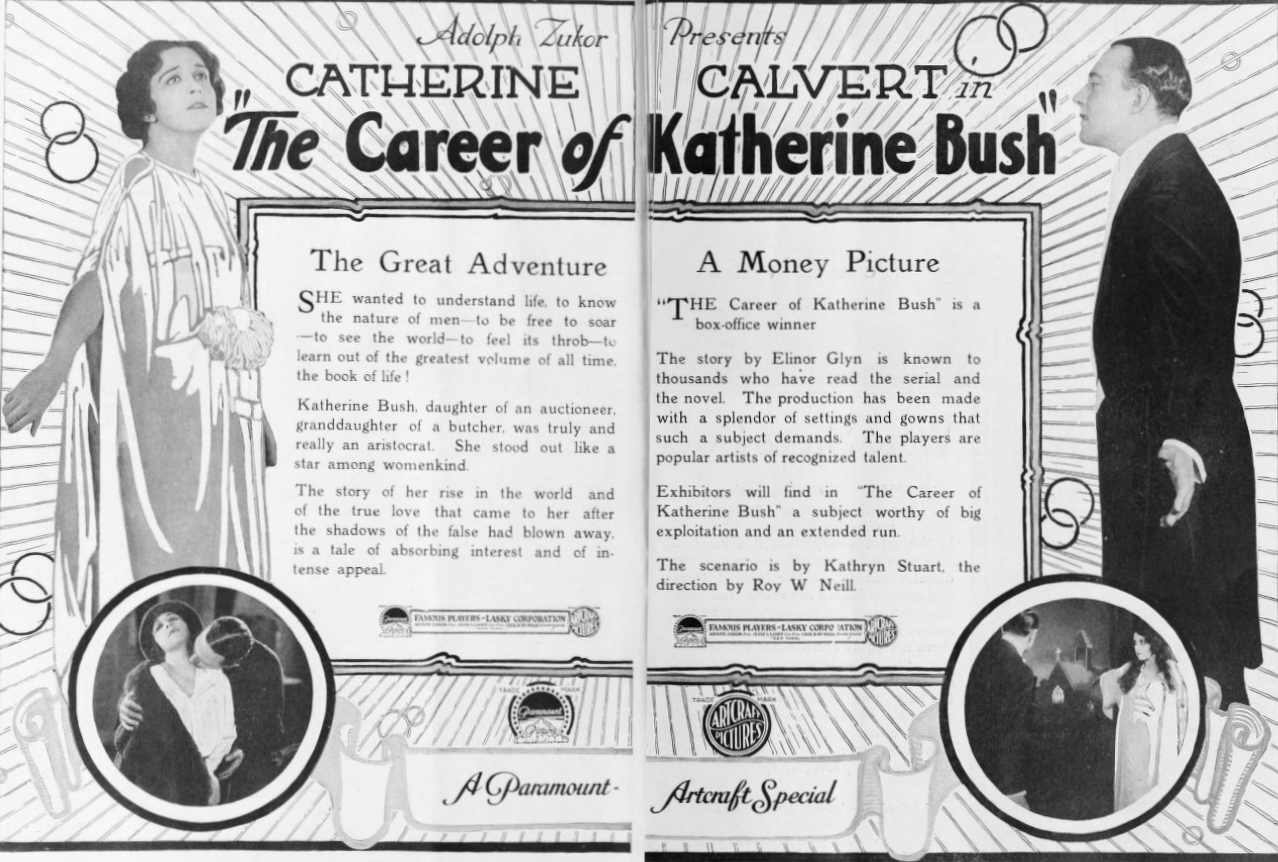
Stepping back into the cinematic tapestry of the early 20th century, one encounters narratives that, despite their silent presentation, resonate with an astonishing clarity concerning the human condition. Among these, The Career of Katherine Bush stands as a fascinating artifact, a testament to the enduring allure of ambition and the intricate dance of social mobility. This isn't just a film; it's a study in character, a societal mirror reflecting the aspirations and rigidities of its time, all filtered through the compelling lens of a woman determined to rewrite her destiny. The very premise — a lowly office worker leveraging her innate charm and unshakeable perseverance to ascend to the exalted status of Lady Catherine — is ripe with both romantic idealism and a potent critique of a stratified world.
At its core, the film presents Catherine Bush not as a mere schemer, but as a protagonist imbued with an almost elemental force of will. Edith Pierce, in the titular role, delivers a performance that, even through the expressive gestures and nuanced facial work characteristic of silent cinema, conveys a profound depth of character. Her Katherine is not simply beautiful; she is intelligent, perceptive, and possessed of a quiet intensity that suggests a mind constantly calculating, adapting, and striving. Pierce masterfully portrays the subtle shifts in Catherine’s demeanor as she navigates different social strata, from the deferential posture of a clerk to the poised confidence of an emerging socialite. It’s a performance that speaks volumes without uttering a single word, relying instead on a precise choreography of emotion and intent.
The narrative, penned by Elinor Glyn and Kathryn Stuart, is a meticulously constructed blueprint for social advancement. Glyn, known for her 'it' girl philosophy and narratives exploring female agency and sensuality, undoubtedly infused Catherine with a captivating charisma that transcends mere physical beauty. It's the 'it' factor, that indefinable magnetism, that becomes Catherine's primary tool. Stuart’s contribution likely grounded this aspirational fantasy in a believable cinematic structure, translating Glyn’s thematic boldness into a coherent visual story. Their collaboration results in a protagonist who is not just a passive recipient of good fortune, but an active architect of her own fate, employing her personality as a strategic asset in a world where connections and perception are paramount.
Consider the subtle yet potent ways Catherine asserts herself. She doesn't resort to overt manipulation or malicious deceit; rather, her ascent is characterized by an unwavering self-belief and an almost preternatural ability to learn and adapt. She observes, she absorbs, and she integrates the customs and expectations of the higher echelons of society with an astonishing rapidity. This isn't just about changing clothes or learning etiquette; it's about a fundamental reshaping of identity, a performance of self that is both authentic to her ambition and strategically crafted for her desired outcome. It’s a fascinating exploration of how much of identity is inherent and how much is constructed, especially when propelled by a powerful drive for self-improvement.
The supporting cast forms the intricate web through which Catherine navigates. While specific roles are often less detailed in silent film synopses, the presence of actors like Helen Montrose, Robert Minot, Frederick Burton, and John Goldsworthy suggests a diverse array of characters crucial to Catherine’s journey. These individuals likely represent the various social obstacles and stepping stones she encounters: perhaps a stern employer, a potential suitor, a disapproving grande dame, or a sympathetic mentor. Each interaction, each glance, each gesture from these characters would have served to either impede or facilitate Catherine’s progress, highlighting the transactional nature of social climbing. The film’s strength lies not just in Catherine’s individual struggle but in how she interacts with and subtly influences those around her, bending their perceptions and expectations to her will.
The ensemble’s collective performance underscores the societal backdrop against which Catherine’s drama unfolds. Augusta Anderson, Allan Simpson, Mathilde Brundage, and Walter Smith, among others, would have contributed to the verisimilitude of the world Catherine inhabits, painting a vivid picture of the social landscape she so desperately wishes to conquer. Their reactions, whether of disdain, admiration, or indifference, serve as crucial markers of Catherine's evolving status and the impact she has on those she encounters. It's a reminder that no ascent is made in a vacuum; it is always a dialogue between individual will and collective perception.
In its exploration of a woman striving against societal constraints, The Career of Katherine Bush finds fascinating parallels with other films of the era. One might draw connections to The Loves of Letty, another narrative focusing on a woman navigating complex emotional and social landscapes in pursuit of personal fulfillment and stability. While Letty’s journey might be more overtly romantic, the underlying current of a woman defining her own terms in a restrictive society is palpable in both. Similarly, films like Society's Driftwood or even the more overtly dramatic The Wicked Darling, though perhaps differing in their specific outcomes or moralistic tones, share a common thread of individuals grappling with their place in a rigid social hierarchy, often compelled by circumstance or aspiration to cross established boundaries.
The film also resonates with the spirit of determination seen in stories like The Iron Claw, albeit in a dramatically different context. While 'The Iron Claw' might represent a more physical and rugged struggle, the mental fortitude and unwavering focus required to achieve one's goals, regardless of the initial odds, is a shared thematic bedrock. Katherine Bush’s 'career' is a battle of wits and charm, a social warfare fought with smiles and strategic alliances rather than brute force, yet the intensity of her resolve is no less formidable. Her journey is a testament to the power of the individual to reshape their world, even in the face of formidable systemic barriers.
Beyond the performances and the narrative, the silent film medium itself becomes a character in this tale of ambition. The visual storytelling, devoid of spoken dialogue, relies heavily on strong compositions, evocative lighting, and the expressive power of the actors. One can imagine the subtle nuances conveyed through a lingering gaze, a hesitant step, or a triumphant smile. The camera, in its silent observation, becomes a confidante to Catherine’s inner world, allowing the audience to intuit her thoughts and feelings without explicit verbalization. The use of intertitles, while necessary for plot progression, would have been carefully crafted to enhance, rather than detract from, the visual narrative, offering glimpses into Katherine’s strategic mind or the societal judgments she faced.
The aesthetic choices, from costuming to set design, would have played a crucial role in illustrating Catherine’s transformation. Her initial attire, simple and functional, would gradually give way to more elaborate and fashionable garments, visually charting her rise. Similarly, the settings would evolve from cramped office spaces and modest lodgings to opulent ballrooms and grand estates, each backdrop serving as a visual marker of her progress. This meticulous attention to visual detail is a hallmark of strong silent film craftsmanship, ensuring that every frame contributes to the overarching narrative of aspiration and achievement. It's a masterclass in showing, not telling, allowing the audience to actively participate in piecing together Catherine's internal and external journey.
Ultimately, The Career of Katherine Bush transcends its historical context to offer a remarkably resonant exploration of human drive. It questions the very foundations of inherited status and celebrates the power of individual agency. Catherine’s journey isn't just about becoming 'Lady Catherine'; it’s about claiming a space, asserting worth, and redefining what is possible within a seemingly immovable social structure. It speaks to anyone who has ever felt confined by circumstance and dared to dream of something more. The film, through its compelling protagonist and the dedicated performances of its cast including Catherine Calvert, Claire Whitney, and Anne Dearing, reminds us that perseverance, coupled with an attractive personality and astute social intelligence, can indeed carve out a new destiny.
It’s a story that, even today, prompts reflection on the nature of ambition: Is it a virtue or a vice? Is social climbing an admirable pursuit of self-betterment, or a cynical manipulation of societal norms? The film doesn't offer simplistic answers, but rather presents Catherine's journey with a nuanced gaze, allowing the audience to grapple with these complex questions. Her transformation is presented not as a morally unambiguous triumph, but as a testament to the sheer force of human will and the captivating power of a personality determined to shine, no matter the obstacles. This enduring relevance is precisely why films like The Career of Katherine Bush continue to captivate, offering insights into both the past and the perennial human quest for self-realization.
The cinematic artistry of the period, as exemplified by this film, lies in its ability to communicate profound human experiences through a language of gesture, expression, and visual metaphor. It invites active viewership, demanding that the audience engage with the unspoken, to interpret the subtle cues that reveal character and motivation. In this way, The Career of Katherine Bush is not merely a historical document; it is a vibrant narrative that continues to speak to the enduring spirit of aspiration, the challenges of social navigation, and the captivating allure of a life forged by one's own design.
IMDb —
1917
Community
Log in to comment.