DbcultAccessing Vault...
Cult Review
Senior Film Conservator
Short answer: yes, but with a significant caveat. Is Charles Lamont's 1929 short film, Raisin' Cain, worth your time today? Absolutely, if you approach it as a historical artifact with unexpected comedic timing, rather than expecting modern narrative sophistication. This charming relic from the early sound era offers a fascinating glimpse into the nascent stages of cinematic storytelling, particularly for those with an appreciation for slapstick and the innocent mischief of youth. However, it is decidedly not for viewers who demand tight pacing, complex character arcs, or high production values typical of contemporary filmmaking. If your cinematic palate leans exclusively towards the sleek and polished, this particular vintage may prove a tough swallow.
From the outset, Raisin' Cain positions itself as a lighthearted romp, an episodic exploration of childhood trickery and its unintended consequences. The premise, while simple, provides a sturdy framework for a series of escalating gags that, for their time, must have been quite effective. It’s a film that asks little of its audience beyond a willingness to indulge in a bygone era's brand of humor, and in return, it delivers a dose of unpretentious fun.
This film works because of its unpretentious charm and the surprisingly effective physical comedy from its young cast, especially Leon Holmes as Bobby.
This film fails because its narrative, while quaint, often feels disjointed, lacking the tight pacing audiences expect from even short-form entertainment today.
You should watch it if you appreciate early cinema, silent-era slapstick, or simply want a light, unchallenging glimpse into childhood antics of the past.
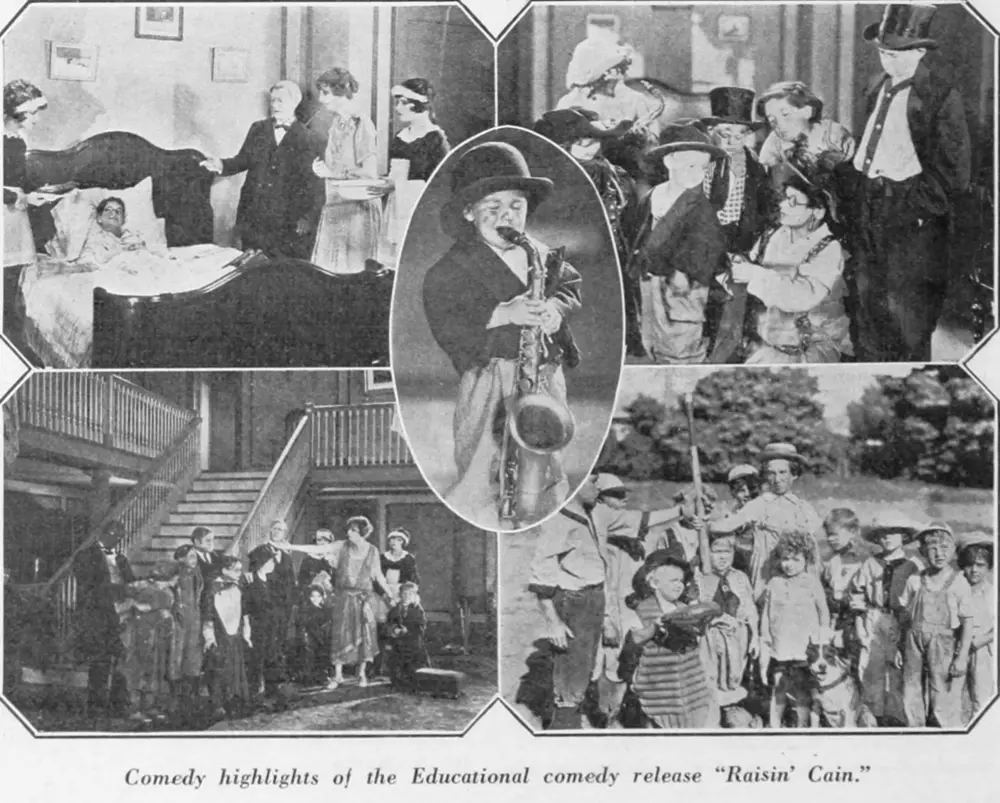
At its core, Raisin' Cain is a testament to the universal impulse of childhood: the desire to escape responsibility for the sake of play. Bobby, portrayed by Leon Holmes, embodies this perfectly. His elaborate feigning of illness, complete with exaggerated coughs and a dramatic slump in bed, is immediately recognizable to anyone who has ever been a child, or parented one. The film doesn't delve deep into his motivations beyond this simple desire, but it doesn't need to. The humor springs from the sheer audacity of his deception and the increasingly absurd lengths he goes to maintain it.

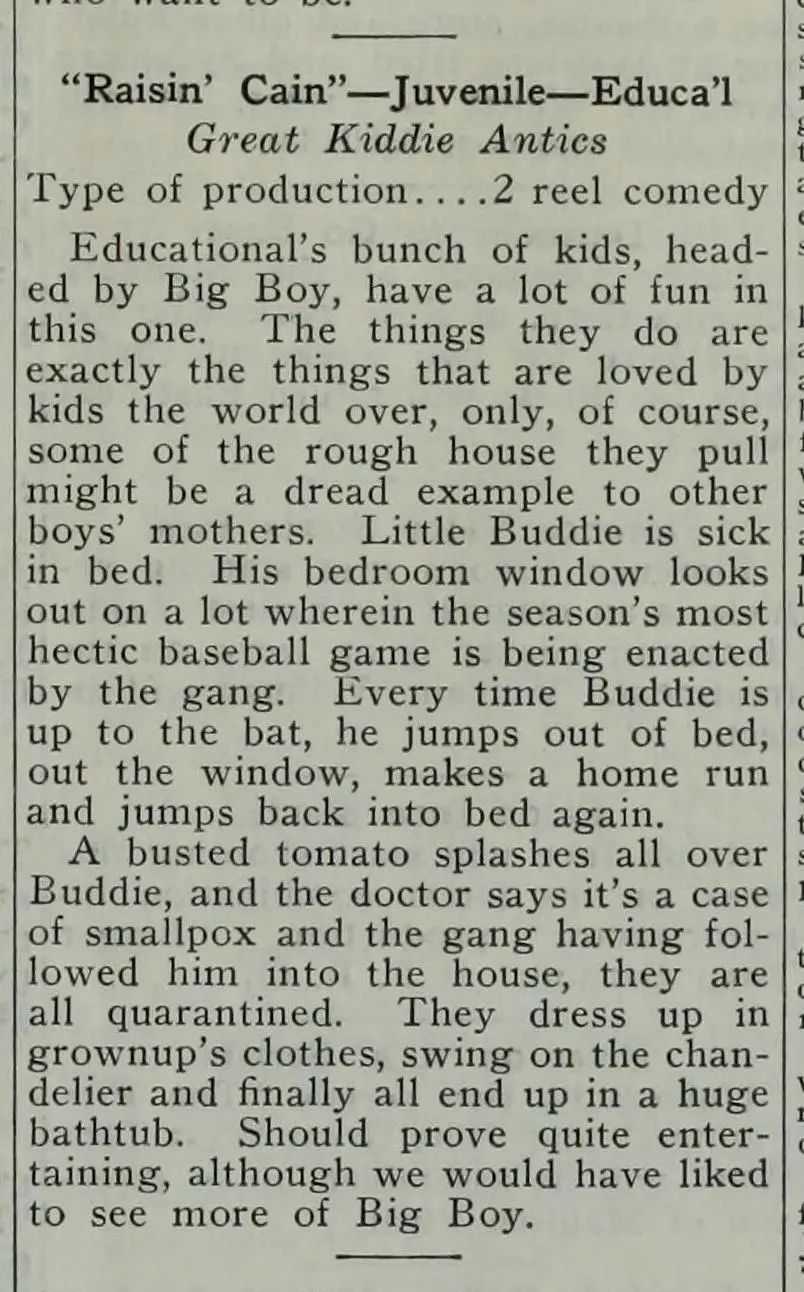
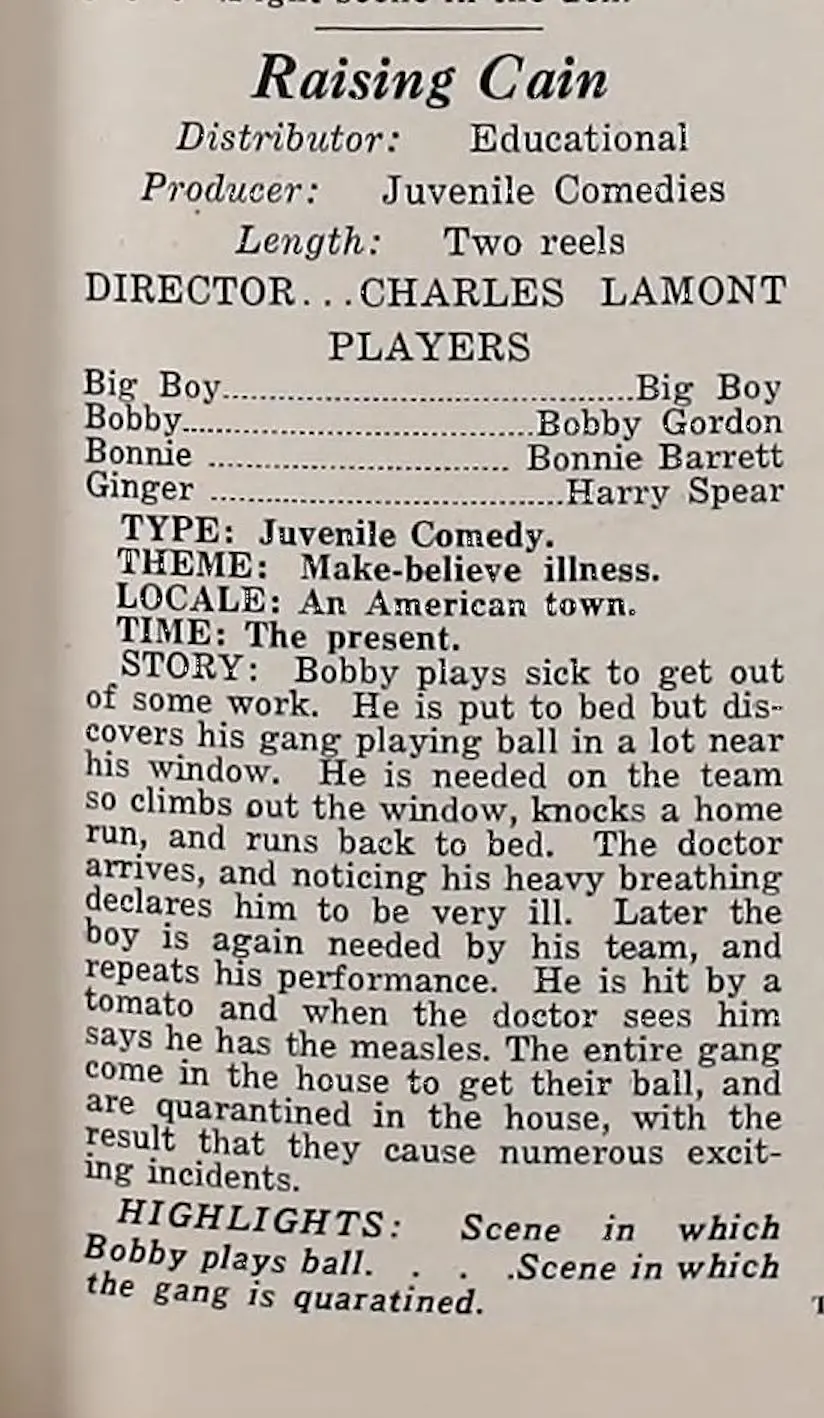
The film's plot, penned by Charles Lamont, moves with a kind of innocent, almost naive, logic. Bobby's initial escape to the baseball game, hitting a home run in his nightgown, is a moment of pure, unadulterated fantasy. It’s the stuff of every kid's dream. The subsequent misdiagnosis of measles, brought about by a well-aimed tomato, is a wonderfully silly plot device that only early cinema could pull off with such earnestness. There’s a charming lack of cynicism here, a straightforward approach to storytelling that feels refreshing in its simplicity.
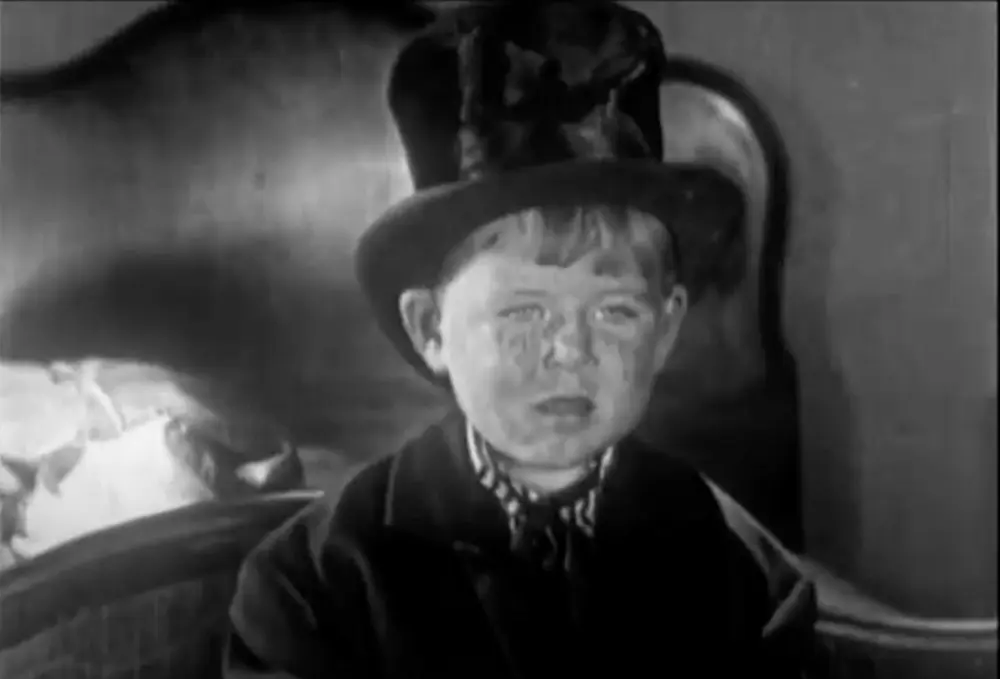
The cast of Raisin' Cain, largely comprised of child actors, delivers performances that are both endearing and indicative of the era’s acting styles. Leon Holmes as Bobby is the undisputed star, his performance a masterclass in exaggerated physical comedy. His transformation from a sickly patient to an energetic baseball hero and back again is executed with a delightful earnestness. The heavy breathing he exhibits after his sprints, which the doctor mistakes for a symptom of his serious condition, is a recurring gag that lands effectively thanks to Holmes's commitment.
The supporting adult cast, particularly the bewildered doctor and Bobby's doting mother, serve as excellent foils to the children's antics. Their reactions, ranging from concern to exasperation, anchor the more fantastical elements of the plot in a semblance of reality. Pal the Dog, a common trope in films of this period, adds another layer of playful chaos, particularly when he fails to retrieve the baseball, inadvertently triggering the grand invasion of Bobby's house.
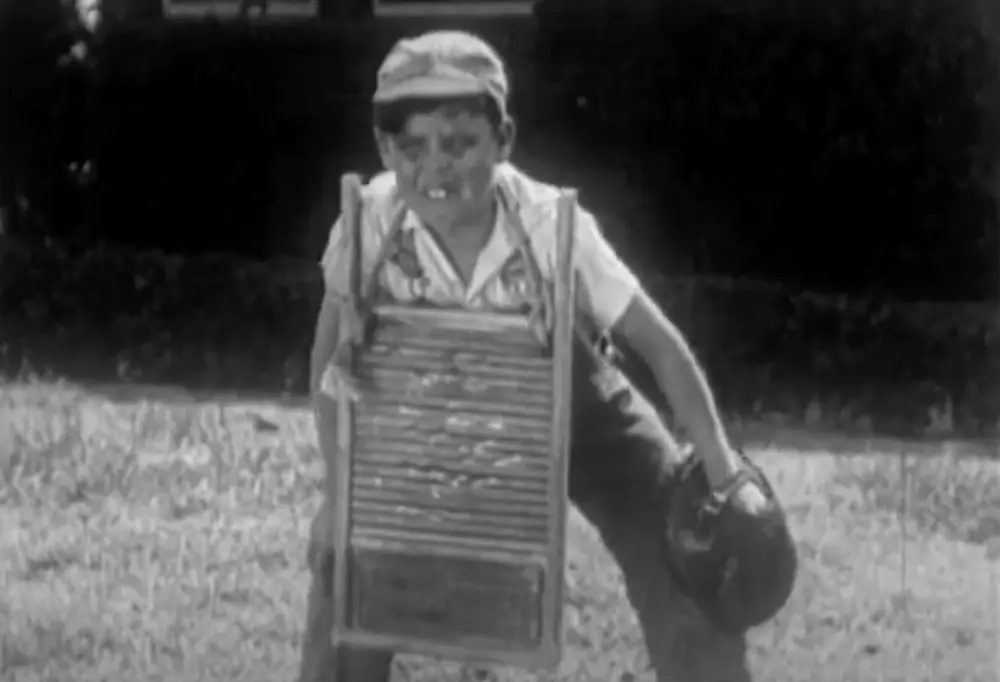
What's perhaps most striking about these performances is their unpolished quality. There's a raw energy to the children's interactions, especially during the Charleston contest and the bathing party, that feels genuinely spontaneous. It’s far from the meticulously rehearsed child performances we see today, offering a more authentic, albeit less refined, glimpse into the natural exuberance of youth.
Charles Lamont's direction in Raisin' Cain is straightforward, focusing on clear sight gags and simple comedic setups. The camera work is largely static, typical of the period, allowing the action to unfold within the frame without elaborate cinematic flourishes. Lamont understands the comedic value of repetition, particularly with Bobby's repeated escapes and returns to bed, building a rhythm of anticipation and payoff.
However, the pacing is undeniably a significant hurdle for modern viewers. The film often feels languid, with scenes stretching longer than necessary, particularly during the initial setup of Bobby's illness and the subsequent party sequences. While this deliberate pace might have allowed audiences of 1929 to fully absorb the gags, today it can feel somewhat drawn out. The transition from one comedic beat to the next isn't always as crisp as one might hope, leading to moments where the energy dips.
One could argue that the film's most glaring flaw isn't its age, but its reliance on a comedic formula that, even for its time, likely felt a touch overextended. The extended bathing party, while visually amusing, verges on repetitive, diluting the impact of what could have been a sharper, more concise comedic crescendo. This is a short film that arguably could have been even shorter to maximize its punch.
The black and white cinematography of Raisin' Cain is functional and clear. The sets, particularly Bobby's lavish bedroom and the spacious bathroom, convey the family's wealth effectively, providing a stark contrast to the boisterous, less privileged children who eventually invade the space. The lighting is bright and even, ensuring that the physical comedy is always visible. There's an undeniable charm in the simplicity of these visuals, a directness that allows the performances and the gags to take center stage without distraction.
While there are no groundbreaking visual techniques, the film effectively uses its limited palette to create a sense of place and atmosphere. The contrast between Bobby's pristine sickroom and the dusty baseball lot outside is subtle but effective. The moment the tomato splatters on Bobby's face, creating the illusion of measles, is a surprisingly vivid visual gag that stands out, a testament to how simple effects could be highly impactful in early cinema.
The tone of Raisin' Cain is overwhelmingly lighthearted and innocent. It's a celebration of childhood mischief, a world where the biggest stakes involve a baseball game and avoiding chores. Beneath the surface, however, there's a gentle theme of accountability. Bobby's elaborate deception eventually unravels, leading to a mild form of comeuppance. The children are sent home "sadder and wiser," a classic moralistic wrap-up that was common in films aimed at family audiences of the era.
There's also a subtle undercurrent of class dynamics, with Bobby, the rich kid, having the luxury of a doctor and nurses, and his friends being drawn from what appears to be a less affluent background. Yet, the film largely sidesteps any heavy social commentary, preferring to focus on the universal language of play and the bonds of friendship that transcend social standing. The shared joy of the Charleston contest and the bathing party momentarily levels the playing field, creating a communal experience that highlights the pure, unadulterated fun of childhood.
While charming, the film inadvertently highlights the era's simplistic approach to child psychology on screen. Bobby's motivations are never questioned beyond surface-level desires, and the resolution is neat, if a little too convenient. This isn't a film designed for deep introspection, but rather for a chuckle and a nod of recognition at the timeless antics of children.
Yes, Raisin' Cain is absolutely worth watching if you are a cinephile, a student of film history, or simply someone who enjoys the charm of early cinema. It offers a genuine laugh and a fascinating window into a bygone era of filmmaking and childhood. It's short enough not to overstay its welcome, despite some pacing issues. It works. But it’s flawed. This film is a delightful curio, a testament to the enduring appeal of simple stories well told, even if the telling is a little rough around the edges by today's standards. It's a reminder that sometimes, the most surprising observations come from the most unassuming places, like a tomato-induced measles diagnosis.
Every film, regardless of its vintage, comes with its own set of strengths and weaknesses. Raisin' Cain is no exception. Understanding these can help set appropriate expectations.
Raisin' Cain is a delightful, if slightly dated, piece of cinematic history. It’s a short film that understands the simple joy of childhood rebellion and the comedic potential of a well-intentioned lie. While its pacing and straightforward narrative might not captivate everyone, its charm, particularly through Leon Holmes's performance, is undeniable. It serves as a gentle reminder that even in the earliest days of cinema, filmmakers were adept at capturing the universal spirit of play and the inevitable consequences of mischief. For those willing to step back in time, this little gem offers a pleasant, nostalgic escape. It’s not a masterpiece, but it’s certainly a worthy watch for its historical context and its enduring, if quaint, sense of humor. Give it a chance, and you might just find yourself smiling at Bobby's audacious antics, much like audiences did nearly a century ago.

IMDb 6.5
1936
Community
Log in to comment.