DbcultAccessing Vault...
5.2/10
Senior Film Conservator
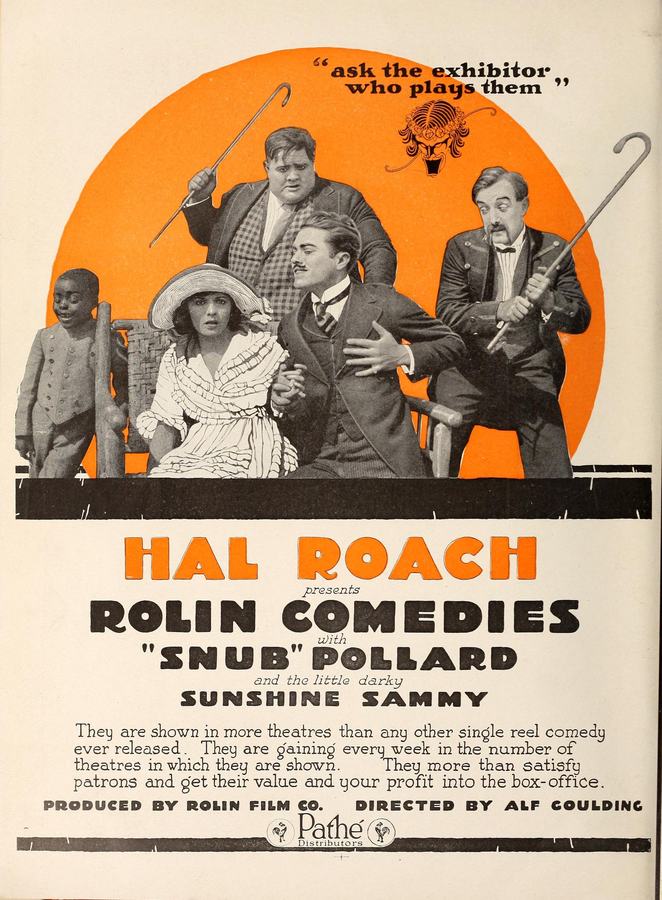
A definitive 5.2/10 rating for a film that redefined the boundaries of cult cinema. Grab the Ghost remains a cornerstone of transgressive art.
A honeymoon cottage that snickers at the institution of marriage—Grab the Ghost is slapstick shot through with ectoplasmic surrealism.
Imagine if Buster Keaton’s deadpan met Freud’s uncanny in a darkroom where nitrate stock burns at the edges; that jittery marriage births this 1920 one-reeler. Clocking in at a breathless twelve minutes, the film nevertheless crams enough visual whiplash to make Méliès blink. It’s a contraption disguised as a narrative: every gag a spring-loaded mousetrap, every ghostly flourish a flicker of cosmic absurdity.
What passes for story is actually a daisy-chain of set-pieces welded by dream-logic. The couple’s arrival at the house is filmed in iris-in, the frame contracting like a wary eyeball. Instantly, objects assert autonomy: gate hinges snap like turtle beaks, a welcome mat curls to trip the groom—a gag repeated thrice, each time at a faster cadence until the mat itself seems possessed by comic sadism.
Inside, the camera crabs sideways, a dolly movement too fluid for 1920, suggesting the influence of German Expressionism drifting across the Atlantic. The piano gag—keys thumping like teeth chattering—derives from vaudeville’s “haunted instrument” routine, yet here it escalates: sheet music flutters into a paper tornado that blinds the bride, forcing her to waltz with a coat-rack mistaken for her spouse. The joke is not the mistaken identity but the film’s delight in tactile textures: lace against galvanized steel, tulle snagging on brass hooks, the acoustic clang of metal echoing like cathedral bells.
Hughie Mack, rotund and rubber-faced, channels a panic that feels pre-verbal; his squeaks harmonize with the flickering house-lights to create a sound design born of pure pantomime. Contrast him with ‘Snub’ Pollard—tall as a stack of broomsticks—whose lanky inertia supplies pendulum rhythms to every chase. Together they form a living Calder mobile, counterbalancing weight with length, tension with release.
Ernest Morrison, the juvenile Black actor, is handed the stereotypical “scaredy-cat” role, yet his double-takes possess such balletic precision they transcend caricature. Watch how he glides backwards, feet never seeming to lift, a proto-moonwalk that predates Motown by four decades. In a just history, this sequence would be GIF-immortalized; instead it languishes in mildewed canisters.
Anonymous director—possibly co-writer Eddie Boland—operates the camera like a conjurer. Speed manipulation alternates between under-cranked frenzy and eerie over-cranked languor, making banal gestures feel either sped-up like Keystone chaos or slowed to whale-song melancholy. Superimpositions layer multiple exposures: a translucent bride overlapped with her own shrieking silhouette, creating a visual echo that suggests the self is the true phantom.
Lighting swings from blown-out whites (the attic climax) to cavernous pools of darkness where only eyes and teeth glint. The palette, though monochromatic, feels polychromatic thanks to tinting: amber for interiors, viridian for night exteriors, rose for the couple’s sporadic embraces. These washes anticipate the emotional color-coding later perfected in Susan Rocks the Boat, yet achieve more with less.
Grab the Ghost never decides whether it wants to tickle or terrify—and therein lies its brilliance. The tension of “is it real?” keeps even modern viewers off-kilter. Jump scares arrive at metrically irregular intervals; pratfalls undercut them before dread ossifies into fear. Compare this oscillation to The Other Side of the Door, which separates its horror set-ups from comic relief characters; here, both tones inhabit the same skin, indivisible.
Marie Mosquini’s bride begins as archetypal porcelain doll, yet by the finale she conducts the chaotic banquet, her laughter becoming the exorcism that purges the house of its prankster parasites. It’s a proto-feminist stroke hidden inside a genre that usually punishes women for venturing outside the kitchen. She claims space not through muscular heroism but through hospitality—turning terror into potluck. The film whispers: domesticity can be witchcraft when wielded on one’s own terms.
Post-WWI audiences, jittery from global carnage and flu pandemics, craved escapism, yet subconsciously wanted narratives that acknowledged death’s house-party. Grab the Ghost supplies both: the haunted-house trope externalizes collective trauma, while slapstick anesthesia numbs the ache. It predates Hawthorne of the U.S.A.’s patriotic swagger and contrasts with Hungry Eyes’ social-realist despair. Instead of flappers or flag-waving, it offers domestic surrealism, a subgenre that wouldn’t resurface until the late-century works of Lynch.
Most prints vanished in the 1930s, recycled for silver recovery. A sole 9.5 mm Pathé-Baby version surfaced in a Belgian attic in 1987, shrunken and vinegar-syndromed. Thanks to crowdfunding led by a ragtag collective of silent-cinephiles, 4K scans resurrected the tints, revealing details like the microscopic newspaper headline glued to a prop: “Local Bride Defies Ghost, Wins Bet.” Such Easter eggs reward obsessive frame-by-frame scrutiny.
Many festivals screen it with improvised piano, but try a playlist of Erik Satie’s Gymnopédies looped against field recordings of creaking ships. The juxtaposition heightens the film’s maritime sway—after all, the house rocks like a vessel adrift on an ocean of night.
In an era of glossy CGI phantoms, the handcrafted whimsy of Grab the Ghost feels punk-rock. Every suspended teacup on fishing wire screams DIY ingenuity. It reminds us that awe needs neither million-dollar budget nor franchise mythology—just audacity, shadows, and a bride willing to dance with poltergeists until they blush.
Flawed? Certainly—gags sag midway, racial caricature dates badly, and the ending gag with the horse in the pantry feels stapled on. Yet its cumulative effect is alchemical: terror transmuted into tenderness, slapstick elevated to haiku. Seek it out at a cinematheque, a museum, or a clandestine loft where projectors clack like mechanical insects. Let the images burn onto your retinas; you will exit seeing the everyday world haunted not by ghosts but by possibility.

IMDb 5.5
1923
Community
Log in to comment.