DbcultAccessing Vault...
Cult Review
Senior Film Conservator
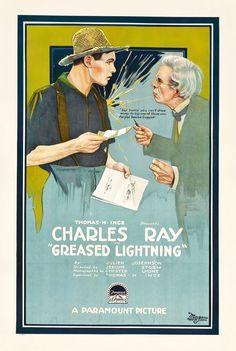
Stepping back into the silent era often feels like unearthing a forgotten treasure, a glimpse into the very genesis of cinematic storytelling. And in the case of Greased Lightning, a 1919 production, we are treated to a vibrant, albeit somewhat boisterous, example of early American narrative filmmaking. This isn't just a film; it's a boisterous declaration of the burgeoning American spirit, a testament to the era's fascination with speed, ambition, and the perennial triumph of the underdog. The narrative, penned by the prolific Julien Josephson, is a fascinating blend of aspirational drama and unexpected criminal intrigue, a concoction that, while perhaps uneven by today's standards, crackles with an undeniable energy that was surely electrifying for audiences a century ago.
At its heart, Greased Lightning champions the unassuming figure of Andy Fletcher, portrayed with a characteristic blend of earnestness and youthful vigor by the inimitable Charles Ray. Ray, a darling of the silent screen, particularly renowned for his portrayals of country bumpkins with hearts of gold and surprising depths, finds a role here perfectly suited to his established persona. Andy is a blacksmith, his days defined by the rhythmic clang of hammer on anvil, the sweat of honest labor, and the earthy scent of his village forge. Yet, beneath this veneer of rural simplicity, a powerful, almost revolutionary, dream pulsates: the desire to conquer the nascent world of automobile racing. This isn't merely a hobby; it's an obsession, a vision of breaking free from the predictable confines of his inherited trade and embracing the exhilarating, unpredictable future that the roaring machine promised.
Ray's performance as Andy is the magnetic north of the film. He imbues Fletcher with an authenticity that makes his aspirations profoundly relatable. We see the yearning in his eyes, the almost childlike wonder at the mechanics of speed, and the quiet determination that fuels his ambition. It's a performance that speaks volumes without a single uttered word, relying entirely on nuanced facial expressions, body language, and the sheer force of his screen presence. One might draw parallels to his work in John Petticoats, where he similarly embodies a character navigating the complexities of identity and expectation, albeit with a different set of societal pressures. Ray had a particular genius for portraying these 'everyman' figures, elevating them from simple archetypes to genuinely endearing personalities.
The film's initial chapters are dedicated to meticulously establishing Andy's world and his fervent desire. The contrast between the rustic charm of the village and the sleek, powerful machinery of the race car is stark and visually compelling. It's a classic narrative tension: the old world giving way to the new, tradition clashing with innovation. The automobile, at this juncture in history, was more than just a mode of transport; it was a symbol of modernity, progress, and unchecked individual freedom. For Andy, it represents an escape, a vehicle (pun intended) for self-actualization. This thematic depth, while perhaps not overtly articulated in the dialogue-free format, is powerfully conveyed through the visual storytelling and Ray's committed performance.
However, the narrative takes a sharp, almost jarring, turn with the introduction of a nefarious band of bank robbers. This sudden injection of crime and suspense transforms the film from a straightforward sporting drama into something far more intricate and, frankly, a little chaotic. The robbers' presence isn't merely background noise; their illicit activities become inextricably linked to Andy's racing aspirations, complicating his journey in unforeseen and perilous ways. This narrative pivot, while providing a jolt of adrenaline, also tests the film's structural integrity. One wonders if Julien Josephson, in crafting the screenplay, sought to inject a broader appeal by melding genres, or if this was a studio mandate to capitalize on the public's appetite for thrilling crime capers, a genre that was simultaneously gaining traction, as evidenced by films like The Eagle's Eye, which explored espionage and criminal underworlds with considerable flair.
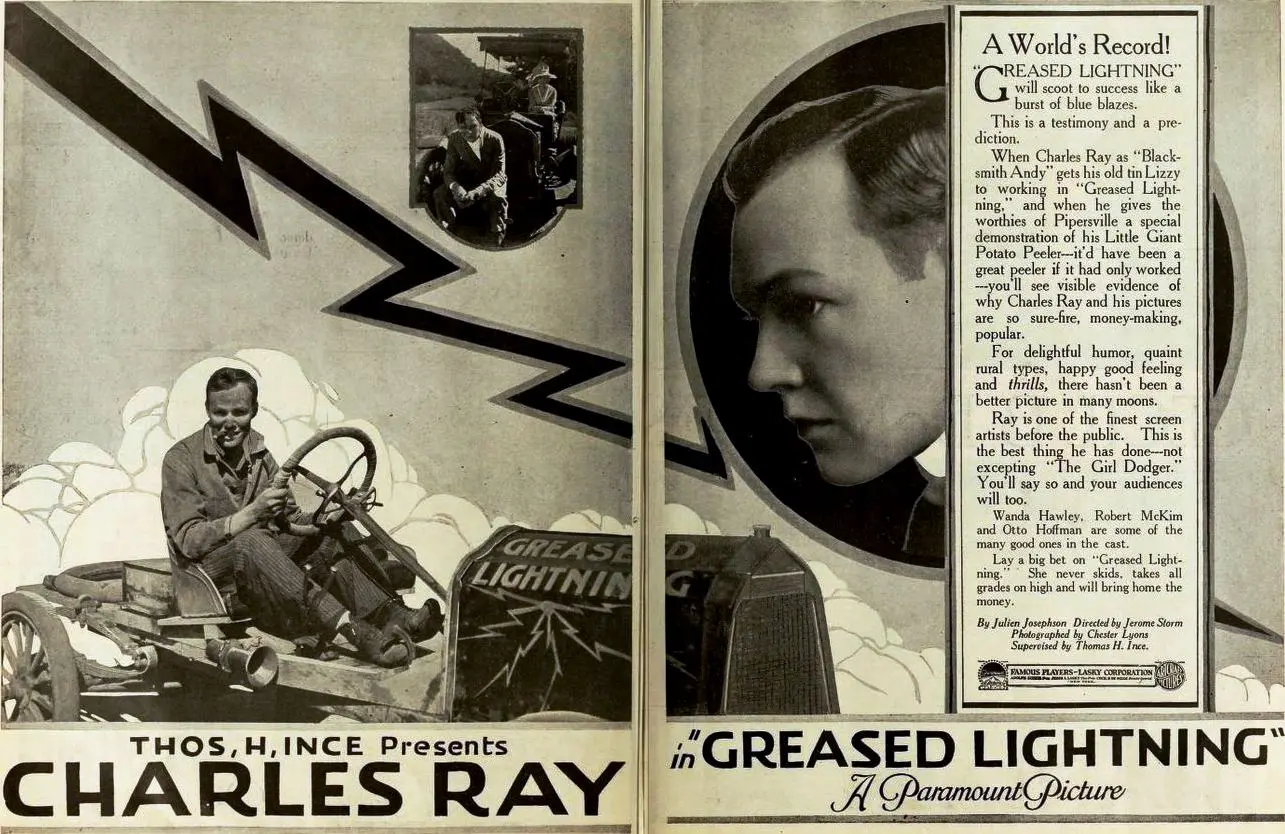
The juxtaposition of the wholesome, aspirational racing plot with the gritty, dangerous world of bank robbery creates a fascinating, if occasionally dissonant, tension. Andy, the earnest dreamer, is suddenly thrust into a moral dilemma, forced to navigate a landscape far more treacherous than any race track. This unexpected entanglement elevates the stakes beyond personal glory, imbuing the race itself with a newfound significance. It's no longer just about winning; it's about justice, about righting wrongs, and perhaps even about personal survival. The supporting cast, including Bert Woodruff, Robert McKim, Otto Hoffman, Wanda Hawley, Willis Marks, and J.P. Lockney, admirably fill their roles, lending credibility to both the village setting and the criminal underworld, even if their characters are often broadly drawn to serve the plot's exigencies.
The racing sequences themselves are a marvel of early cinema. While lacking the hyper-realism and complex choreography of modern action films, they possess an inherent dynamism that relies on clever editing, effective use of speed effects, and the audience's willingness to suspend disbelief. The thrill of the chase, the sheer exhilaration of speed, is palpable. The film leverages the nascent power of the moving image to convey velocity and danger, making the audience feel the rush alongside Andy. This is where Greased Lightning truly shines, demonstrating the innovative spirit of filmmakers grappling with a new medium and discovering its unique capabilities for spectacle and excitement. The camera work, though rudimentary by contemporary standards, manages to capture the essence of the race, building suspense through cross-cutting and close-ups that emphasize the intensity of the competition and the perilous nature of the criminal interference.
One might consider the film's broader cultural context. The late 1910s were a period of immense change, both socially and technologically. The automobile was transforming landscapes and lives, and cinema was rapidly evolving from a novelty into a powerful art form and mass entertainment. Greased Lightning, in its very title, encapsulates this era of rapid acceleration and modernization. It's a film that reflects the optimism and dynamism of a nation pushing forward, yet also hints at the darker undercurrents of crime and moral ambiguity that often accompany societal shifts. Unlike films that delved into deeper psychological complexities like Blind Husbands, Greased Lightning opts for a more straightforward, action-oriented approach, prioritizing excitement and a clear moral arc, even if that arc becomes surprisingly circuitous.
The integration of the bank robbers' plotline, while initially feeling like a departure, ultimately serves to heighten the drama and provide Andy with a chance to prove his heroism beyond the confines of the racetrack. It forces him to become not just a racer, but a reluctant participant in a high-stakes game of cat and mouse. This duality of character – the ambitious sportsman and the accidental law enforcer – adds a layer of unexpected depth to Ray's portrayal. He handles the transition with a natural grace, maintaining the earnestness of his character while adapting to the demands of the thrilling, dangerous circumstances. The film, in this regard, shares a kinship with other silent-era thrillers that pitted ordinary individuals against extraordinary criminal elements, forcing them into roles they were never meant to play, and in doing so, revealing their true character.
Ultimately, Greased Lightning is more than just a period piece; it's a vibrant, if imperfect, testament to the enduring appeal of a good story well told. It captures the essence of ambition, the thrill of competition, and the unexpected twists of fate that can turn a simple dream into a sprawling adventure. While its narrative might occasionally veer into the melodramatic or feel slightly disjointed by modern sensibilities, its core strengths lie in Charles Ray's compelling performance, the energetic portrayal of early automobile racing, and the surprising depth added by its criminal subplot. It's a film that, despite its age, still possesses a certain spark, a 'greased lightning' quality that allows it to race through its runtime with an infectious enthusiasm. For anyone interested in the foundational years of American cinema, or simply in a spirited tale of a country boy chasing a dream amidst unforeseen perils, this film offers a delightful, if occasionally bumpy, ride. It reminds us that even in the absence of spoken dialogue, the power of visual storytelling, compelling characters, and a dash of thrilling action can resonate across generations, proving that the language of cinema is truly universal and timeless. This is a film that, much like Andy Fletcher's journey, is rough around the edges but possesses an undeniable, roaring heart. The sheer audacity of its narrative ambition, to weave together such disparate threads, is commendable, even if the seams occasionally show. It's a delightful example of the kinetic energy that defined so much of the silent era's popular entertainment, an exuberant sprint towards a cinematic future that was still very much in the making. The film, in its very fabric, embodies the forward momentum it depicts, a true relic of an era obsessed with speed and progress, delivering a narrative that, while perhaps not as polished as some of its contemporaries, certainly doesn't lack for spirit or thrilling incident. It's a testament to the ingenuity of early filmmakers who understood that a compelling story, coupled with dynamic visuals, could captivate an audience even without the benefit of synchronized sound. The legacy of films like Greased Lightning lies not just in their historical value, but in their ability to still entertain and provoke thought, reminding us of the enduring power of dreams, speed, and the occasional, thrilling brush with danger.
IMDb —
1924
Community
Log in to comment.