DbcultAccessing Vault...
Cult Review
Senior Film Conservator
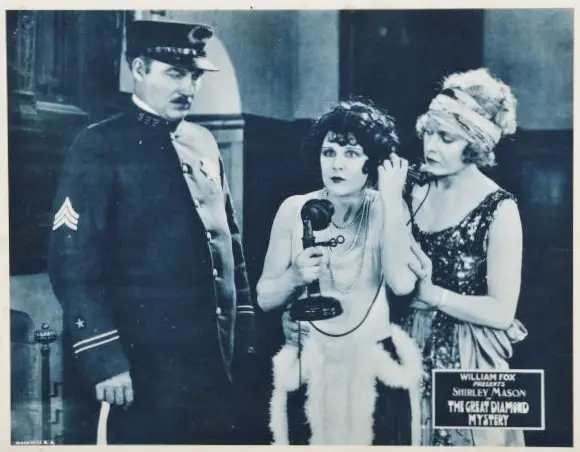
The 1924 silent cinematic landscape was often cluttered with melodramas that relied heavily on overwrought histrionics, yet Great Diamond Mystery emerges as a sophisticated outlier. It is a film that dares to ask whether the creator of a mystery can truly master the chaos of a real-world crime. Directed with a keen eye for atmospheric tension, the film utilizes the meta-narrative of Ruth Winton, an author who treats the impending execution of her lover not merely as a personal catastrophe, but as a hypothesis to be tested through the rigorous application of her own literary tropes.
In contrast to the more straightforward moral plays of the era, such as The Price of Crime, this film weaves a complex tapestry of psychological obsession. Ruth Winton is not your typical damsel in distress; she is an intellectual combatant. Her decision to rent the victim's house—the very site of the trauma—is a stroke of narrative genius that prefigures the modern obsession with true crime. She rehires Davis, the butler, creating a domestic environment that is essentially a stage set for a trap.
The casting of Shirley Mason as Ruth Winton provides the production with its emotional and intellectual anchor. Mason, who showcased a different facet of her range in The Blue Bonnet, here portrays a woman of formidable resolve. Her performance is characterized by a restrained intensity; her eyes convey the frantic calculations of a writer trying to rewrite a tragic ending in real-time. Opposite her, William Collier Jr. as Perry Standish manages to evoke a sense of doomed nobility that makes the race against the clock feel palpably urgent.
The supporting cast, particularly Philo McCullough as the suspicious Mallison, adds layers of predatory menace. Mallison is not a cartoonish villain but a desperate man driven by the avarice inherent in the diamond trade. The way he snoops through the Graves estate creates a sense of claustrophobia that rivals the most effective moments in Merchant of Menace. The interaction between these characters is a masterclass in silent-era blocking, where every glance and movement toward a shadow suggests a hidden motive.
Technically, the film excels in its use of space. The Graves mansion is not merely a backdrop; it is a labyrinth of secrets. The cinematography captures the looming architecture of the house, using shadows to suggest the presence of the missing diamonds that everyone—including the audience—is seeking. This use of light and dark is far more sophisticated than the contemporary The Broken Trestle, which relied more on external action than internal dread.
The script, penned by Thomas Dixon Jr. and Shannon Fife, maintains a brisk pace while allowing for moments of quiet reflection. They understand the fundamental rule of the mystery genre: the audience must be given just enough information to feel like they are solving the puzzle alongside the protagonist, but not so much that the final revelation feels unearned. The pacing here is superior to the somewhat disjointed narrative found in Gemini Ambrose.
The resolution of Great Diamond Mystery hinges on the trope of the murderer returning to the scene of the crime. While this might seem like a cliché in the 21st century, the film executes it with such conviction that it feels revitalized. The butler, Davis, portrayed with a haunting frailty by John Cossar, becomes the pivotal figure. His confession is not a mere plot device but a moment of profound existential reckoning. As he lies dying from a gunshot wound, the truth spills out with a raw honesty that contrasts sharply with the deceit that preceded it.
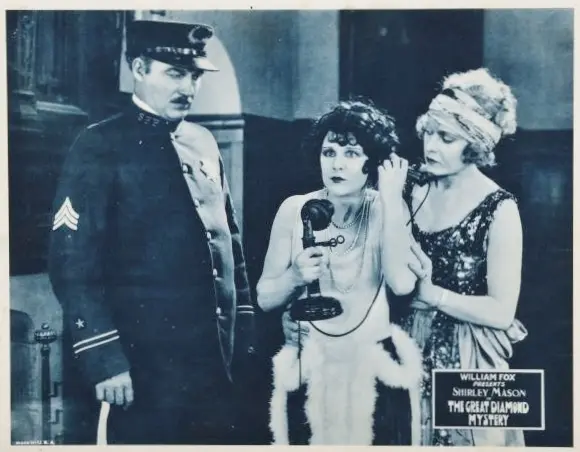
This scene is particularly resonant when compared to the dramatic resolutions in The Marriage Lie. Where that film deals with the breakdown of social contracts, Great Diamond Mystery deals with the breakdown of the human soul under the weight of guilt. The eleventh-hour pardon for Perry Standish is handled with a cinematic flair that avoids the saccharine pitfalls of lesser dramas like Pure But Simple.
One cannot ignore the sociological undercurrents of the film. The "underworld connections" of the merchant Graves serve as a commentary on the porous borders between legitimate business and criminal enterprise in the 1920s. This theme is explored with even greater cynicism in The Brain of Soviet Russia, yet here it is personalized through the lens of a domestic thriller. The diamonds themselves represent a corrupting influence, a motif that appears frequently in silent cinema but is rarely handled with this degree of narrative integration.
Furthermore, the film’s exploration of class—specifically through the character of the butler—adds a layer of complexity. Davis is both a servant and a silent observer, a man who knows the house's secrets better than its owners. This dynamic is a staple of British dramas like Caste, but in this American production, it takes on a more sinister, noir-adjacent quality. The film manages to be both a high-society drama and a gritty procedural, bridging the gap between the two with remarkable ease.
To watch Great Diamond Mystery today is to witness the birth of the psychological thriller. It eschews the supernatural whimsy of Alf's Button or the historical grandeur of Miracle of the Wolves in favor of a grounded, character-driven suspense. It understands that the greatest mysteries are not found in ancient tombs or magical artifacts, but in the dark corners of the human psyche.
While some might find the silent format restrictive, the visual storytelling here is so potent that words would almost feel redundant. The film doesn't need to shout to be heard; it whispers its secrets through the clever use of shadows, the flickering light of a candle, and the desperate expressions of its leads. It is a work that deserves to be reassessed, not just as a relic of 1924, but as a foundational text in the evolution of the mystery genre. Whether compared to the comedic timing of Beauty and the Feast or the domestic tension of He Couldn't Fool His Wife, this film stands tall as a testament to the power of a well-constructed plot.
In the end, Ruth Winton’s victory is not just over the judicial system, but over the very nature of storytelling. She proves that by understanding the patterns of human behavior, one can predict—and even change—the course of fate. It is a triumphant, intellectually stimulating experience that remains as engaging today as it was a century ago. For those seeking a silent film that offers more than just slapstick or spectacle, Great Diamond Mystery is an essential viewing, a gleaming facet of cinematic history that still shines with a dark, compelling brilliance.
Final Verdict: A labyrinthine journey through guilt and redemption that remains a high-water mark for 1920s suspense cinema.
IMDb —
1917
Community
Log in to comment.