DbcultAccessing Vault...
Cult Review
Senior Film Conservator
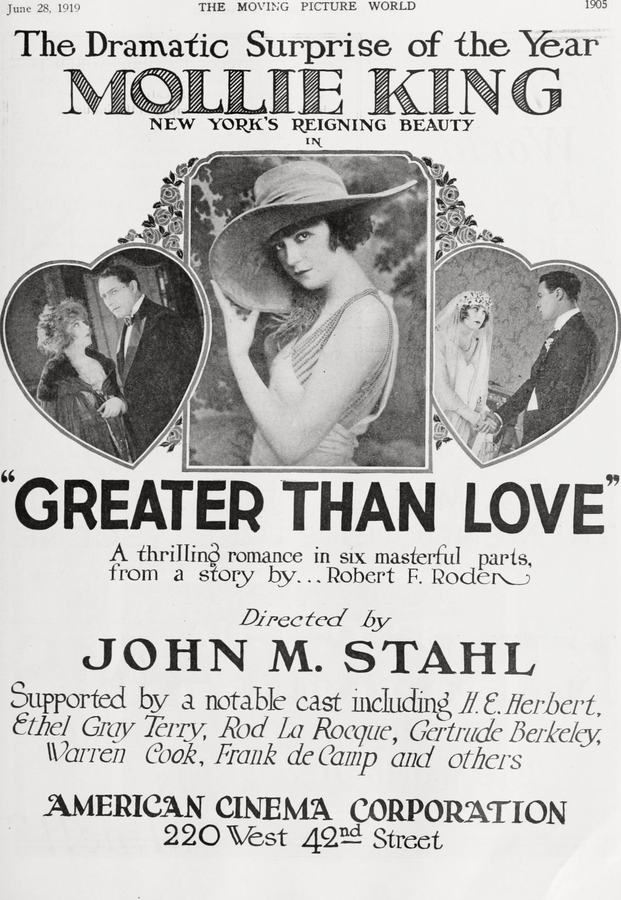
In the annals of silent cinema, certain narratives transcend their era, speaking to universal human experiences with a clarity that belies their age. Greater Than Love, a 1922 feature, is precisely one such film, a sprawling tapestry woven with threads of love, betrayal, class, and the haunting specter of ancestral secrets. It plunges us headfirst into a world where personal desires collide with the rigid strictures of societal expectation, where a single choice can unleash a cascade of unforeseen consequences, and where the echoes of past transgressions resonate through generations. The film opens with a seemingly straightforward romantic dilemma: Grace, a woman of evident grace and sensibility, finds herself at a crossroads, choosing between the earnest, perhaps less flamboyant, Bob Standing and the more distinguished, aristocratic James Brunton. Her selection of James, a decision seemingly predicated on love and aspiration, swiftly ushers her into a realm of opulent privilege, culminating in a wedding that promises a life of unblemished happiness. Yet, this idyllic tableau is brutally shattered, almost instantaneously, by an act of violence that redefines the very fabric of the narrative and the lives of all involved.
The patriarch, Mr. Brunton, is struck down by a bullet fired through a window during the sumptuous wedding festivities. The sudden, shocking nature of this event is not merely a plot device; it is a seismic shift, propelling the story from romantic drama into a realm of profound moral ambiguity and familial intrigue. What truly elevates this moment beyond mere sensationalism is Mr. Brunton’s dying command. With his last breaths, he extracts a solemn, almost sacred, vow from his son, James: to not seek vengeance, to not apprehend his killer. This enigmatic injunction is the film’s central conundrum, a narrative anchor that not only defines James’s immediate future but also casts a long, foreboding shadow over his burgeoning marriage. It forces us, the audience, to question the nature of justice, the weight of a father’s dying wish, and the hidden complexities that must have preceded such an extraordinary demand. What could compel a man to shield his own murderer, particularly in his final moments? This question hangs heavy in the air, a silent testament to the intricate web of relationships and secrets that lie beneath the polished surface of the Brunton estate.
The immediate aftermath of this tragedy sees James burdened by a promise that defies logic and societal expectation, a secret that he must carry alone. This burden, coupled with the inherent opacity of his father's final act, begins to erode the foundation of his marriage to Grace. The film masterfully portrays the insidious nature of suspicion and miscommunication. Grace, observing James’s discreet financial dealings with a mysterious woman named Helen, misinterprets these gestures as evidence of an illicit affair. Her heart, already tender from the shock of the wedding day, shatters under the weight of perceived betrayal. The film allows us to empathize deeply with Grace’s plight; her conclusions, though ultimately erroneous, are entirely understandable given the secrecy surrounding James’s actions and his inability—or unwillingness—to fully confide in her due to his solemn vow. This lack of transparency, a direct consequence of Mr. Brunton’s dying wish, becomes the catalyst for Grace’s devastating departure. She flees her marital home, seeking solace and anonymity in another town, a poignant act of self-preservation. Her subsequent miscarriage, a silent tragedy endured in solitude, underscores the profound emotional and physical toll of her heartbreak and isolation. It is a stark reminder of the film’s willingness to delve into the darker, more painful aspects of human experience, refusing to shy away from the profound consequences of misunderstanding and emotional trauma.
Meanwhile, James, equally ensnared in a web of misinterpretation, believes Grace has abandoned him for Bob Standing. The dramatic irony here is palpable and expertly utilized by the filmmakers. Both husband and wife, once bound by love, are now separated by layers of unspoken truths and erroneous assumptions, each suffering in their own isolated world, convinced of the other’s infidelity or betrayal. This period of estrangement highlights the fragility of trust and the destructive power of unaddressed secrets. Their individual journeys through grief and resentment serve as a powerful commentary on how easily love can be eclipsed by doubt when communication falters. The narrative structure, with its slow reveal of a long-buried secret, might remind modern viewers of the intricate familial deceptions explored in films like The Dead Secret, where the past exerts an inescapable pull on the present, dictating the fates of those caught in its intricate web.
As fate would have it, a dramatic car accident befalls James, bringing him, by sheer coincidence, to Grace’s humble abode in her new town. This unexpected reunion, born of crisis, acts as a crucial turning point. Grace, ever compassionate, takes on the role of his caregiver, nursing him back to health. This period of shared vulnerability and quiet intimacy allows for a rekindling of their lost connection, a space where raw emotion can begin to mend the fissures created by misunderstanding. It's a testament to the enduring power of their initial bond, suggesting that despite the pain and separation, a profound love still lingers beneath the surface. The tender moments of care, the unspoken glances, and the shared space create a poignant prelude to the ultimate revelation, preparing the audience for a catharsis that is both earned and deeply satisfying. This narrative device, bringing estranged lovers back together through an external crisis, is a classic trope, yet executed here with a delicate touch that emphasizes human empathy above all else.
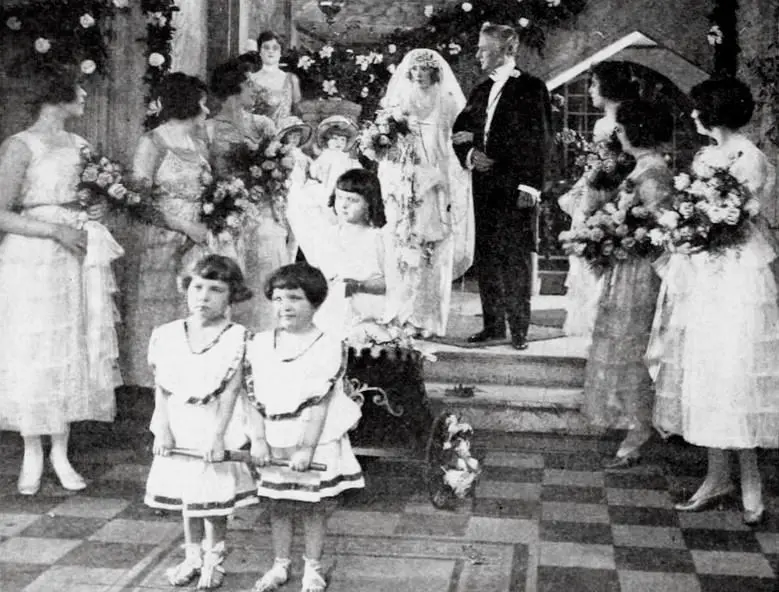
The final, intricate layers of the enigma are peeled back with the opportune arrival of Helen and Bob, setting the stage for a dramatic exposition that unravels years of silence and deceit. It is revealed that Helen is not James’s lover, but his half-sister, the forgotten daughter of Mr. Brunton and Alice, a woman abandoned by the patriarch years prior. This revelation casts Mr. Brunton’s dying wish in an entirely new, profoundly moral light. He knew it was Alice who had shot him, a desperate act born of years of neglect and suffering. His command to James was not merely about shielding a murderer; it was an act of profound, albeit posthumous, atonement. He sought to compel James to rectify his own past failures, to embrace and provide for the family he had forsaken. This twist transforms Mr. Brunton from a mere victim into a complex, morally conflicted character, whose final act, though enigmatic, becomes a desperate attempt to mend a fractured legacy. The film posits that some forms of love, or perhaps, duty, are indeed greater than love as conventionally understood, extending beyond personal affection to encompass a broader sense of familial responsibility and historical rectification.
Greater Than Love, therefore, is not just a story of a romantic misunderstanding but a profound exploration of atonement and forgiveness. Mr. Brunton, in his final moments, recognizes the profound injustice he inflicted upon Alice and Helen. His refusal to let James pursue the killer is a silent acknowledgment of his own culpability, a desperate plea for a different kind of justice – one rooted in compassion and familial duty rather than retribution. James’s journey from confusion to understanding, and his eventual acceptance of Helen as his sister, symbolizes his embrace of this inherited responsibility. It forces him to confront the moral failings of his father and to actively work towards healing wounds that predated his own existence. This theme of inherited duty and the long shadow of past sins resonates deeply, suggesting that the true measure of a person can sometimes be found in their willingness to rectify the wrongs of those who came before them. The film subtly critiques the aristocratic façade, revealing the hidden lives and desperate measures taken by those marginalized by societal structures.
The film’s portrayal of Grace’s initial heartbreak and subsequent resilience is particularly compelling. Her independent spirit, her willingness to leave a life of luxury rather than endure perceived betrayal, speaks volumes about her character. Her journey from a heartbroken wife to a nurturing caregiver, and finally to a woman whose faith in her husband is restored, forms the emotional core of the narrative. James, too, undergoes significant character development. Initially bound by a confusing promise and later by his own mistaken assumptions, he evolves from a somewhat passive figure into one who actively seeks to understand and atone. His acceptance of Helen and Alice, and his reconciliation with Grace, mark his transition into a man capable of truly embracing the complexities of family and love. The core misunderstanding between James and Grace, fueled by misinterpretation and lack of communication, echoes the marital tribulations often depicted in domestic dramas of the era, perhaps finding a parallel in the fraught relationships seen in For Better, for Worse, where external pressures and internal doubts test the very bonds of matrimony.
As a product of the silent era, Greater Than Love relies heavily on visual storytelling and the nuanced performances of its cast. Mollie King, as Grace, undoubtedly conveyed the depth of her character's emotional turmoil through expressive facial gestures and body language, capturing the audience's sympathy during her moments of heartbreak and her quiet strength during her period of independence. Warren Cook, as James, would have needed to project the internal conflict of his character, torn between his promise to his father and his love for his wife, gradually revealing his journey towards understanding and acceptance. The dramatic staging of key scenes, such as the wedding day murder and the climactic revelation, would have been crucial in building tension and delivering emotional impact without spoken dialogue. The film's use of intertitles would have been pivotal in conveying the complex plot points and Mr. Brunton's dying wish, guiding the audience through the intricate layers of the narrative. The cinematography, likely utilizing stark contrasts between the opulent settings of the Brunton estate and the more modest surroundings of Grace's exile, would have visually underscored the thematic shifts and emotional states of the characters.
The budding romance between Bob and Helen, a charming coda to the main drama, offers a glimmer of hope and a sense of new beginnings. Bob, who initially represented a simpler choice for Grace, finds his own path to love and connection with Helen, thereby integrating another lost member into the newly reconciled family unit. This resolution speaks to the film’s overarching message: that even amidst profound betrayal and misunderstanding, there is always potential for healing, forgiveness, and the forging of new, stronger bonds. The title itself, Greater Than Love, ultimately refers not just to romantic affection but to the expansive, often painful, and ultimately redemptive power of familial duty, moral reckoning, and the capacity for human compassion to overcome even the most deeply entrenched grievances. It's a reminder that the most profound forms of love often demand sacrifice, understanding, and a willingness to confront uncomfortable truths, paving the way for a more authentic and enduring connection.
In its entirety, Greater Than Love stands as a testament to the enduring power of dramatic storytelling. It meticulously constructs a world where appearances deceive, where love is tested by the weight of the past, and where redemption is earned through painful self-discovery and a commitment to justice that transcends personal revenge. The film’s intricate plot, rich character arcs, and profound thematic explorations solidify its place as a compelling piece of early 20th-century cinema. It invites viewers to ponder the complex interplay of fate, choice, and the inherent human capacity for both profound error and ultimate forgiveness. The journey of Grace and James, from initial bliss to harrowing separation and eventual reconciliation, is a microcosm of life’s unpredictable turns, underscoring the vital importance of empathy and open communication in navigating the labyrinthine paths of human relationships. It is a narrative that, despite its century-old vintage, continues to resonate, reminding us that the human heart, in all its complexity, remains an endless source of dramatic fascination.
IMDb 6.3
1933
Community
Log in to comment.