DbcultAccessing Vault...
6.2/10
Senior Film Conservator
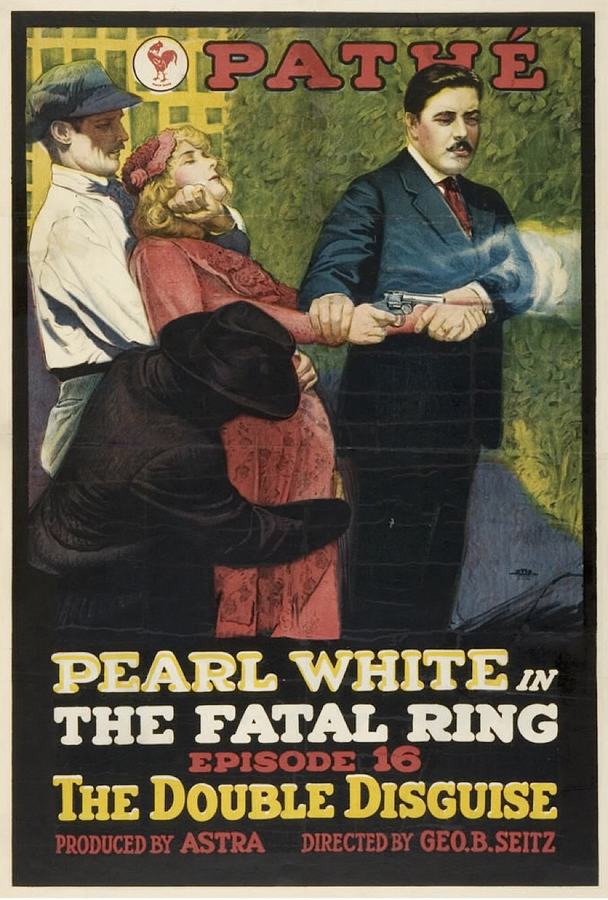
A definitive 6.2/10 rating for a film that redefined the boundaries of cult cinema. The Fatal Ring remains a cornerstone of transgressive art.
The year 1917 represented a pivotal junction for the moving image, a time when the cinematic grammar was being forged in the fires of pulp excitement and technical experimentation. At the heart of this revolution stood Pearl White, the undisputed 'Queen of Serials,' whose presence in The Fatal Ring solidified her status as a global icon of feminine agency. This first episode, 'The Violet Diamond,' is not merely a relic of a bygone era; it is a masterclass in the kinetic energy that defined the Pathé Exchange’s output. While contemporary audiences might view the silent era through a lens of nostalgic simplicity, a closer examination reveals a sophisticated architecture of suspense and physical prowess that remains startlingly modern.
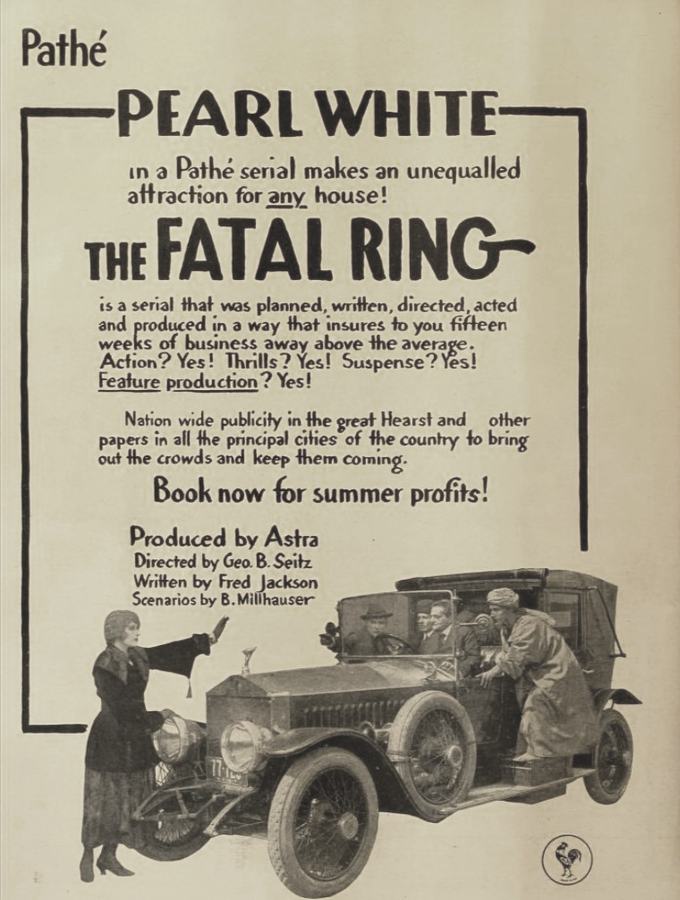
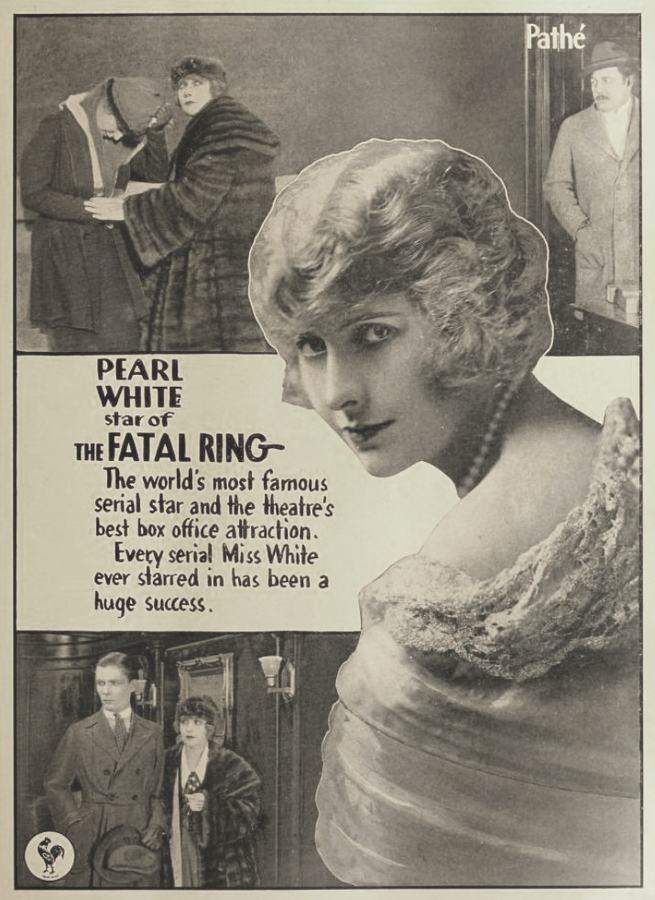
Pearl Standish, portrayed with a fierce, wide-eyed intensity by White, is a character who rejects the passive domesticity often found in the melodramas of her contemporaries. Unlike the titular figure in Maria Magdalena, whose suffering is rooted in moralistic tragedy, Pearl Standish seeks the abyss. Her boredom is a catalyst for adventure, a sentiment that resonated deeply with an audience navigating the anxieties of the Great War. White’s performance is defined by a singular physicality. When she is hurled over a stair rail, catching a chandelier with a desperate, unscripted-looking grace, the audience isn't watching a stunt double; they are witnessing the birth of the action hero. This raw athleticism distinguishes the film from the more static, stage-bound productions like Her Great Match.
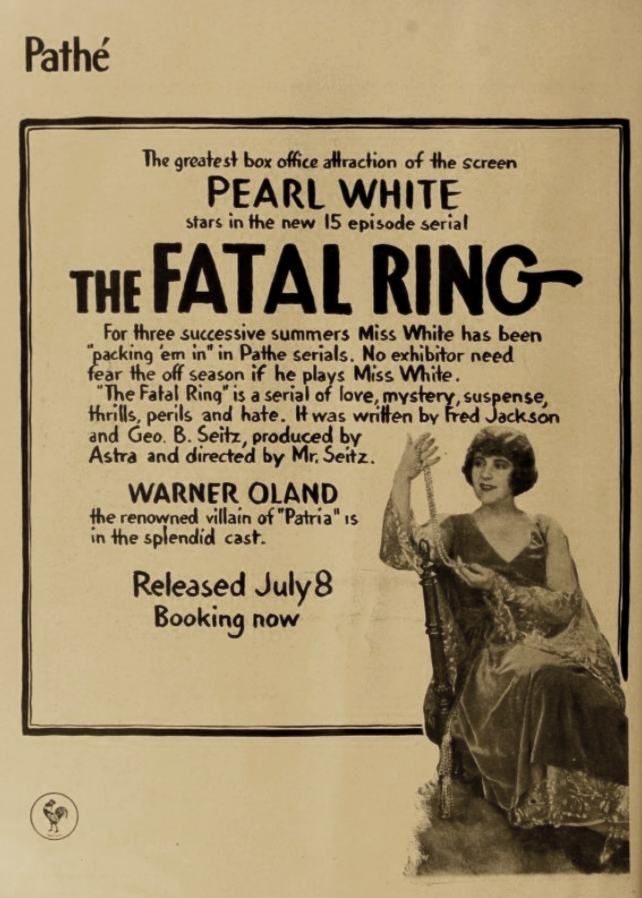
Director George B. Seitz, who also contributed to the screenplay alongside Frederick J. Jackson and Bertram Millhauser, understood the psychology of the hook better than almost any other filmmaker of his generation. In 'The Violet Diamond,' the pacing is relentless. The transition from the drawing-room tensions of the Standish estate to the shadowy, violent incursions of the 'Secret Order' is handled with a staccato rhythm that leaves the viewer breathless. Seitz’s direction captures the claustrophobia of the era's interiors while simultaneously suggesting a vast, dangerous world lurking just beyond the frame. This sense of global intrigue and 'orientalist' mysticism provides a stark contrast to the localized, rugged conflicts found in Where the Trail Divides or the pastoral settings of God's Country and the Woman.
One cannot discuss The Fatal Ring without acknowledging the presence of Warner Oland. Before he became synonymous with Charlie Chan, Oland specialized in roles that leaned into the 'exotic other,' a trope common in 1910s cinema. Here, the antagonism is not just personal but systemic, represented by a cultish devotion to a stolen relic. This thematic preoccupation with sacred objects and ancient retribution mirrors the epic scale of Joan the Woman, though Seitz trades DeMille’s grandeur for a grittier, more visceral pulp ethos. The interaction between Oland’s forces and the morally ambiguous Nicholas Knox (Henry G. Sell) creates a three-dimensional conflict where Pearl is not a prize to be won, but a player to be reckoned with.
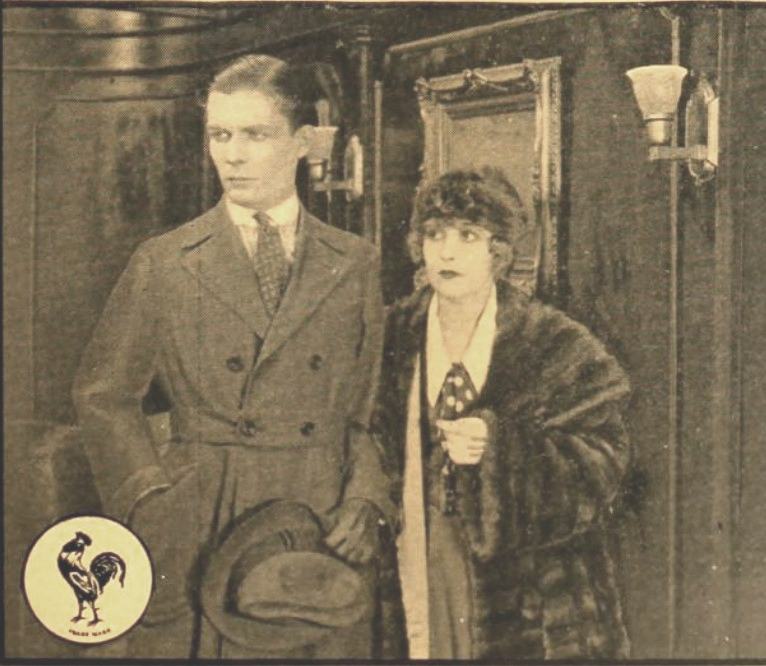
The cinematography in this opening chapter utilizes the limited lighting technology of 1917 to create a world of deep shadows and sharp highlights. The use of iris shots and tinting—though often lost in modern restorations—originally served to guide the viewer's eye through the chaotic scuffles. The scene in which the priestess enters through the window is a triumph of blocking; the movement is fluid, almost dance-like, contrasting the jagged, desperate lunges of the male combatants. This visual sophistication is reminiscent of the atmospheric depth seen in The Stolen Voice, yet it possesses a unique, frenetic energy that is purely 'Seitzian.'
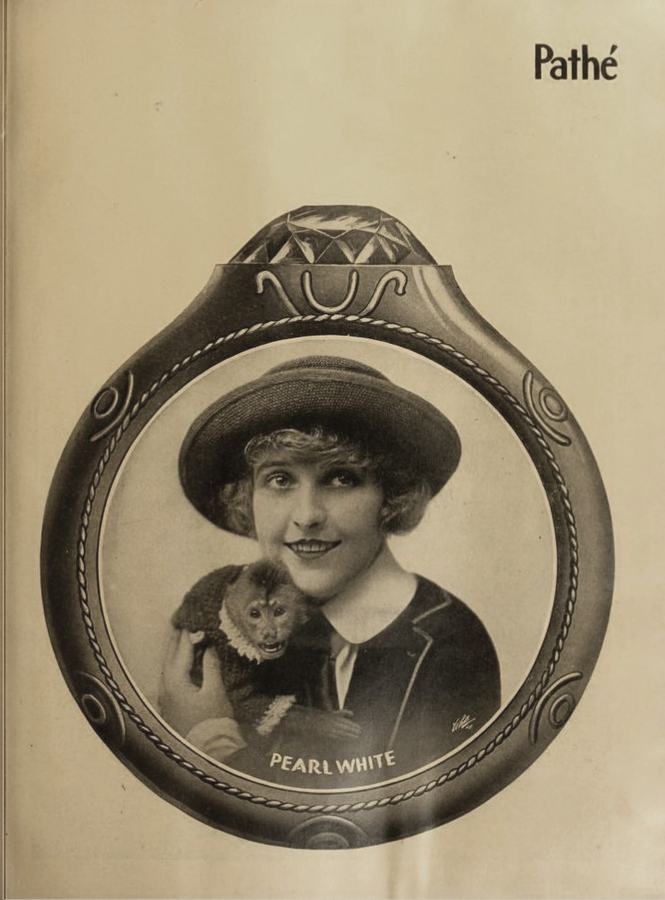
To understand the impact of The Fatal Ring, one must place it within the broader cinematic landscape of its time. While Only a Factory Girl dealt with the grounded realities of social class, and The Little Mademoiselle played with charm and whimsy, Seitz’s work was unapologetically sensationalist. It shares a certain DNA with the high-stakes drama of The Cossack Whip, particularly in its depiction of a woman pushed to her physical limits. However, where The Galley Slave focuses on the crushing weight of fate, The Fatal Ring suggests that through wit and agility, one might outrun the inevitable. Even when compared to the historical drama of The Conqueror, the immediacy of Pearl White’s peril feels more resonant because it is unburdened by the pomposity of 'Great History.'
The centerpiece of 'The Violet Diamond' is undoubtedly the chandelier sequence. In an era before safety unions and CGI, the danger was palpable. As Pearl is hurled from the balcony, her grab for the light fixture is a moment of pure, unadulterated cinema. It is a synecdoche for the serial itself: a precarious hold on life, dangling over a precipice, with only one's own strength to prevent a fatal fall. This scene alone justifies the film's place in the pantheon of action cinema. It captures a spontaneity that is often missing from more polished contemporary works, a sense of 'real-time' danger that makes the viewer’s heart skip even a century later. It evokes the same sense of wonder one might feel viewing the scenic beauty of Assisi, Italy, but replaces tranquility with a shot of pure adrenaline.
The MacGuffin of the Violet Diamond serves as a brilliant narrative engine. By establishing that Pearl’s father obtained the stone through dubious means—purchasing it from a 'villainous priest'—the script injects a layer of moral complexity. Pearl is not just defending her property; she is navigating the fallout of her father's colonialist greed. This nuanced approach to the 'stolen artifact' trope is more complex than the straightforward heroics found in Captivating Mary Carstairs. The involvement of Richard Carslake, the disgruntled former secretary, adds a layer of domestic betrayal that mirrors the family tensions in Hans Faders Ære, suggesting that the threats are both external and internal.
As the episode concludes with the discovery of the knife and the fifteen-day ultimatum, the audience is left in a state of exquisite frustration. This was the genius of the weekly serial: the commodification of the cliffhanger. The Fatal Ring does not offer closure; it offers a promise of further escalation. It is a work of peripatetic energy, moving from one crisis to the next with the fluid grace of a Zigeuneren Raphael protagonist, yet anchored by the very American grit of its lead actress. Pearl White remains a revelation—a woman who could fight, fall, and flourish in a world designed to keep her stationary. 'The Violet Diamond' is a spectacular opening salvo in a war of nerves, a testament to the enduring power of the silent screen to captivate through movement, shadow, and the sheer audacity of its performers.
IMDb —
1915
Community
Log in to comment.