DbcultAccessing Vault...
Cult Review
Senior Film Conservator
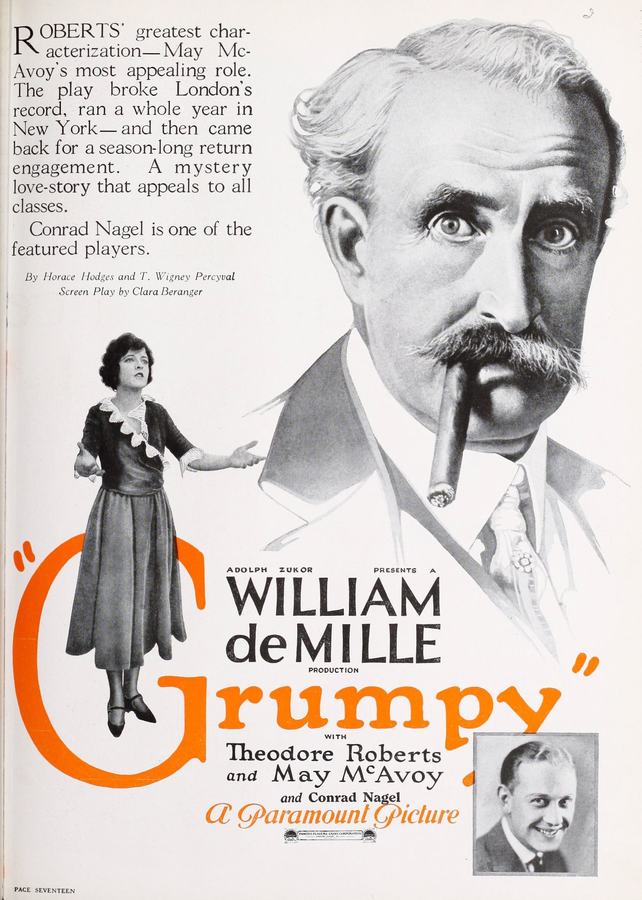
In the annals of silent cinema, where grand gestures and expressive physiognomy often spoke louder than words, certain characters etched themselves into the collective consciousness with an indelible force. One such figure is Andrew Bullivant, more affectionately—or perhaps accurately—known as 'Grumpy,' the titular protagonist of the 1921 cinematic offering. This film, a testament to the era's storytelling prowess, presents a delightful blend of drawing-room mystery, familial drama, and the triumph of astute observation over cunning subterfuge. It’s a work that, even a century later, retains a compelling narrative energy, largely thanks to the masterful performance at its core and a plot that, while seemingly straightforward, unravels with satisfying precision.
The genius of Grumpy lies not merely in its intricate plot, but in its profound character study. Andrew Bullivant, portrayed with exquisite nuance by the venerable Theodore Roberts, is far more than a simple archetype. He is a retired lawyer, a man whose life has been spent dissecting human fallibility and legal complexities, and whose disposition has, over time, calcified into a rather formidable testiness. Yet, beneath this crusty exterior lies a mind as sharp as any razor, a heart fiercely loyal to his kin, and an unwavering commitment to justice. Roberts imbues Grumpy with a captivating blend of cantankerousness and sagacity, making him utterly endearing despite his outward prickliness. His very presence commands attention, and his subtle facial expressions, a hallmark of silent acting, convey volumes of unspoken thought and emotion.
The narrative pivot of Grumpy is, of course, the audacious theft of a valuable diamond. This isn't just any jewel; it's a MacGuffin that ignites the dormant detective instincts within Bullivant. The diamond, entrusted to the care of Ernest Heron (Conrad Nagel), is pilfered under circumstances that initially appear baffling. The film expertly sets up the scene, building tension around the gem's security before its mysterious disappearance. This initial enigma is crucial, for it's the catalyst that forces Grumpy out of his comfortable, albeit grumpy, retirement and into the fray of active investigation.
What truly elevates the story from a simple whodunit is the seemingly innocuous clue that Grumpy seizes upon: a gardenia. In the hands of lesser writers, such a detail might feel contrived, but here, it's presented with a logical consistency that makes it utterly believable. Horace Hodges, Clara Beranger, and Thomas Wigney Percyval, adapting the popular play, demonstrate a keen understanding of how small details can unravel grand deceptions. The gardenia isn't just a pretty flower; it's a silent witness, a fragrant breadcrumb leading Grumpy down a path that others overlook. This reliance on minute observation is a cornerstone of classic detective fiction, and Grumpy executes it with admirable finesse, showcasing how a seasoned mind can connect seemingly disparate pieces of information.
The true villain of the piece, Chamberlin Jarvis (Casson Ferguson), is a master of manipulation, a suave antagonist who operates with a chilling lack of conscience. His machinations are particularly insidious because they ensnare the innocent Virginia Bullivant (May McAvoy), Grumpy's own granddaughter and Ernest's beloved. Virginia becomes Jarvis's unwitting dupe, her innocence and trust exploited in a way that adds a potent emotional layer to the mystery. The stakes are raised considerably when Grumpy realizes not only that a crime has been committed, but that his own family is inadvertently implicated. This personal connection injects a powerful urgency into his quest, transforming it from a mere intellectual exercise into a deeply personal mission to protect his loved ones and uphold their honor. McAvoy portrays Virginia with a touching vulnerability, making her predicament all the more poignant and emphasizing the insidious nature of Jarvis’s betrayal.
Theodore Roberts’ performance as Grumpy is, without hyperbole, a tour de force. He embodies the character with a physicality and expressiveness that transcend the limitations of silent film. Every scowl, every raised eyebrow, every dismissive wave of the hand speaks volumes. He conveys intellectual acuity through subtle shifts in gaze and posture, transforming what could have been a caricature into a fully realized, complex individual. His Grumpy is not just a grumpy old man; he is a man burdened by wisdom, occasionally exasperated by the folly of others, but ultimately driven by an unwavering moral compass. This level of depth in a silent film performance is rare and deserves considerable commendation. It's a testament to Roberts's skill that he could communicate such a rich inner life without uttering a single audible word.
The supporting cast, too, delivers strong performances that complement Roberts’s central role. Conrad Nagel, a prominent leading man of the era, brings earnestness and a touch of youthful impetuousness to Ernest Heron, making his character's plight sympathetic. May McAvoy's Virginia is a picture of innocence and emotional turmoil, crucial for conveying the stakes of Jarvis's deception. Casson Ferguson’s Jarvis is suitably slick and menacing, embodying the elegant villainy required for such a role. The ensemble works in concert, each actor contributing to the film's overall dramatic impact and the believable construction of its world.
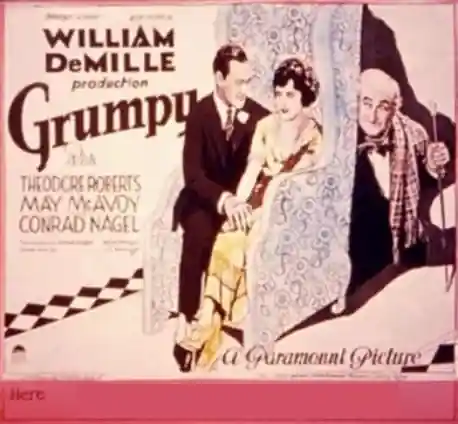
Beyond the stellar performances, Grumpy showcases the sophisticated craft of early 20th-century filmmaking. The direction, while not overtly flashy, is effective in maintaining a steady pace and building suspense. The use of intertitles is judicious, providing necessary exposition and dialogue without overwhelming the visual narrative. This balance is critical in silent films, where too many intertitles can disrupt immersion, and too few can leave the audience adrift. Here, the intertitles serve to enhance, rather than detract from, the visual storytelling.
Cinematography, while lacking the elaborate camera movements of later eras, is functional and clear, focusing on character expressions and key plot details. The framing often emphasizes Grumpy's reactions, drawing the viewer's eye to his thoughtful scrutiny. There are moments of subtle visual storytelling, such as the lingering shot on the gardenia, that effectively communicate its importance without needing lengthy explanations. The film's aesthetic is clean and crisp, allowing the narrative and performances to take center stage, a hallmark of well-executed silent dramas that prioritized clarity and emotional resonance.
Released in 1921, Grumpy arrived during a particularly fertile period for American cinema. The industry was rapidly evolving, moving beyond its nascent stages into a more structured and ambitious form of storytelling. Films like Grumpy demonstrated the commercial viability and artistic potential of character-driven mysteries. While not a sprawling epic like some contemporaneous productions, its tightly woven plot and memorable characters ensured its appeal.
Comparing Grumpy to other films of its era highlights its unique strengths. While films like Dangerous Hours explored more overt thriller elements, and The Border Legion delved into the rugged landscapes of the Western, Grumpy carved its niche as a sophisticated drawing-room drama. It wasn't about high-octane action or sweeping romances, but about the quiet power of intellect and the intricate dance of human deception. Its focus on character psychology and deductive reasoning places it firmly within the tradition of literary detective fiction, translated effectively to the screen. It also stands apart from more melodramatic offerings like Love's Redemption (1921), opting instead for a more cerebral and understated emotional impact.
The film’s enduring relevance stems from its universal themes: the pursuit of justice, the fragility of reputation, and the often-underestimated wisdom of age. Grumpy, with his seemingly old-fashioned methods, proves that keen observation and logical deduction are timeless tools for truth-seeking. He represents a figure of moral authority, a reminder that integrity and intellect can prevail even against the most cunning adversaries. This message resonates across generations, making the film more than just a historical curiosity but a narrative with lasting appeal.
Grumpy, though perhaps not as widely discussed as some of its more epic contemporaries, holds a significant place in the development of the detective genre in cinema. It solidified the archetype of the eccentric, brilliant investigator whose unconventional methods yield extraordinary results. Theodore Roberts’ portrayal undoubtedly set a high bar for such characters, influencing subsequent depictions of cinematic sleuths who rely on brains over brawn. The film's success demonstrated that audiences were eager for intelligent mysteries, not just spectacle, and that a strong, unique central character could carry a narrative with immense power.
The film's writers, Horace Hodges, Clara Beranger, and Thomas Wigney Percyval, deserve credit for crafting a screenplay that respects its source material while adapting it effectively for the screen. Their work ensures that the plot remains coherent and engaging, allowing the actors to fully inhabit their roles without the story ever feeling convoluted or forced. The pacing is deliberate, allowing the mystery to unfold naturally, giving the audience time to engage with Grumpy's thought process and appreciate the subtle clues he uncovers.
Ultimately, Grumpy is a delightful cinematic experience that transcends its silent origins. It’s a compelling mystery, a nuanced character study, and a showcase for the formidable talent of Theodore Roberts. For anyone interested in the evolution of film, the art of silent acting, or simply a well-crafted story of detection, this film is an absolute must-watch. It reminds us that sometimes, the most insightful observations come from those who appear, on the surface, to be the most cantankerous. Grumpy, in his own inimitable way, teaches us that beneath every gruff exterior, there might just be a brilliant mind waiting for the right mystery to solve, and that a single gardenia can indeed speak volumes.
IMDb —
1933
Community
Log in to comment.