DbcultAccessing Vault...
Cult Review
Senior Film Conservator
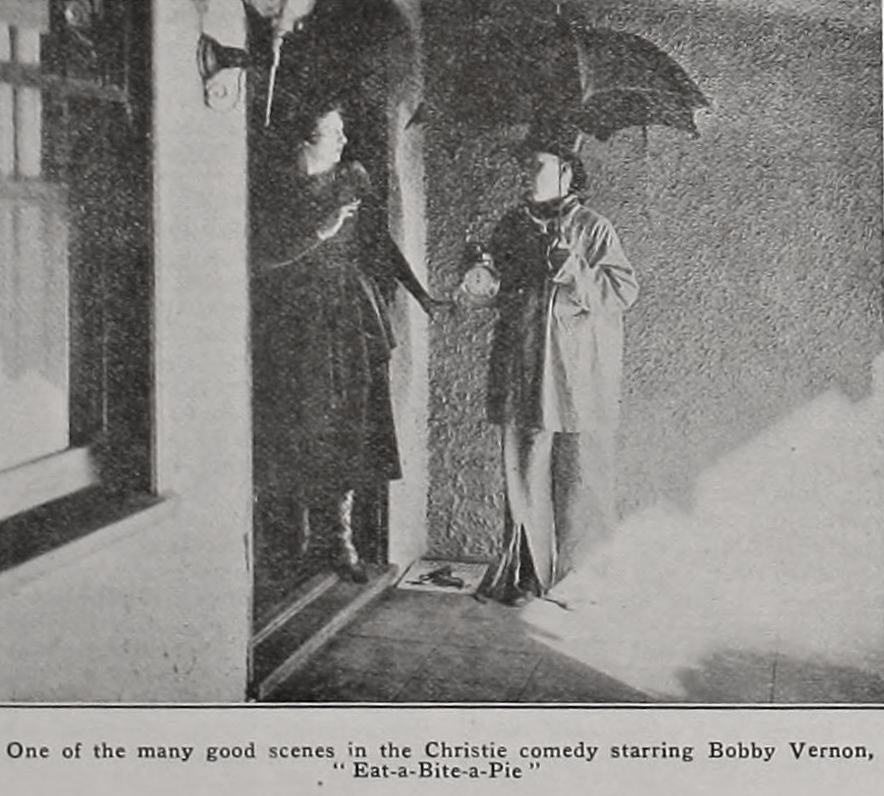
Custard projectiles arc across the flickering nitrate like golden comets, each splatter a hieroglyph of youthful defiance. Eat-a-Bite-a-Pie, a 1925 one-reeler that somehow feels longer than a semester, turns the collegiate initiation rite into a delirious ballet of humiliation and desire. Bobby Vernon, rubber-limbed and moon-eyed, enters the frame as if he’s been shot from a popgun: a suitor spurned by a dragon-dad who guards his daughter’s dowry with the vigilance of a Prohibition agent.
The narrative engine is less plot than pinball machine. Bobby’s rival, a smug fraternity grand-poobah played by Victor Rodman, wears his superiority like a sash stitched from entitlement. The damsel—Vera Steadman, equal parts flapper and vestal—hovers at the edge of each frame, eyebrows raised in perpetual appraisal. Her father, a walrus-mustached monarch of small-town virtue, decrees that any son-in-law must survive the Greek-letter gauntlet. Thus the courtship ritual is recast as hazing obstacle course: swallow a goldfish, ride a donkey through the dean’s rose garden, juggle cream pies while reciting the school fight song backward.
Jack Jevne’s screenplay, lean as a whippet, knows that silence loves visual puns. When Bobby is ordered to “eat the whole pie,” the intertitle card winks: He thought they meant dessert; they meant humble. The gag lands harder because the film stock itself seems dusted with powdered sugar; every scratch on the print looks like a fingernail trail through meringue.
Where The Havoc weaponized melodrama and Under the Yoke flayed social injustice, Eat-a-Bite-a-Pie opts for custard-coated catharsis. The film’s central insight—love is a hazing ritual nobody graduates from—gets literalized when Bobby, drenched in butterscotch, crawls out of a vat labeled FOR INITIATES ONLY and straight into paternal embrace. The father, whose scowl could curdle milk, bursts into laughter so seismic his mustache trembles like a tuning fork. Approval, the film argues, is only ever one pratfall away.
Director/scribe Jevne stages the initiation trials like Stations of the Cross reimagined by a soda jerk. There’s the blindfolded pie-identification round (flavors ranked by humiliation level), the greased-pig tug-of-war, and the climactic human sundae where Bobby is layered with ice cream, nuts, and a cherry perched on his nose while the fraternity brothers chant Latin gibberish. The camera, starved for sync sound, compensates with kinetic ingenuity: undercranked footage makes every tumble feel like jazz in 4/4 time.
Viewed today, the short crackles with anachronistic electricity. The absence of audible laughter amplifies each squish and splat; you swear you can hear crust flake, cream splatter, dignity rupture. The organ score on the surviving Kino print (composed in 1998 but shamelessly jaunty) punches out ragtime chords that sync so perfectly with Bobby’s flinch reflex you’d think the film was shot to click track.
Compare it to The Fair Barbarian or Find the Girl: those films chase romance through exotic locales and mistaken identities. Eat-a-Bite-a-Pie compresses the entire mating dance into one quad, one night, one pie. Efficiency becomes poetry.
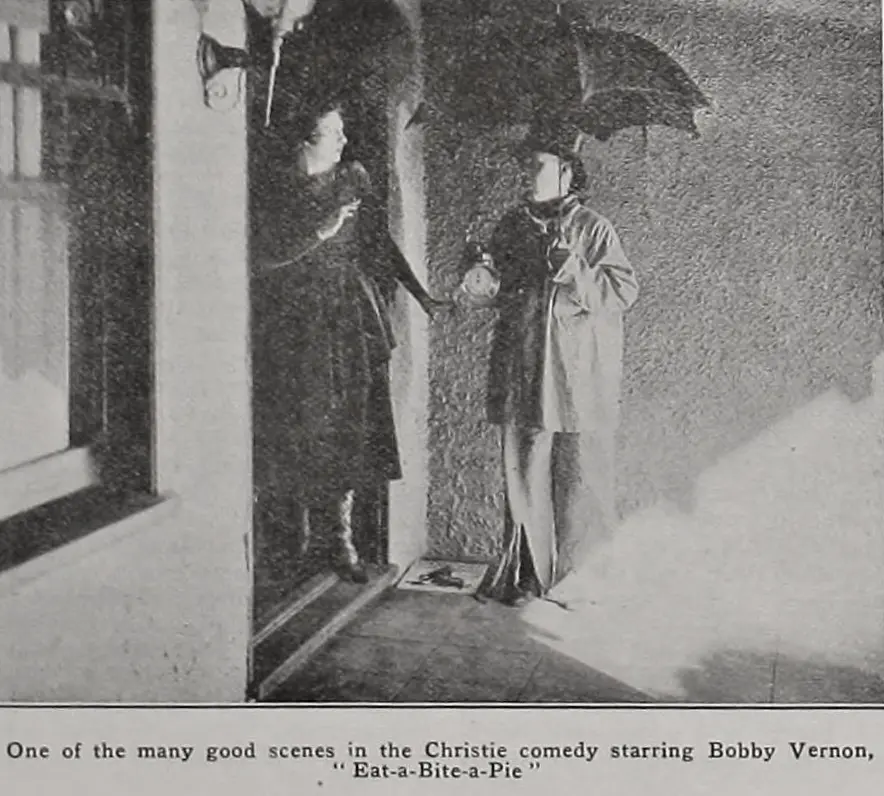
Modern eyes may flinch at the gender politics: the woman is prize, the men are contestants, the father is referee. Yet Steadman’s performance smuggles subversion. Watch her in the final shot: while the boys whoop, she sidesteps the confetti, catches Bobby’s gooey hand, and leads him offscreen—an exit that feels less conquest than co-opt. The film lets her reclaim the narrative with one decisive tug.
Meanwhile, the rival—Rodman’s preening alpha—ends up face-first in the same vat that once humiliated Bobby. The camera lingers on his submerged expression: entitlement dissolving like sugar in hot water. Revenge, Jevne whispers, is best served à la mode.
The surviving 16-mm print, housed at UCLA, bears scorch marks that look like cigarette burns on pie crust. Yet those scars enhance the texture: every scratch is a breadcrumb trail to 1925. Note the tinting: amber for daylight antics, cerulean for twilight heart-to-hearts, rose for the fleeting kiss. It’s a Kodak Neapolitan.
Cinematographer William Marshall (later lensing The Eternal Grind) frames the piefight like a battlefield cyclone. He parks the camera low so pastries soar overhead, transforming clowns into Icarus. Depth is achieved via diagonal lines of fleeing freshmen; cream splashes read as shrapnel against the night sky.
Talkie remakes tried to replicate the gag—Uncle Tom’s Caboose slaps pies in sound, but the splats feel timid without the vacuum of silence. Television sitcoms from I Love Lucy to Community owe a debt: the fraternity initiation episode is practically a genre unto itself. Yet none capture the zero-gravity sweetness of Eat-a-Bite-a-Pie, where love is proven not by valor but by how much custard you can wear and still grin.
Criterion rumor mill whispers of a 4K restoration funded by a dessert conglomerate—product placement as preservation. Purists howl, but I’d lap it up: let the colors pop like artificial dye, let the world see that 1925 knew what 2025 still pretends to ignore: courtship is comedy, commitment is custard, and every kiss tastes faintly of pie.
Eat-a-Bite-a-Pie is a miniature sugar rush of a film—ninety years old and still sticky. It will not mend your soul, but it might glue a smile to your face with lemon-curd permanence. Seek it out at any archive screening; bring a napkin, bring a date, bring a willingness to believe that the shortest distance between two hearts is a cream pie hurled at 24 frames per second.
Runtime: approx. 22 min. | Silent with English intertitles | Not rated | Available on DCP from Kino Classics & select archive festivals.
IMDb 5.7
1930
Community
Log in to comment.